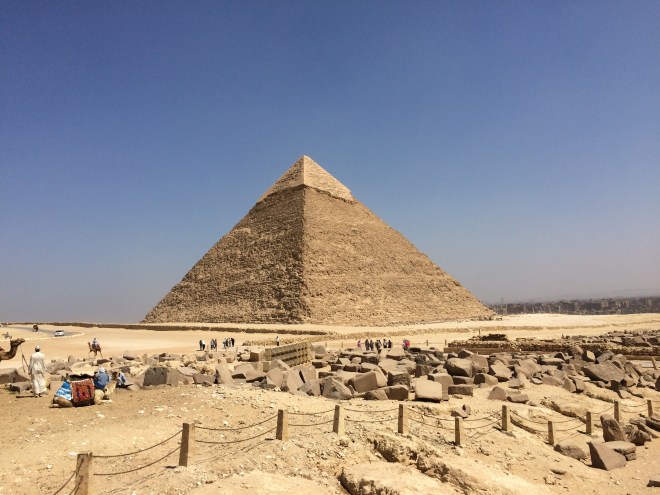
1.Visiting the Pyramids was so surreal. It just stood there in all its glory surviving thousand of years. The Giza complex houses three main pyramids – Pyramid of Khufu, Pyramid of Khafre and Pyramid of Manekure. Of which, the Pyramid of Khufu is the largest and highest in world and is also known as the great pyramid of Giza. Pyramids are made entirely of blocks of sandstone. Although the pyramids have lost their original shine, certain parts do give us some idea of what it would have looked like. I can only imagine the kind of awe an imposing and glowing monument would have elicited in its hey day. It is a back breaking process to make these stones shine and it probably only added to the complexity of the entire operation.They are also four other small but dilapidated pyramids in the larger complex area.The great sphinx of Giza was much smaller than I imagined it to be but it is still photogenic.

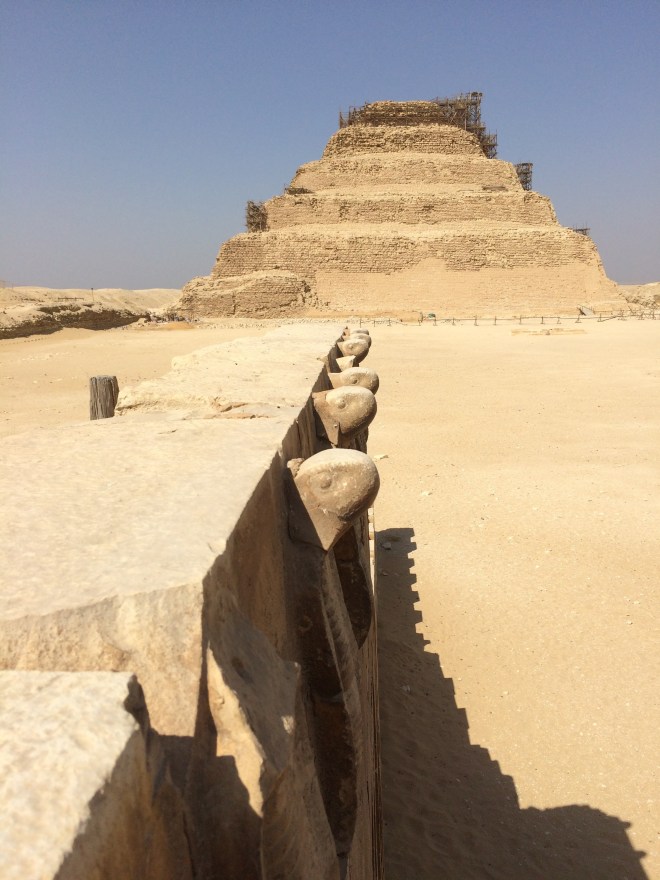
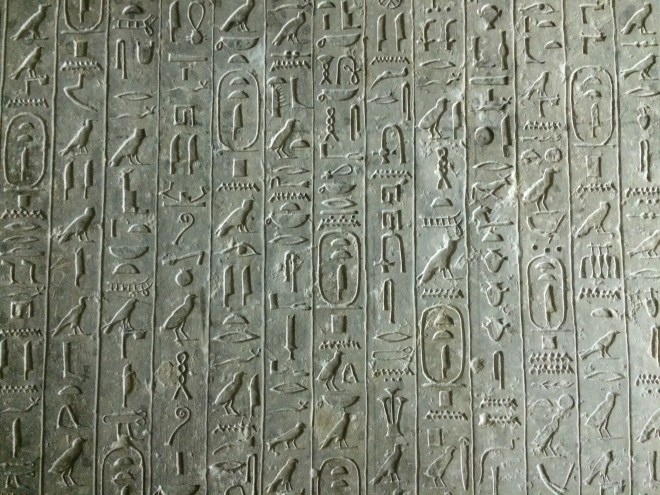
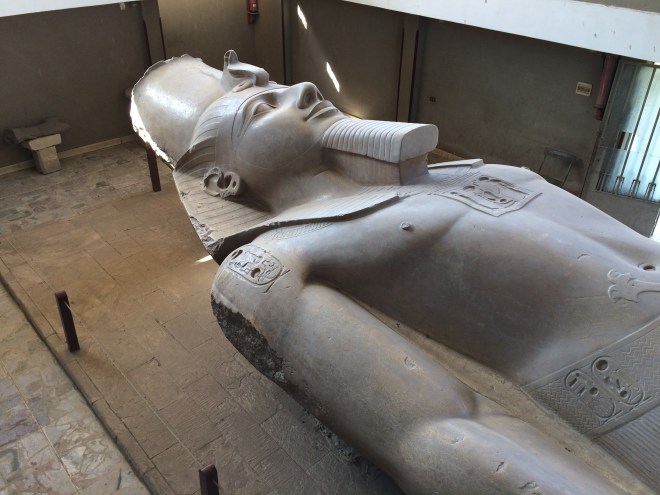
2. Saqqara and Dahshur are other pyramid destinations that are within driving distance of Giza. Saqqara is a necropolis area for the ancient city of Memphis. The hieroglyphics in the Tomb of Idut were absolutely fascinating. I had to pinch myself time and again to convince myself that I wasn’t dreaming. Saqqara is also home to the Step Pyramid. The statue of Rameses nearby in Memphis is also worth a stop. Dashur is home to the red pyramid and the bent pyramid. The bent pyramid has an angle change midway. There are many theories as to how it ended up that way but our guide casually admitted that it was most likely an experiment gone wrong.
3. I wish I had time for Coptic Cairo but the security situation was very fluid during our visit. So, we chose to end our day earlier and sweltering heat in September didn’t help either. Sadly, the National Museum of Egyptian Civilization was also closed for renovation during our visit. We also gave the Mohammed Ali Mosque (Ottoman style mosque) a miss since we had been been in Istanbul only a few weeks ago.
4. Cairo is a sprawling metropolis with a population of 9 million at the core of the Greater Cairo region which is home to about 20 million people. Not sure if it is a protective hack against dust but brownish hues seemed to dominate the city’s color palette. Also, rows of unfinished houses are the norm in Cairo. Apparently, there are tax implications if the construction looks “complete”. Hence, the citizens of Cairo seemed to embrace this strategy.
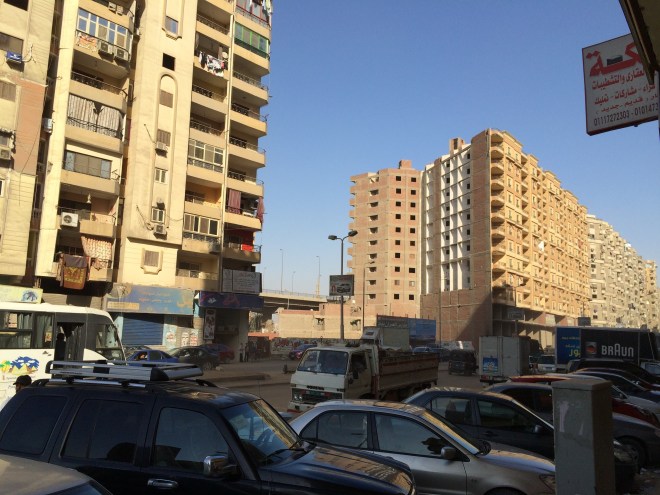
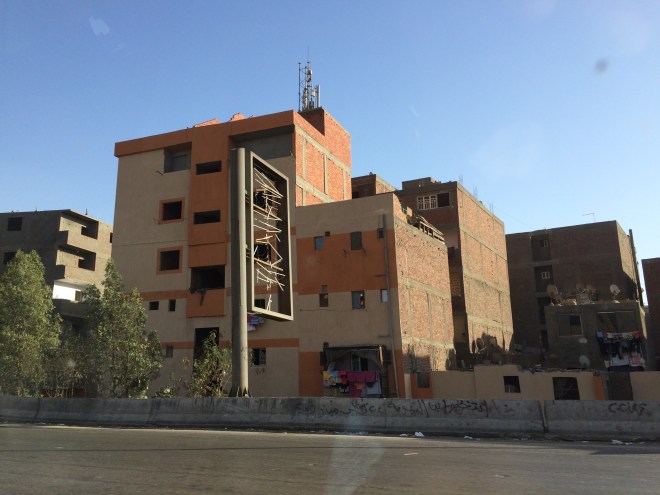
5. Life is hard for average Egyptians. The infrastructure is dilapidated, post revolution politics led way to a different form of autocracy and opportunities for survival leave alone advancement are scarce. So, don’t scorn the hustlers looking to offer you a camel ride or sell you a postcard but get good at saying firm nos. Bakshish (bribes) are expected pretty much everywhere even at the archaeological sites administered by the Ministry of Antiquities.
6. The Nile is a source of pride and a lifeline for Egypt. Although the glory seems long lost, the lifeline thing is still very true. About 90% of Egypt’s 100 million population live along the Nile. There is an old tussle between Egypt and Ethiopia on sharing Nile resources.Taking a Felucca ride is a good way to experience the Nile but it is more about the story. There are probably better places elsewhere in the world for a boat cruise.
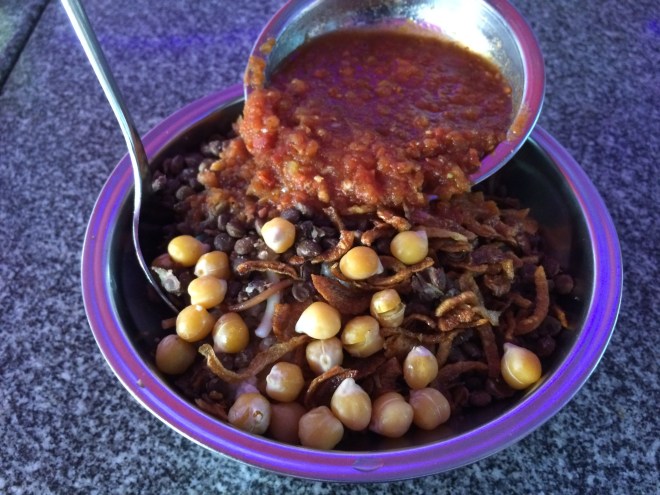
7. Ful and falafel(tameeya) sandwiches are breakfast staples. They are tasty, nourishing and cheap. Koshary is Egypt’s national kitchen sink dish. It is a weird mix of rice, macaroni and lentils topped with spicy tomato sauce, chickpeas and fried onions. Although the tomato sauce contributes to 90% of the flavor, the dish surprisingly works.

 flagsandforks