1. To be honest, one of reasons I went here was because it was a short train ride from Vienna. On second thought, the boat cruise would have been much more fun but was also more expensive and time consuming. As soon as alighted from the inter-city train, I noticed the contrast with Vienna. It had the rusticity of a developing country but I learned that Bratislava is one of the richest regions by per capita GDP. Although English is widely spoken, many vendors usually the older generation were much more comfortable with Russian.
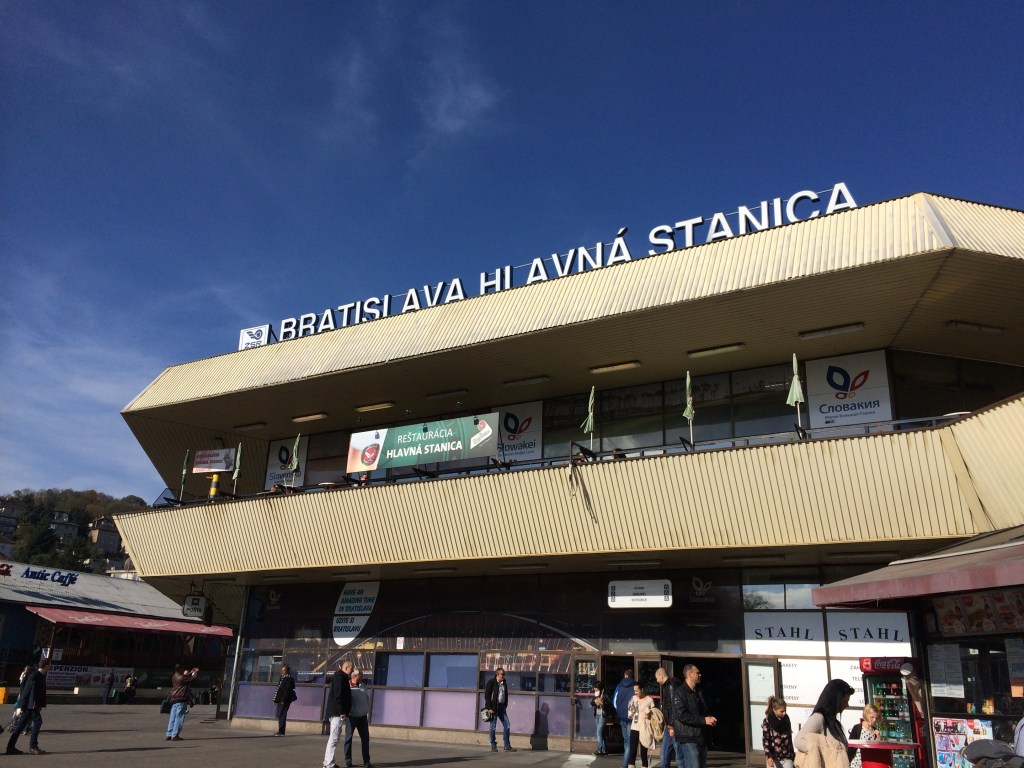
2. Bratislava like major European cities has a long history going all the way back to the times of Celtics and Romans. However, it peaked under the Habsburg dynasty. As the Ottomans advanced into the heart of Europe and capture Buda, Pozsony became the capital of the Kingdom of Hungary. It served as the seat of the Habsburg empire seeing coronations of 11 kings and 8 queens including the longest reign of Maria Theresa. The modern name, Bratislava was agreed upon when the country of Czecho-Slovakia was created.
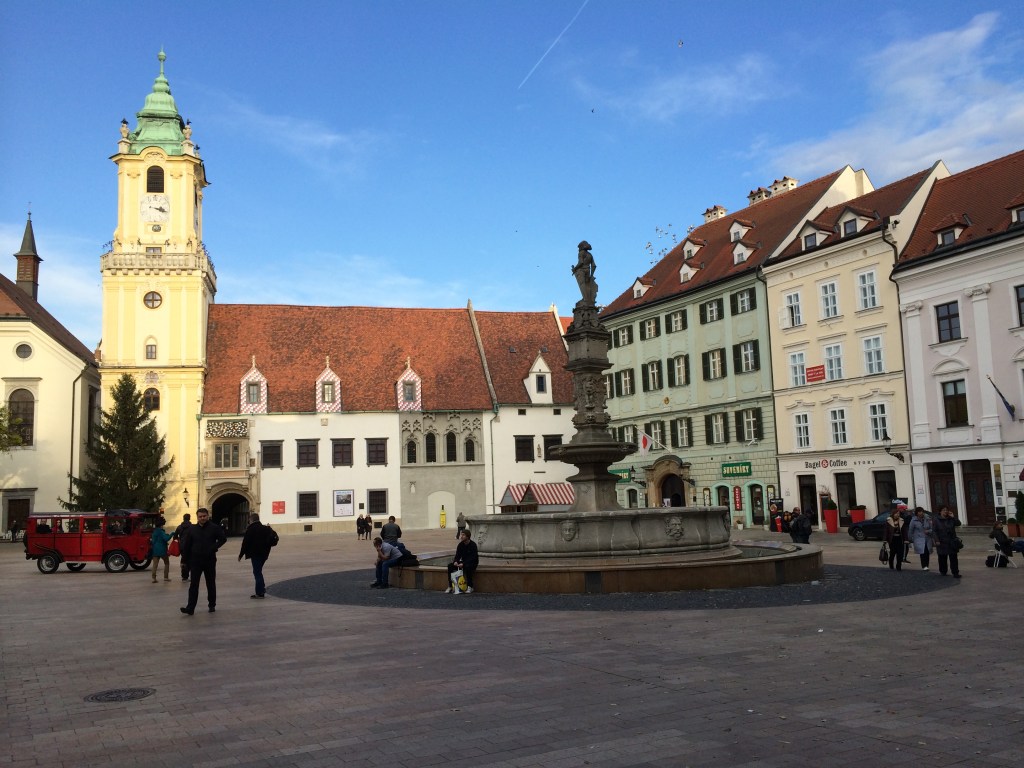
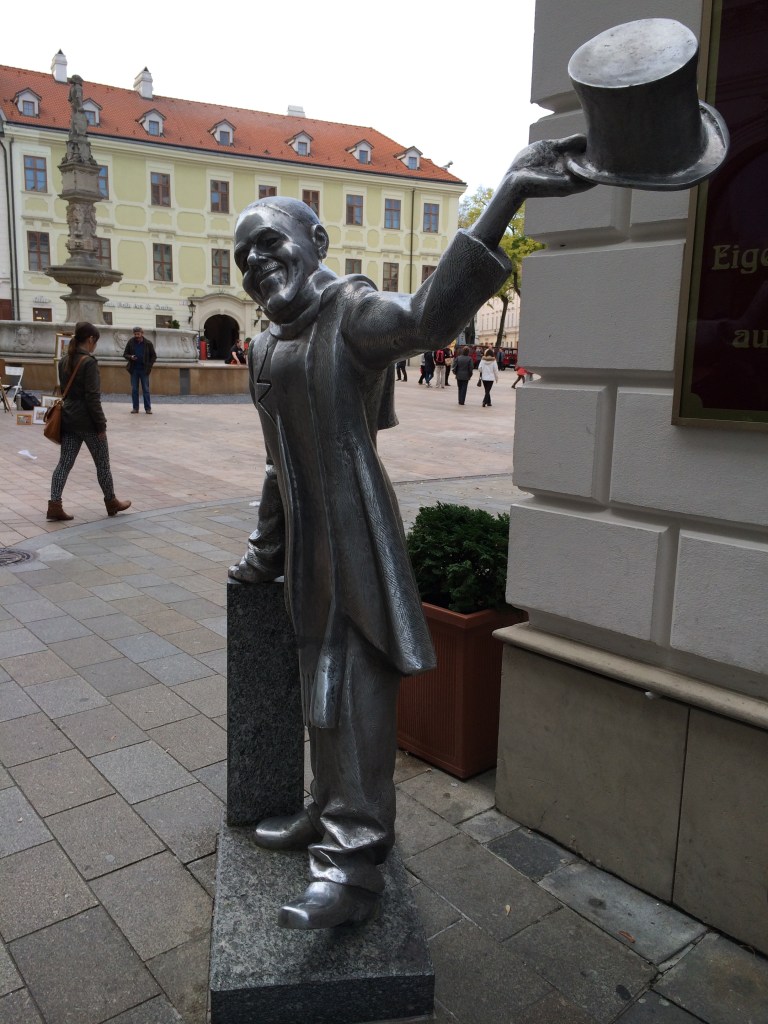
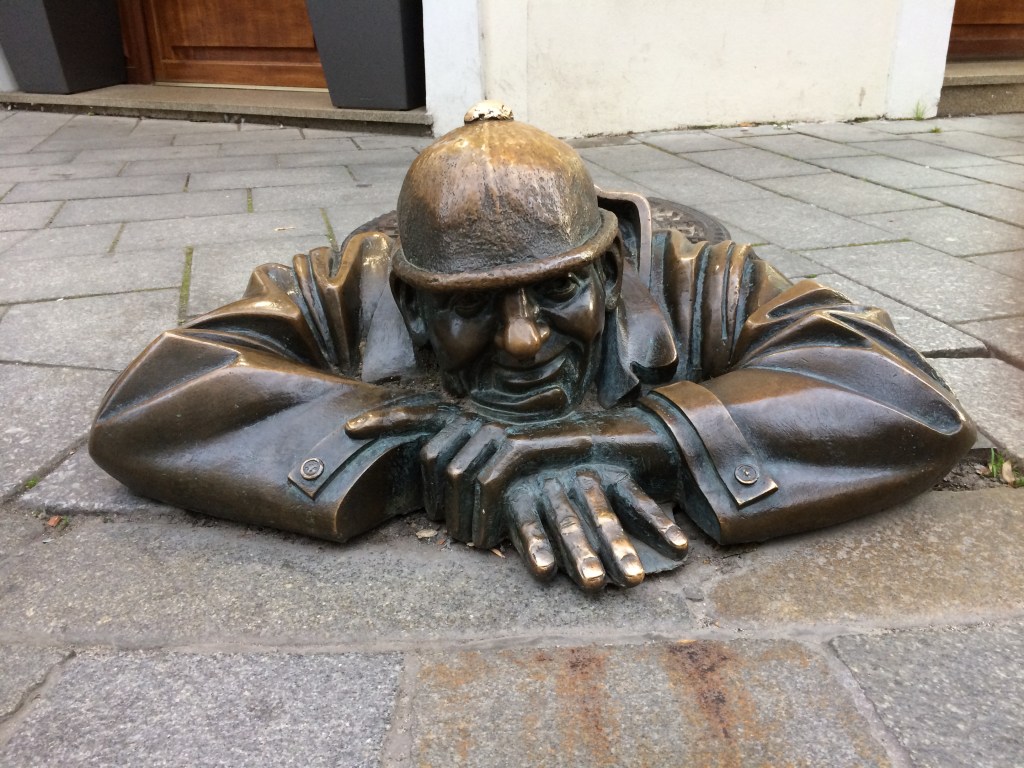
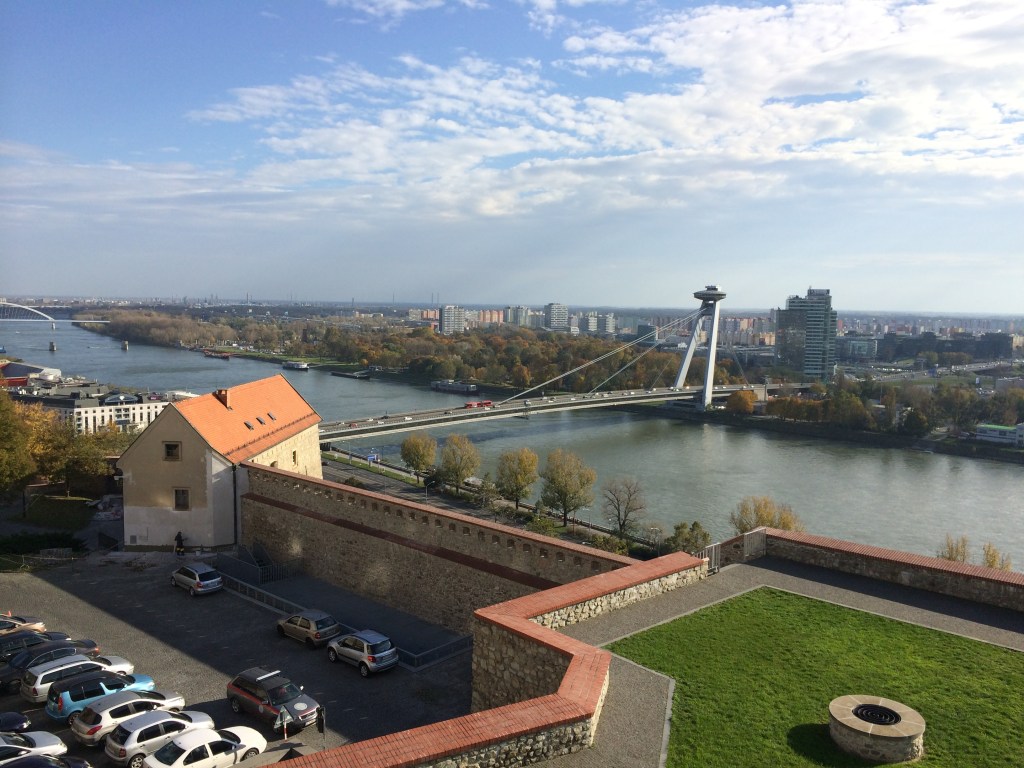
3. The main draw in Bratislava is definitely the Old Town. It is one of the better surviving medieval towns in Europe. In fact, Michael’s Gate is the oldest serving medieval fortifications in Europe.One of my favorite things was the little statues that are placed all over the old town. It was no doubt that it was meant for photo-ops but they were delightful nevertheless. Cumil (“Man at Work”) is the most popular among then. I walked to SNP bridge over the Danube river but I gave the UFO shaped observation deck a miss.

4. Bratislava Castle has been inhabited continuously from the Iron age due to its strategic location overlooking the Danube river. It served as the acropolis during the Celtic and Roman period. In the 9th century, Slavs build a palace of stone with a basilica and fortified using it using the material from the Roman buildings. Through the middle ages and until the final abolishment of the Kingdom of Hungary in 1781, Bratislava Castle (Pozsony castle under the Hungarian empire) served as the seat of many kings in the Hungarian empire. It was later converted to a seminary before being destroyed by a fire in 1811. The ruins were opened to public in 1946 and restoration work began as early as 1957 and continues in some way to the present day. I liked getting lost in the gardens and various pathways within the castle and the views of the Danube are not shabby too.

5. Food is heavily influenced by Russian cuisine given this history. At lunch I was served pelmeni introduced to me as ravioli. The dill sauce gave it away though.There are a bunch of hip cafes popping up all over town with globalization favorites like latte art and avocado toasts.
 flagsandforks