10 things about Tokyo, Japan

1. Japanese culture is known to be insular but it has fascinating extremes. At one end of the spectrum are overly formal things like elaborate tea ceremonies and at the other end there are crazy irreverent things like anime, exotic fetish clubs including kogals (young women in uniforms), fuzoku(“pleasure”services) culture.

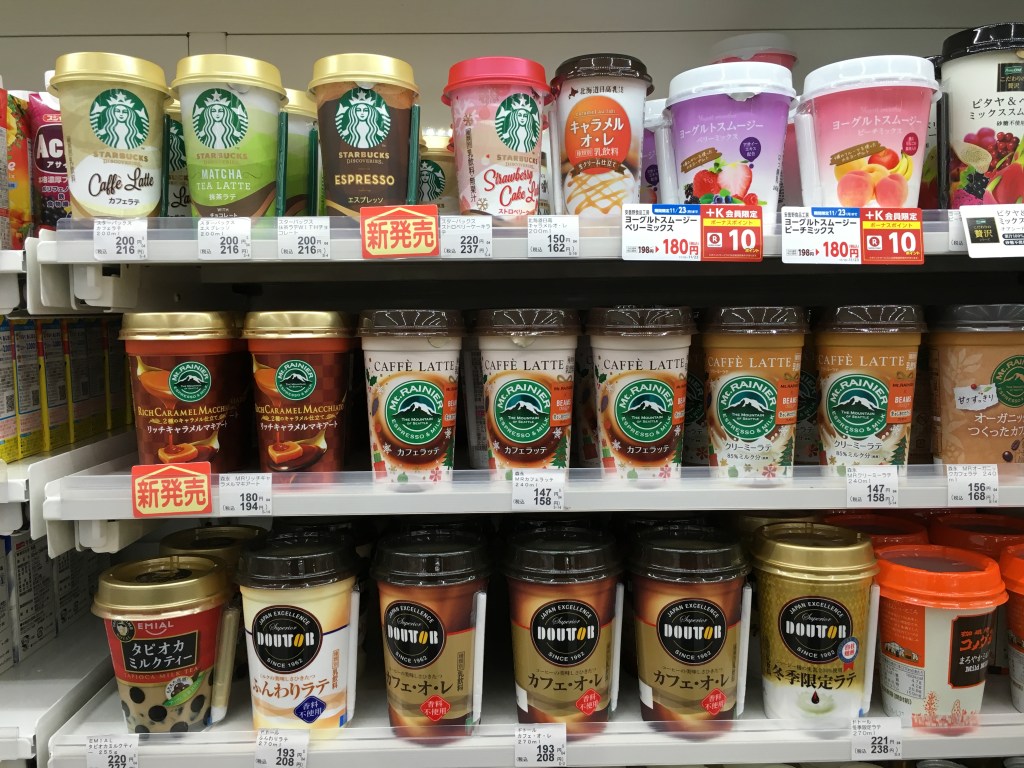
2. I thought America symbolized convenience with 24 hours availability of almost anything. Japan takes it to a whole another level with a mind boggling variety of vending machines that dish out almost anything and everything. 

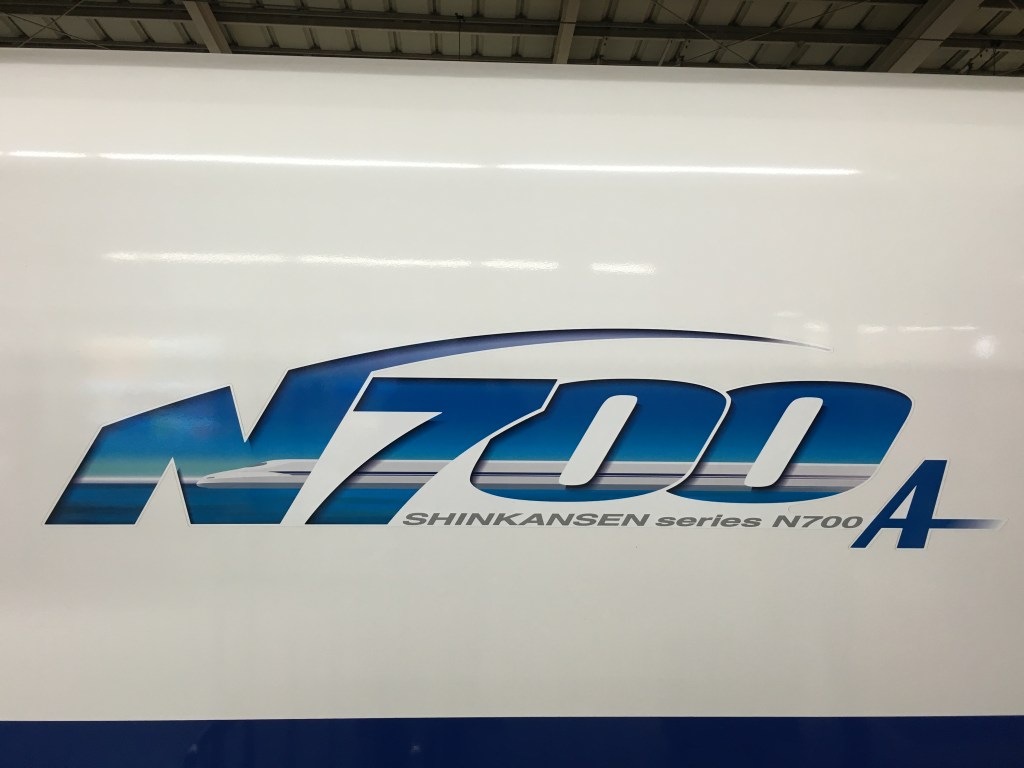
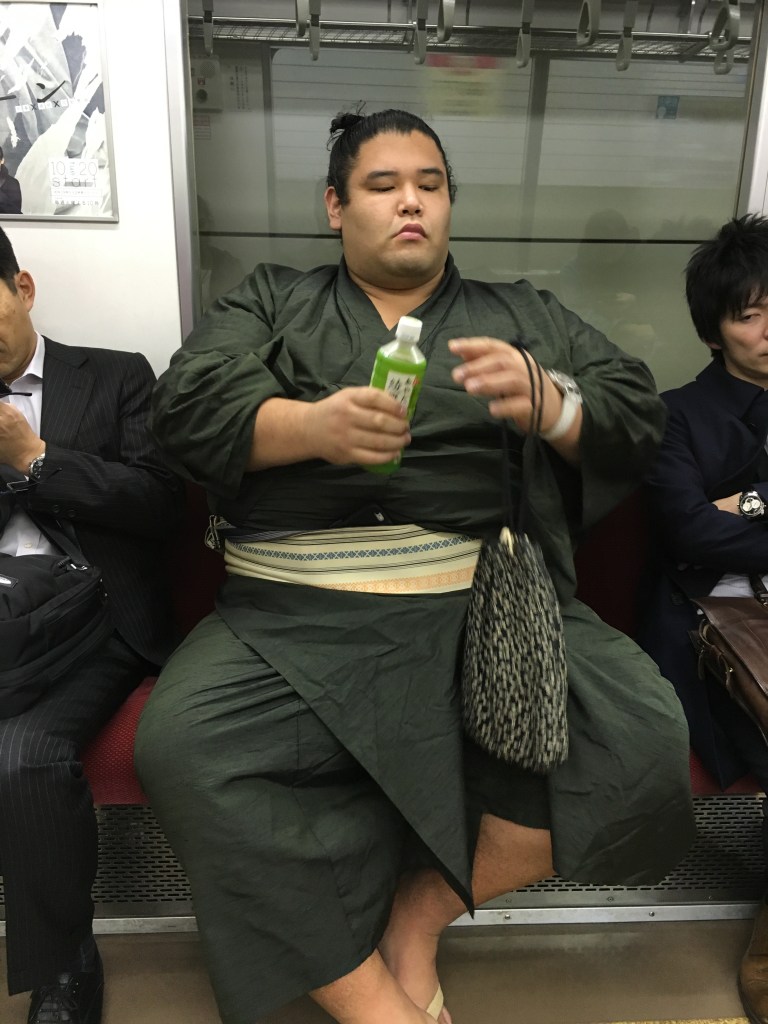
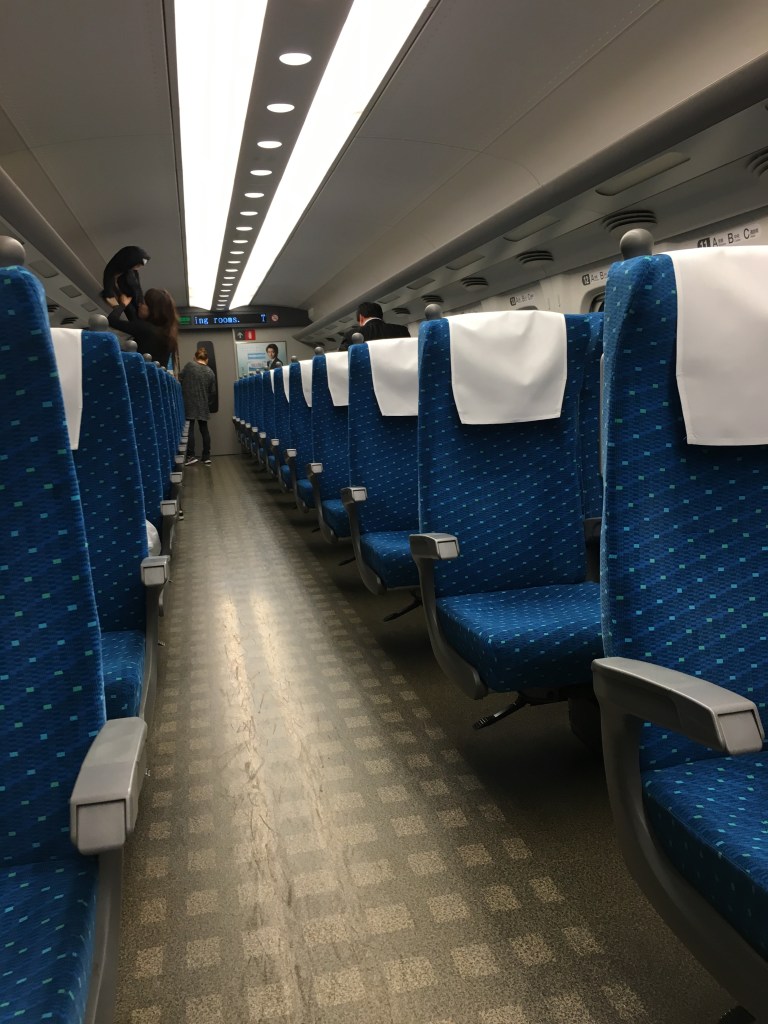
3. It is incredible to see how Tokyo is both vast and dense, some of the wards/municipalities in the Tokyo metro region could be cities by themselves. Yet there is an understated efficiency in how the city functions, the subway in particular does a phenomenal job ferrying people from end of the metro area to another every day. For intercity travel, the Shinkansen bullet trains are simply the gold standard for the world to emulate (China likely being the only exception). They are known for their punctuality so much so that apologies are issued for even 1-2 minute delays.
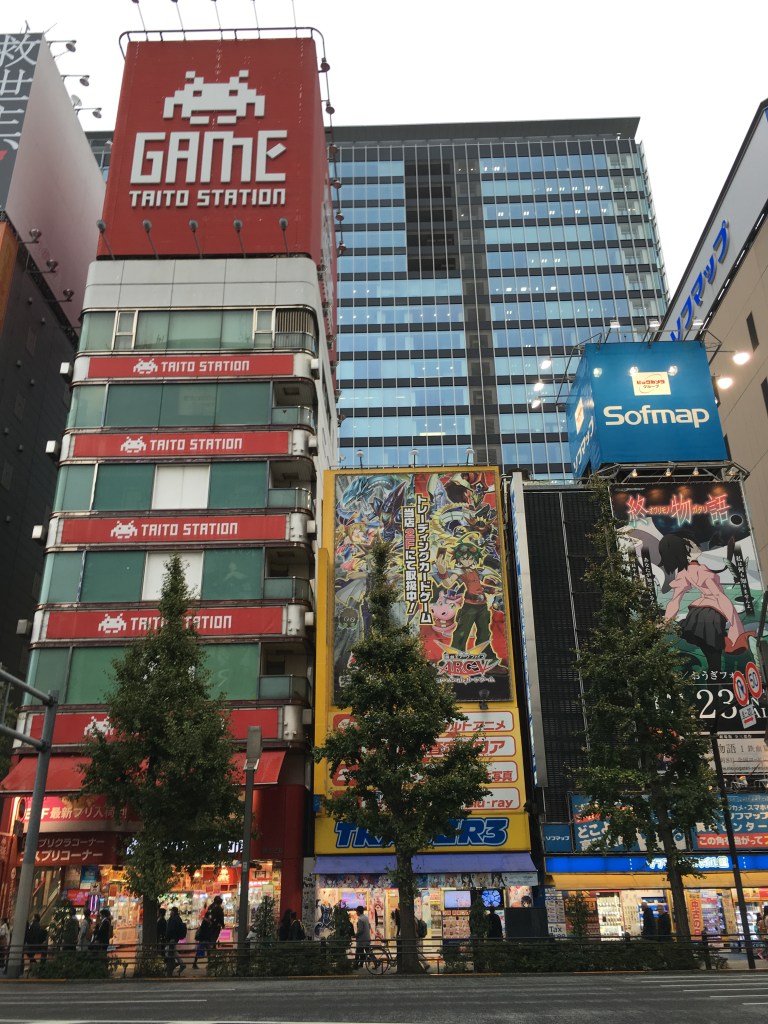
4. While every neighborhood in Tokyo is self contained, they do have their unique characteristics. Akhiabhara is a treasure trove for gaming, manga, electronics geeks alike. There is a smaller version of Akhiabhara across town in Ikebukuro. Ginza is the shopping district dominated by showrooms of global brands while Roppongi is jeweled with upscale restaurants in high rises and classy bars. Harajuku is great for people watching and its is not uncommon to see some of Tokyo’s best haute couture here. It also the home to the beautiful tree lined boulevard, Omotesandō and numerous themed cafes along its side streets. Needless to say, it was my favorite neighborhood. Shibuya and Shinjuku are both busy and have a ‘Times Square’ vibe thanks to a plethora of digital billboards. 
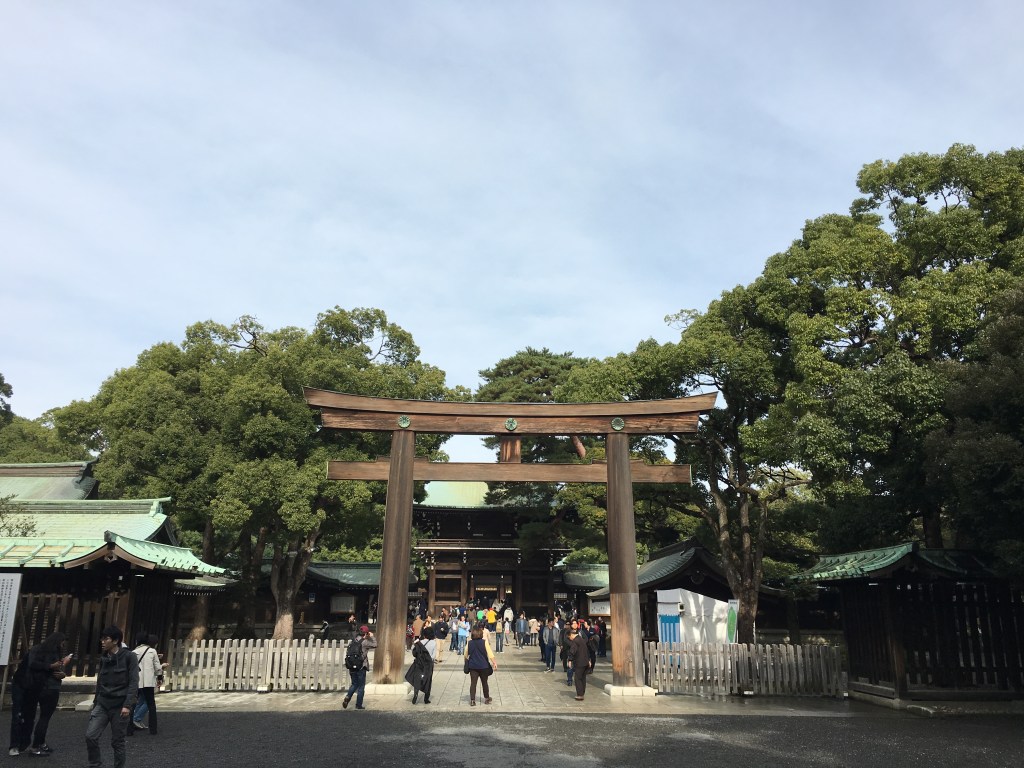
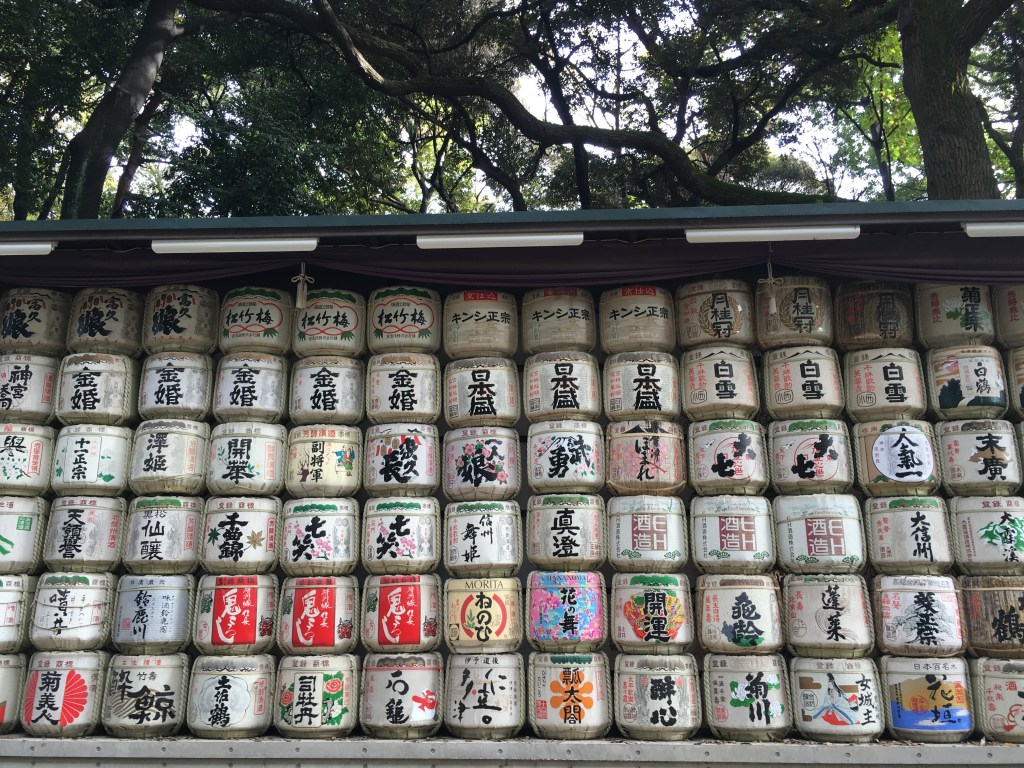
5. The Meiji Shrine is of great significance to the Japanese. It is dedicated to Emperor Meiji and his wife in honor of their role in reforming the political system and modernizing the country. The campus of the shrine is very serene thanks to the abundance of vegetation in the form of 120,000 trees. Being adjacent Yoyogi park and the trendy Harajuku neighborhood, it attracts both visitors and locals alike. Harajuku is great for people watching and its is not uncommon to see some of Tokyo’s best haute couture. It also the home to the beautiful tree lined boulevard, Omotesandō and numerous cafes along its side streets. Needless to say, it was my best favorite neighborhood. Shibuya and Shinjuku are both busy and have a ‘Time Square’ vibe thanks to a plethora of digital billboards. 

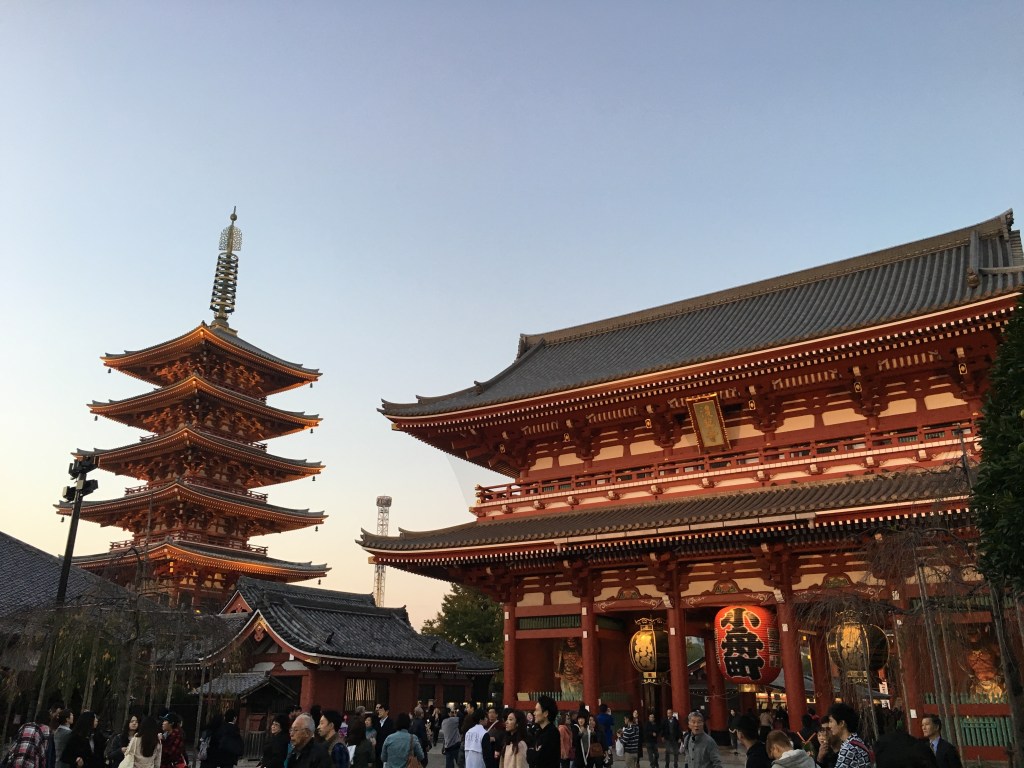
6. While Kyoto is home to some of the best Buddhist temples in Japan, Tokyo has Sensoji. It has all the hallmarks of classic temple architecture –  large gently curved roof, storied pagoda, main hall with the altar and entrance gates. However, Sensoji temple has an attractive red color that glistens at night. It is dedicated to Kannon, goddess of mercy. It is also known as the Asakusa Kannon temple.
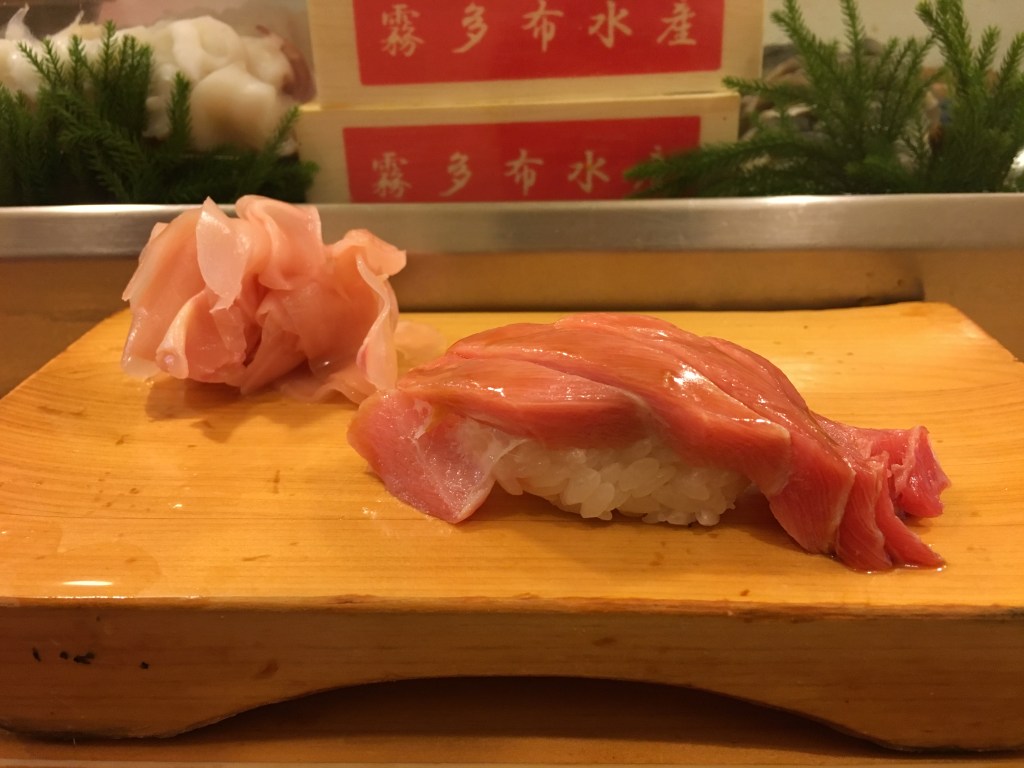
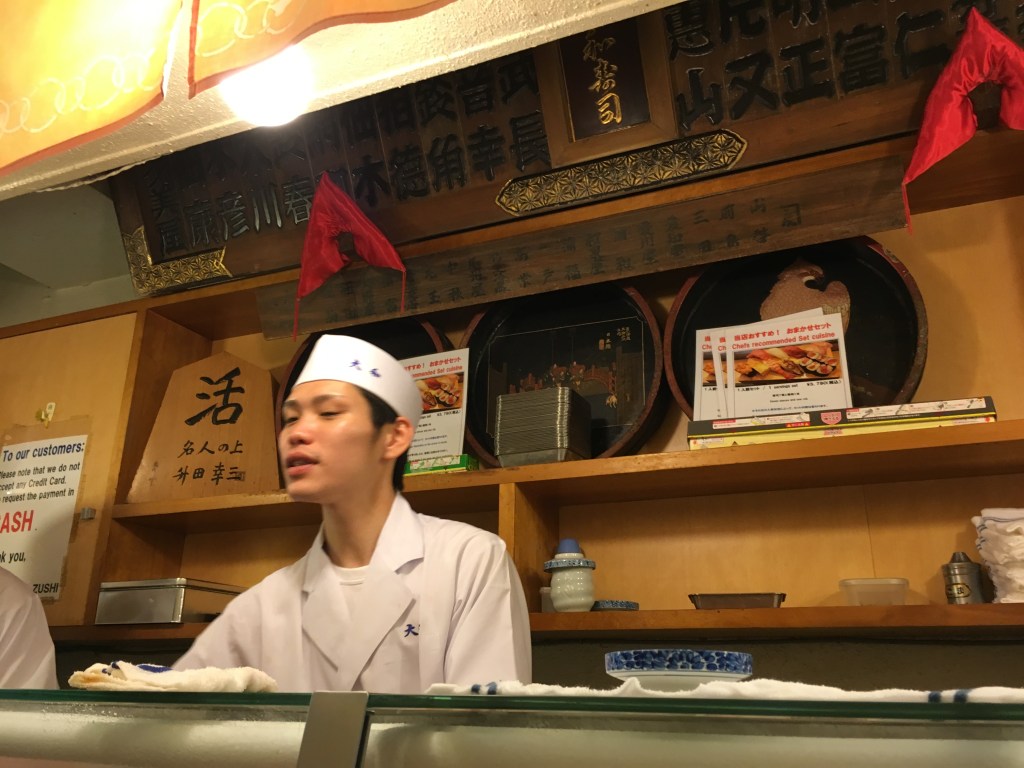
7. There is no better place to try sushi on the planet. Japan obsesses over the quality of their fish. Chefs form long standing relationships with their suppliers to source the best. Tsukuji market used (now relocated and renamed as Toyosu market) to be the place that enabled chefs to identify those suppliers.The 4am tuna auctions with its eye watering bids are testament to that obsession with quality. No wonder Tokyo has the most 3 Michelin star restaurants in the world. There a few omakase joints adjoining the market, most notably Sushi Dai and Sushi Daiwa. After a long wait, I was glad to try my first ever sushi at Daiwa. The Itamae (or the master sushi chef) contrary to popular opinion was very friendly and paid close attention to our likes/dislikes through the courses. 

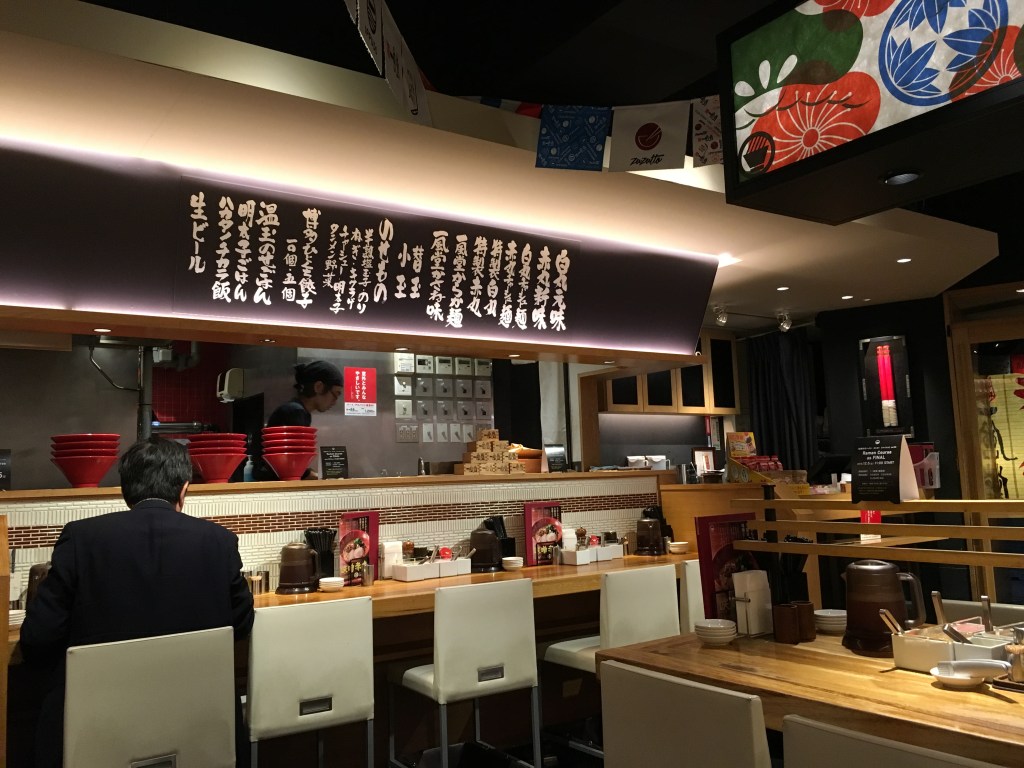
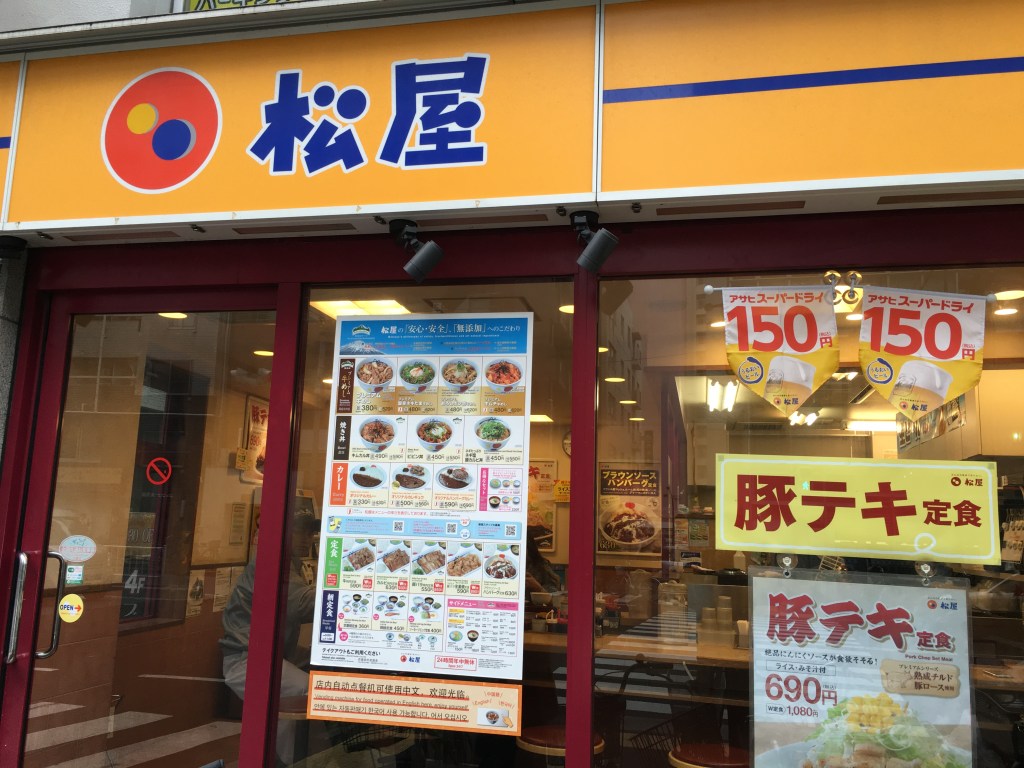
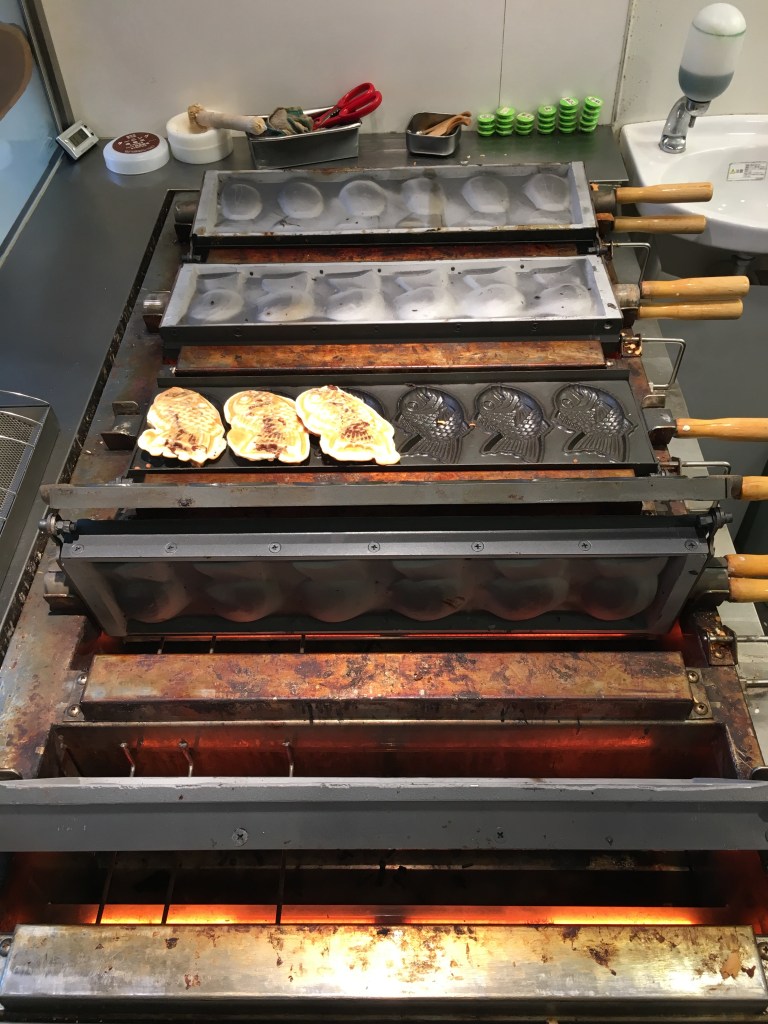
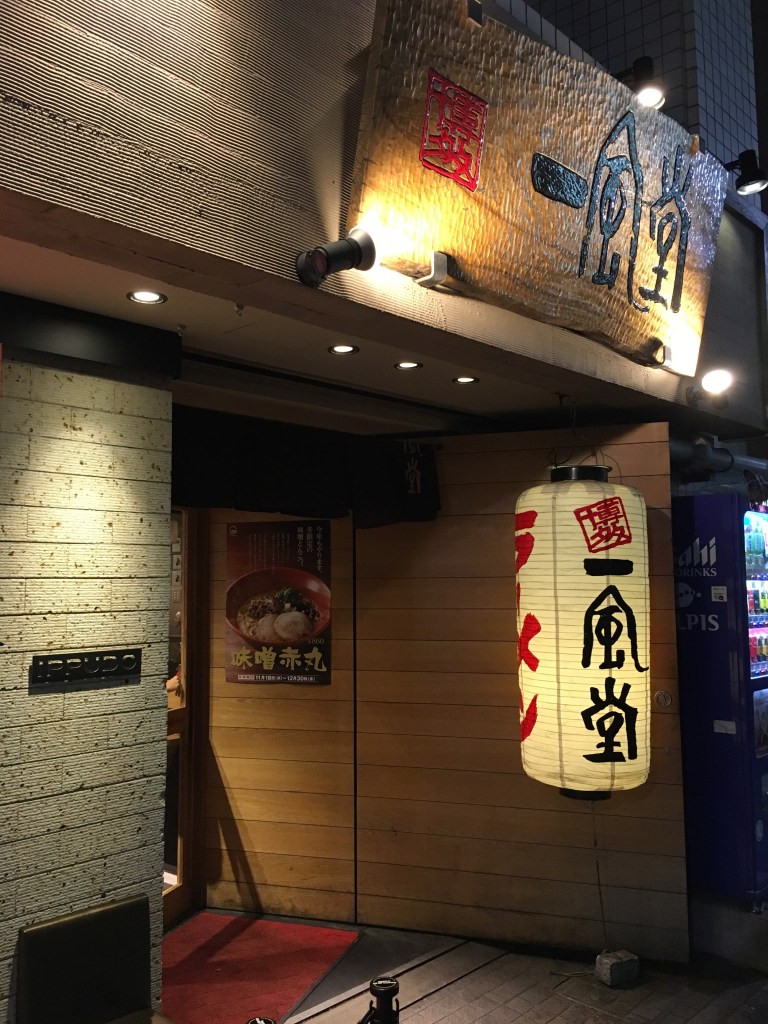
8. After sushi, Ramen is the next big Japanese export. Due to my dietary preferences, I desperately searched for non-pork broths and it led me to Ippudo in Ginza. The chefs were surprised by this odd request for a vegetarian broth but did oblige. It underwhelmed but I am sure that it was a far cry from the traditional tonkotsu broths. The Japanese breakfast experience was much more memorable. It was fun to order a real meal on a very opinionated automated kiosk. The set consisted of a semi boiled egg, cold tofu, miso soup, salad, steamed rice and smoked fish. I couldn’t point to anything that was unhealthy. May be this is Japan’s secret to live a healthy long life. Onigiri (rice balls wrapped in nori) and Ichigo Daikfuku (whole strawberry mochi) from the neighborhood 7-11 was my stand by meal. It worked out ok because there were enough street snacks to fuel up on the go. Taiyaki is especially a popular one, it is a fish shaped cake filled with red bean paste. It is typically made to order on hot coals. They aren’t too sweet so I didn’t feel guilty gobbling up a few at a time. There is no tipping anywhere and no expectation whatsoever. It was so refreshing to experience this coming from the West. 
9. There is also this fascination with high quality patisseries – Maison Kayser, Pierre Herme, Dominique Ansel, Sadaharu Aoki all have flashy outlets in Tokyo. So, there is no shortage of viennoiseries or pastries if you are a sweet tooth.
10. Tea and Zen buddhism both were Chinese imports to Japan. However, it was the Japanese that blended tea drinking and Zen principles to create a spiritual experience around it. Sen no Rikyu is widely credited for having created this rustic style referred to as Wabi-Cha. There are still traditional tea houses that are trying to preserve this tradition albeit with a few subtle twists. As a visitor, the tea ceremony at Hamarikyu Gardens is good way to get acquainted with the Japanese tea culture. Tea is served in a traditional tearoom with tatami floor surrounded by a lush garden. The ceremony is relatively informal. So, the tea is not not prepared in front of the guests but there are still some explicit etiquette definitions. Here are a few –  the wagashi(Japanese confection) served along with the tea has to be eaten first. The tea bowl should be picked up with the right hand, played on the left palm and turned so that front of bowl is no longer facing the guest. Nevertheless, it was certainly a very soothing activity.

10 things about Tokyo, Japan

7 things about Rome, Italy

1. There are many platitudes about Rome but for a living breathing city it has incredible amount of history at every nook and corner. The survival of all those ancient Roman monuments is surprisingly due to Rome’s utter irrelevance in the medieval period when the city was almost depopulated. But the greatest contribution of the Roman Republic (509 BC) was abolishing kingship and transferring power to elected representatives called consuls. That legacy is preserved today in the emblem of Rome – SPQR “Senātus Populusque Rōmānus” translated as “The Senate and People of Rome”. 

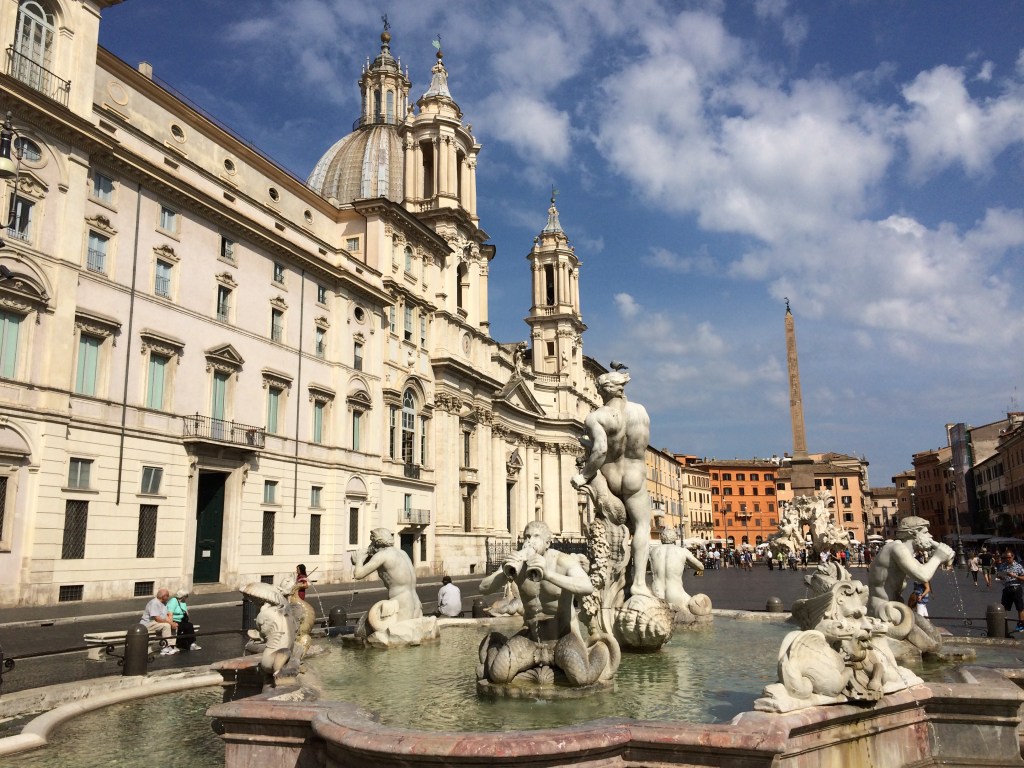
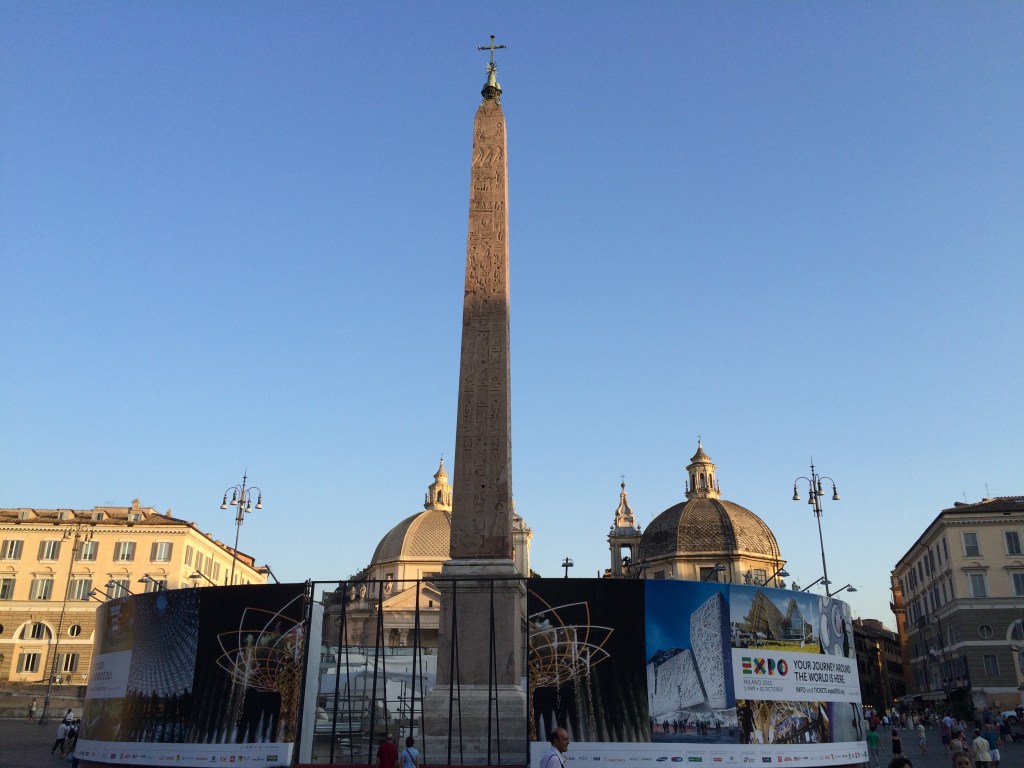
2. Piazza is the Italian equivalent of a market square. Similar to the Spanish word “Plaza, it is derived from the Greek word plateia (broad street). Piazzas define Rome’s urban landscape. Piazza di Spagna is known for its grand steps that were built to connect the Trinita De Monti church above the hill to the Spanish embassy to the Holy See in the square. Piazza Navona is decked with baroque grandeur best represented by Bernini’s Fountain of the Four Rivers water fountain. Piazza del Popolo (People’ Square) is by far the largest one in Rome and is similar in layout to the renowned Piazza San Pietro in the Vatican. The larger piazzas tend to have Obelisks which were mostly brought in from Egypt. 

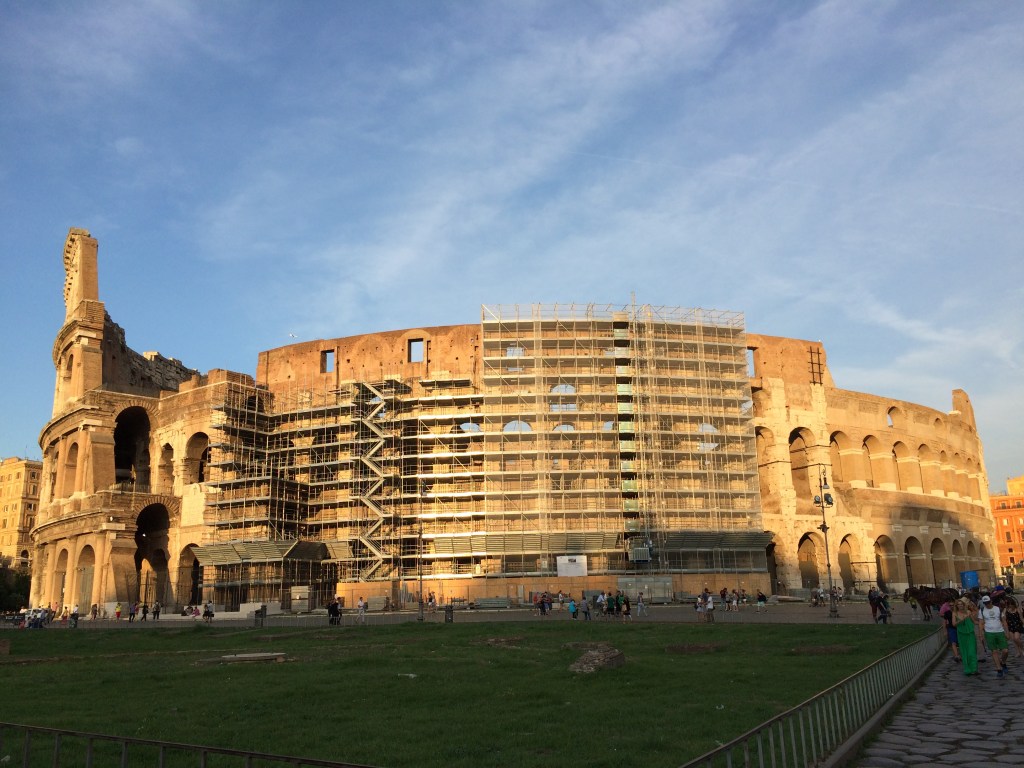
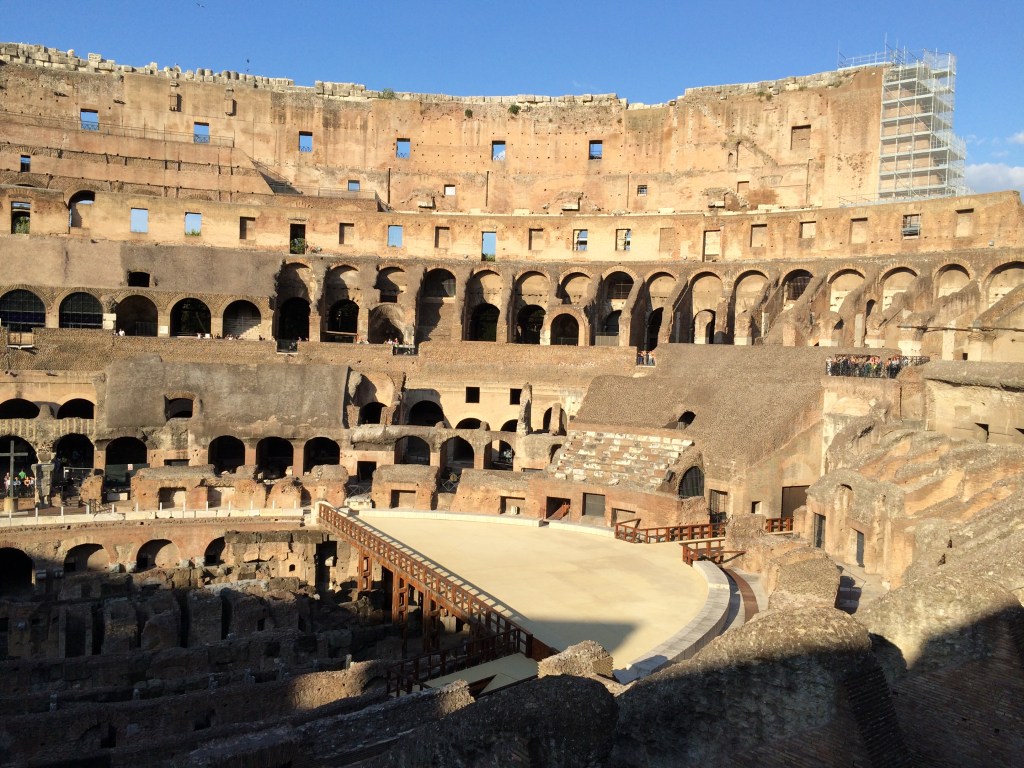
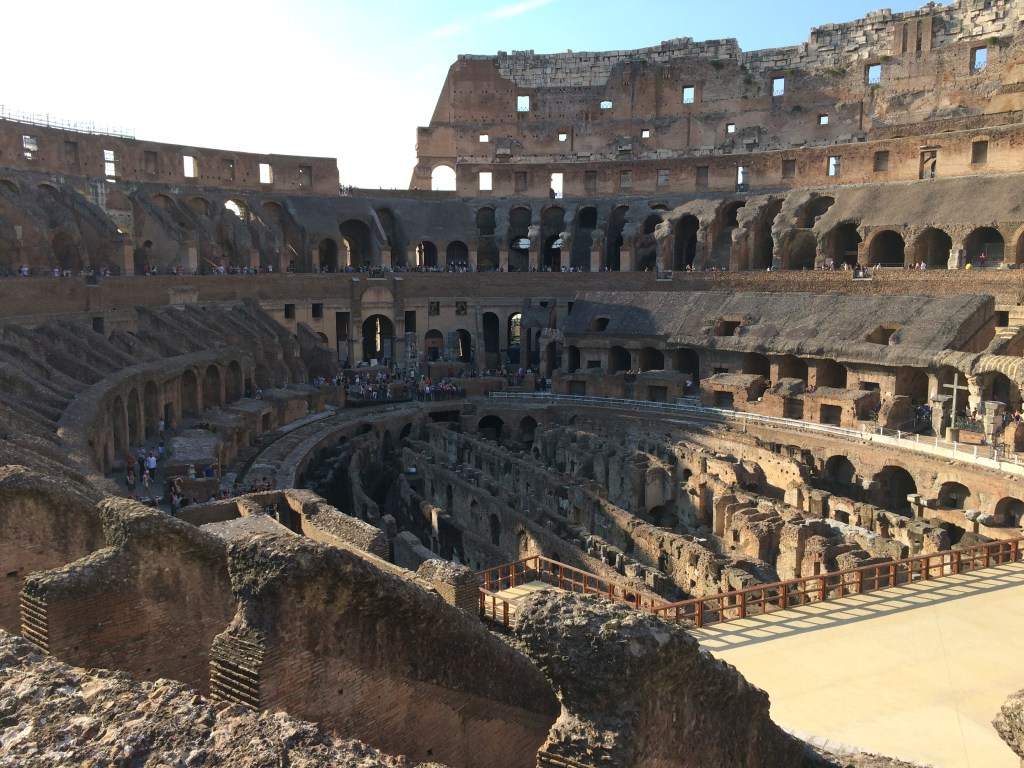
3. Colosseum is undoubtedly the most recognized monument in the city of Rome. It is the mother of all theaters and stadiums in the world. Built to accommodate an audience of about 50,00 to 80,000 spectators, it was used to stage everything from gladiatorial contests, mock sea battles and re-enactments of Roman mythology.The hypogeum (“the underground”) consists of cages and tunnels meant for staging the animals and gladiators before the show. However, after the medieval era it seized to used for entertainment purposes and withered with time. In modern day, it is a popular tourist attraction. The tours are super informative and piques one’s interest in understanding the early Roman era. 

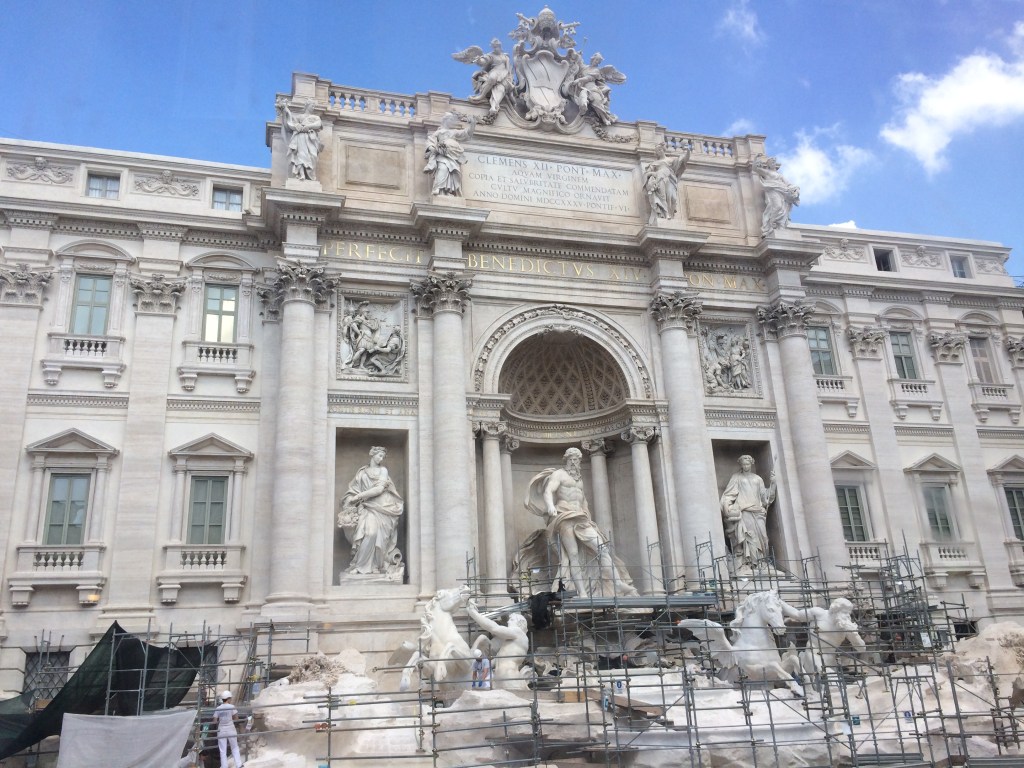
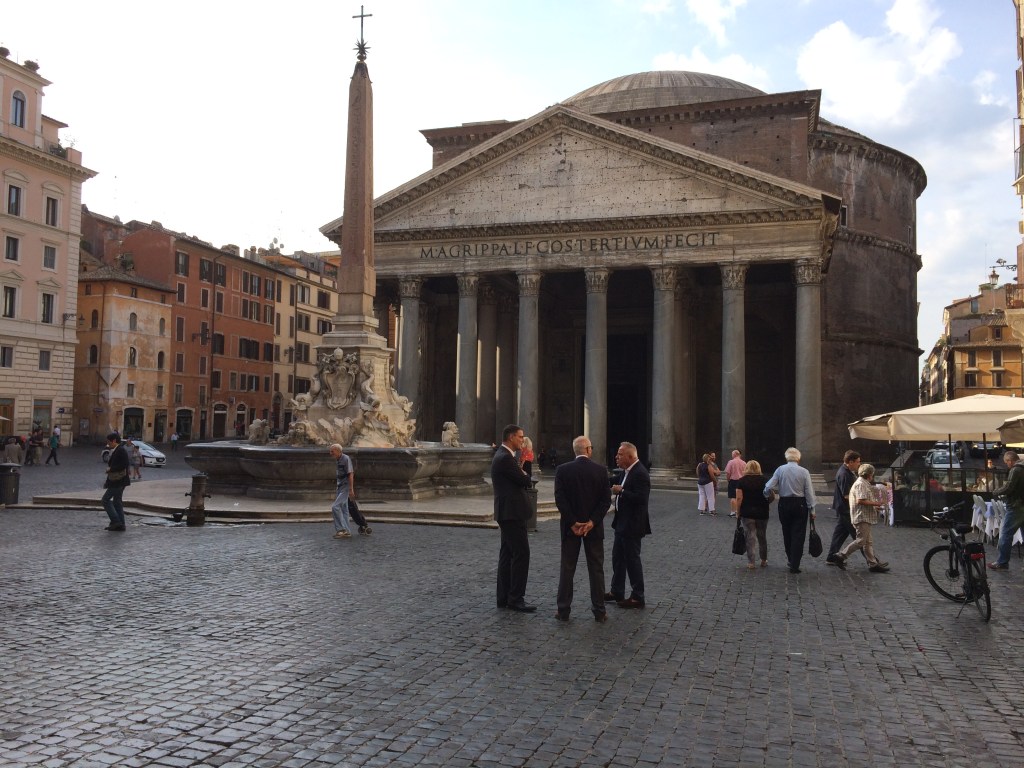
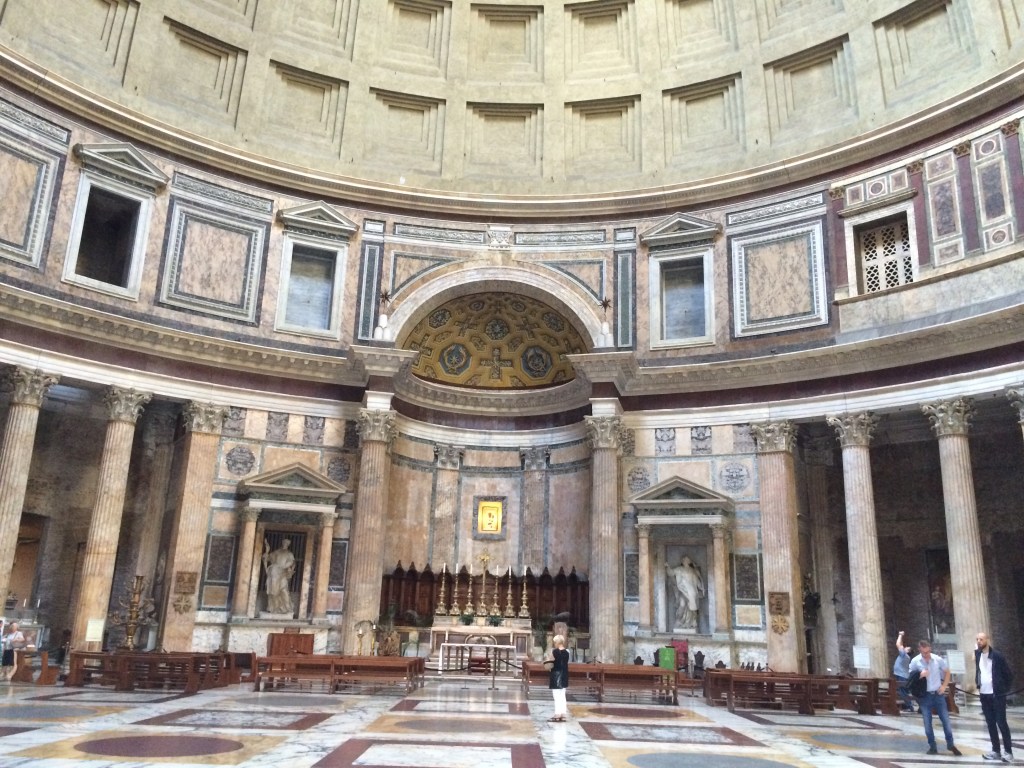
4. Trevi is one of the most famous fountains in the world brimming with baroque excess . The name is derived from the Latin word Trivium (intersection of three streets). The fountain is also famous for its coin throwing. It is estimated that US$1.5 million was thrown into the fountain in 2016. Pantheon is an underrated but inspiring monument that has survived since 126 AD. With its portico of Corinthian columns under a pediment, Pantheon resembles a Greek temple. In fact, it was originally a Roman temple that was later converted to a Church. Also, the word Pantheon is derived from the Greek word Pantheion translated as Temple of Gods. The interiors are grand but I was awestruck by the coffered dome with an oculus (classy word for skylight). It is easy to step back in time here as it one of the best preserved buildings from ancient Roman period. 

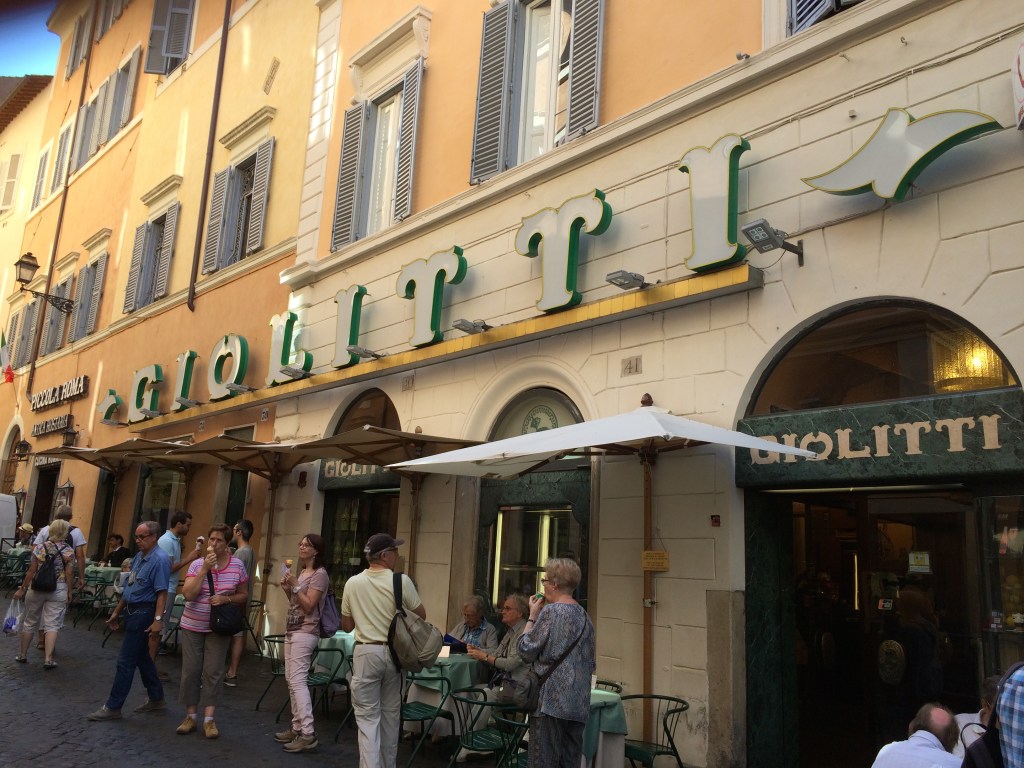
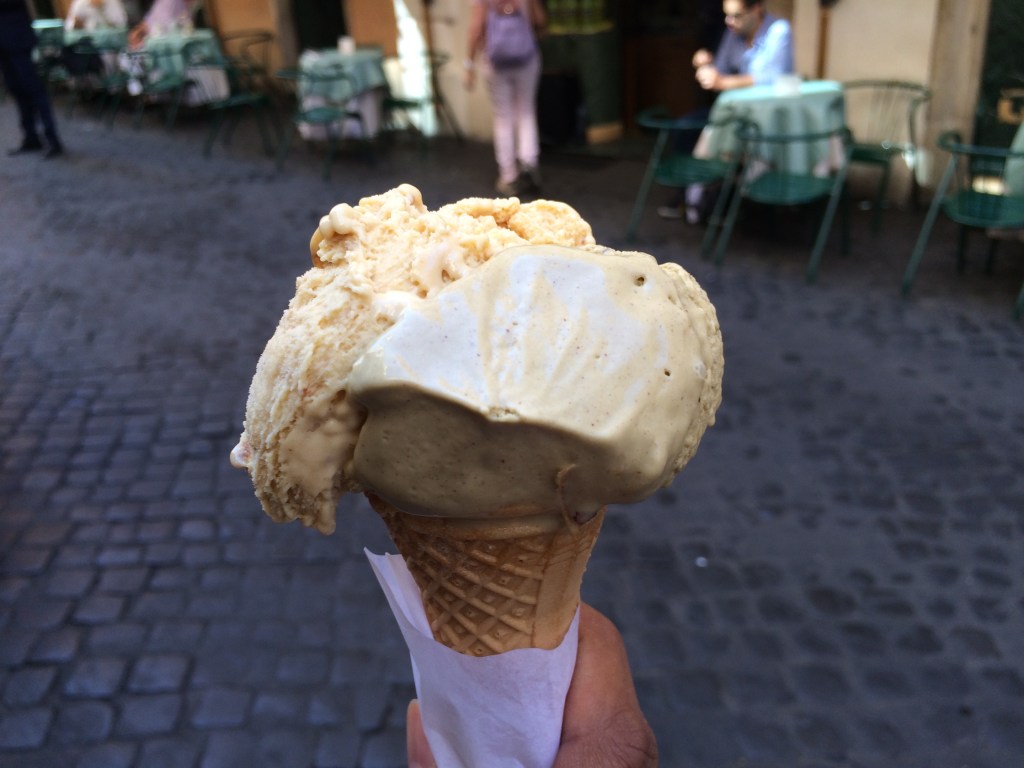
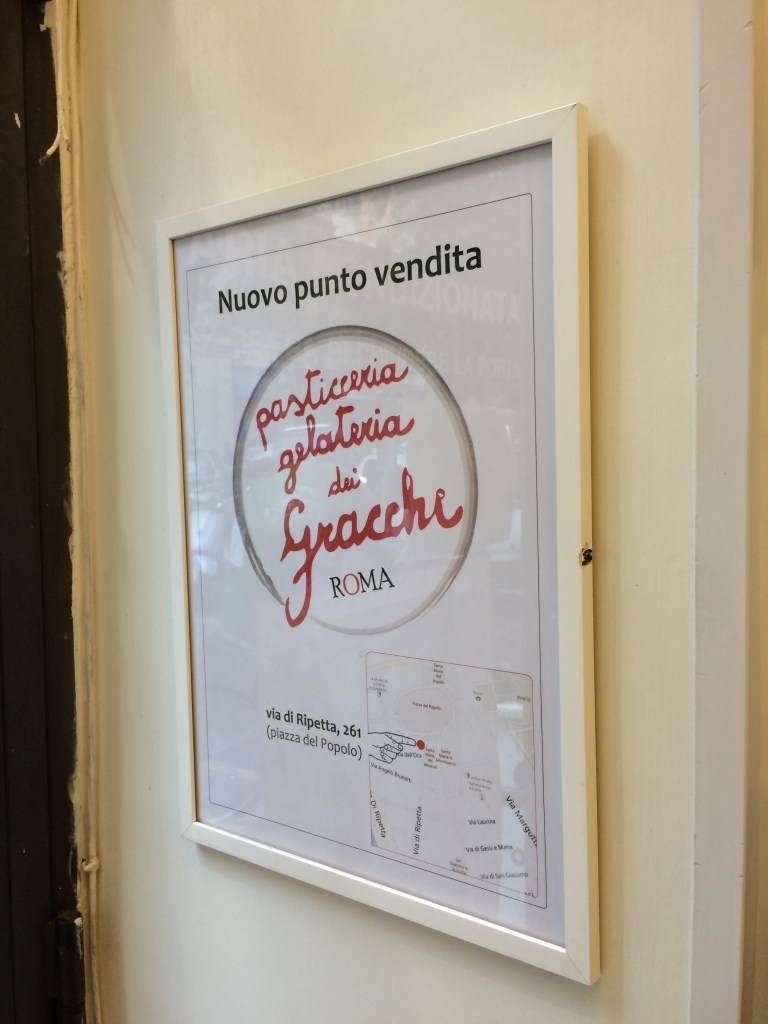
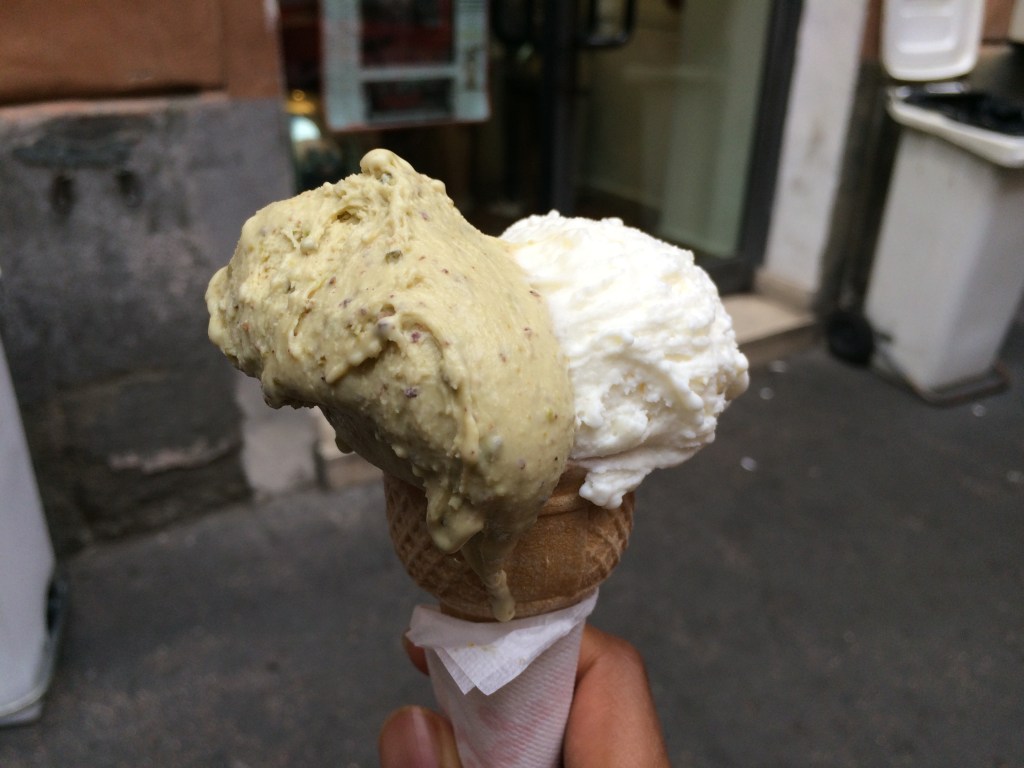
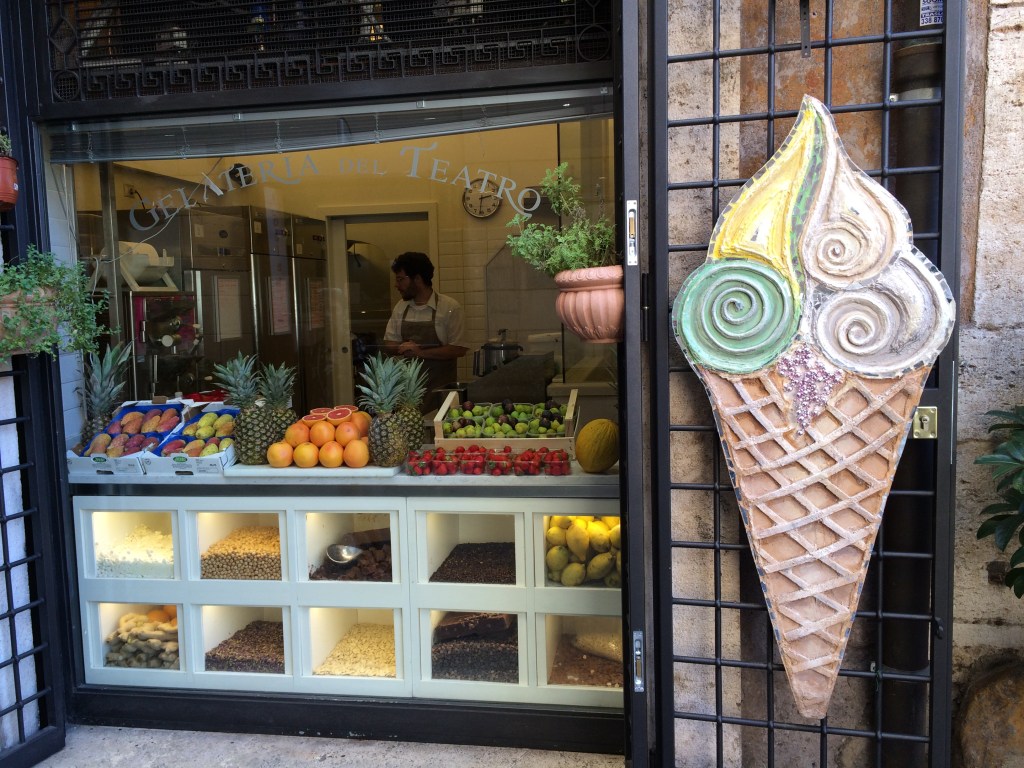
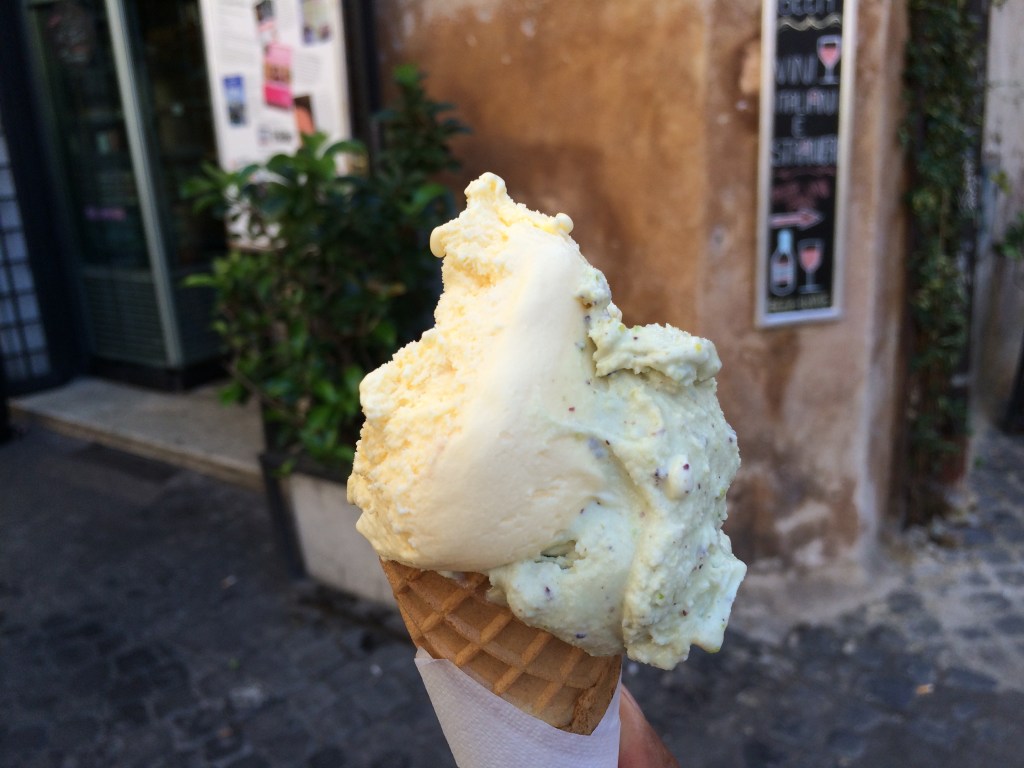
5. I was introduced to real gelato and it sort of ruined ice cream for me forever. The marquee gelato flavors like pistachio and hazelnut completely blew my mind. The intensity of the flavors and the creamy but not icy texture makes gelato very special. I had gelato almost everyday at the some of the popular spots –  Giolitti, Gelateria Del Gracci, Gelateria del Teatro, Gelateria Fassi. Giolitti and Gracci were my favorite but I couldn’t get the past the classic nut flavors despite multiple visits. 

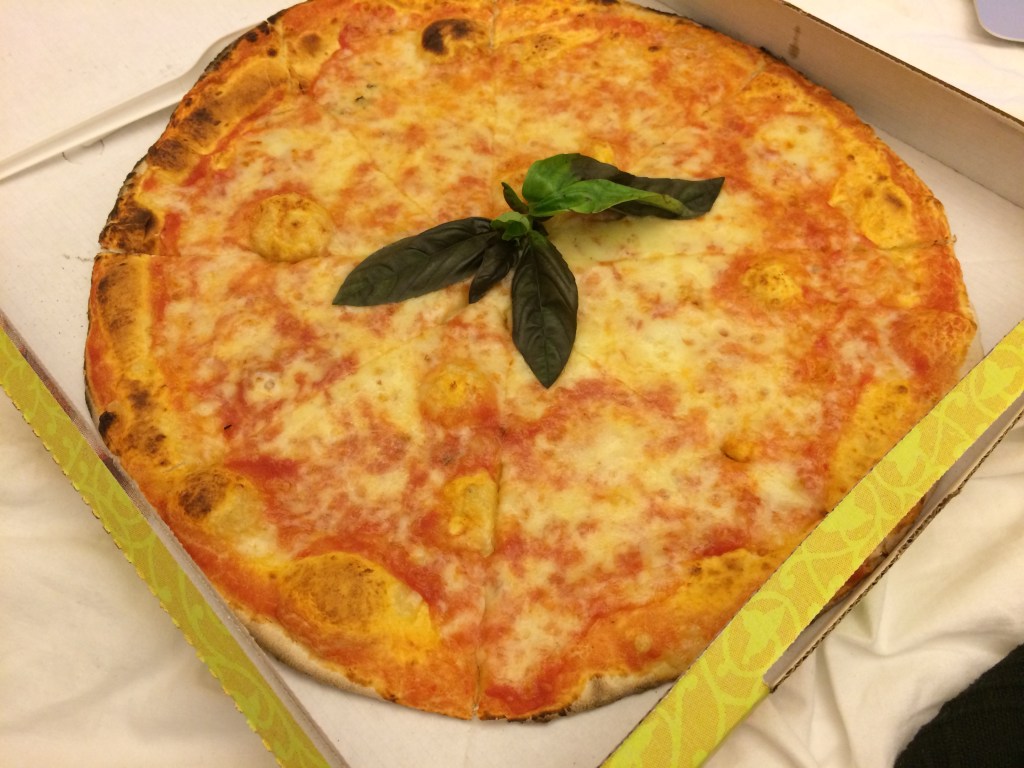
6. There are fewer things Italy makes better than Pizza. The reputation of neapolitan pizza is well deserved but the Roman version was a pleasant surprise. Most pizzerias in Rome serve pizzas with a thin crispy crust unlike their airy and chewy counterparts from Naples.   The addition of oil in the dough apparently contributes to the crispness of the base. The less common Pizza al taglio (pizza by the slice) is also very good where the colorful and fancy toppings outshine the almost focaccia like crust. It is usually sold by weight and packaged to-go. Pizzarium Bonci is a star in this category. 

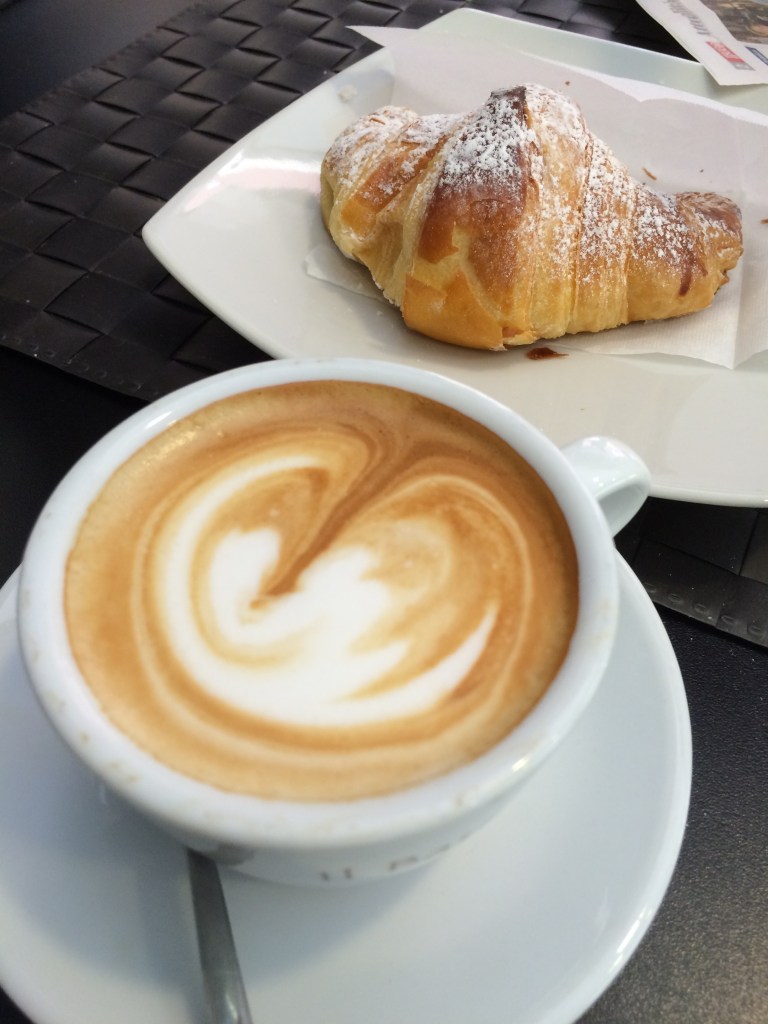
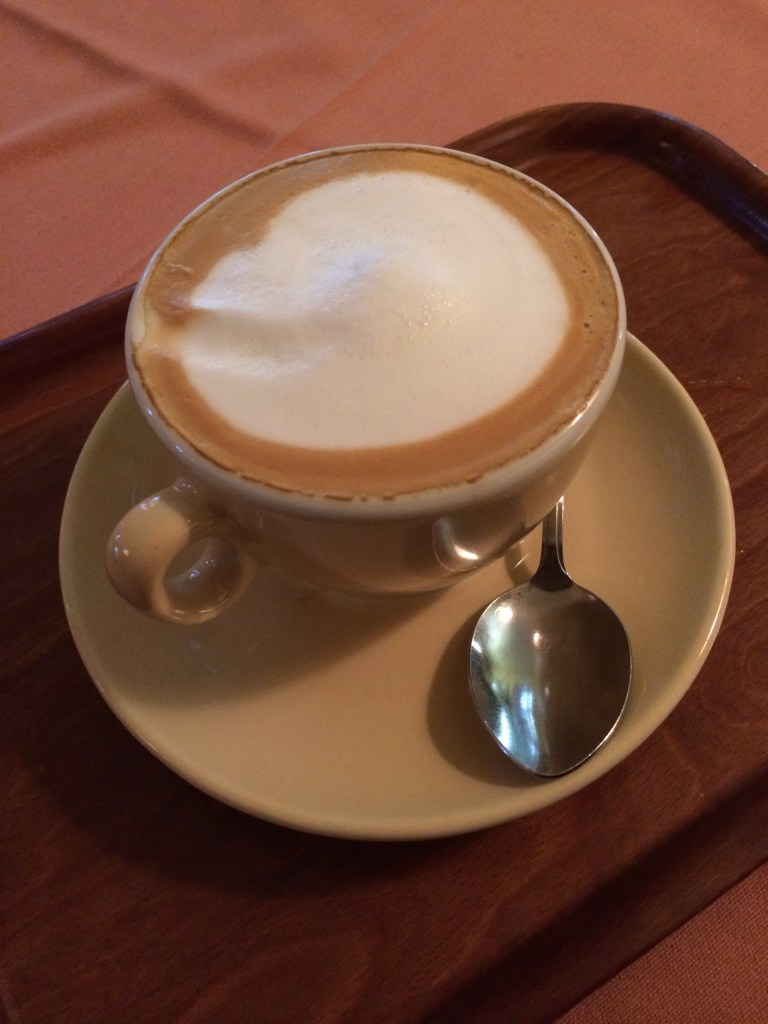
7. Cornetto is another variation of the classic Viennoiserie – the croissant. The cornetti though are sweeter, denser and less buttery. I am partial to the ones with filled with cream or custard. Paired with a cappuccino, there is hardly a better pick me up for the day. No wonder Italians standardized on the cornetto-capuccino combination for breakfast. 

7 things about Rome, Italy

7 things about Vienna, Austria

1. Vienna grew from a Roman settlement called Vindobona. It developed as a trading site and became of the capital of the Babenburg dynasty. But it was the Hapsburg dynasty that elevated the profile of the city and transformed it to a major hub.

2. The early growth strategy of the Hapsburg dynasty is classic. The Hapsburg kings acquired new territories primarily through marriage. King Rudolf I of Germany laid the foundation of the empire in 1282 when he assigned the Duchy of Austria to his sons. Maximilian I married Mary of Burgundy and added Netherlands to the empire. Philip the Handsome married Joanna the Mad of Spain, thus adding more territory in the south. Their son, Charles V inherited Austria, Spain and Netherlands. Eventually, Hapsburgs became synonymous with Austria and the term ‘monarchia austriaca’ was coined. They reigned supreme until their defeat in the First World War and were formally dissolved in 1918. 

3. The Hapsburgs left behind their architectural legacy with their regal palaces – Schonbrunn, Hofburg and Belvedere. Even though Hofburg was the principal residence of the Hapsburg dynasty and continues to be the official residence of the President of Austria, Schonbrunn is undoubtedly more grand and elegant. Being the summer palace, it has a stunning garden embellished with a gloriette, parterre and a large fountain. The palace boasts of 1440 rooms with elaborate decorative tapestries and furnishings. Public tours allow visitors to get sneak peek into the lives of the Hapsburg monarchs. The Upper Belvedere palace does share some of the characteristics of Schoenbrunn especially the facade and the garden but is better known for its art collection. These design of these palaces was overwhelmingly baroque. 

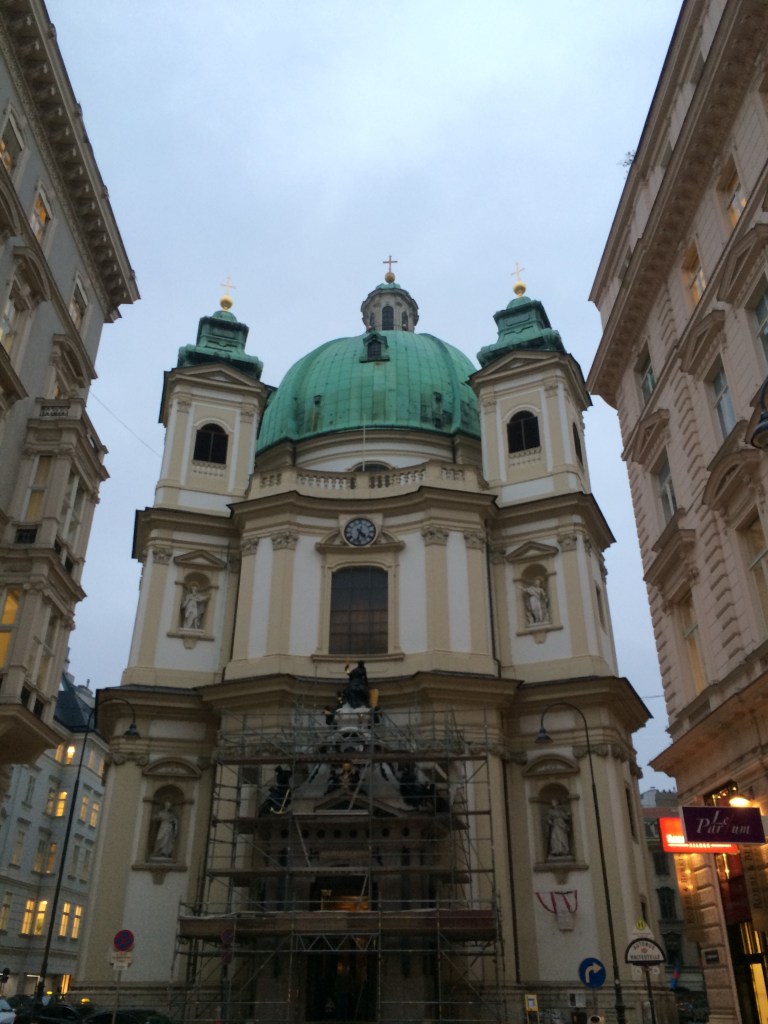
4. Austrian Baroque architecture was an Italian import. Johann Bernhard Fischer von Erlach is one of Austria’s renowned architects. He trained under Bernini and Borromini in Rome and adopted Baroque style in his designs most notably with Karlskirche and later with the  Schonbrunn palace. Johann Lukas von Hildebrandt continued Erlach’s  Baroque legacy with his designs for Belvedere Palace and St. Peter’s Church. 

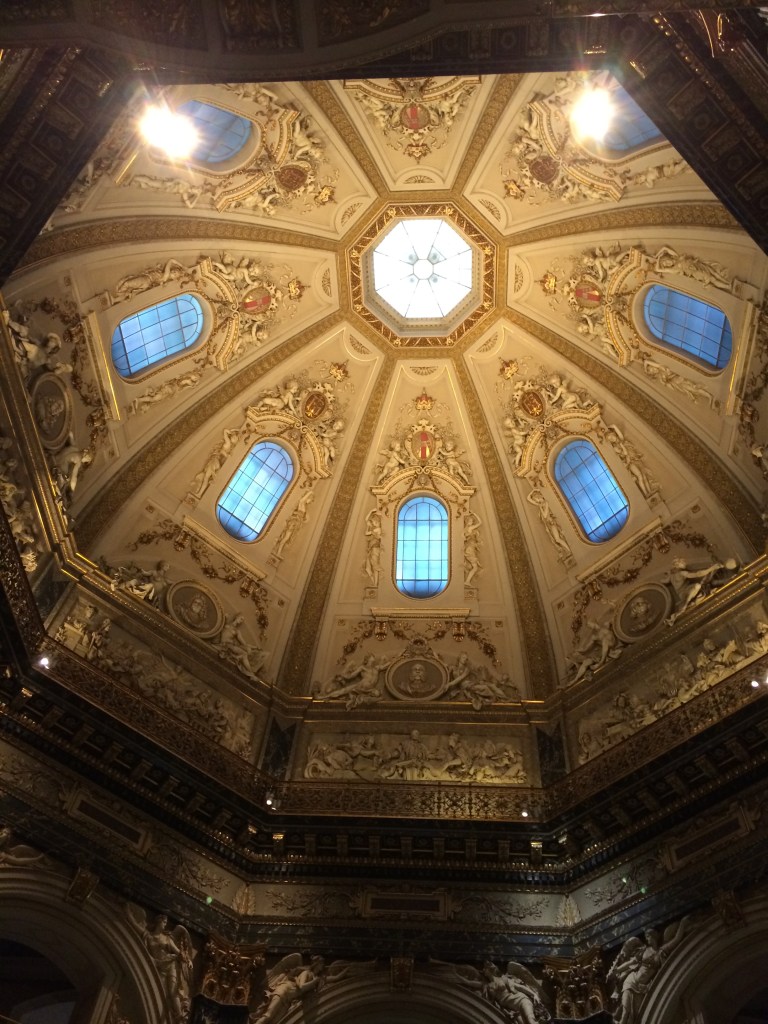
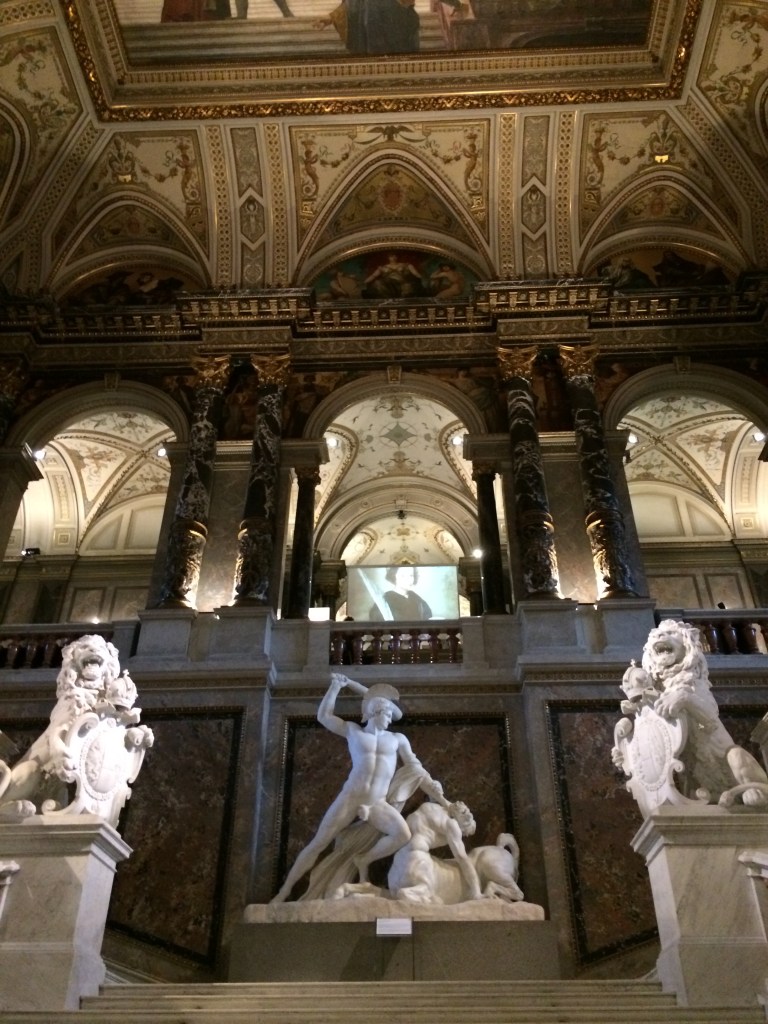
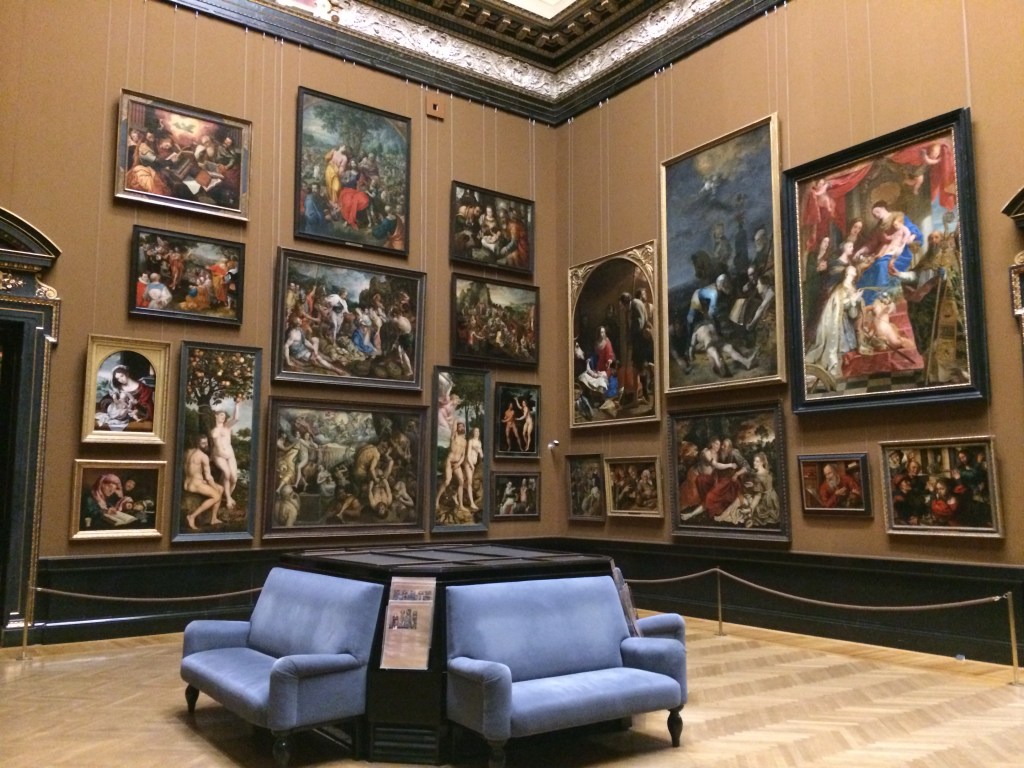
5. Vienna’s museum quarter is a sprawling complex that was originally built to serve as the imperial stables. I was more interested in the art museum across the street in Marienplatz. Kunsthistorisches Museum literally translated as Museum of Art History is the largest museum in the country. Established by Emperor Franz Joseph I with the intention of making the royal collection of the Hapsburg dynasty accessible to the general public, the museum’s design and ornamentation is on par with the palaces. The grand stairway and the cupola make it obvious that no expense was spared. The collection is massive and worth of days of exploration. The paintings from Renaissance era greats like Raphael, Michelangelo and Pieter Brueghel are highlights.

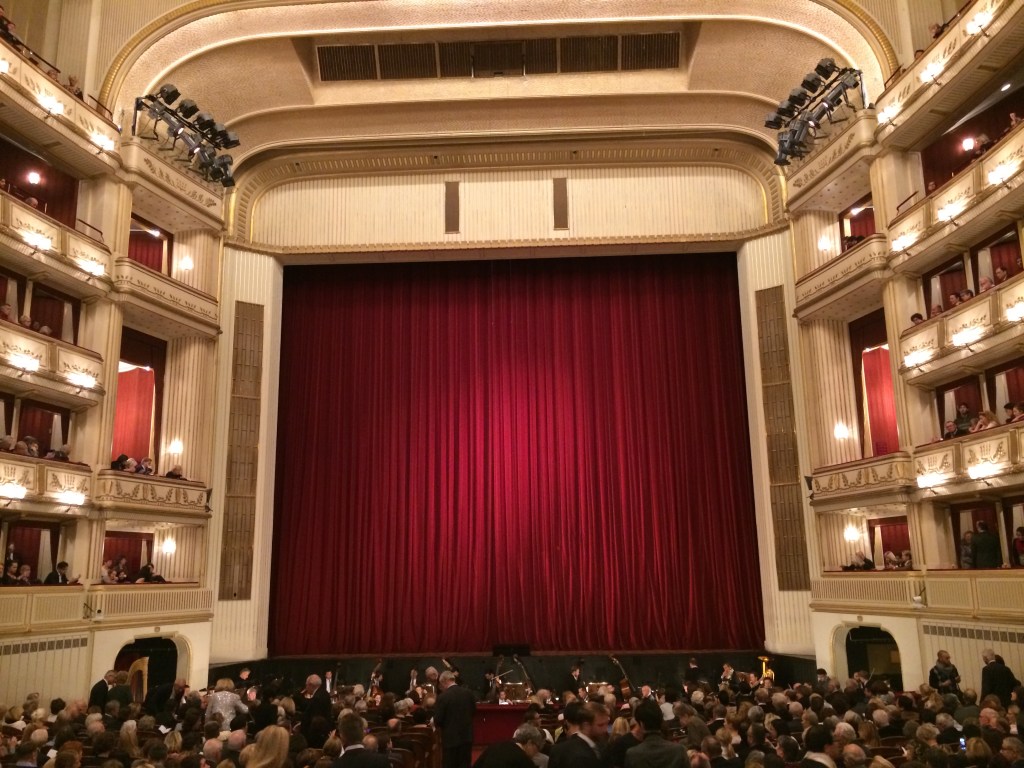
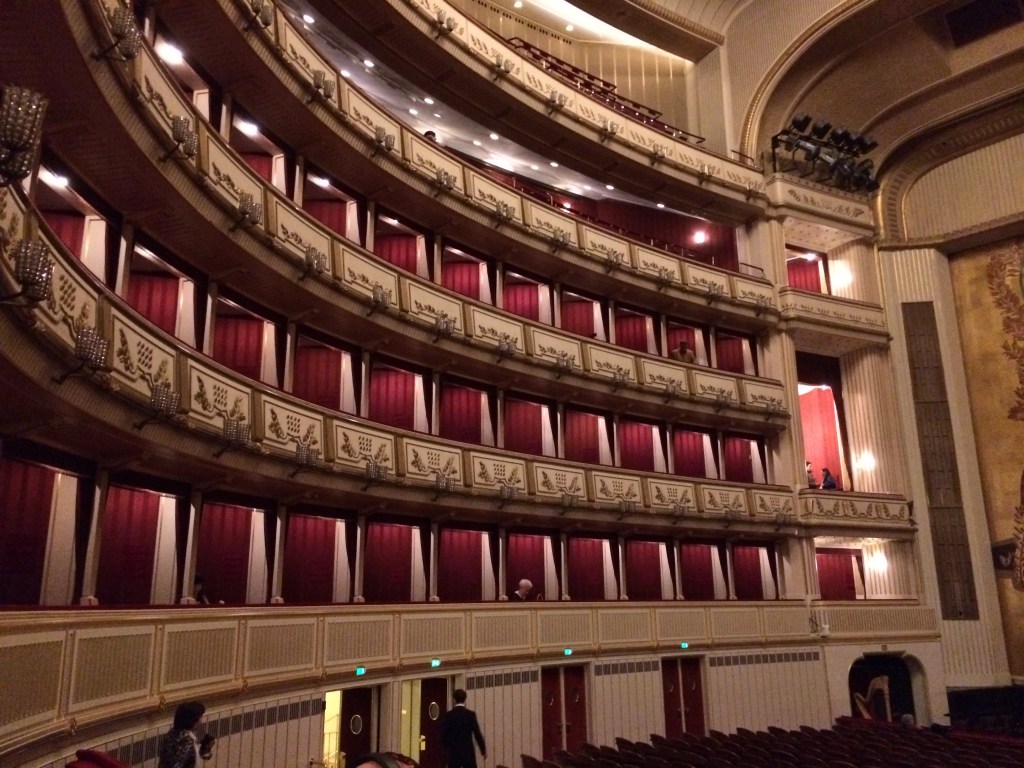
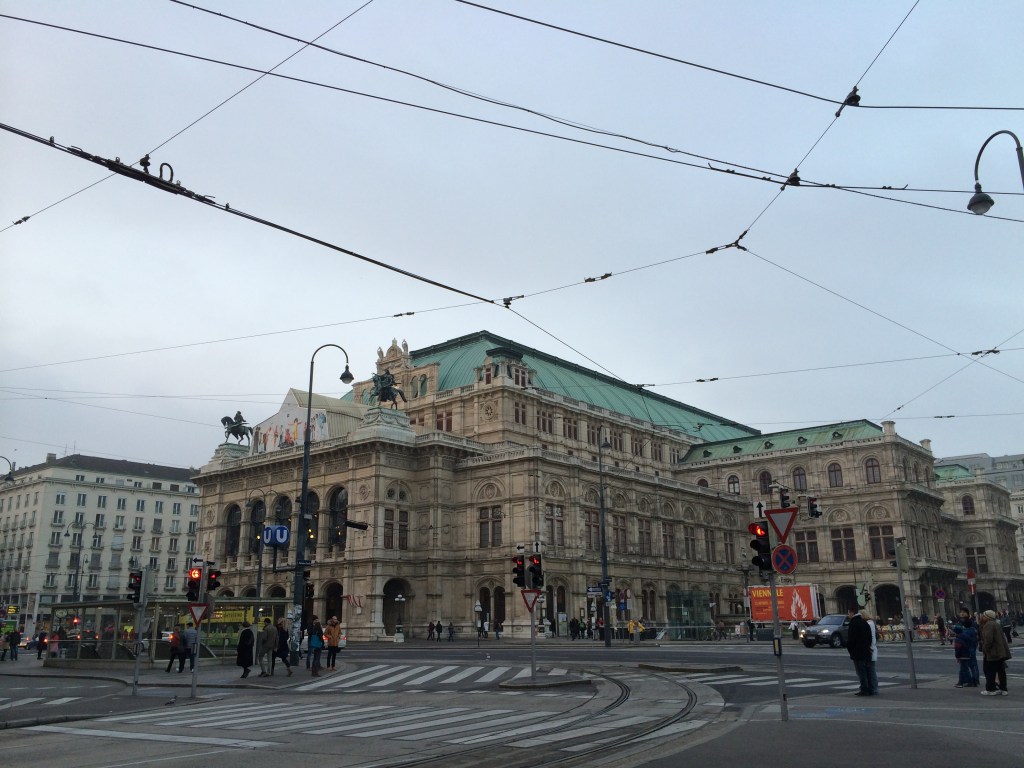
6. Viennese State Opera is a massive theatre complex that is the crown jewel of the culture venues in Vienna. Not only can it seat 1700 people, it has every bit of aristocratic flair with red velvet seats, rich tapestry and panoramic booths. I only had a chance to grab the standing room seats which are issued 90 minutes prior to the show. For 10 euros, I was able to experience Viennese opera but it was bit strenuous for a 3 act play. 

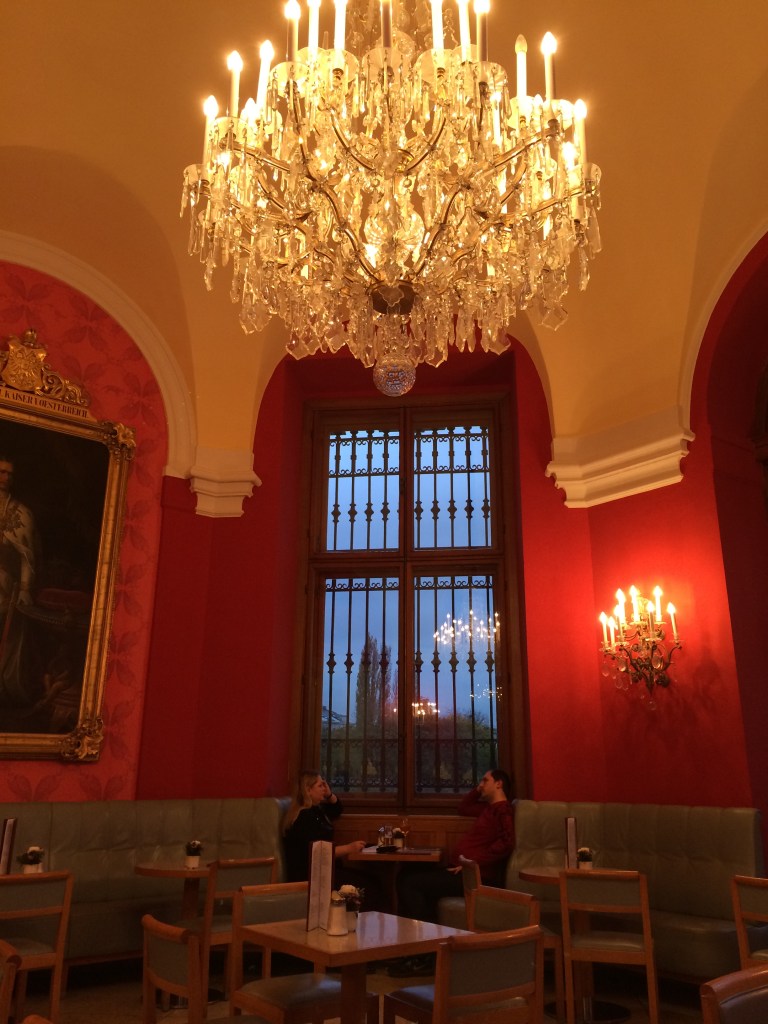
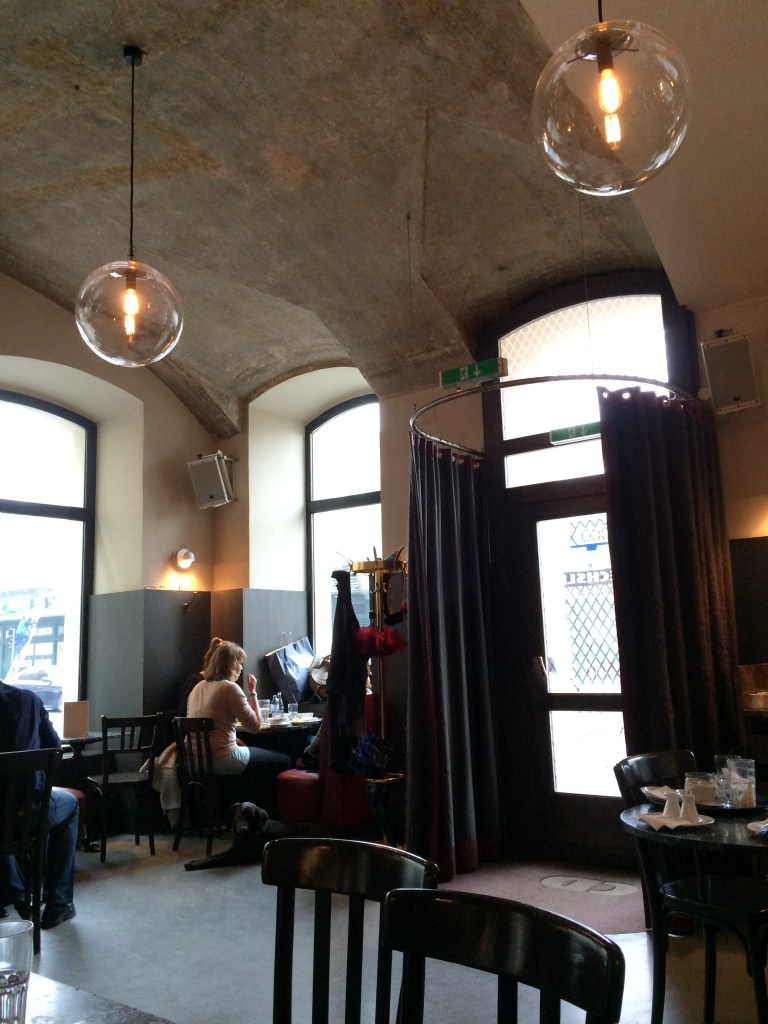
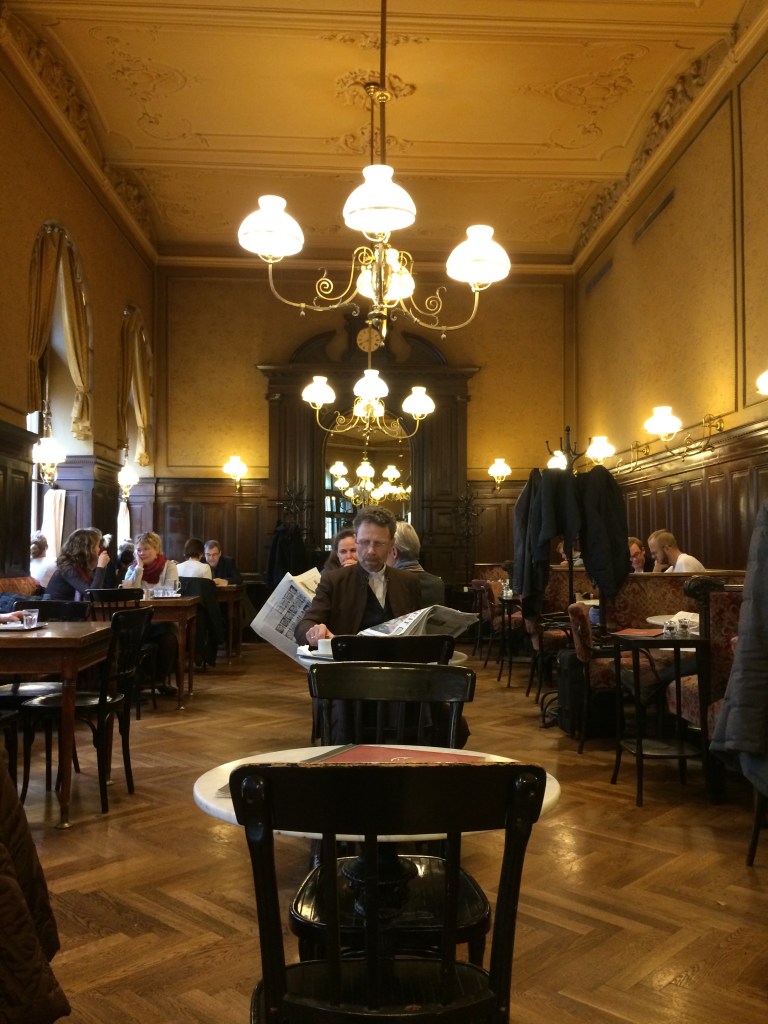
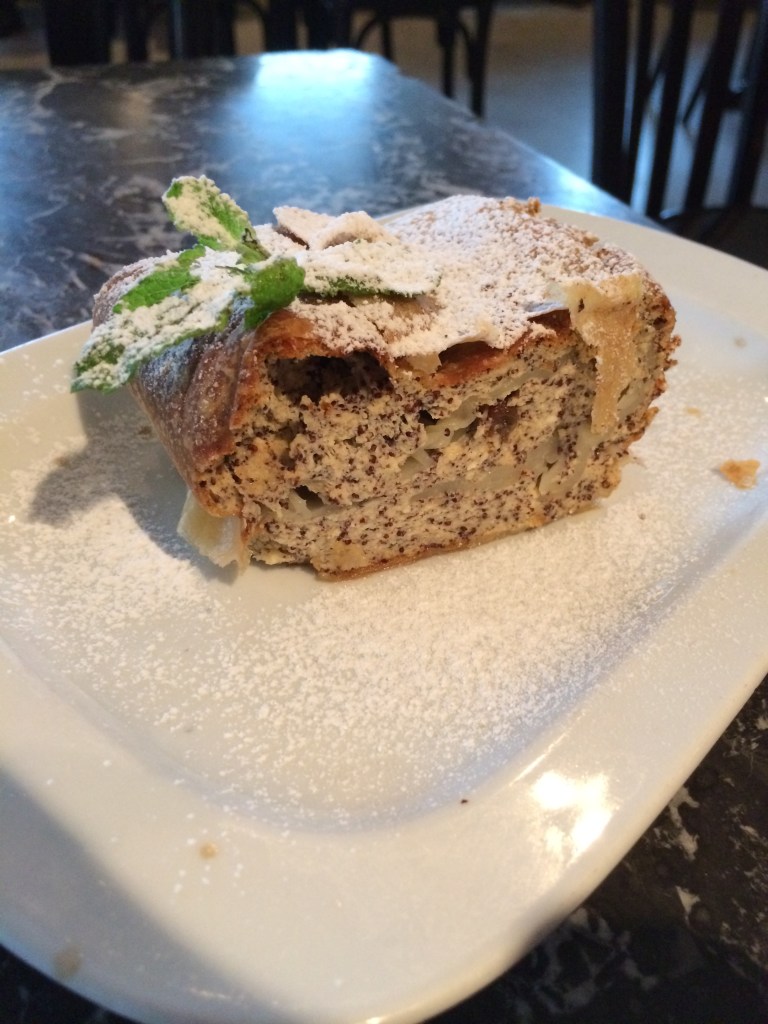
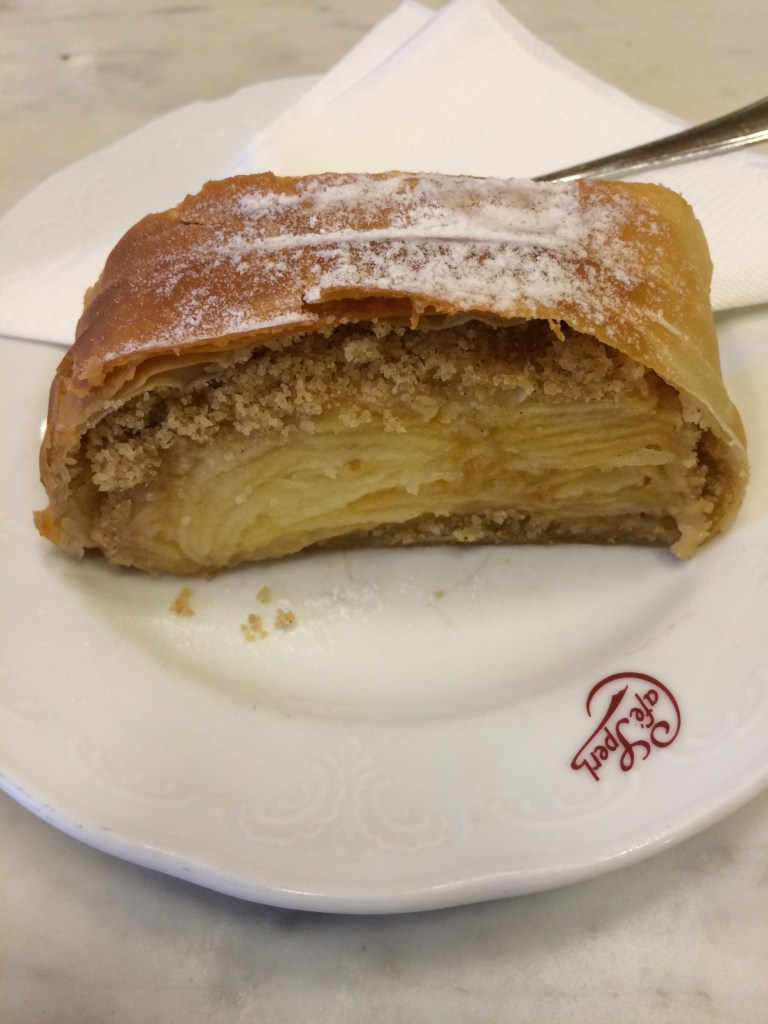
7. Today, cafes are flourishing everywhere in the world serving coffee, food and a convivial atmosphere to meet and socialize. But Viennese coffee houses had been so for hundreds of years now and incredibly proud of it. So much so that Viennese coffee house culture was included by the UNESCO in the national inventory of intangible cultural heritage.The Austrians have to thanks the Ottomans for introducing then to coffee on way or the other. Legend has it that one Mr Georg Franz Kolschitzky discovered the magic beans left over by the Turks and started the a cafe in the city. However, the first coffee house in Vienna was actually opened by an Armenian Diodato. He got this expertise from his home country which unsurprisingly also happened to be part of the Ottoman empire.  Coffee houses in Vienna are about practicing slow life. Part of the allure is in the regal old school old ambience that coffee houses like Cafe Dreschler, Cafe Sperl, Cafe Hawelka have managed to preserve till today. The high ceiling embellished with grand chandeliers, cosy interiors and delicious strudels. It was as romantic as it sounds. The tradition of tendering change from a purse was very unique.
7 things about Vienna, Austria

7 things about Vatican City

1. Vatican is a city-state and the smallest one at that with an area of just 49 hectares and resident population of 825. However, it is a sovereign entity recognized by international law governed by the Holy See. Named after the Vatican hill on which it is situated, the city state was born in 1929 because of the Lateran Treaty which put to rest a long standing sovereignty dispute between the Pope and the Republic of Italy. 

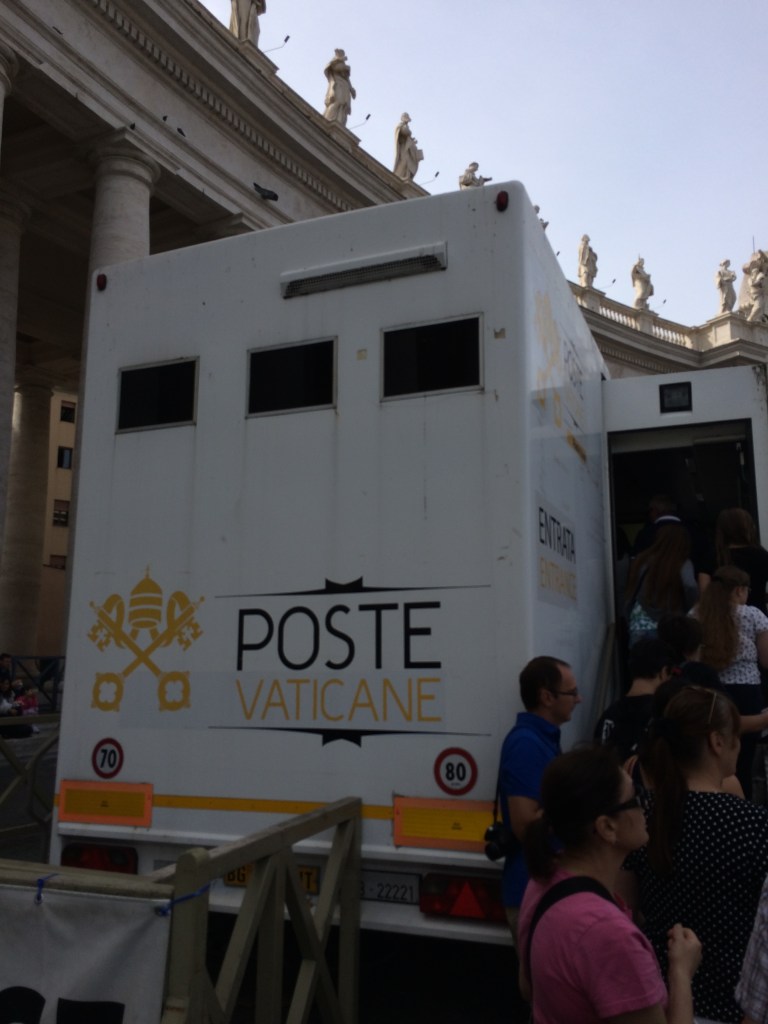
2. The economy of Vatican City is supported by the sale of stamps, coins, souvenirs as well as admission fees to Vatican museums. There is even a post office in the St Peter’s plaza that is popular with visitors to mail postcards back home. However, the budget of the Holy see is entirely different. It is funded by donations collected from Catholics worldwide as well as a slew of investments in real estate, stocks and stakes in Italian companies. 

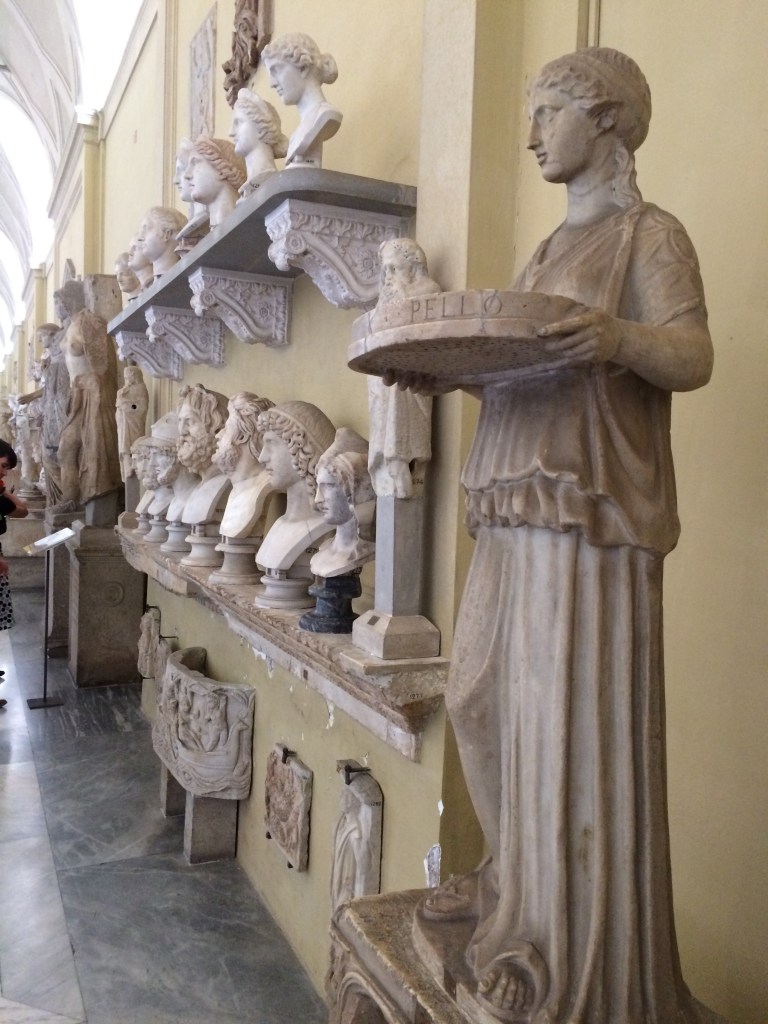
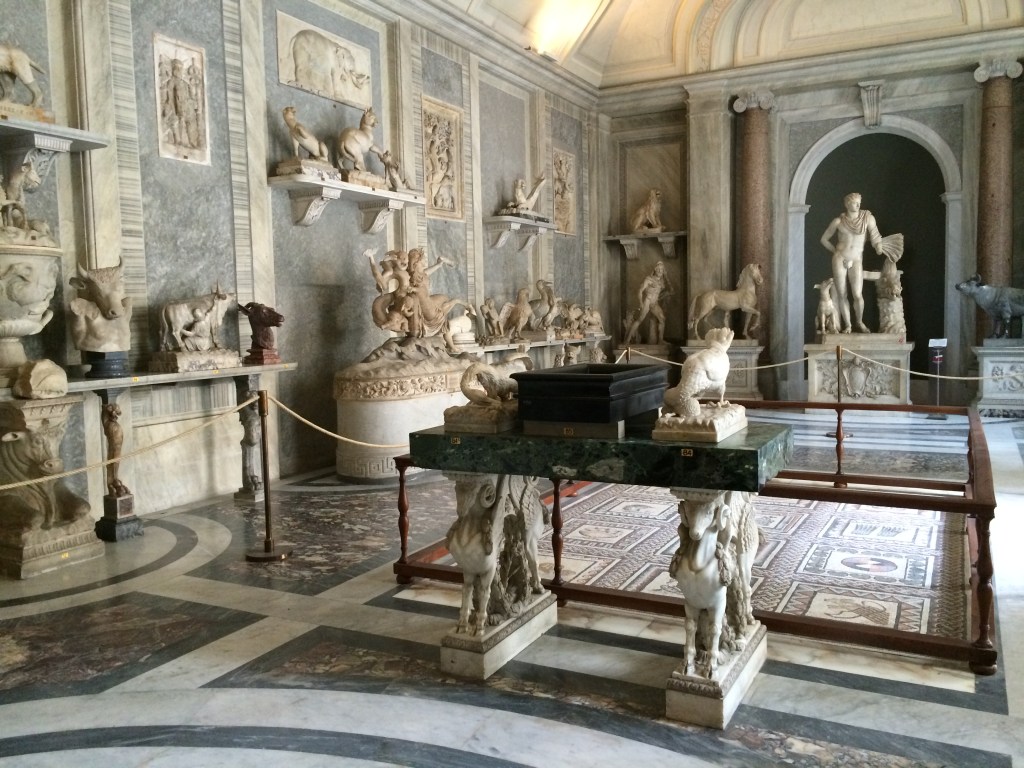
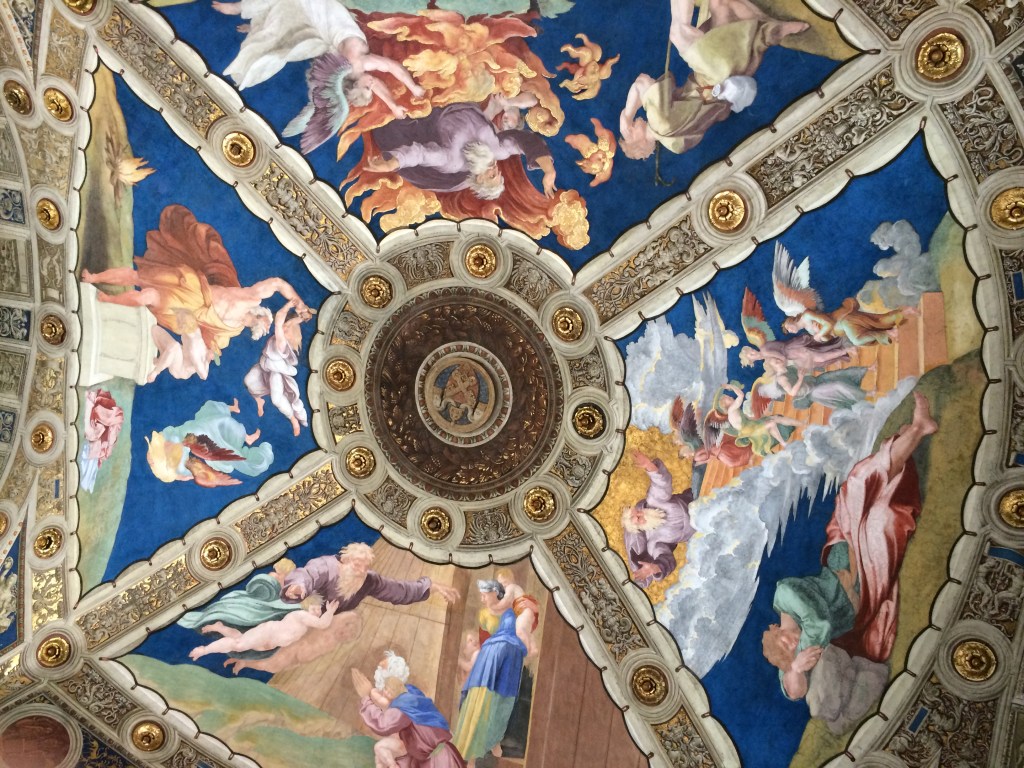
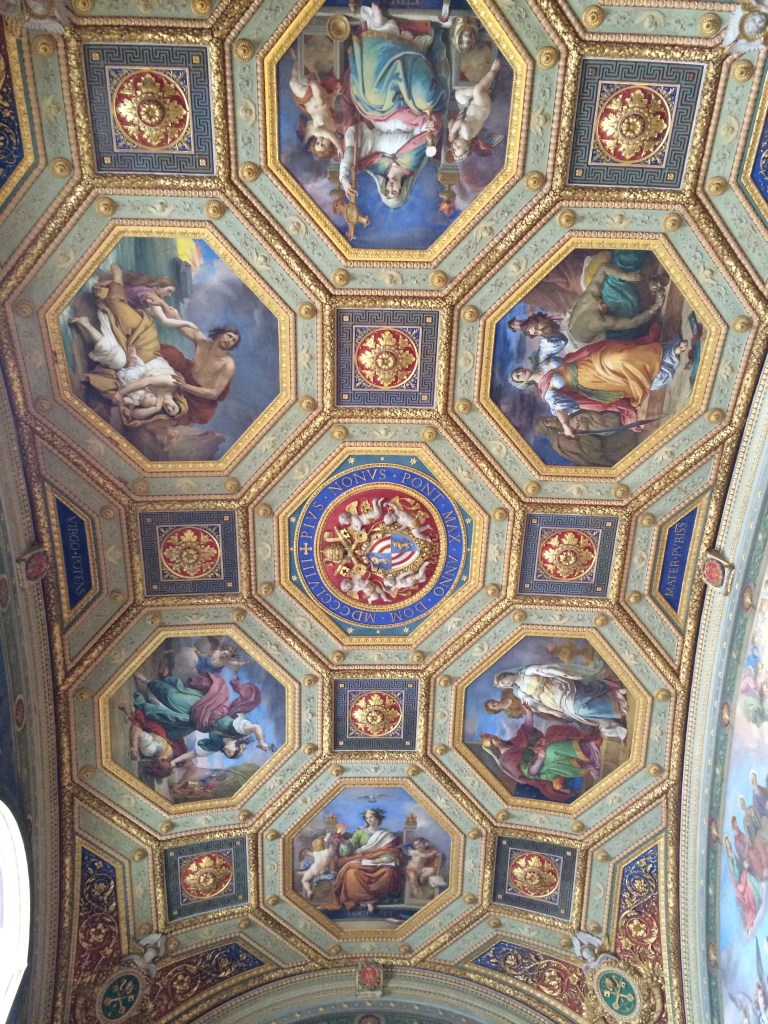
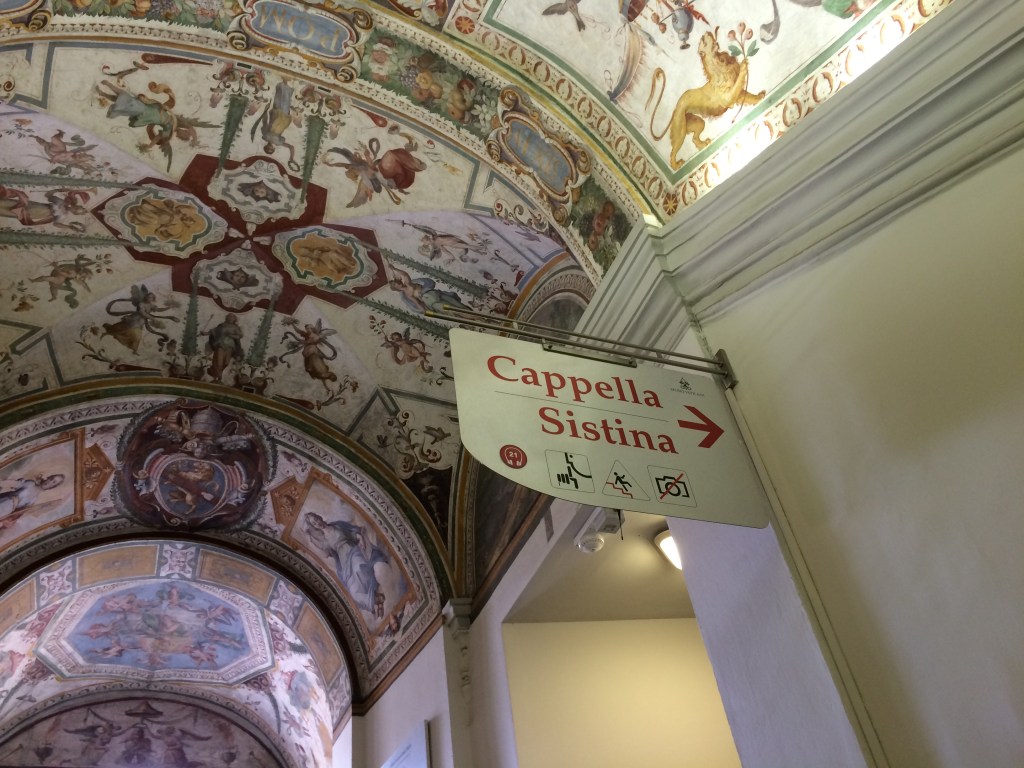
3. Vatican Museum is a wealth of paintings from important artists across multiple eras. The frescoes in Raphael rooms is one of the greatest works of the  influential Renaissance painter, Raffaelo Sanzio.One could spend days if not months in the museum taking in all the art if not for the unrelenting crowds. Unsurprisingly, it is the fourth most visited museum in the world. As for me, I couldn’t take my eyes off the ceilings. They were equally studded with art. 

4. Sistine Chapel located in Apostolic palace is considered the epitome of the Renaissance era art thanks to all the amazing frescos from greats like Botticelli, Peruguino, Rosselli, Pinturicchio and Michelangelo. Sistine Chapel was originally called the Great Chapel, it was renamed in memory of Pope Sixtus IV who led the restoration and led its first mass in 1483. It was only under Pope Julius almost 25 years later did Michelangelo paint the ceiling frescoes. He returned to create his Magnum Opus ‘Last Judgment” which survives till date. It is glorious but the amount of nudity in the painting can be a bit jarring given it is in one of the most exclusive places of the Catholic Church. Sistine Chapel is also the site of the Papal conclave, the process in which Popes are chosen. To preserve all of this for future generations, photography is prohibited. 

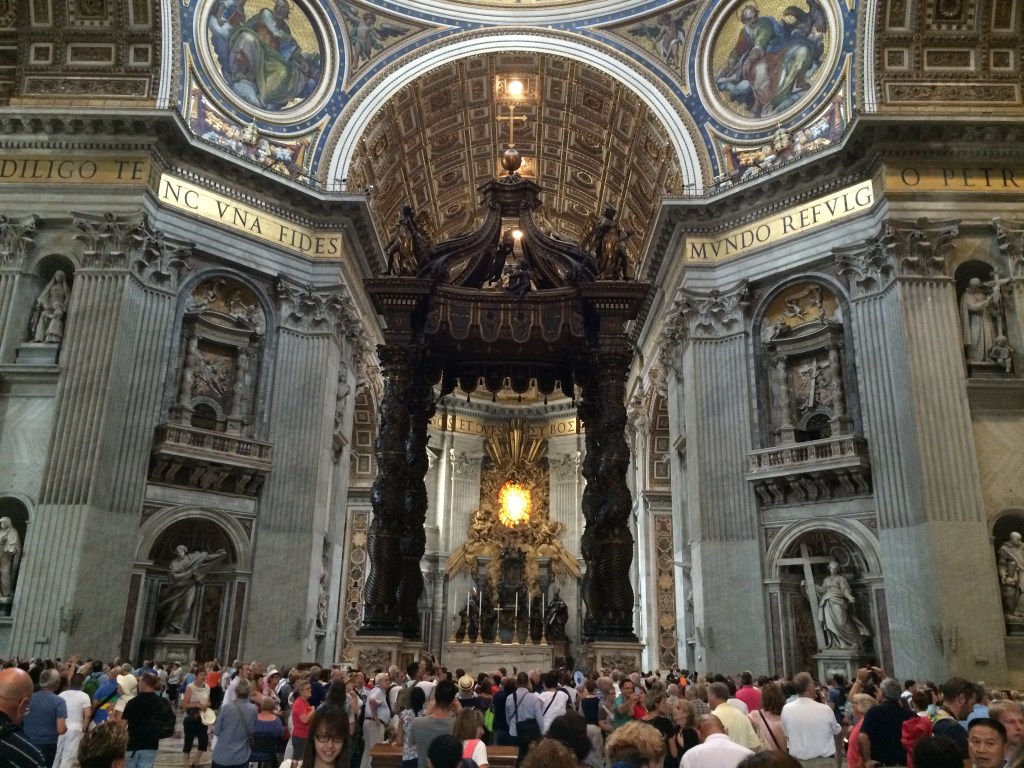
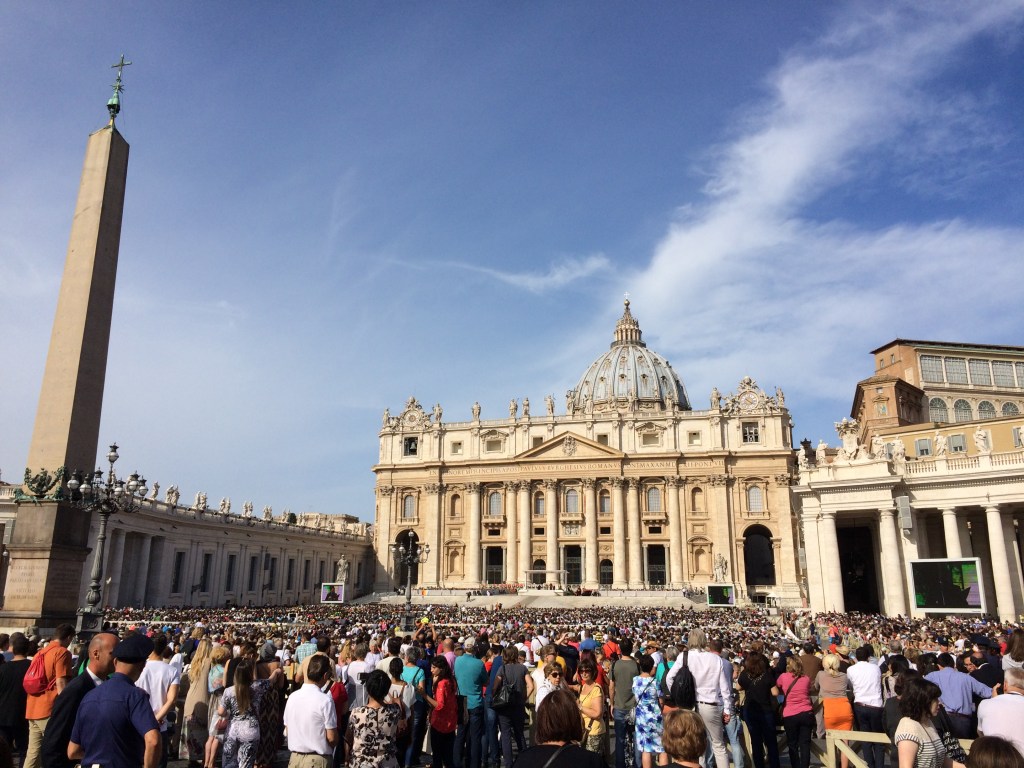
5. St Peters Basilica is truly an impressive building. It was meant to awe inspire visitors and it definitely does that with its grand hallways and richly decorated interiors. It is the largest church in the world and is the holiest of holy sites for the Catholic community. The view of the plaza from the top of Basilica is fantastic. The tall obelisk at the centre of the plaza is an import from the Egyptian civilization. The papal audience day (typically Wednesdays) held in the square is an intense religious experience for Catholics. 
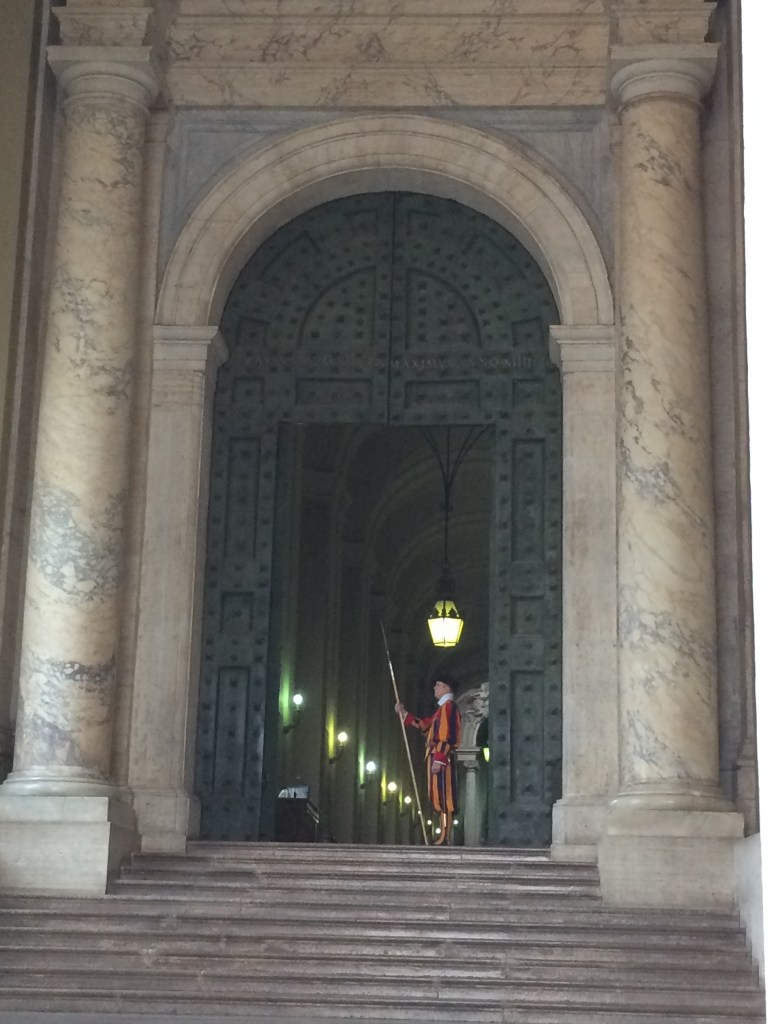
6. The guards dressed in colorful Renaissance gear are officially the armed forces unit of the Holy See although they don’t look the part. The recruits to the Swiss Guard must be unmarried Swiss Catholic males between the ages of 19 and 30 and must have completed armed forces training in this Swiss army. The history of Swiss Guard dates dates back to the 15th century when Pope Sixtus IV made an alliance with the Swiss rulers back then to recruit Swiss mercenaries.Today, they are primarily tasked with protecting the Pope.
7. The Vatican bank ATMs offer Latin as a language option. It is the only bank in the world to do so. It probably made Robert Langdon very happy. 

7 things about Vatican City

7 things about Athens, Greece

1. There is incredible history in and around Athens. While it was surreal to be in places where one of the greatest civilizations once thrived, it was also sad to see the neglect of many of these priceless monuments. It was not uncommon to see jaded guards sitting on stones in blazing sun trying to do their best to safeguard the ancient ruins from carefree visitors. Of course, the ground realities are always complex especially with an ailing economy.

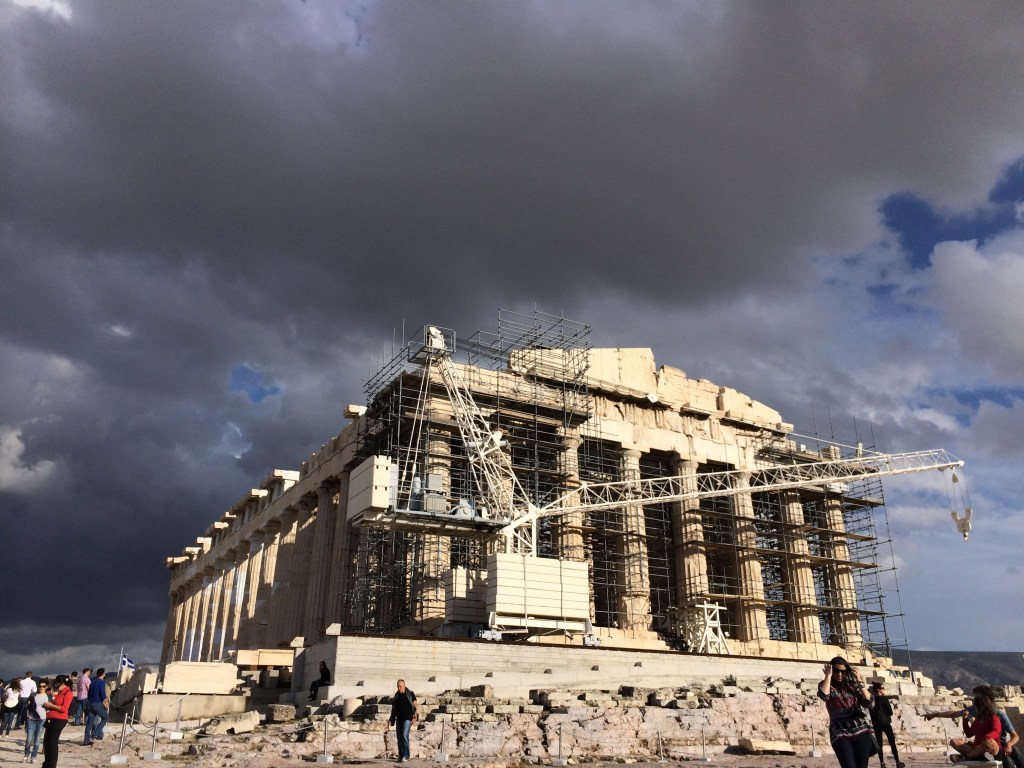
2. An acropolis is designed to be the citadel of a settlement. It is typically built at an elevated location with precipitous sides. It is derived from the Greek words – akros(highest) and polis(city). Parthenon is the most important structure in the Acropolis of Athens. It was commissioned by Pericles of Athens in 447 BC to honor goddess Athena as well as to commemorate the Greek victory against the Persians. The Parthenon was converted to a Christian church under Constantine the Great  and to a mosque under the Ottomans. It was heavily damaged in the Venetian siege of the city aimed at unseating the Ottomans. The Greeks finally reclaimed it during the war of independence and have been restoring it ever since. Located at the base of the Acropolis is the ancient amphitheatre called Odeon of Herodus Atticus. This theater was built in the Roman times by the Roman philosopher, Herodes Atticus.

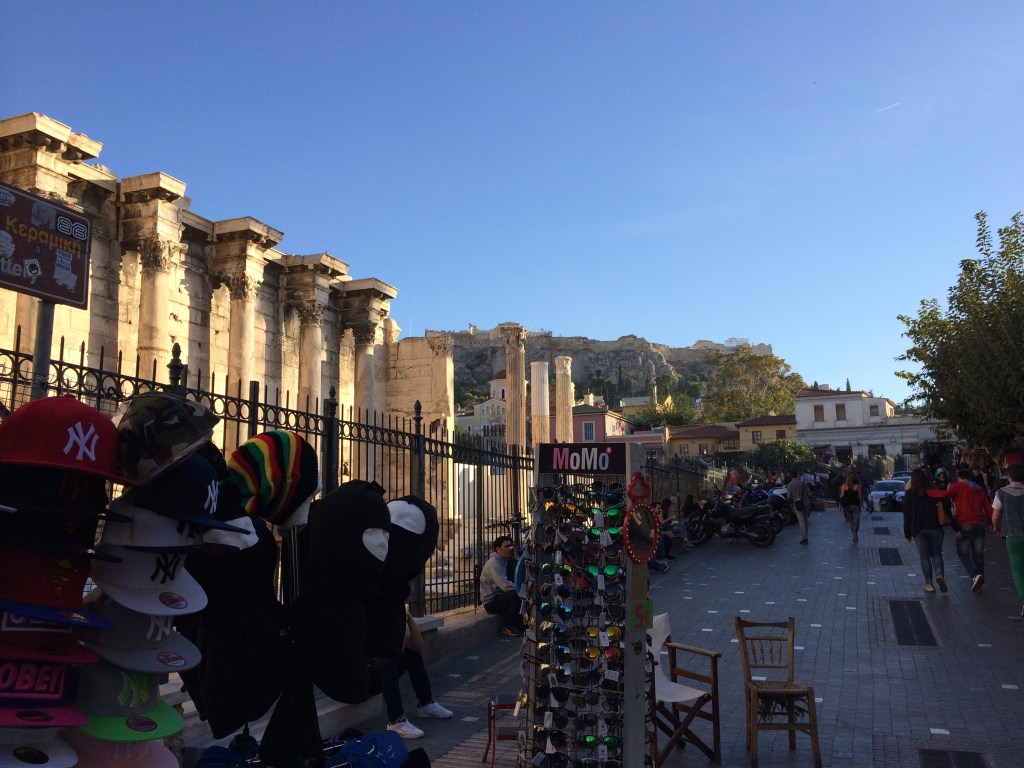
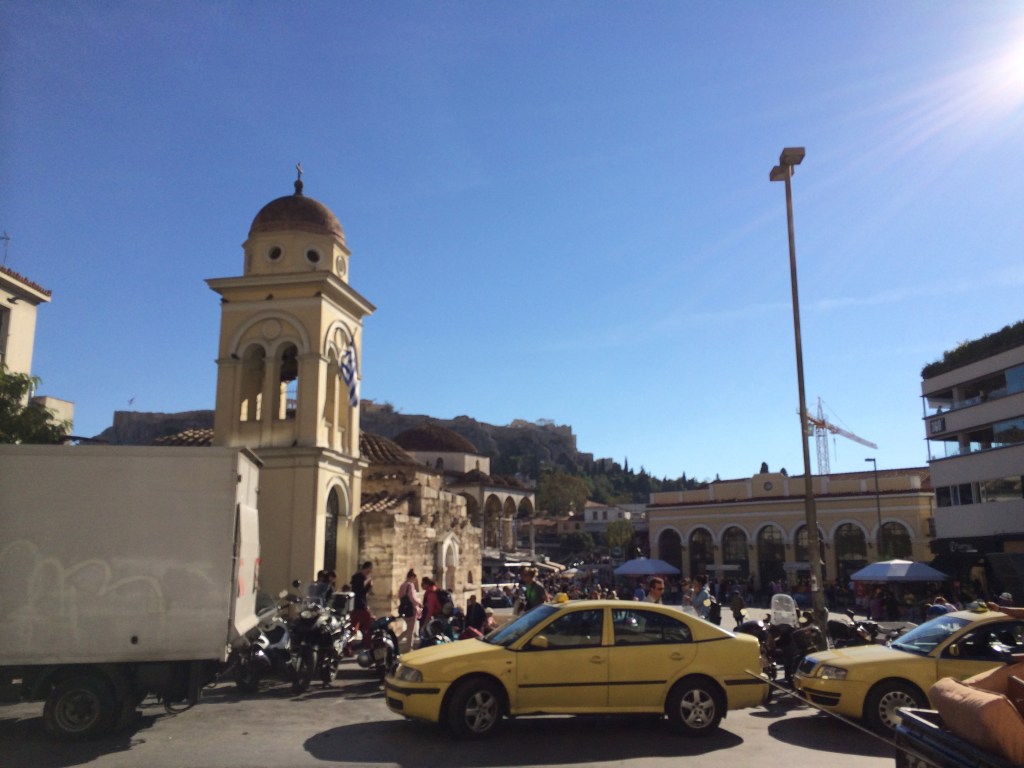
3. Adjacent to the Acropolis is the bohemian neighborhood of Plaka. It is closest to the Greek island vibe without getting on a boat. Next to Plaka is the neighborhood of Monstriaki which is home to several ancient ruins. Notable ones include the Roman Agora which was designed as an open air mall. During the reign of Hadrian, a library was added to the complex referred as Hadrian’s library. Today, the Monstriaki Square is buzzing with tourist and locals alike relaxing and enjoying a meal with a view of the Acropolis. 

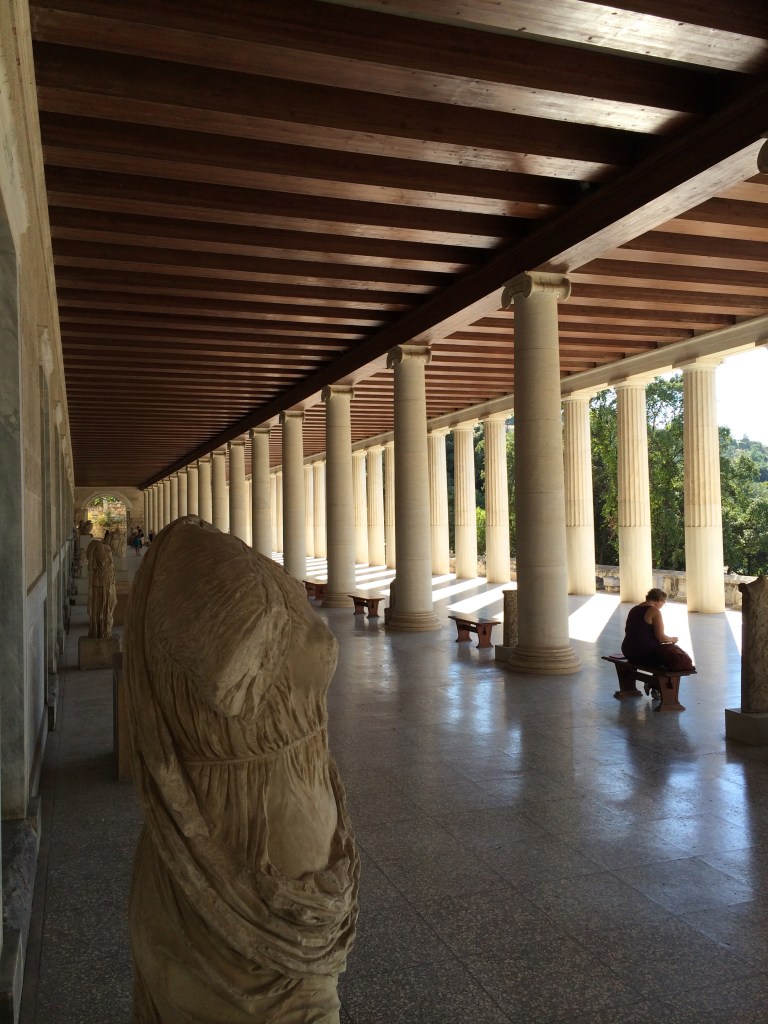
4. The site of ancient Agora is one of the largest excavation sites in Athens.The Stoa of Attalus was built as a trade market by the king of Pergamus, Attalus, between 159-138 B.C. It was extensively restored and serves a museum hosting the artifacts found in the ancient Agora complex. The long floors and marble columns are magnificent and makes it easy to imagine the commerce that happened eons ago. Located directly above on a hill is the temple of Hephaestus. It is one of the best preserved ancient temples in Greece.The design aesthetic is similar to that of the Parthenon as it was designed by the same architect, Iktinus. Lycabettus hill is the highest point in Athens and offers panoramic views of the entire city including the every single ruin mentioned above. 

5. There was crisis in the Greek economy starting 2009 spawning a decade long recession. The repercussions of which hit the people hard including record levels of youth unemployment. During my visit daily protests about the economy at Syntagma Square (opposite to Greek Parliament) were not uncommon. Barring minor conveniences, it did not impact me but it was eye opening to see the economic impact as well as democracy at work. 

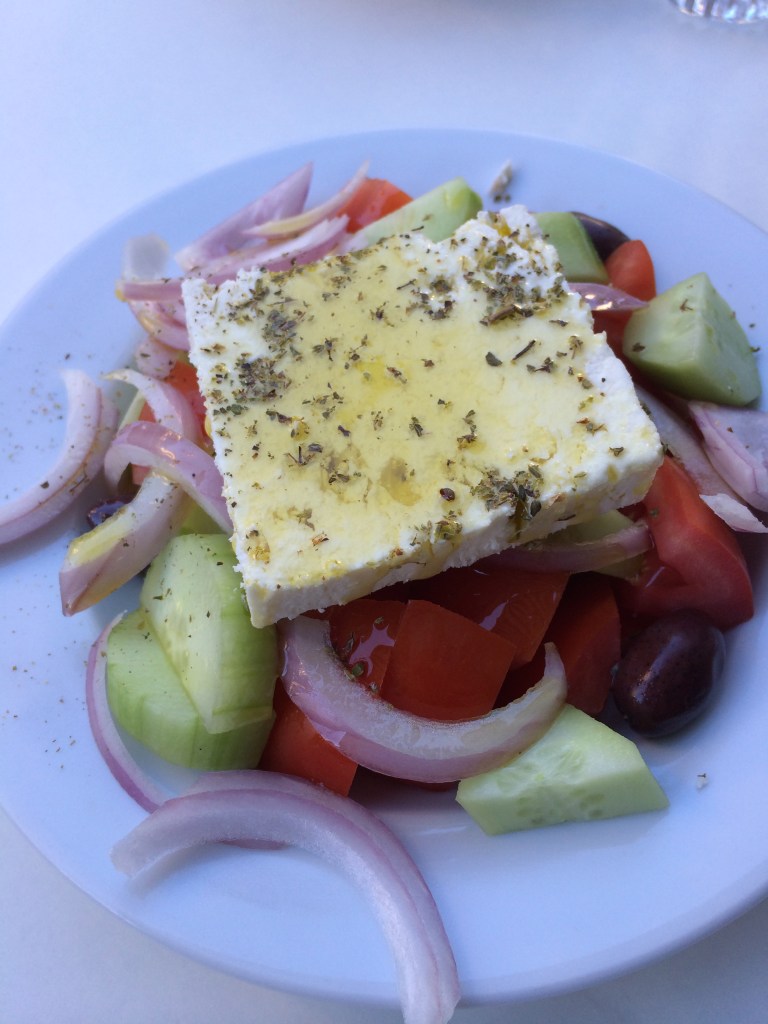
6. My first meal in Athens started with the Greek salad known to Greeks as just salad. It consisted of a giant slab of feta , cooked chickpeas, onions, tomatoes finished with a generous drizzle of olive oil. It was simple but very refreshing. The freshness of the ingredients made all the difference. I went back for my salad fix everyday. 

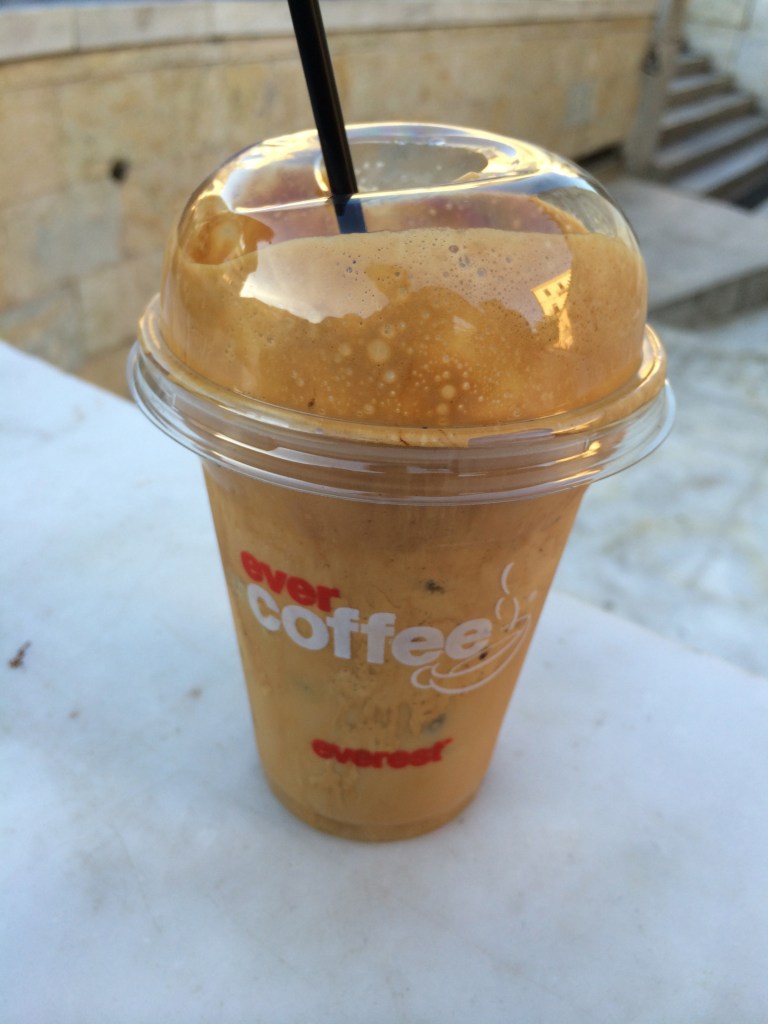
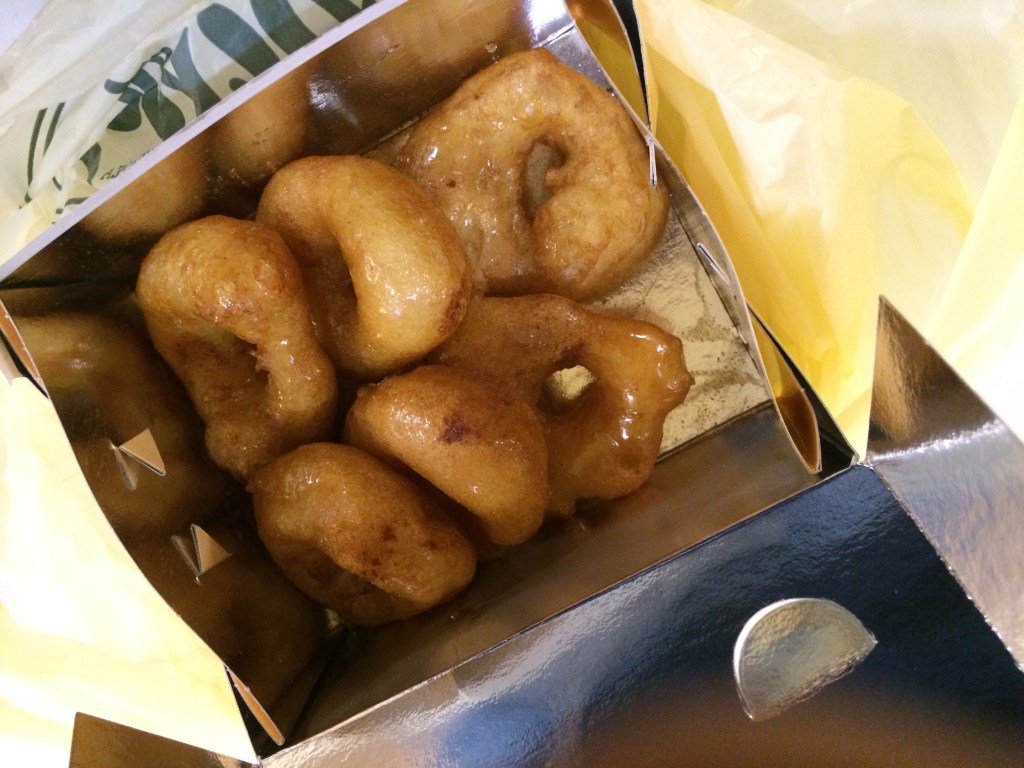
7. Gyros, hookahs and frappes are ubiquitous. Frappe (iced coffee) is strong and sweet. It was an accidental innovation that was born at the Thessaloniki International Fair in 1957 when an caffeine starved Nestle sales executive used cold water and ice to make his coffee. Greeks didn’t see like dessert people but there is lot of baking heritage shared with Turks and Arabs thanks to the Ottoman rule. Galaktompoureko is a Taverna stand by. It is a sweet pie with sweet custard encased in layers of flaky phyllo and soaked in sugar syrup. Loukamades are equally popular – they are airy donuts topped with honey and cinnamon

7 things about Athens, Greece

7 things about Budapest, Hungary

1. Budapest is divided into two by the Danube river – Buda and Pest. However, it was originally  created by merging 3 cities –  Buda, Óbuda and Pest in 1873. The origins of the city go back to Roman times. It was founded as Aquincum. Romans were succeeded by the Huns, Germanic tribes and Avars. The Bulgarians scattered the tribes while one clan stayed back and established the Arpad dynasty. It was under them that Hungary was born and established as a Christian state. But after a couple of centuries of relative stability, the Ottomans and Hapsburgs occupations ensued. After the Austro Hungarian compromise of 1867,  there was a period of phenomenal growth and building. Pest was actually modeled after Paris and built to include to large boulevards and gardens. The 20 century was more tumultuous dominated by Nazi influenced fascist rule followed by a very long Soviet occupation. It was only in 1989 that Hungary became an independent republic. 

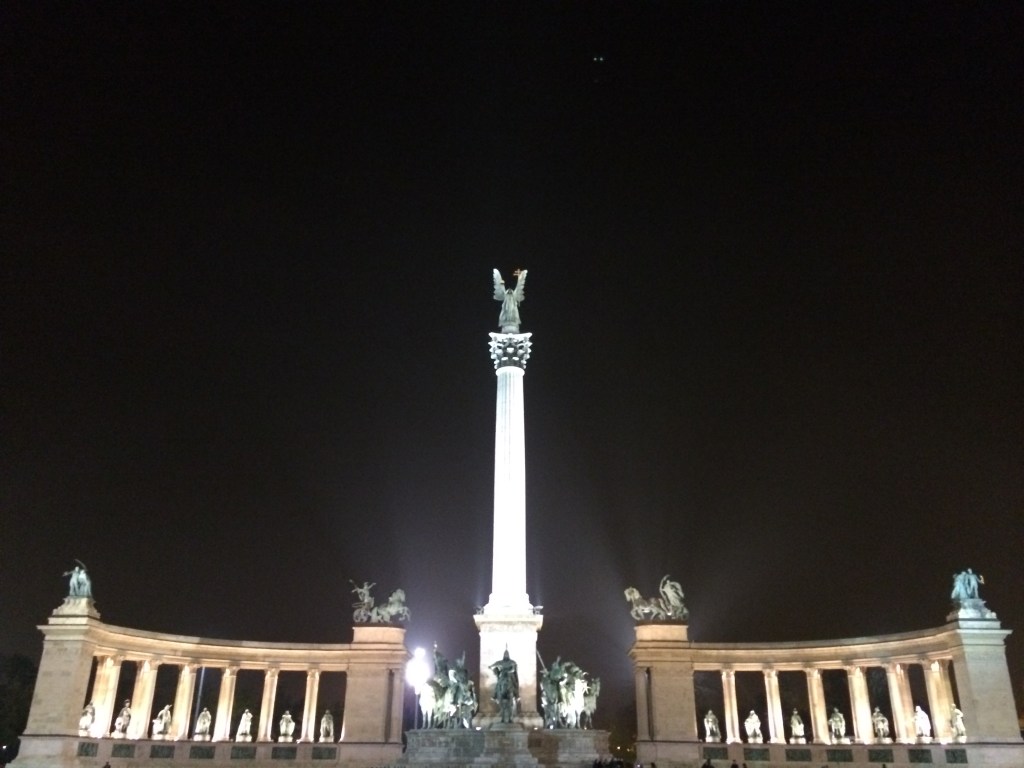
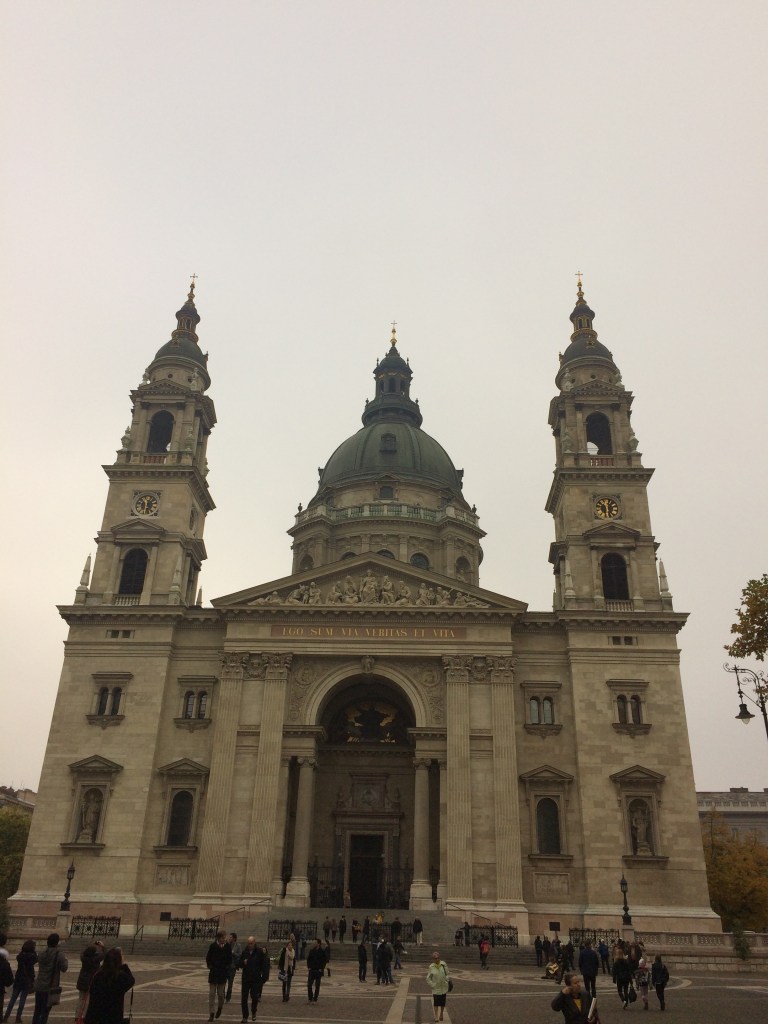
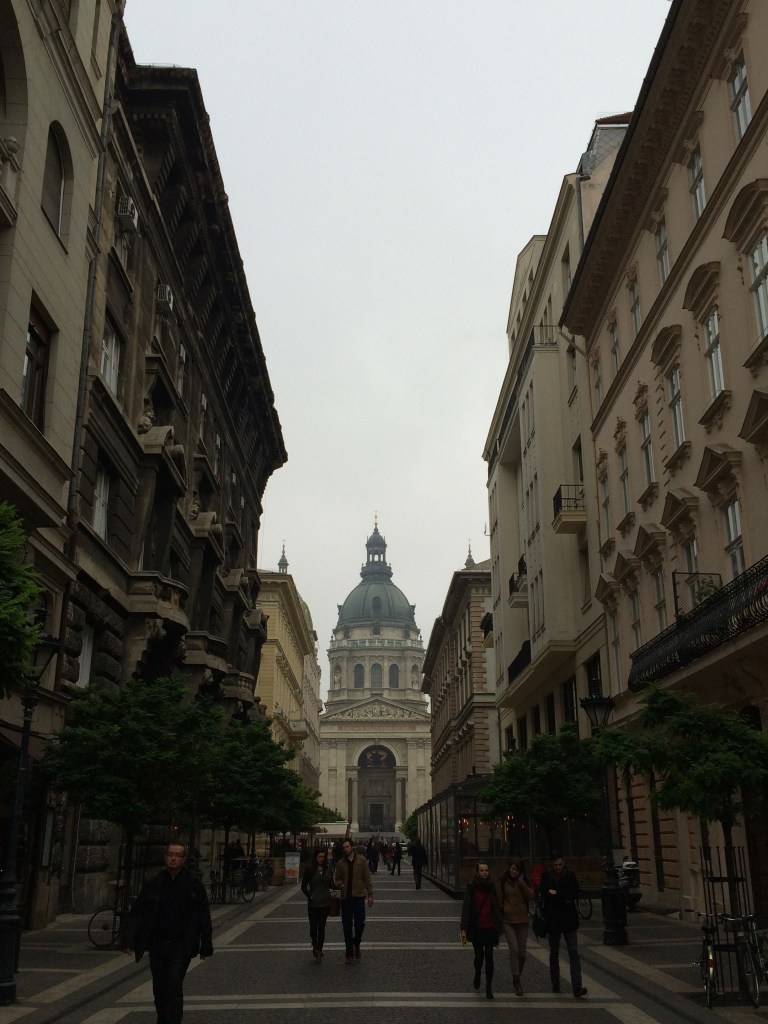
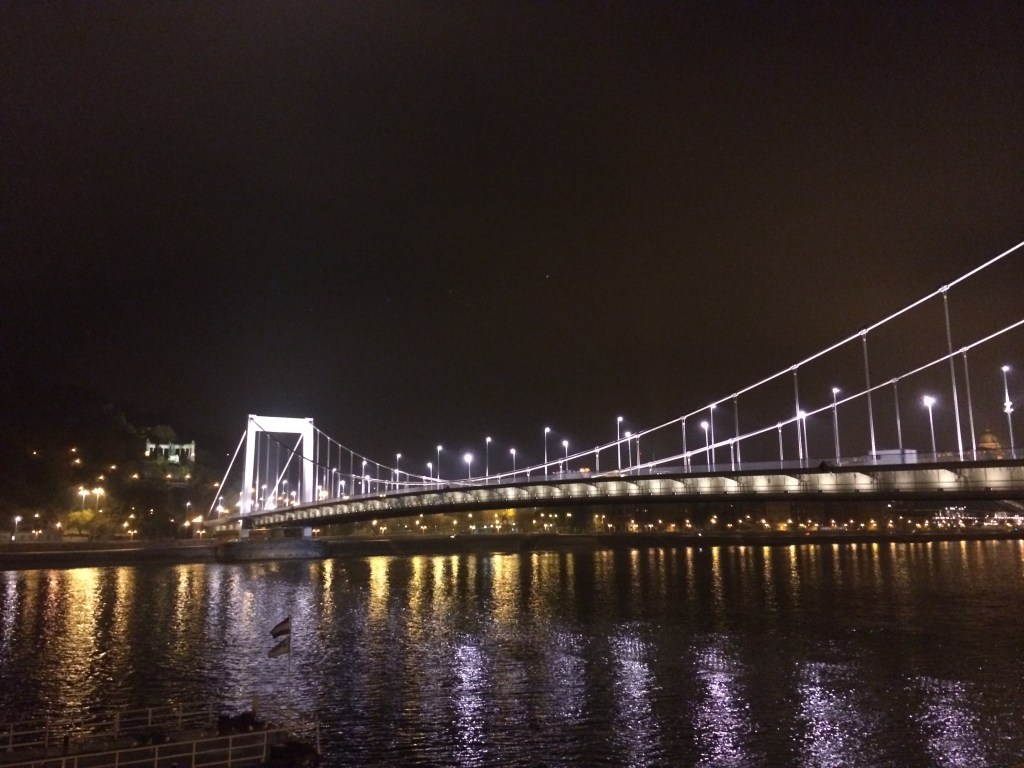
2. Buda and Pest (pronounced as Phest) are twin cities and have their distinct personalities. Geographically, Buda is hilly while Pest is flat. Buda has a more aristocratic air to it with the former Austrian Hapsburg court reigning from Castle Hill.They are 8 bridges connecting Buda and Pest today but they were mostly rebuilt after being destroyed in the second world war. The Heroes’ Square and St Stephen’s Basilica are important monuments on the Buda. The Heroes’s square was built to commemorate the thousandth anniversary of the Hungarian conquest of the Carpathian Basin. Hence, the complex prominently features the seven chieftains of the Magyars. The St Stephen’s Basilica is one of the highest churches in the country and is named after the first king on Hungary. It is also one of the tallest buildings in Budapest.

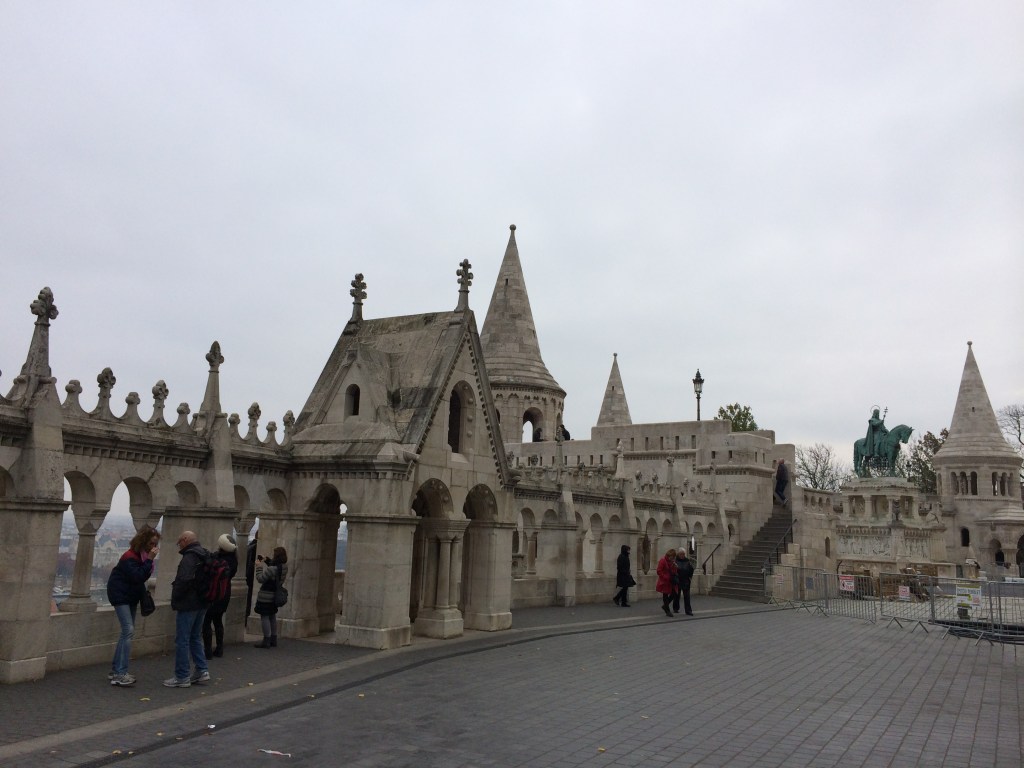
3. Buda Castle district preserves the history of Budapest in a nutshell. The Royal Palace and the Gothic Mathias Church are wonderful pieces of architecture. The fisherman’s bastion is built to enjoy those beautiful views of Pest especially the parliament. I could have sat there for hours if not for the cold weather during my visit. The castle funicular was intended to make the climb up the hill a bit easier but it just a tourist attraction now. It is worth it for views of the Széchenyi Chain Bridge and the St Stephen’s Basilica but the lines can be long. 

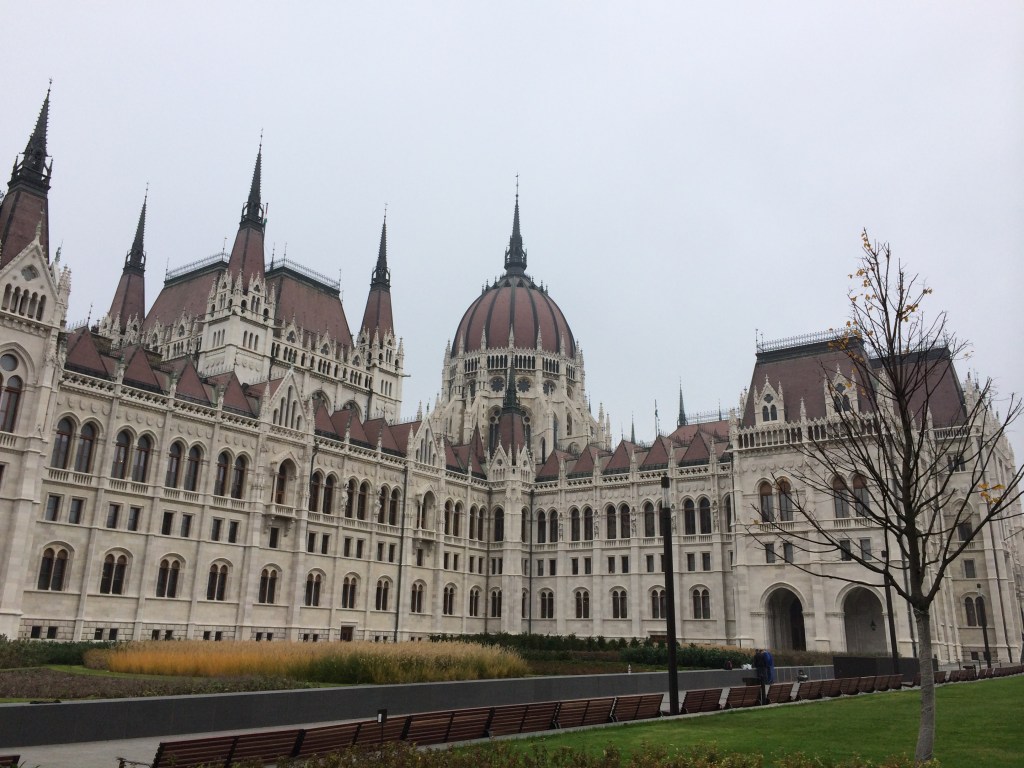
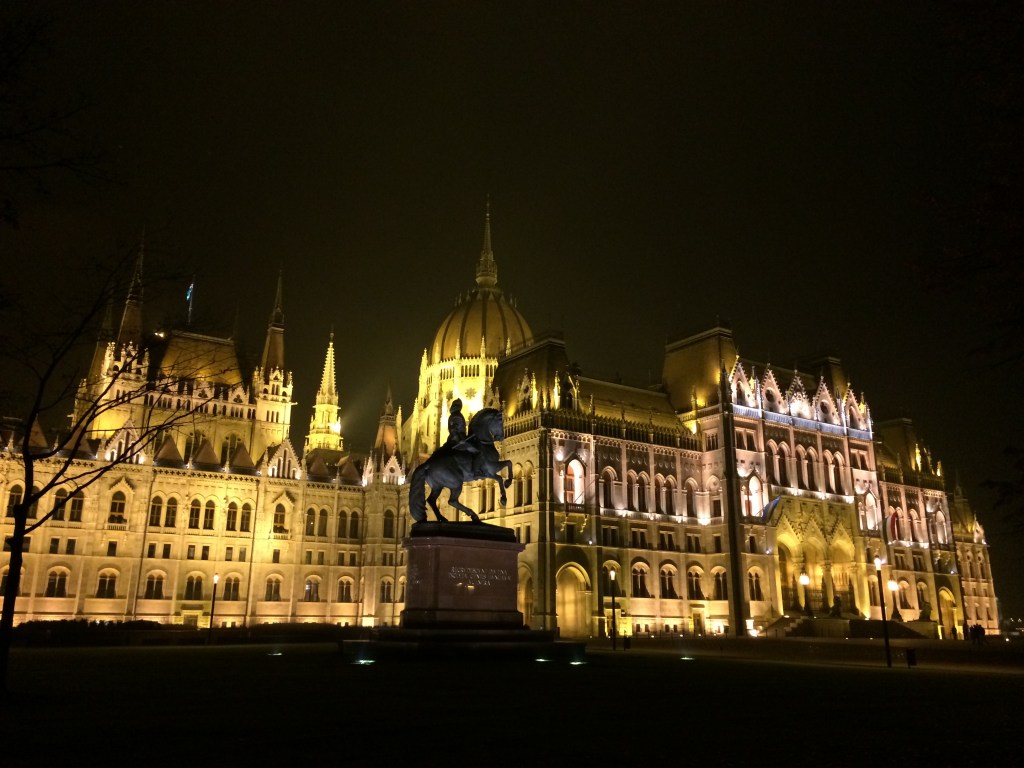
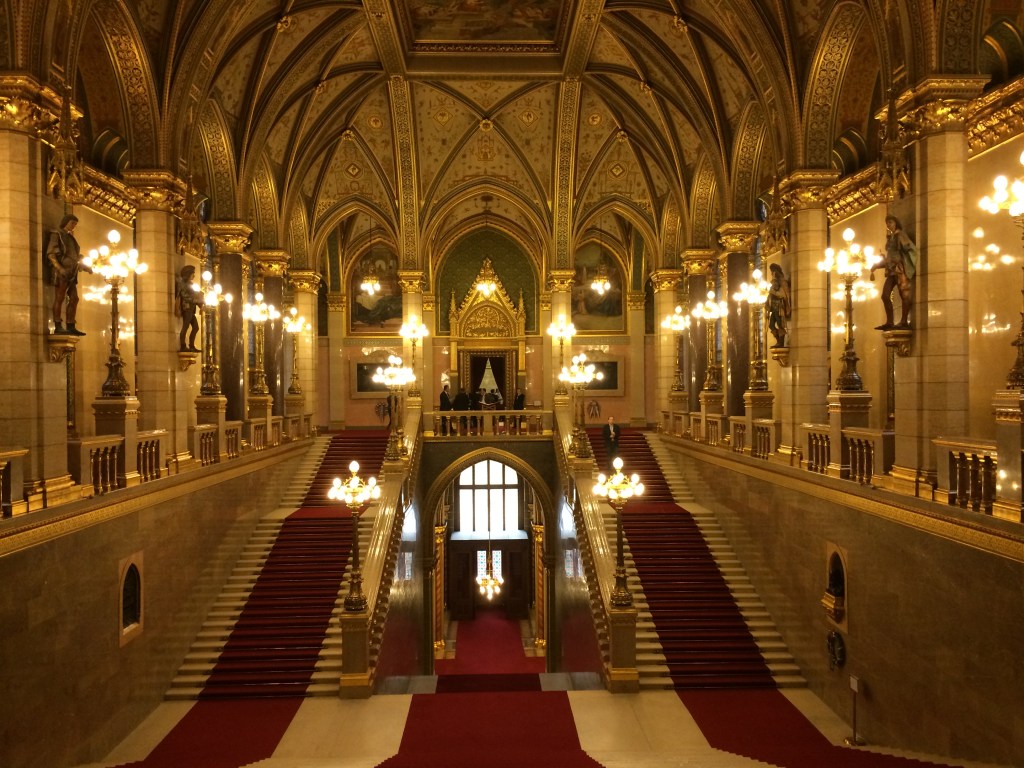
4. The parliament building is worth the trip by itself. It was designed by architect Imre Steindl who ironically went blind and died before its completion. His design was apparently inspired by the architecture of the British parliament. Built in neo-gothic style with intricate ornamentation, it has a symmetrical facade and a dome in the centre. The interiors are equally well anointed with gold and velvet hues dominating the color palette.The building tour  is the only way to get a glimpse into the insides of the building. While the tours can get a bit crowded at times, it is still worth it. 

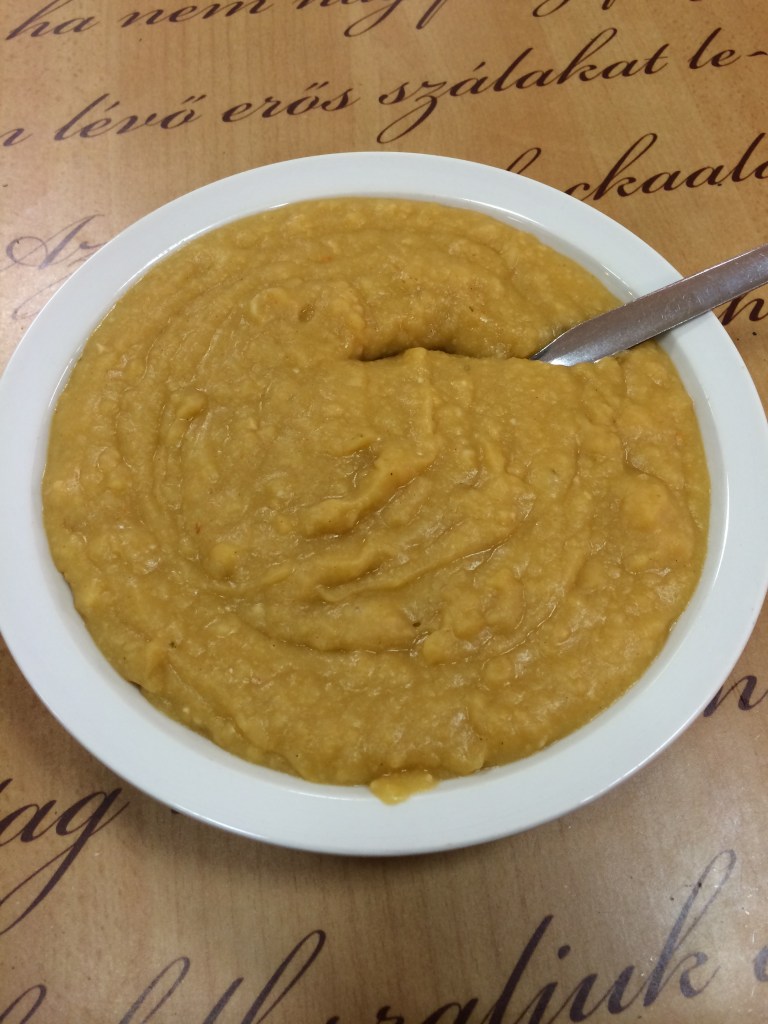
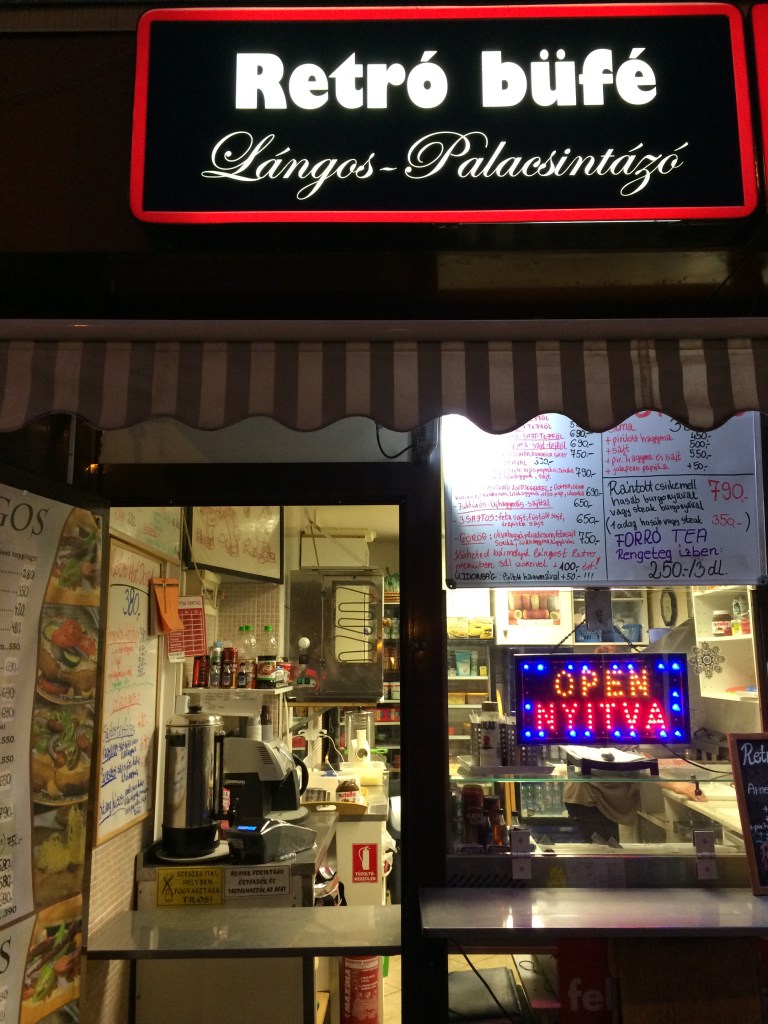
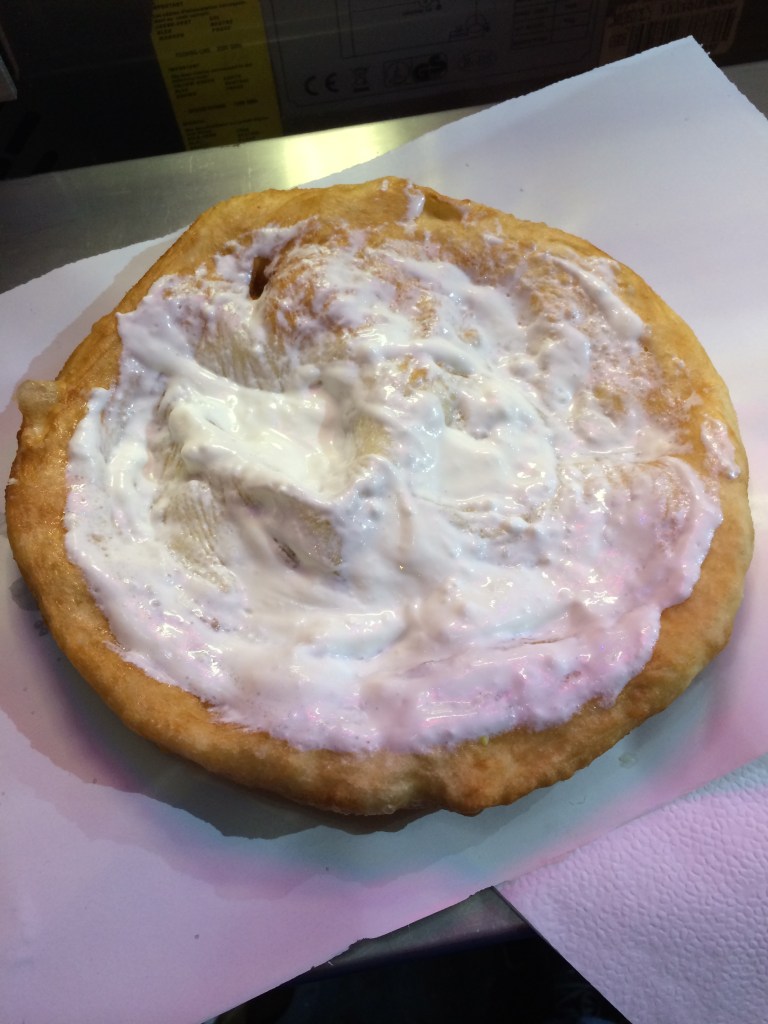
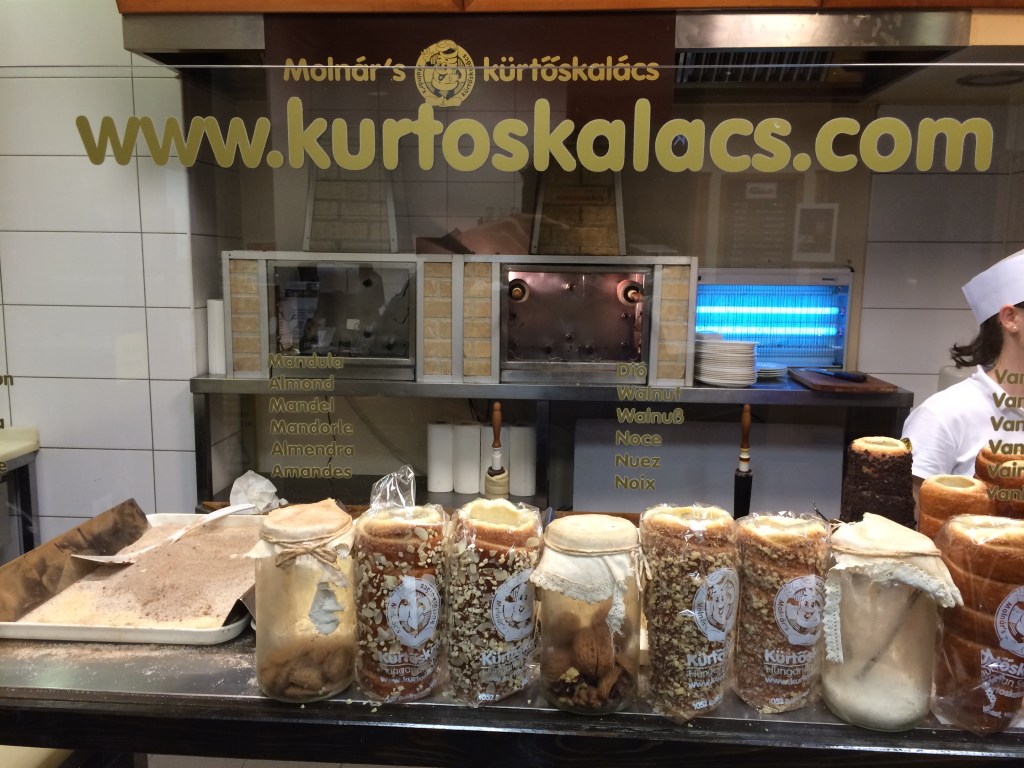
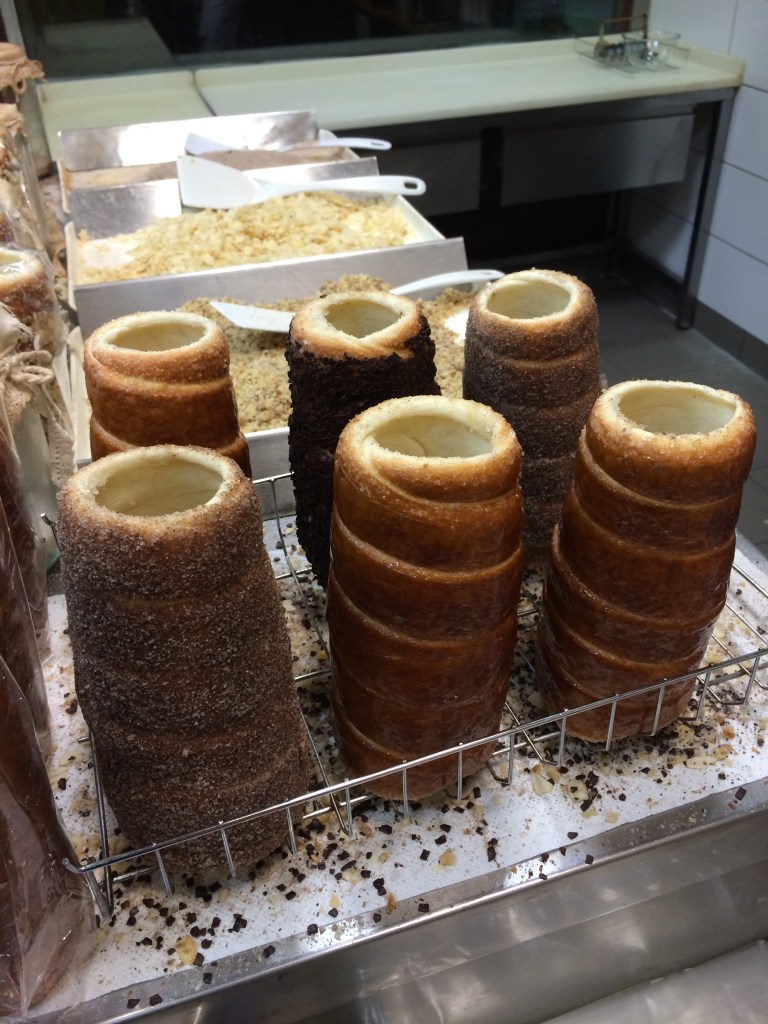
5. Fozelek was my go to dish in the meat heavy Hungarian cuisine.It is made by cooking vegetables and/or beans to a mush and thickened with roux or sour cream very similar in texture and taste to the Indian Khichdi. But I kept discovering interesting street food that made it easier. Langos is a deep fried bread similar to the native America Navajo bread topped with sour cream. It is usually made to order and eaten hot to enjoy the greasy fatty goodness. The Kürtöskalác or chimney cones is an addictive sweet snack. It is cross between a bread and pastry. It is made with raised dough that is rolled and wrapped on a dowel, rolled in sugar and  baked on an open rotisserie grill. The caramelized sugar makes the outer layer crunchy while the insides are soft and doughy. It is perfect for a long walk along the river bank. While the food scene at the newish Central Market was underwhelming, I had a comforting meal at an old school Hungarian restaurant, Kadar Etkezde in the Jewish Quarter. The senior waitress fully intended that I leave stuffed but I had to make do with Fozelek yet again due to my dietary restrictions.

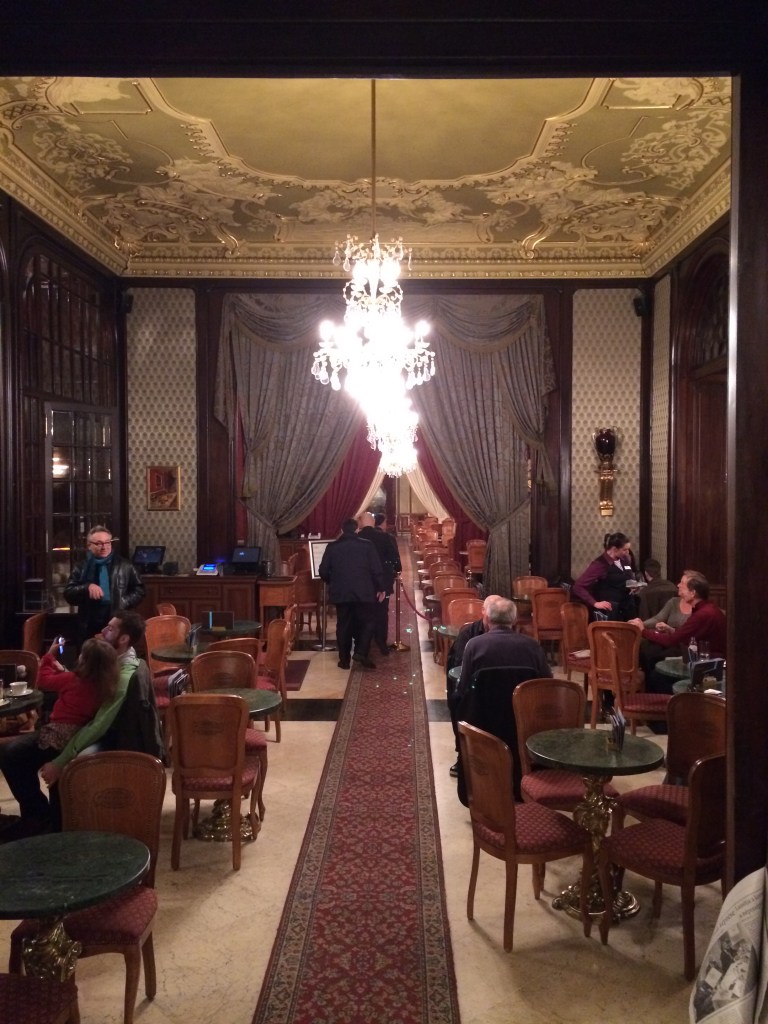
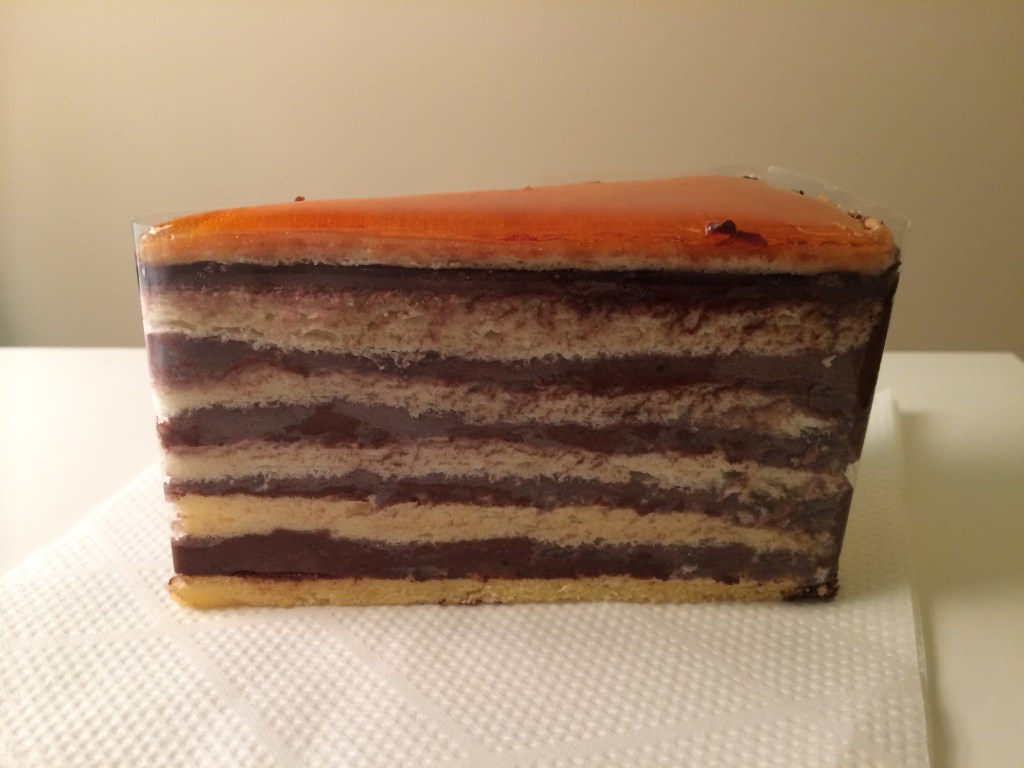
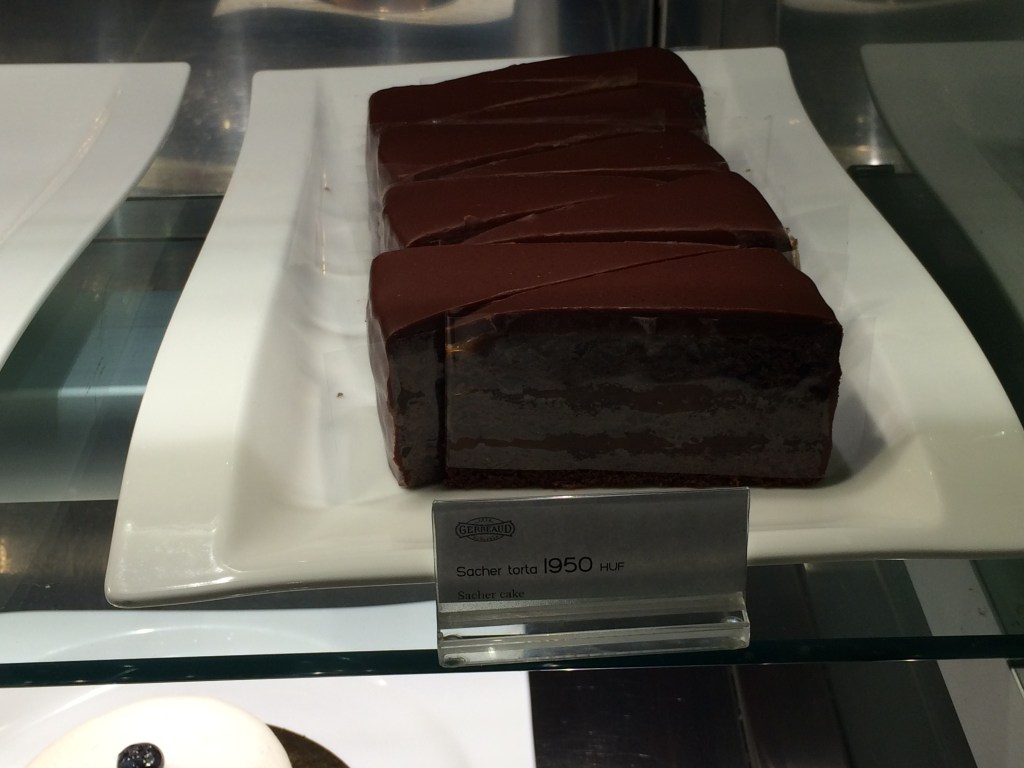
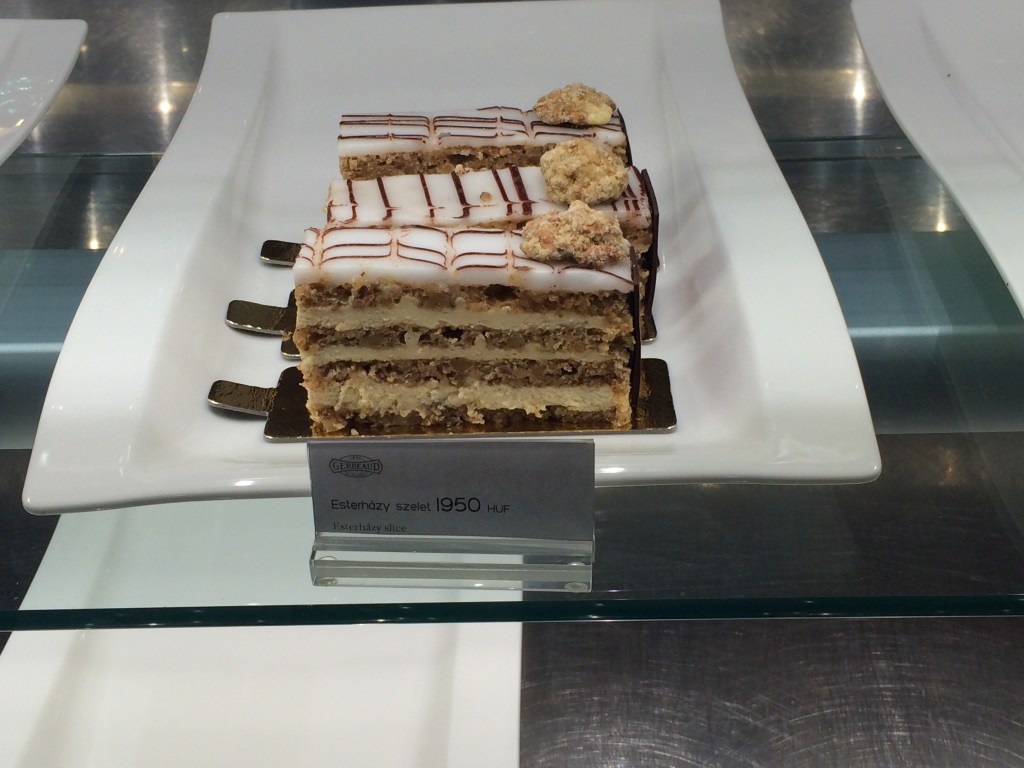
6. The cafe culture in Budapest only rivaled by Vienna. There are many 3rd wave coffee shops but places like Café Gerbeaud and Ruszwurm reek of old school elegance and warmth. While Gerbeaud is pricier and touristy, the pastries are definitely fantastic. I couldn’t get a reservation for a dine-in experience but the warm servers at the pastry counter sent me home with one too many pastries. Dobos Torte was my favorite. Named after the famed Hungarian pastry chef Josef Dobos, it is a sponge cake layered with chocolate butter cream and topped with caramel. Apparently, it was intentionally designed for a long shelf life compared to other cakes at that time. Dare I say that the infamous Sacher Torte here was better tasting than the ones in Vienna. 

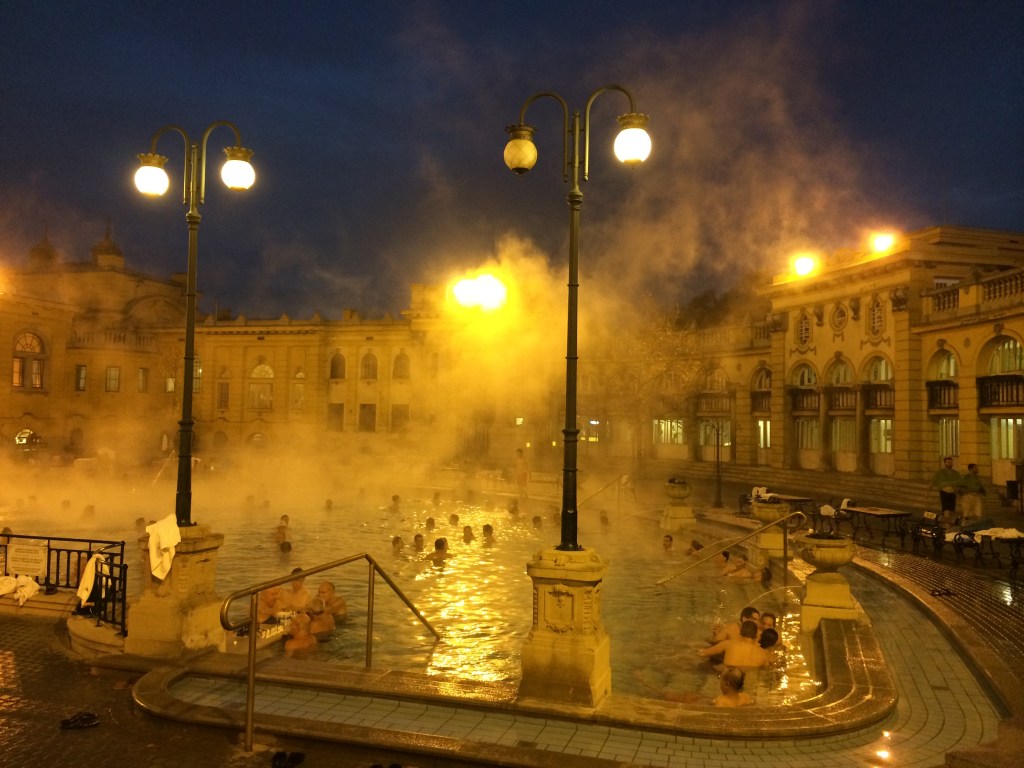
7. Thermal baths are remnants of the Roman and the Turkish period but the city is blessed with hot springs. In fact, Budapest was crowned at the “City of Spas” in 1935. While the Rudas and Lukács Baths were originally built during the Turkish period, the bigger and popular ones – Gellert and Széchenyi were built in the early 20th century. Széchenyi Baths is a massive complex that is served by two hot springs with temperatures ranging from 74C to 77C. Of course, they are made tolerable with cold water.  The whole experience is well designed and the Neo-Baroque architecture adds more aesthetic appeal. Baths are popular among locals as well. It is not uncommon to find bands of seniors engrossed in chess in the milder thermal pools. 

7 things about Budapest, Hungary

5 things about Brno, Czech Republic

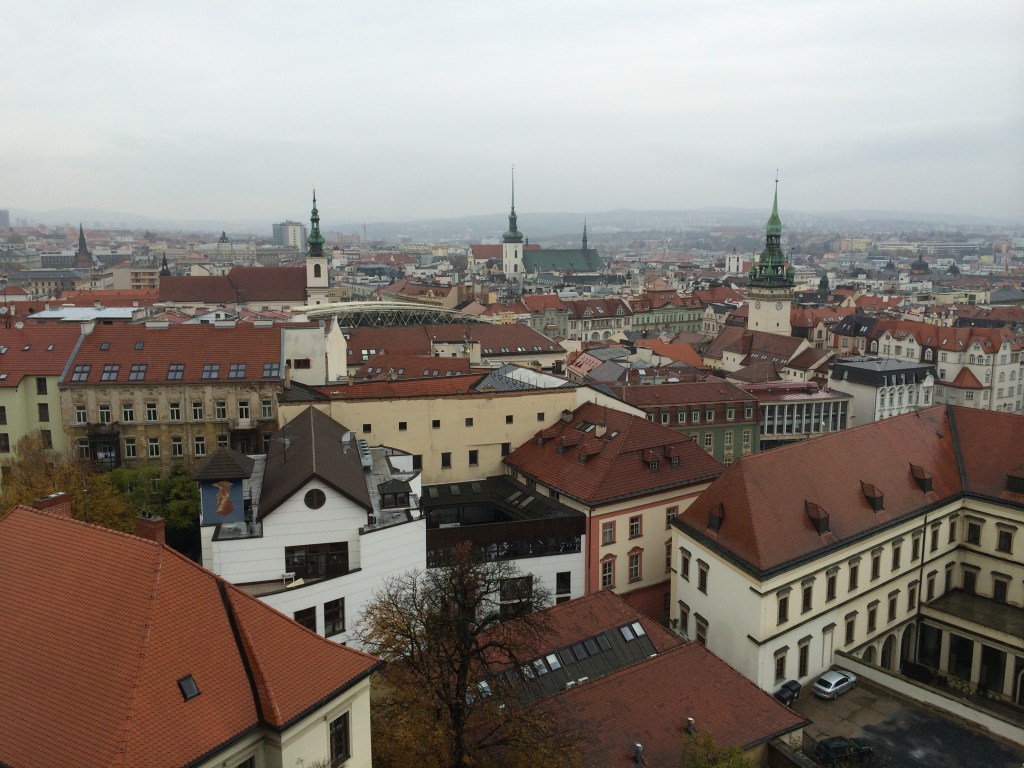
1. Brno is no Prague or Cesky Krumlow but it is a charming little town nevertheless. However, it was of great political significance and served as one of the seats of governance for the Moravian region starting with the Great Moravian empire since the 11th century. It became the sole capital of Moravia in 1648 after Olomouc was captured by the Swedes in the Thirty Years’ War. Today, it is still the capital of South Moravian region administered by the Czech Republic. 

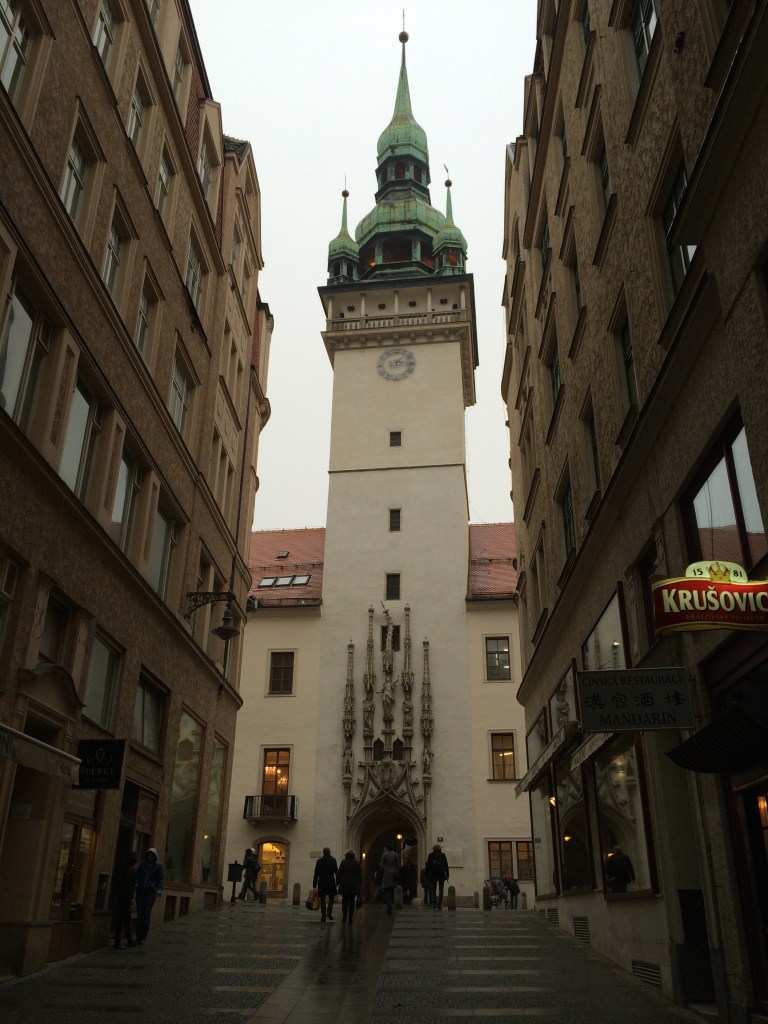
2. Brno was besieged by Hussites (15th century), Swedes (17th century), Prussians (18th century) but none of them were successful in conquering the city. The city was also referred to as Brunn (German Brunn) as the city had a large German population in the early 20th century. The Old Town Hall has a crocodile figurine hanging from the ceiling. Referred to as the Brno dragon, the legend is that it threatened the local people and was overcome with a clever hack.   

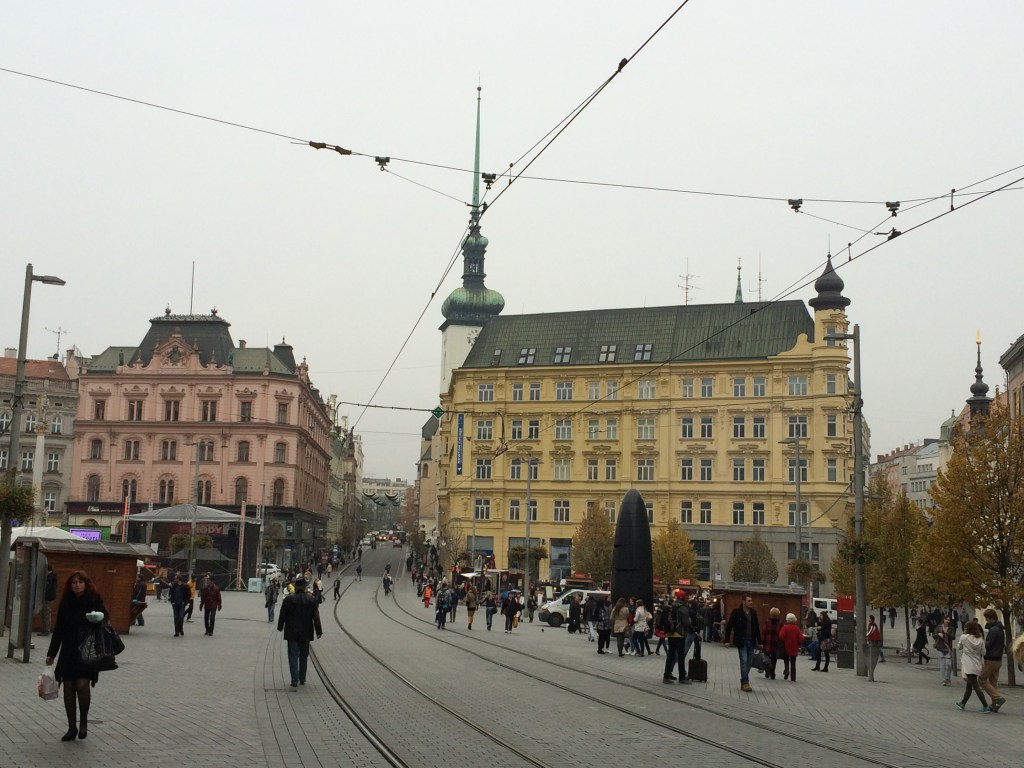
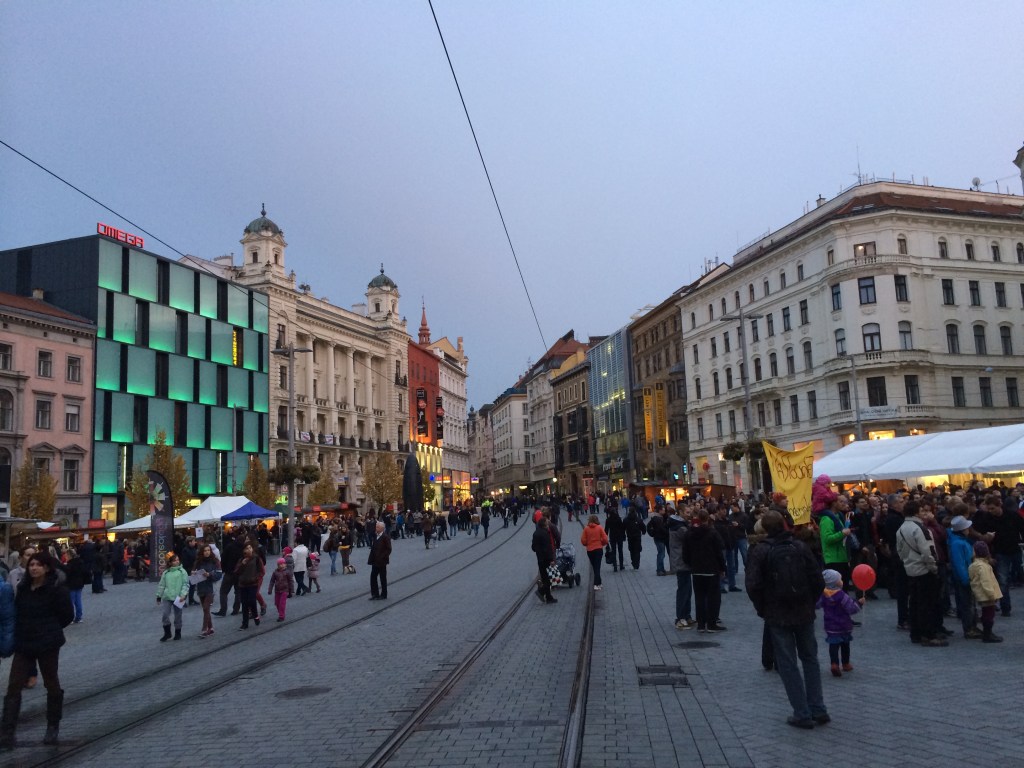
3. The Freedom square is usually a great place to hangout with food stalls, markets and street performances. It also has the astronomical clock which is a shiny black marble obelisk. It has some interesting history associated with it. In 1645, Swedes had laid siege to Brno for 3 months but were unable to force a surrender. Apparently, the Swedish general exhausted his patience eventually  and chose to withdraw if the city did not fall by noon. However, some ingenious people of Brno turned the clock to read noon an hour early i.e 11 o’clock. The general promptly walked away. This clock was installed to commemorate that event and releases glass marbles everyday at 11. However, I simply couldn’t figure out how to read time from it.  

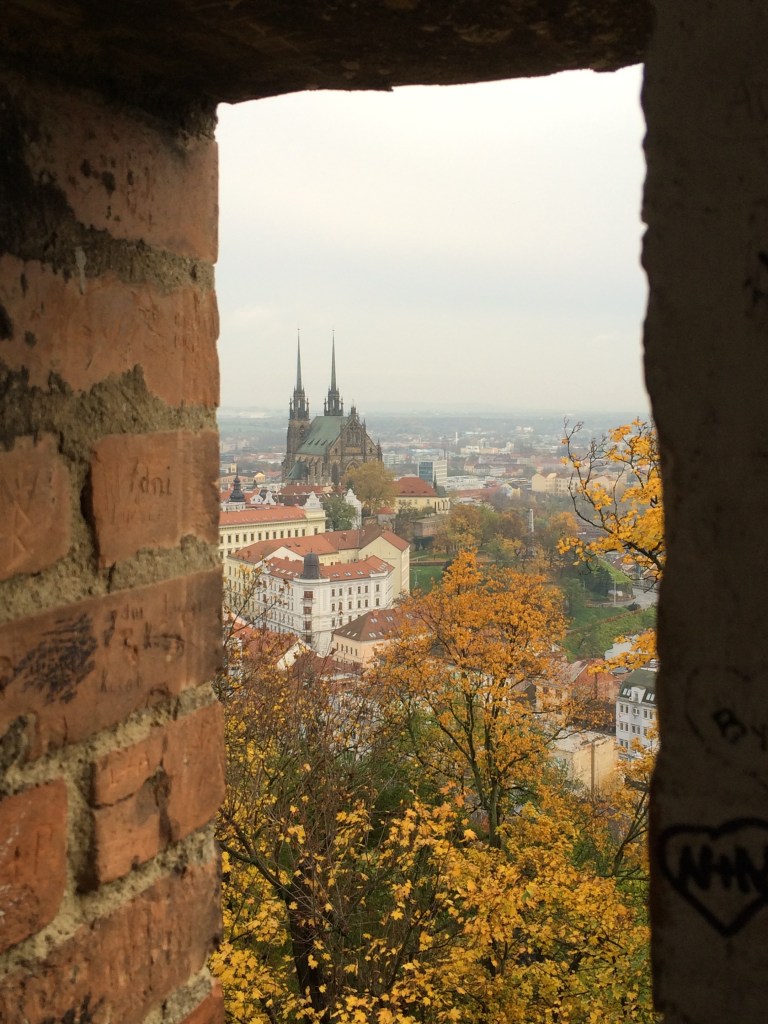
4. Spilkberg Castle’s facade is very similar to that of Bratislava castle.The castle itself is not that impressive but the garden and outdoor areas are beautiful and well maintained. It was once notorious as a prison under the Austro Hungarian empire.The views of the Cathedral of Peter and Petrov from the castle are great. The Cathedral of Saints Peter and Paul with its baroque interiors and Gothic style towers is one of the most important pieces of architecture in the Moravian region. Thee bells of the cathedral are also rung at 11 o’clock in the morning instead of 12 noon for same reason as above.

5. Local food seemed very functional – lots of cabbage, potatoes and hearty meat soups but there were a good number of “international” options like burger, pizza, pasta as well. 

5 things about Brno, Czech Republic

10 things about Lisbon, Portugal

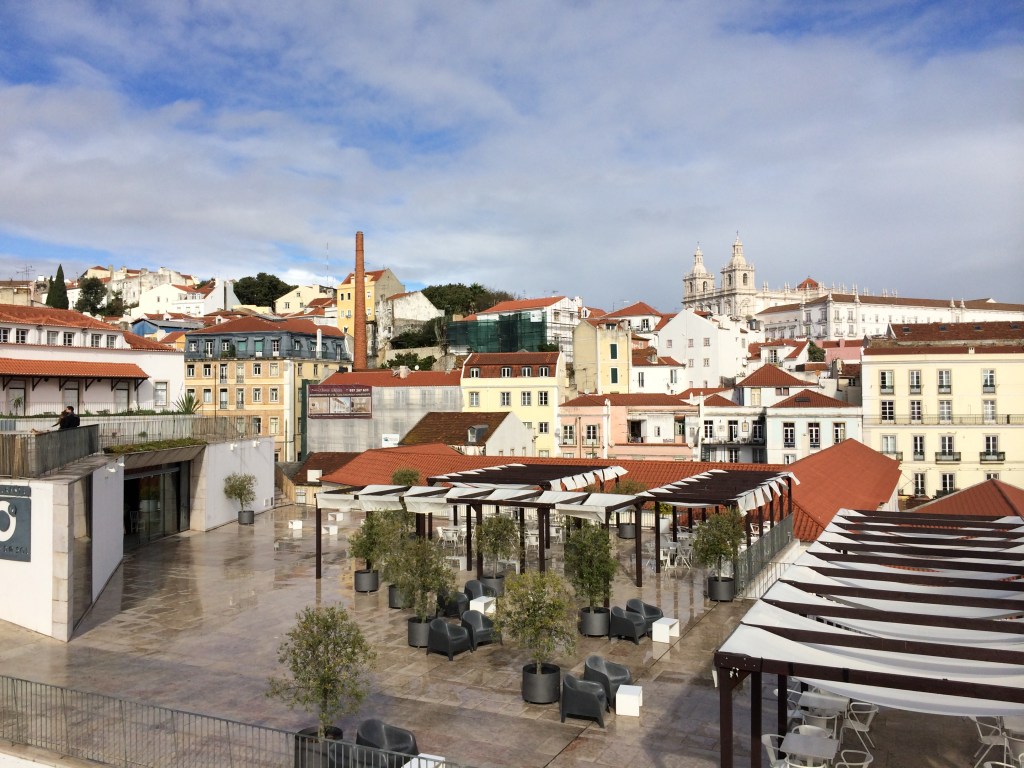
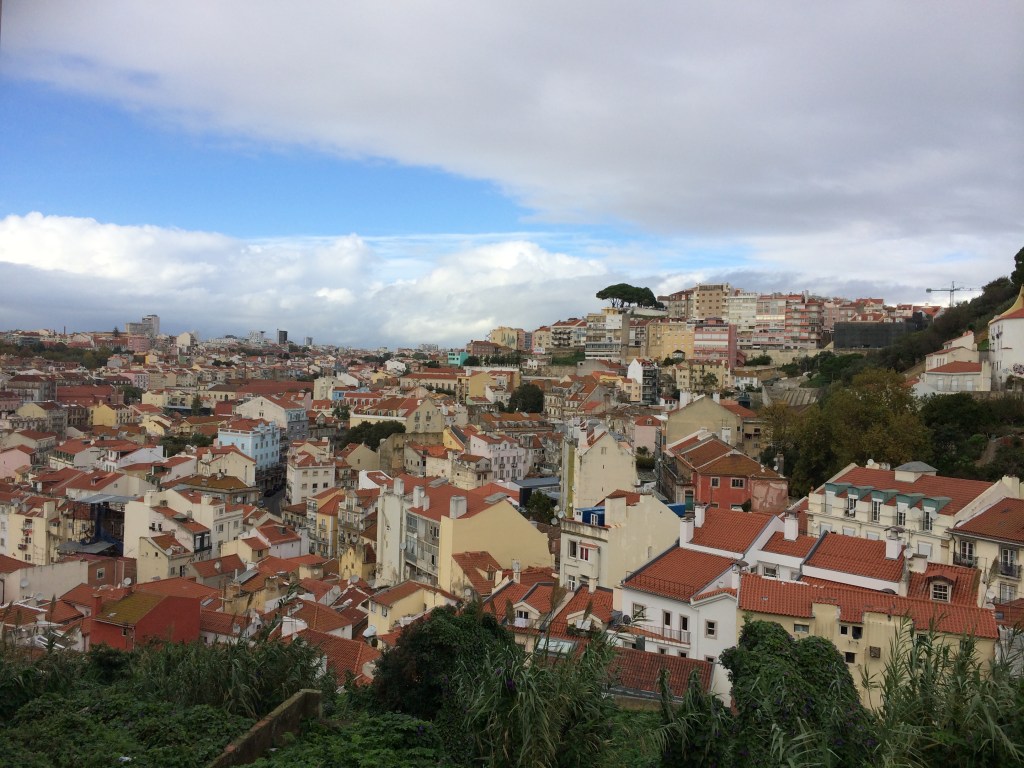
1. Lisbon is a picturesque city and easy to fall in love with. The hilly neighborhoods with their bright red roofed houses and pastel colored walls is as quaint as it gets for any capital city. But most of it was constructed after the devastating 1755 earthquake financed by the gold riches from the region of Minas Gerais in their colony, Brazil. But the foundation of Lisbon was laid by the Phoenicians. It was then conquered by Greeks, Carthaginians, Romans, Germanic tribes and finally by the Moors. Alfonso I of Asturias undid the Moorish conquest. Alfonso III moved the capital from Coimbra to Lisbon and laid the foundation for centuries for maritime expansion. In the end, it was the merchant class that made the port of Lisbon one of the most important in the world. They enthroned the Aviz dynasty and helped establish Casa da Guiné e Mina which evolved into Casa de India to manage Portuguese trading interests (including slave trade) across Asia, Africa and Brazil. 

2. The tram system is very convenient and affordable. A ride on the heritage Tram 28 is a must since it crisscrosses almost every old neighborhood – Baixa, Chaido, Bairro Alto, Alfama. Miradouro de Santa Luzia viewpoint in the Alfama neighborhood is a popular stop on this tram. The funiculars were designed for the citizens of Lisbon to navigate the hilly train. The Elevador da Glória is a fun ride ending at San Pedro de Alcántara viewpoint in the artsy Bairro Alto neighborhood.

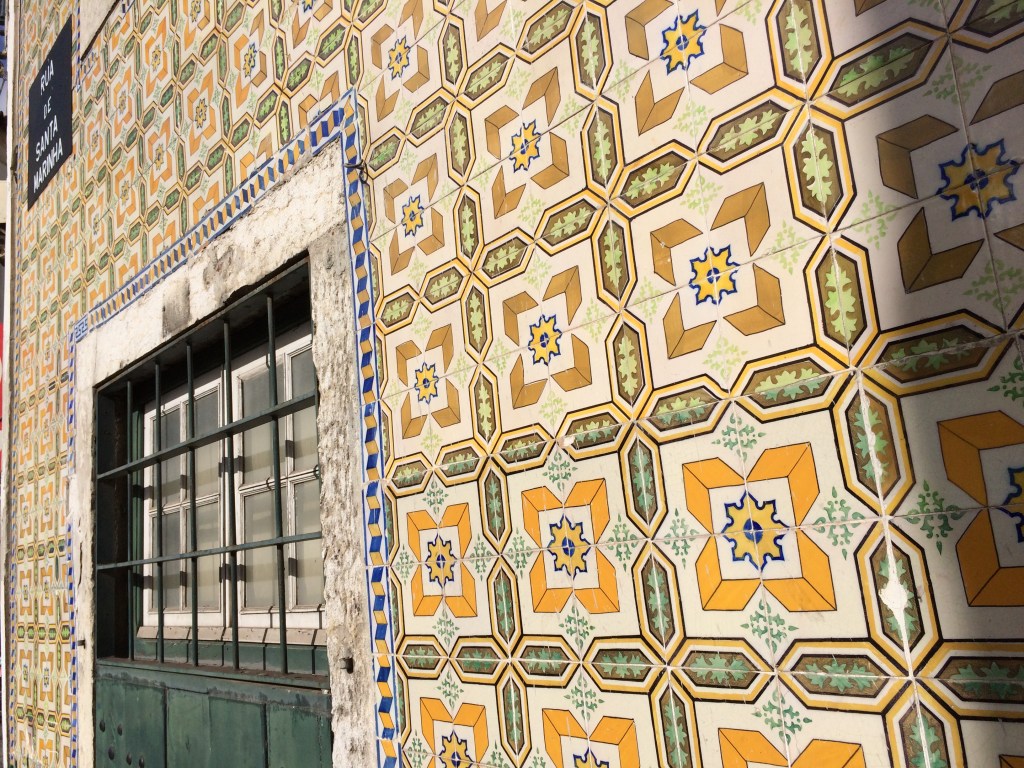
3. Portuguese ceramic tiles called Azulejo are renowned. It is hard to miss them in Lisbon. Almost every house and commercial building have facades with colorful azulejos in them, each of it is a work of art. These ceramic tiles were a cultural influence of the Moorish rule in the Iberian Peninsula. King Manuel I of Portugal brought home these tile making techniques he observed in Sevilla which was then the centre of the tile industry.
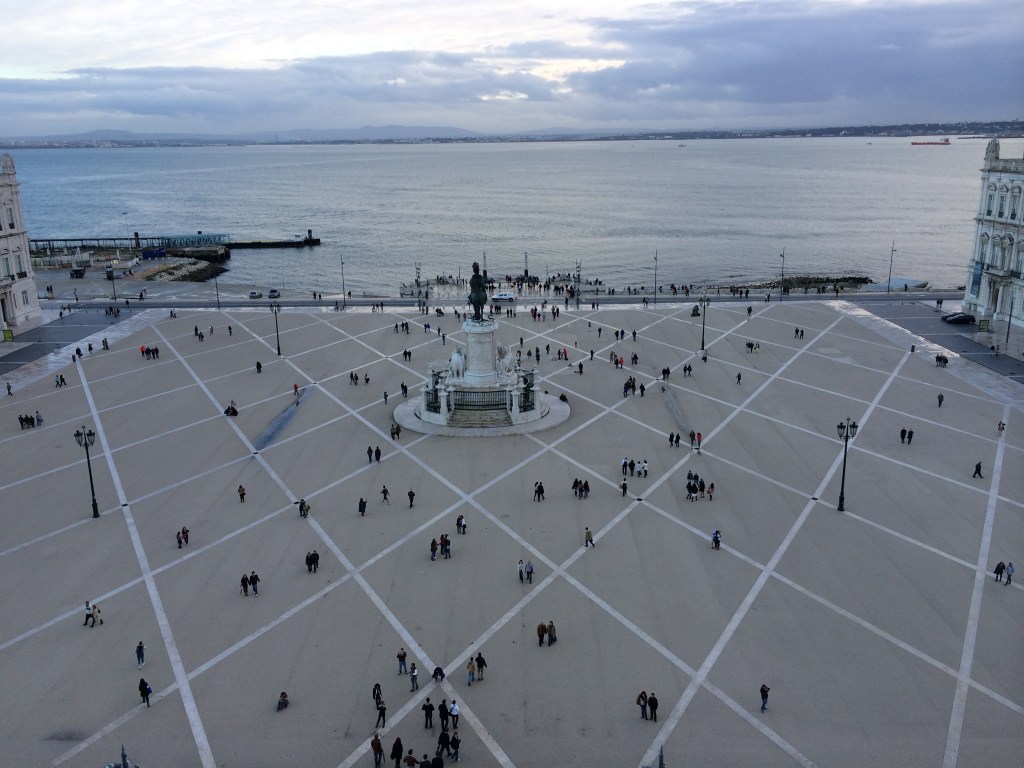
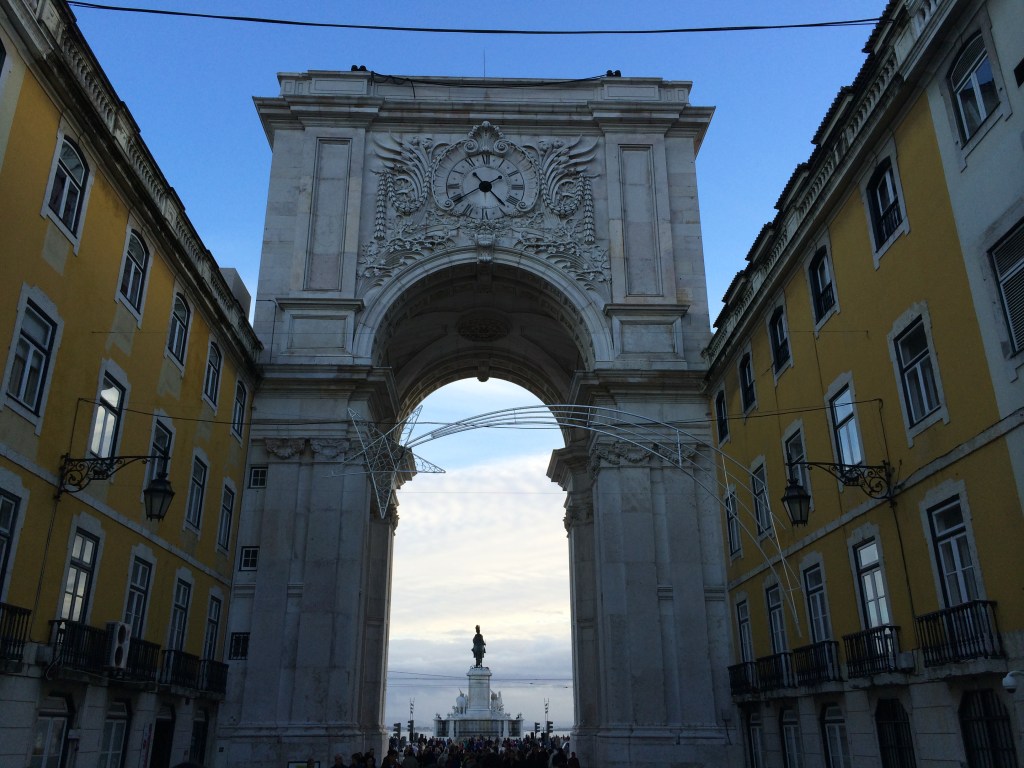
4. Praça do Comércio is one of the older commercial centres in Lisbon. While the square is great for people watching, the sunset views from the top of Rua Augusta arch are stunning. Boulevard Rua Augusta connects to the square which is flanked by pretty yellow buildings on two sides and opens up to the Tagus river at the other end. The arch itself was built to commemorate the reconstruction of Lisbon after the 1755 earthquake. It is decorated with statues of some important citizens of Portugal like the explorer Vasco da Gama, Marquis of Pombal (diplomat who led the reconstruction of Lisbon after the earthquake) and Viriato (war resistance hero from Roman times). 
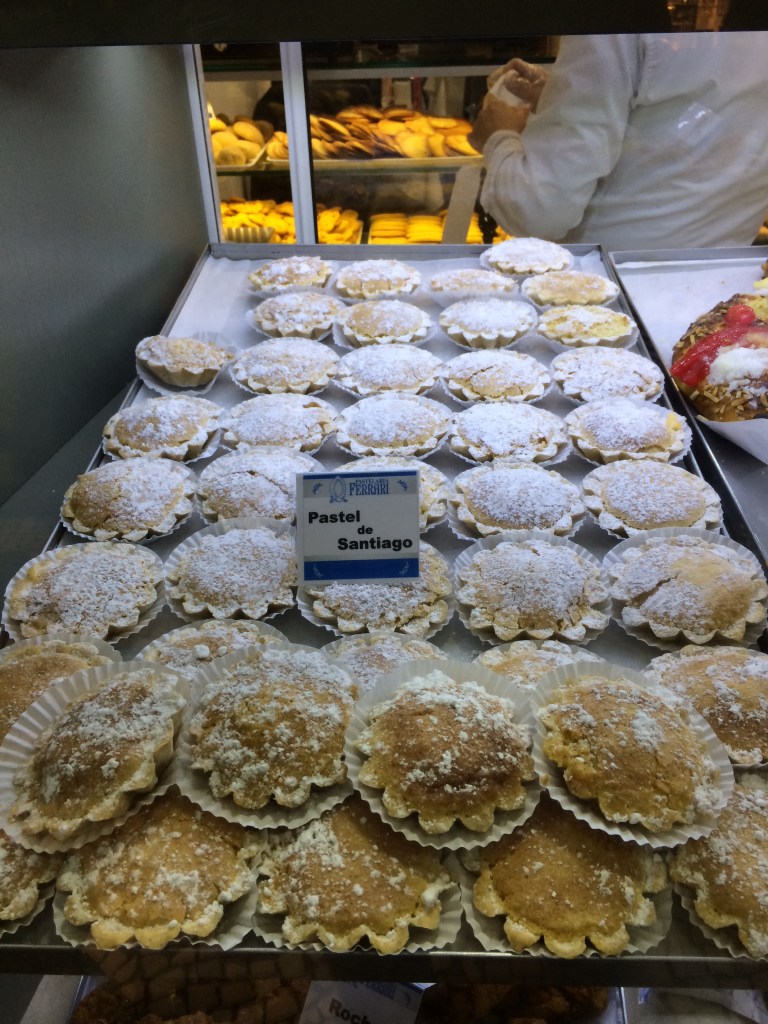
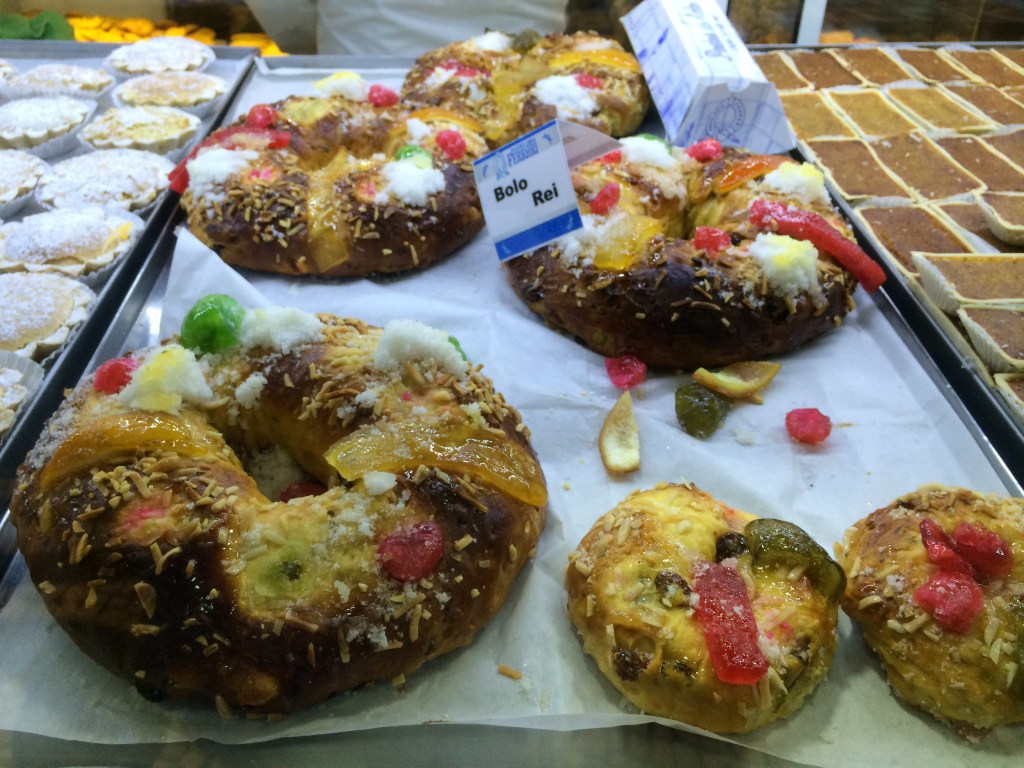
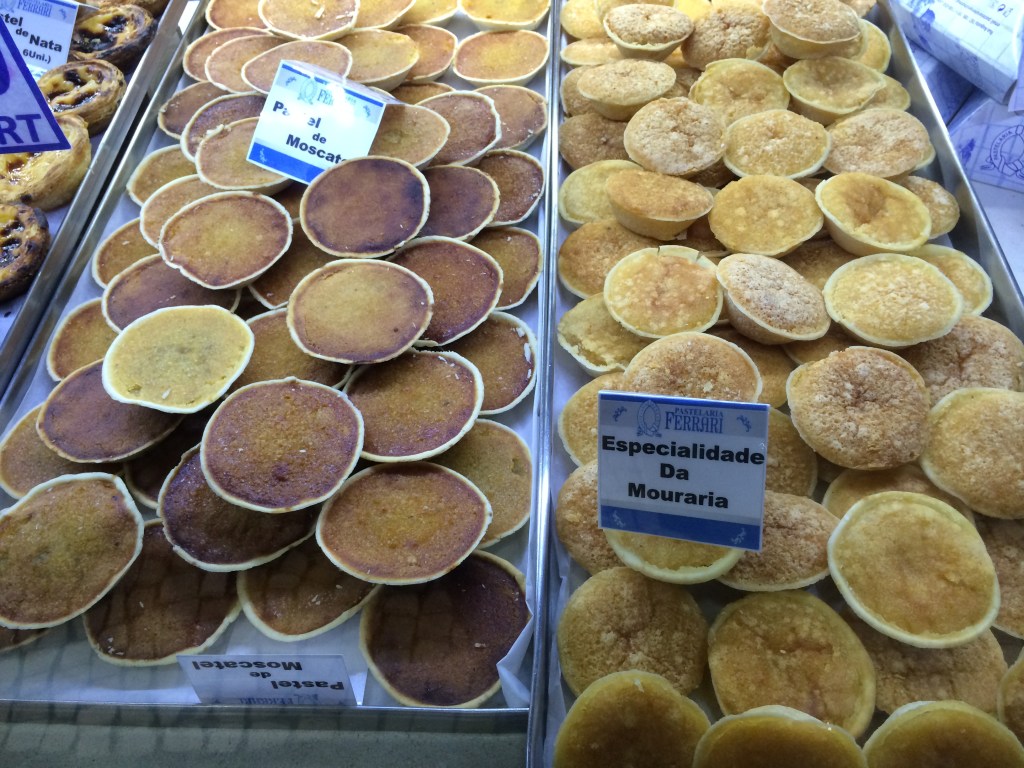
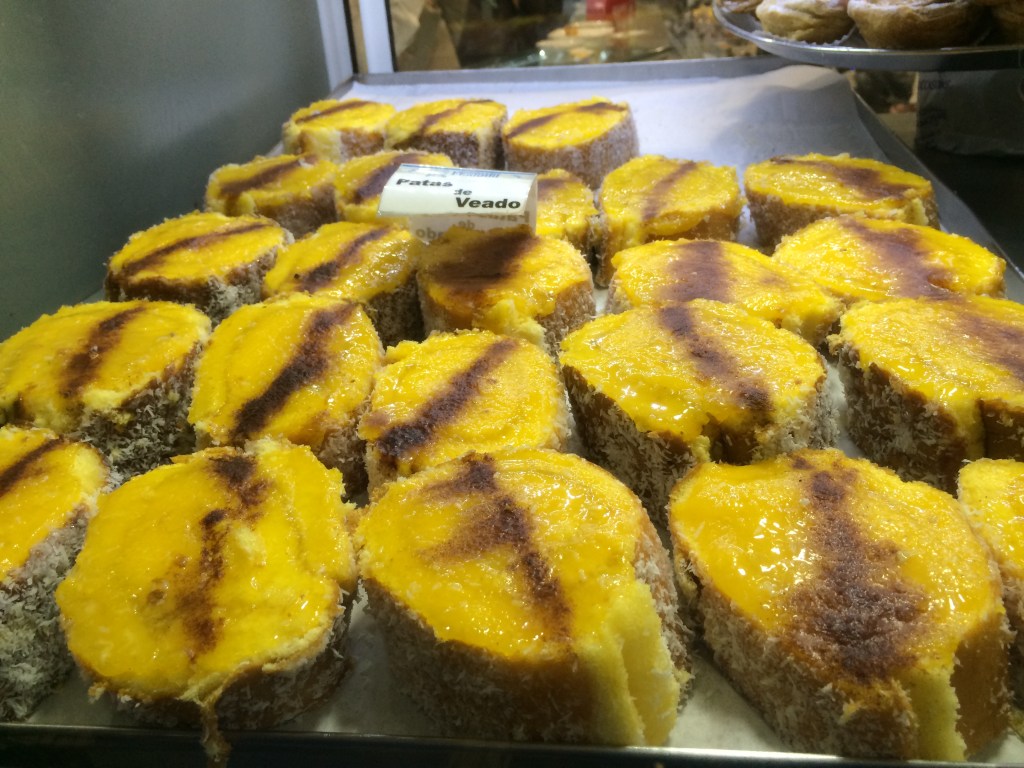
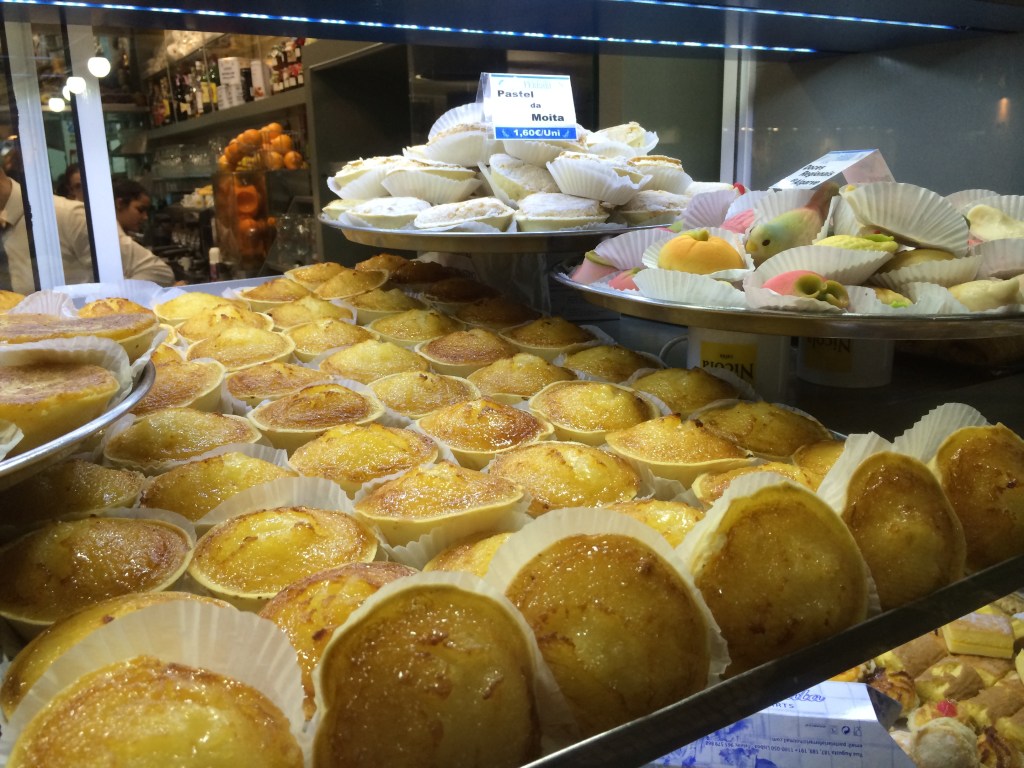
5. Portuguese baked offerings are rather under rated. The egg custard tarts(pastel del nata) have got their fair share of fame across in the culinary world especially the ones at Belem(Pastel de Belém) are world famous and does lives to the hype. But there are a variety of pasteles and cakes that live in relative obscurity. Although I have to admit, they end up looking very similar with their brown and yellow hues. Pastel de Santiago (almond cake/pie), pastel del moscato, patas de veado (swiss roll topped with egg custard) and Bolo rei (King’s cake) are among the few that I sampled. 

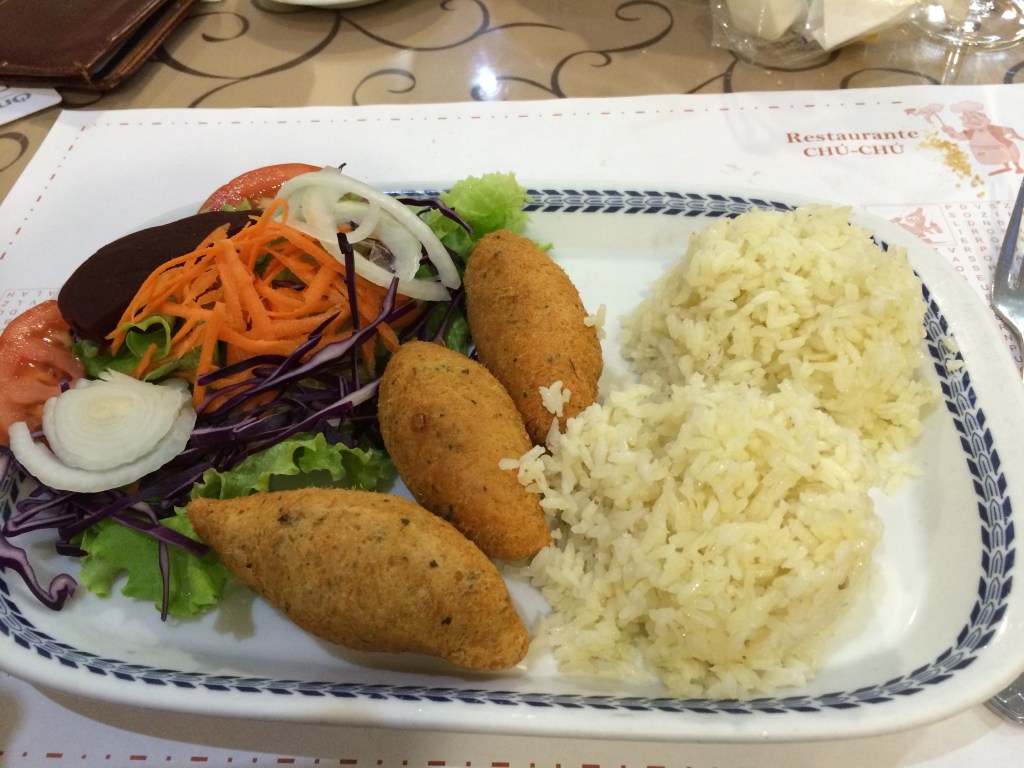
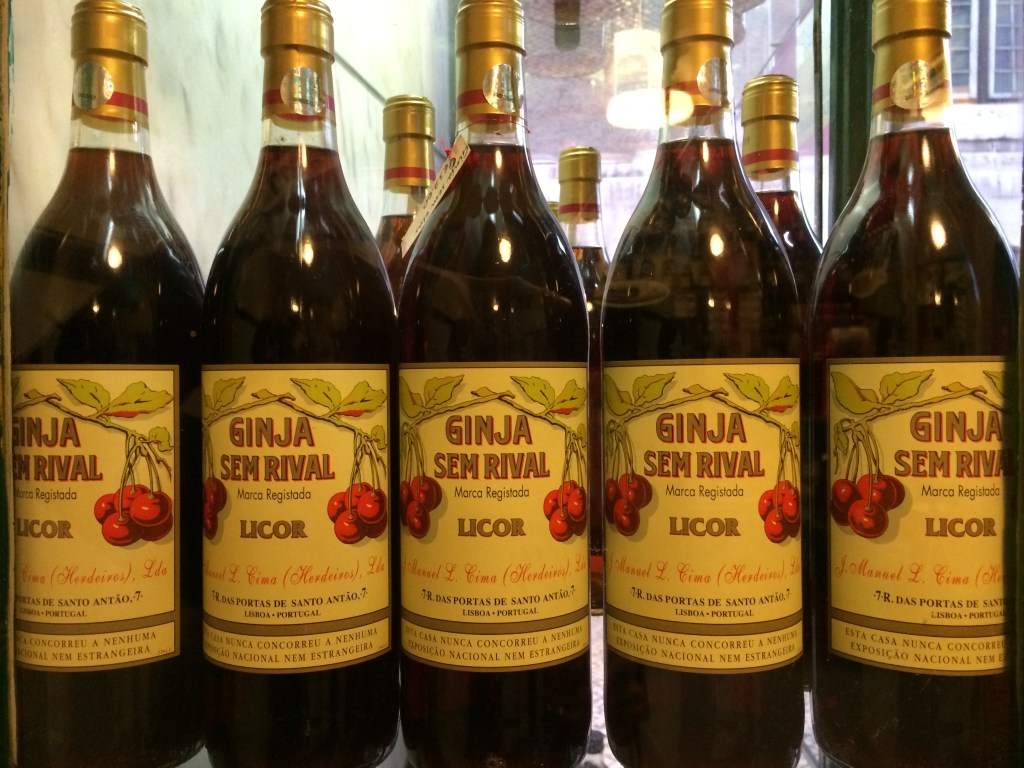
6. Bacalhau (dry salted cod) is as ubiquitous as it gets and probably the national dish of Portugal. It is usually into made into croquettes(pasties de bacalhau) or stews but there are probably hundreds of Bacalhau based Portuguese recipes. Bacalhau itself was a result a clever hack invented by sailors to transport cod from distant seas to their homeland. Cod preserves well with salting and drying as it has a lower oil content compared to other fish. As time went by, Portuguese palates acclimatized to the preserved version and is now a kitchen staple. Giginja is a cherry liqueur made by soaking sour cherries and spices in a high proof  alcohol. It is sharp, sour, sweet and strong, licorice-ish but better. Aguardente de Medronho dubbed as firewater is what you drink to get hammered quick. It is vile and will heat up your throat on its way down. 

7. Fado music is very unique to Lisbon. It is very evocative and meant to create ‘saudade’ which is a feeling of longing. It is thought to have originated in the sailor bars of Alfama wherein sailors would express their pent up emotions from their maritime explorations. Today, it has evolved into a performance art. There are plenty of Fado dinners to get a taste of this soulful musical style.

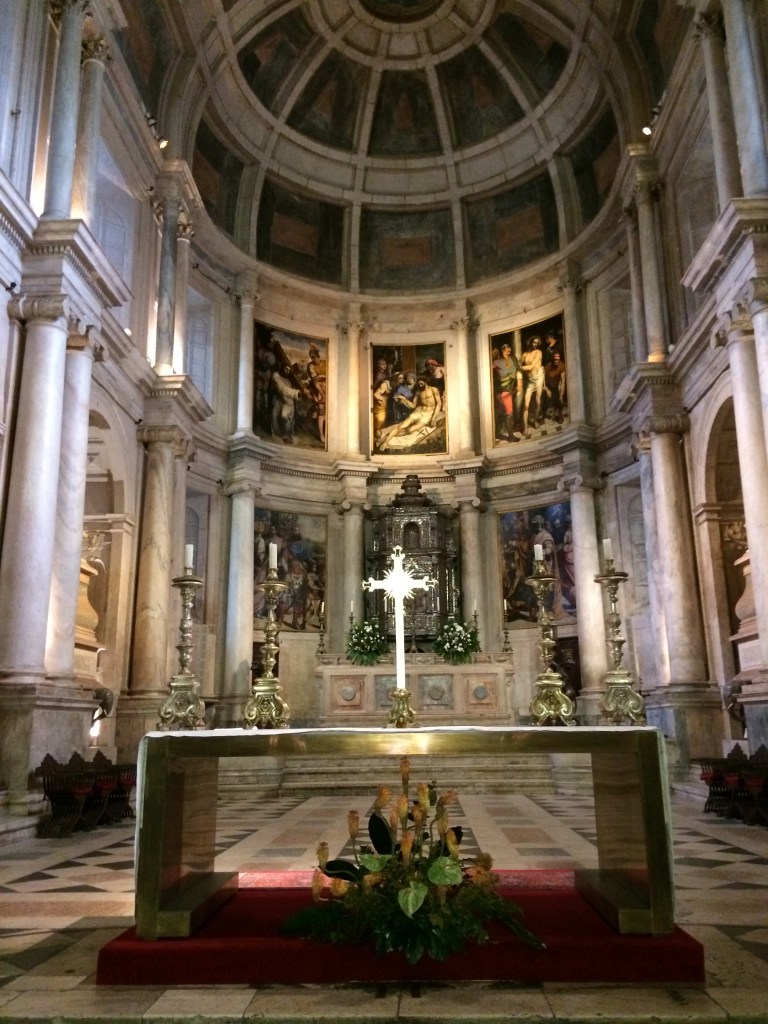
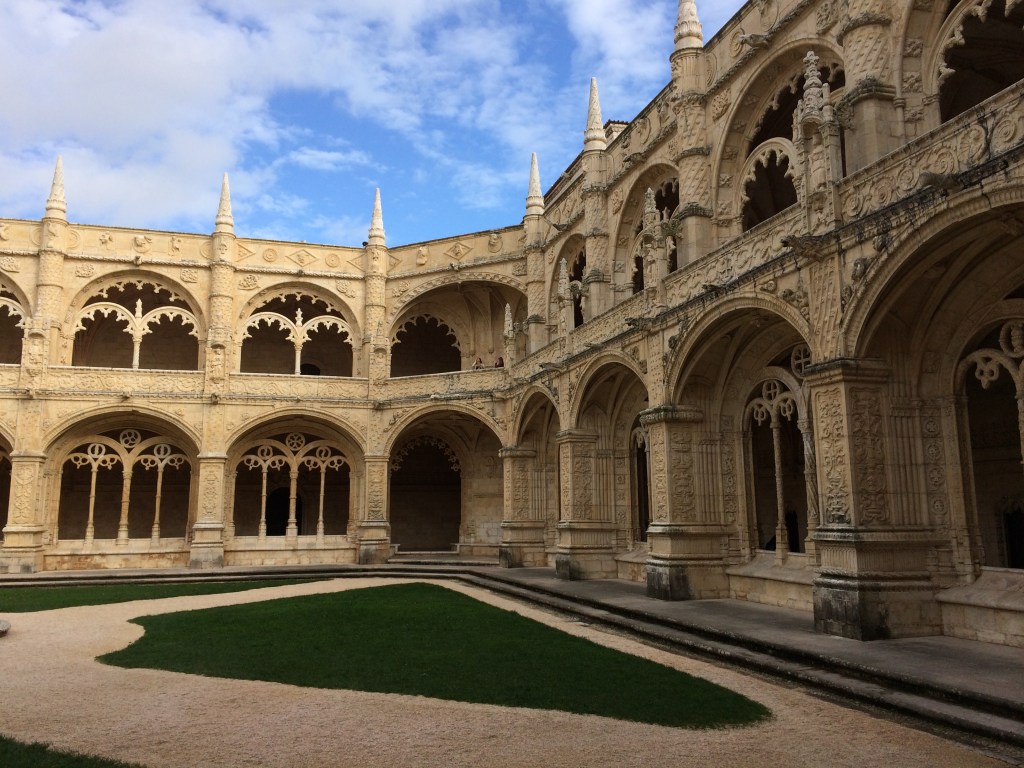
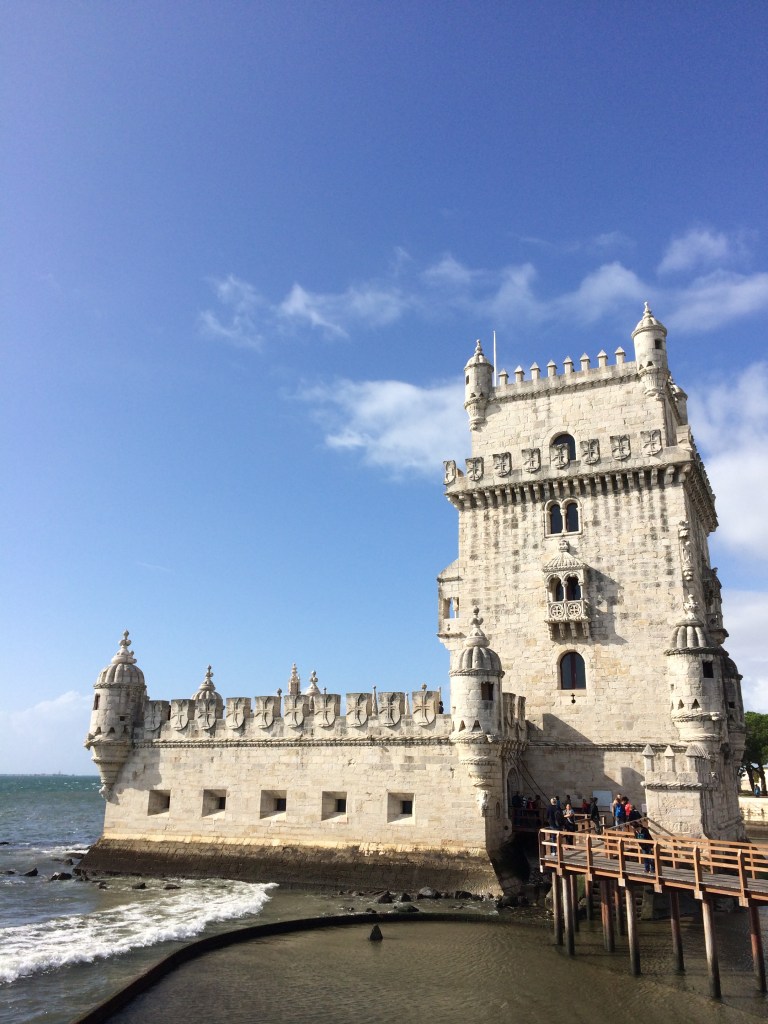
8. Belem has more to it than Pastéis de Belém although that alone is a good enough reason to pay a visit. The Jerónimos Monastery which is down the road is a UNESCO monument with stunning ornamentation both in the Santa Maria church and the adjoining cloister. Belem tower might look pretty with its whitewashed walls and intricate carvings but it was primarily built as a defensive post. The ground floor once housed 16 cannons. The prisoners pits are unique due to the space constraints in the tower but then again human race hasn’t changed much in this regard even centuries later. Thankfully, It was later transformed into a lighthouse. 

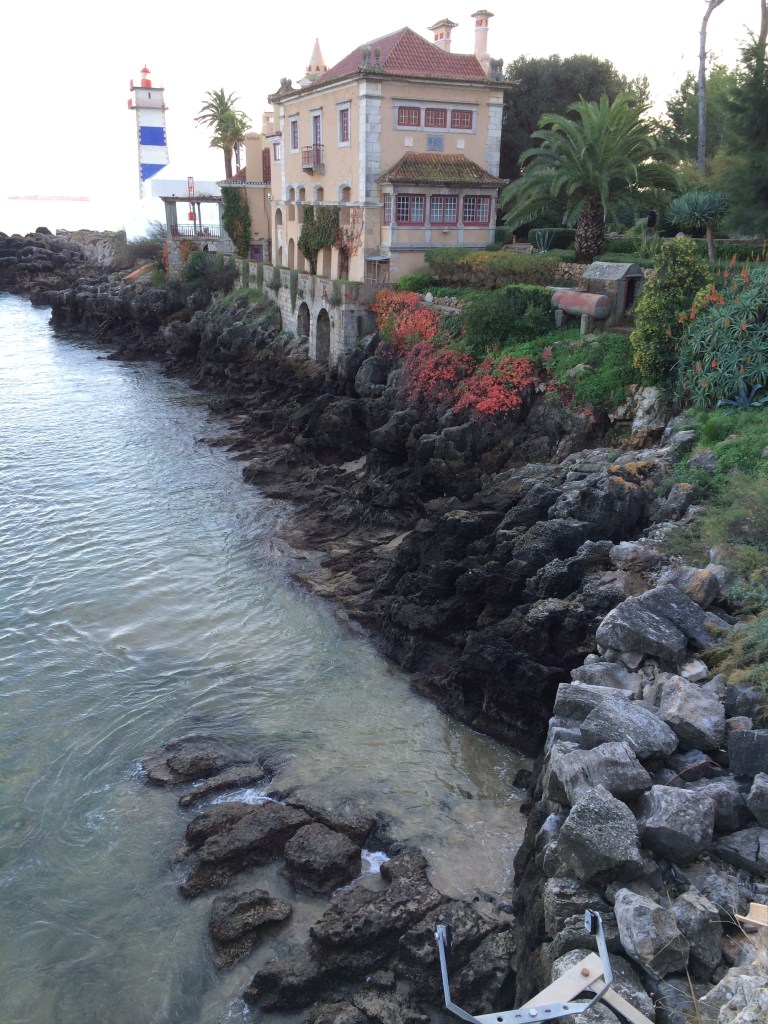
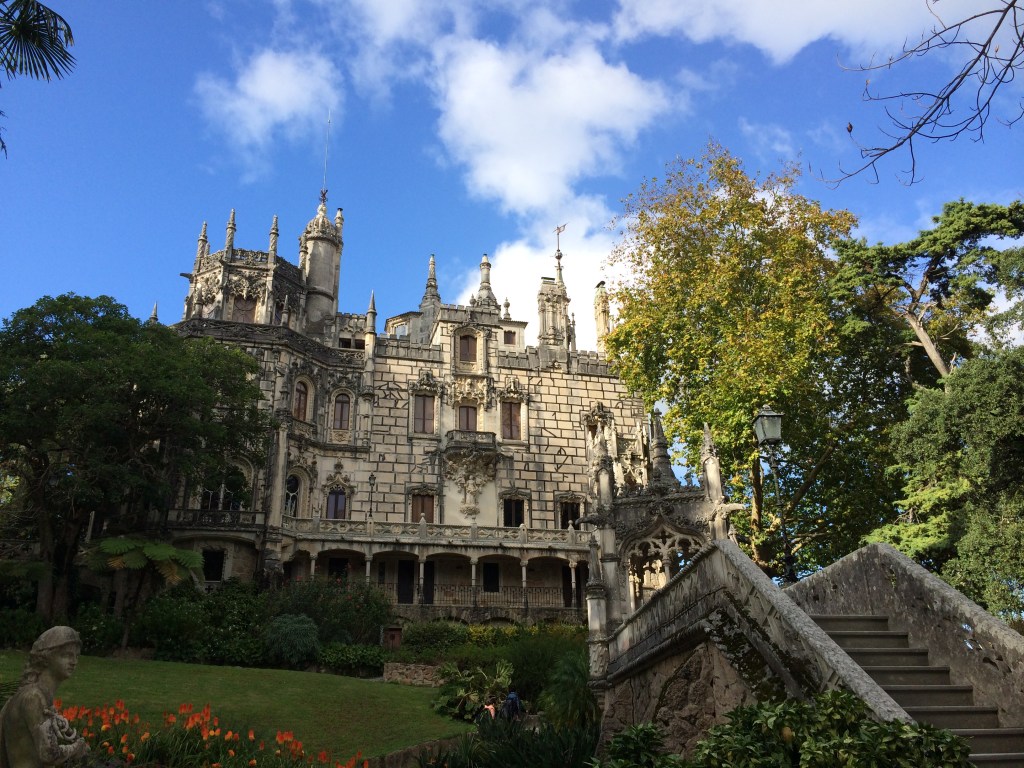
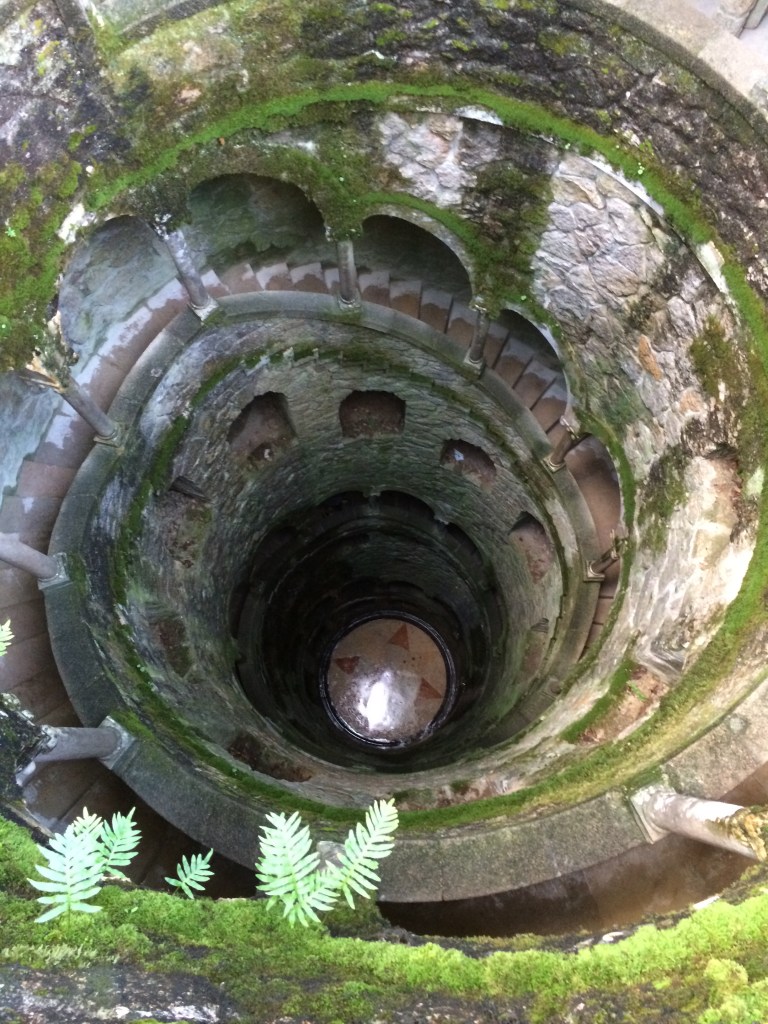
9. The Santa Marta beach at Cascais is perfect for a sunny day. The beach isn’t too crowded and there is a nicely restored lighthouse that is a perfect backdrop for sunsets.Sintra merits a few days on its own but I was glad I squeezed in at least day trip.Quinta da Regaleira is by far the most fascinating building that I have ever visited. It is so mystical and worthy of days of exploration so much so that I could write an essay about it.

10. Sintra merits a few days on its own but I was glad I squeezed in at least day trip.Quinta da Regaleira is by far the most fascinating building that I have ever visited. It is so mystical and worthy of days of exploration so much so that I could write an essay about it.

10 things about Lisbon, Portugal

5 things about Bratislava, Slovakia

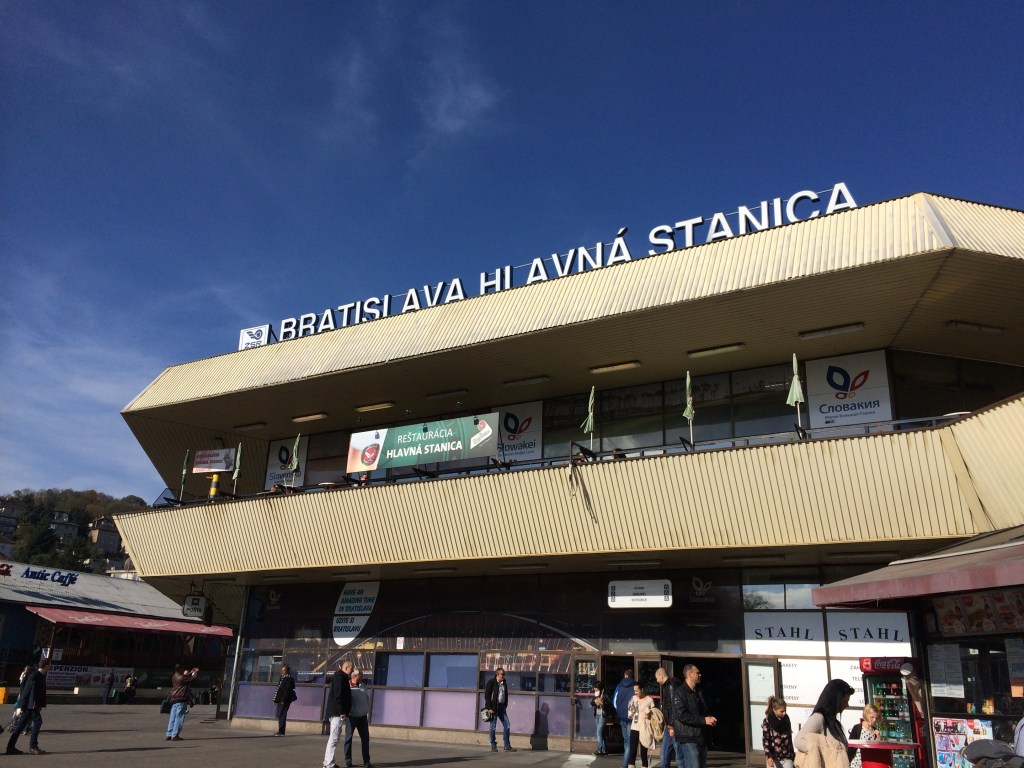
1. To be honest, one of reasons I went here was because it was a short train ride from Vienna. On second thought, the boat cruise would have been much more fun but was also more expensive and time consuming. As soon as alighted from the inter-city train, I noticed the contrast with Vienna. It had the rusticity of a developing country but I learned that Bratislava is one of the richest regions by per capita GDP. Although English is widely spoken, many vendors usually the older generation were much more comfortable with Russian. 

2. Bratislava like major European cities has a long history going all the way back to the times of Celtics and Romans. However, it peaked under the Habsburg dynasty. As the Ottomans advanced into the heart of Europe and capture Buda, Pozsony became the capital of the Kingdom of Hungary. It served as the seat of the Habsburg empire seeing coronations of 11 kings and 8 queens including the longest reign of Maria Theresa. The modern name, Bratislava was agreed upon when the country of Czecho-Slovakia was created.  

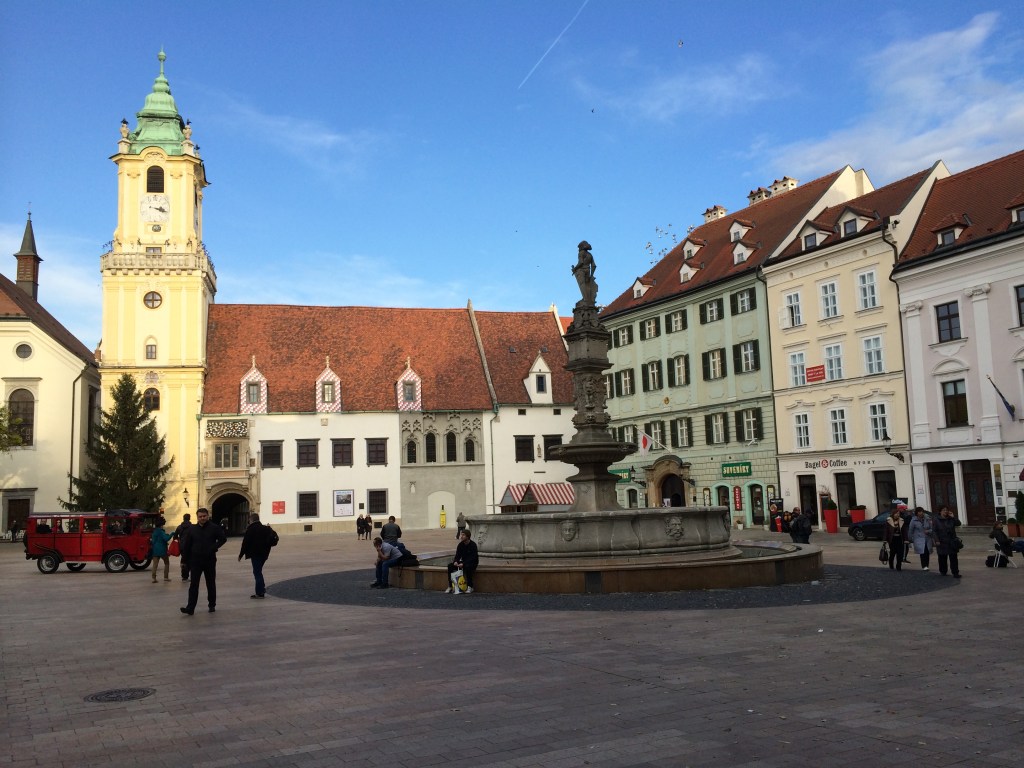
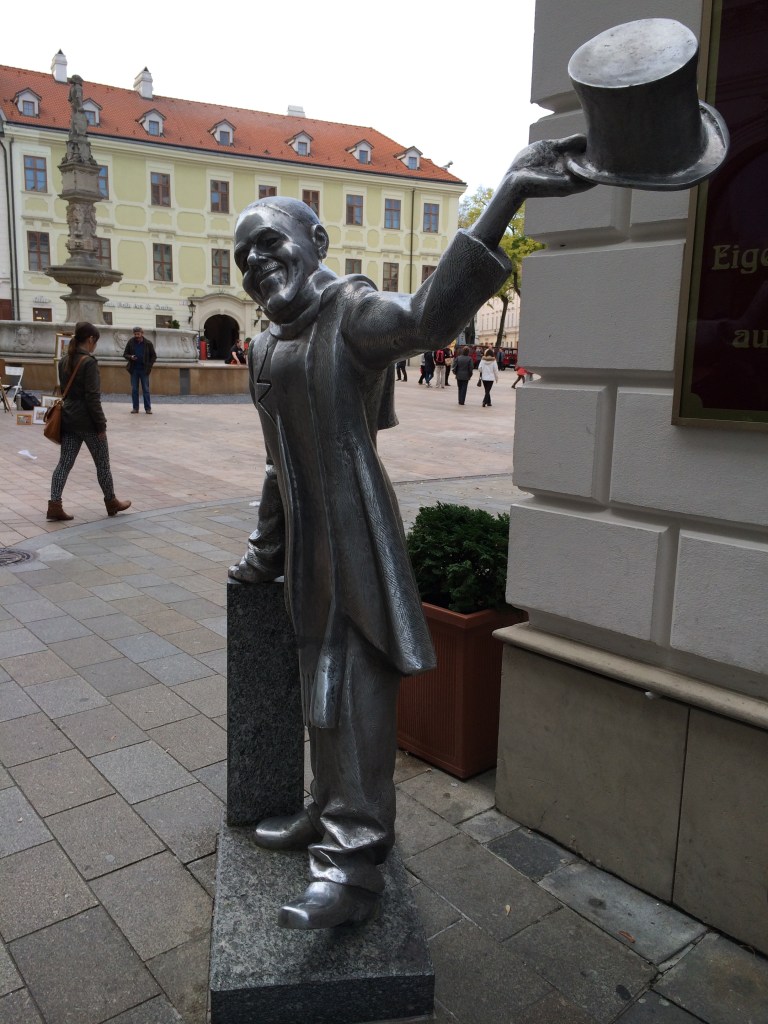
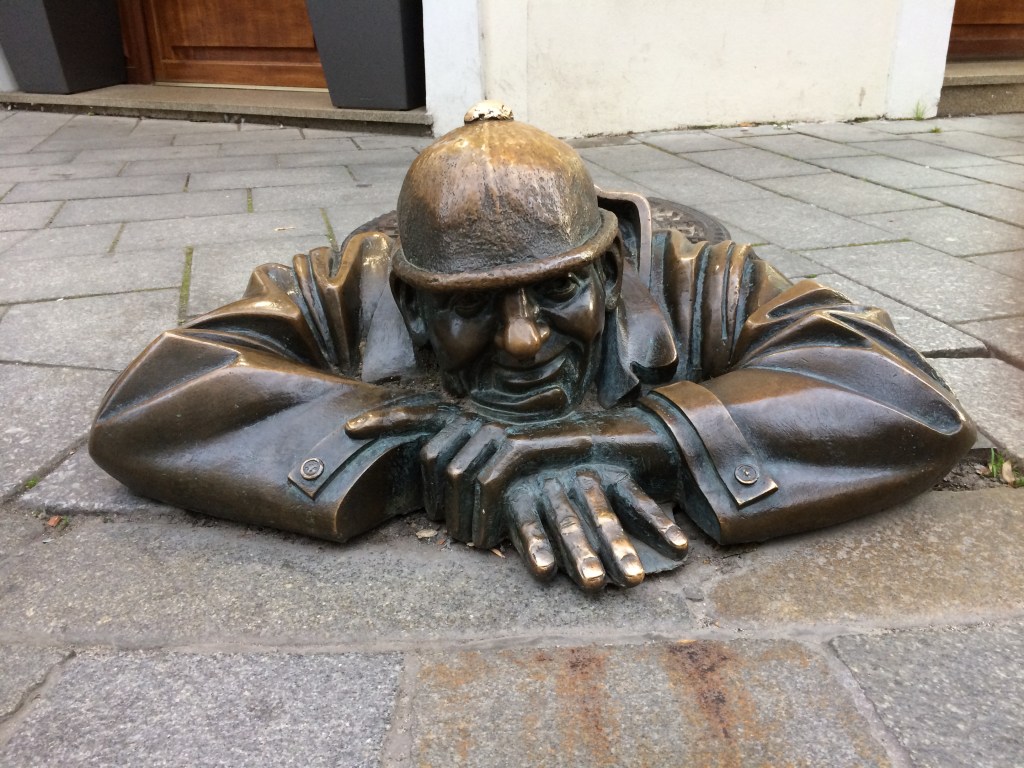
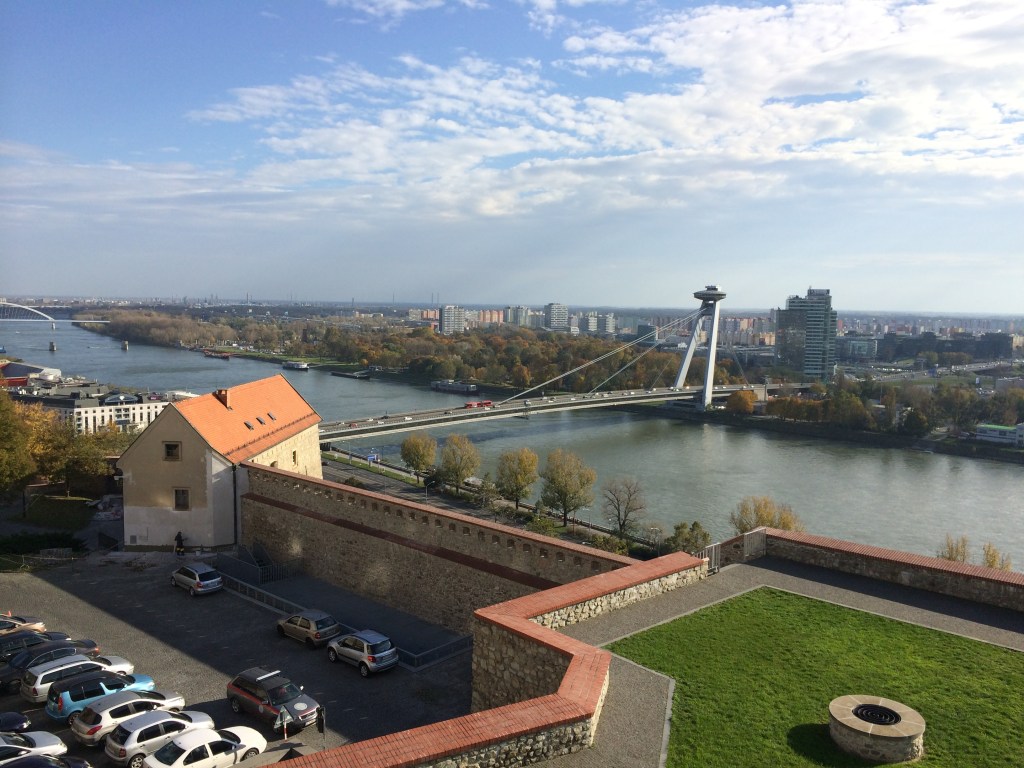
3. The main draw in Bratislava is definitely the Old Town. It is one of the better surviving medieval towns in Europe. In fact, Michael’s Gate is the oldest serving medieval fortifications in Europe.One of my favorite things was the little statues that are placed all over the old town. It was no doubt that it was meant for photo-ops but they were delightful nevertheless. Cumil (“Man at Work”) is the most popular among then. I walked to SNP bridge over the Danube river but I gave the UFO shaped observation deck a miss. 

4. Bratislava Castle has been inhabited continuously from the Iron age due to its strategic location overlooking the Danube river. It served as the acropolis during the Celtic and Roman period. In the 9th century, Slavs build a palace of stone with a basilica and fortified using it using the material from the Roman buildings. Through the middle ages and until the final abolishment of the Kingdom of Hungary in 1781, Bratislava Castle (Pozsony castle under the Hungarian empire) served as the seat of many kings in the Hungarian empire. It was later converted to a seminary before being destroyed by a fire in 1811. The ruins were opened to public in 1946 and restoration work began as early as 1957 and continues in some way to the present day. I liked getting lost in the gardens and various pathways within the castle and the views of the Danube are not shabby too. 

5. Food is heavily influenced by Russian cuisine given this history. At lunch I was served pelmeni introduced to me as ravioli. The dill sauce gave it away though.There are a bunch of hip cafes popping up all over town with globalization favorites like latte art and avocado toasts.

5 things about Bratislava, Slovakia

5 things about Warsaw, Poland

1. Warsaw or Warszawa in Polish was born out of a fishing settlement established along the banks of the Vistula river. Warsaw became the capital of Poland in 1596 when the then king of Poland, Sigismund III chose to move the capital from Krakow. It later became part of the Kingdom of Prussia in 1795 and became the capital of the Grand Duchy of Warsaw. Soon after it was annexed by the Russian empire and finally emerged as the capital of an independent Poland in 1918. Today, Warsaw like any modern city in EU promises a great quality of life for the Poles. 

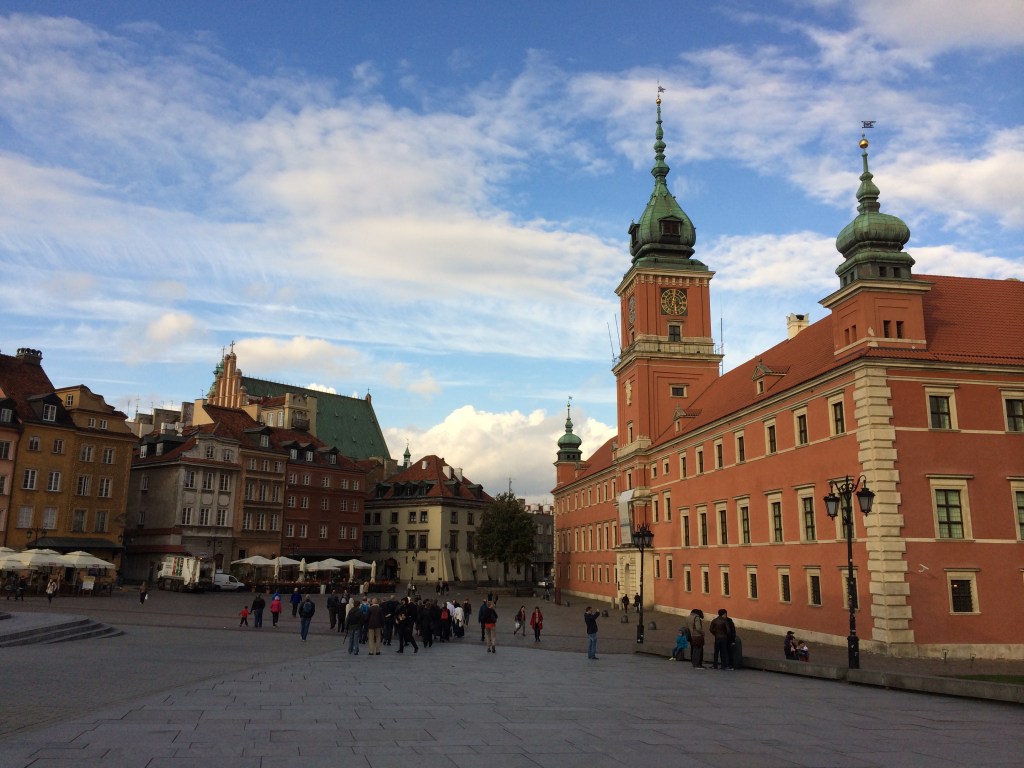
2. The World wars were dark times for Poland in general and Warsaw in particular. The city was obliterated by Nazi bombings in WW2 as retribution to the Warsaw uprising. The uprising itself was one of the largest resistance movement of WW2. The Old Town has been painstakingly renovated for 14 years to its colorful modern day version. Plac Zamkowy or Castle Square is at the centre of the Old town. It is a popular gathering point for visitors and locals like. Christmas, concerts, football live casts makes the square vibrant in all seasons. The red brick facade of the castle has an aesthetic appeal about it and I couldn’t enough of that color tone. The Old town market square is also picturesque and usually teeming with local artisans. 

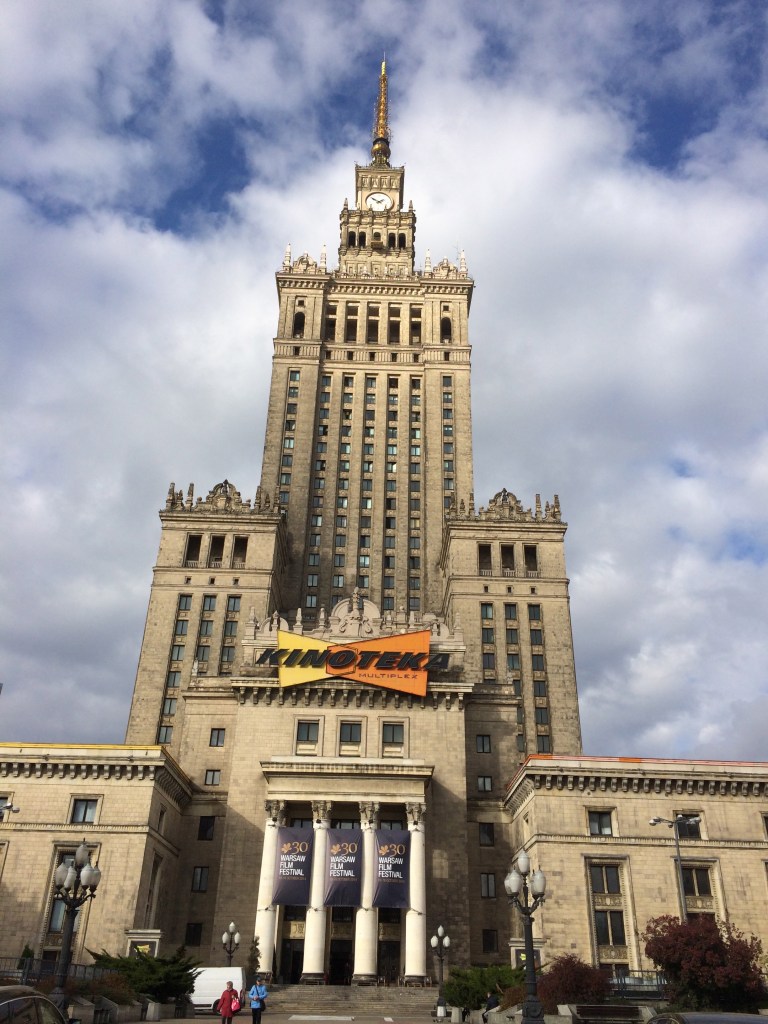
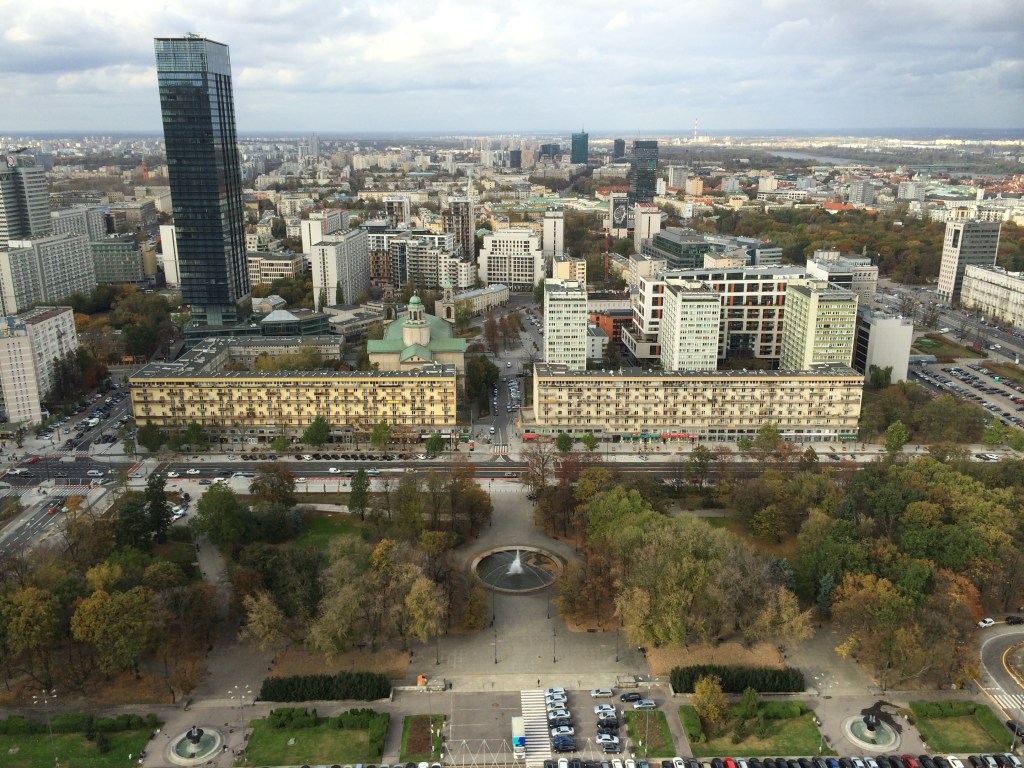
3. The Russian Communist regime influence is so obvious in many ways. Most notably, the Palace of Culture and Science 237 meters high still stands tall. It was a “gift” from Stalin to Poland and one of those things that Poles loves to hate. It is a majestic but is largely uninspiring. I actually thought that the interiors were much nicer. The view from the top was alright but I wished there was a building tour. I later found that the building was host to many conference and cultural centers. 

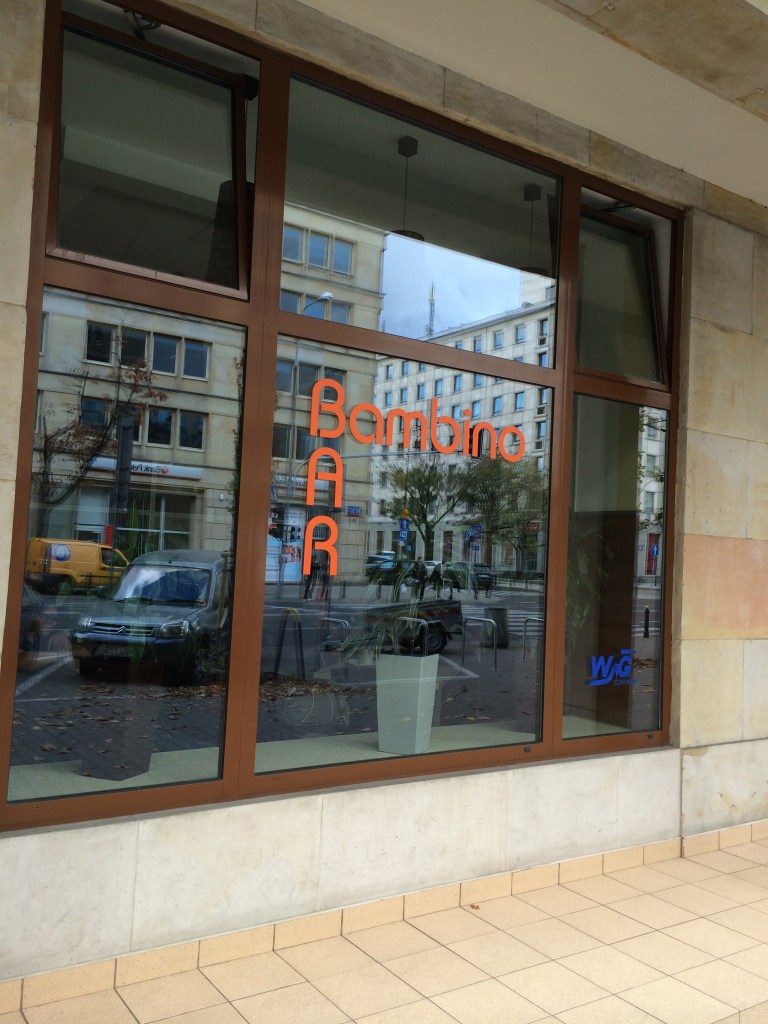
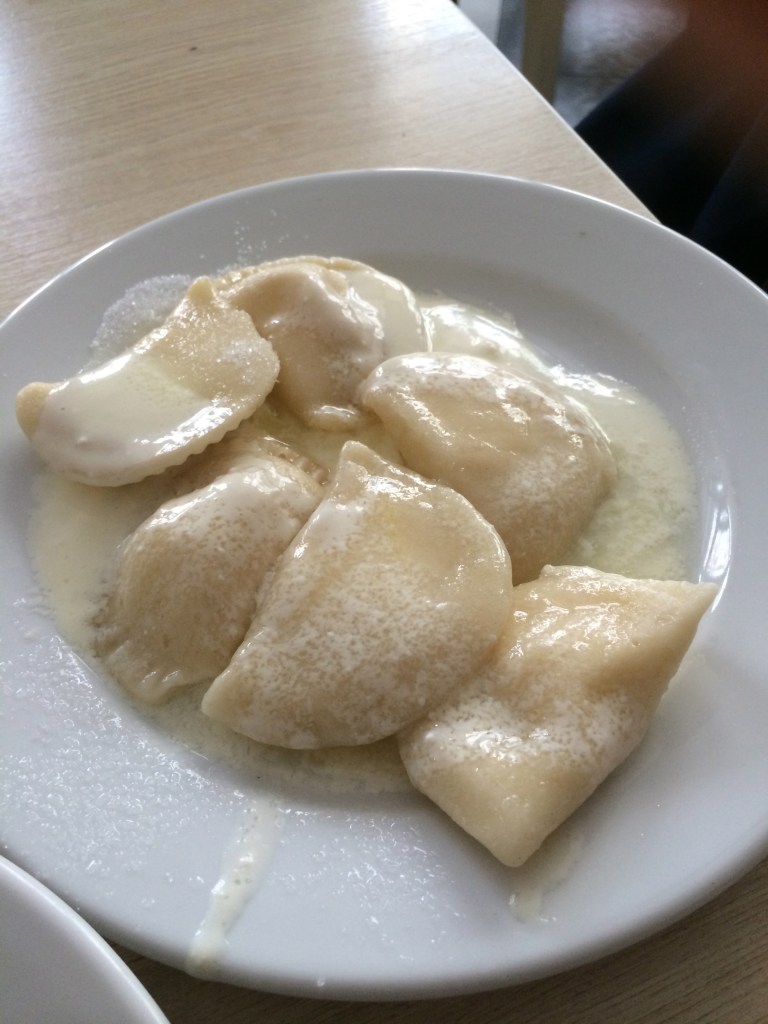
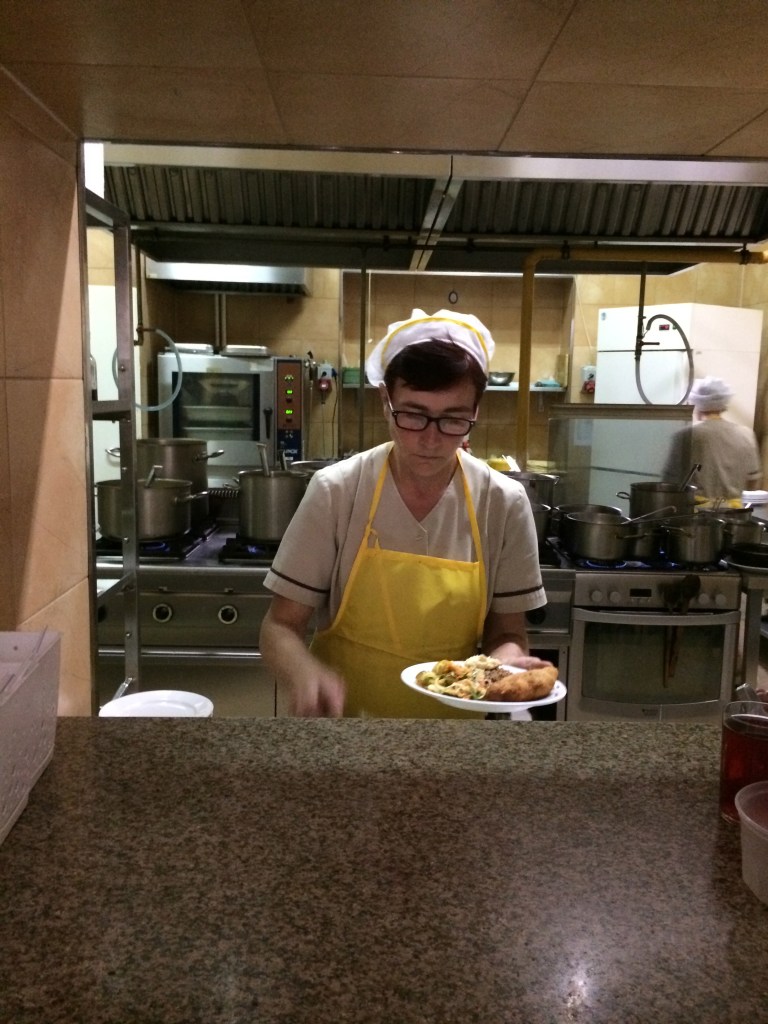
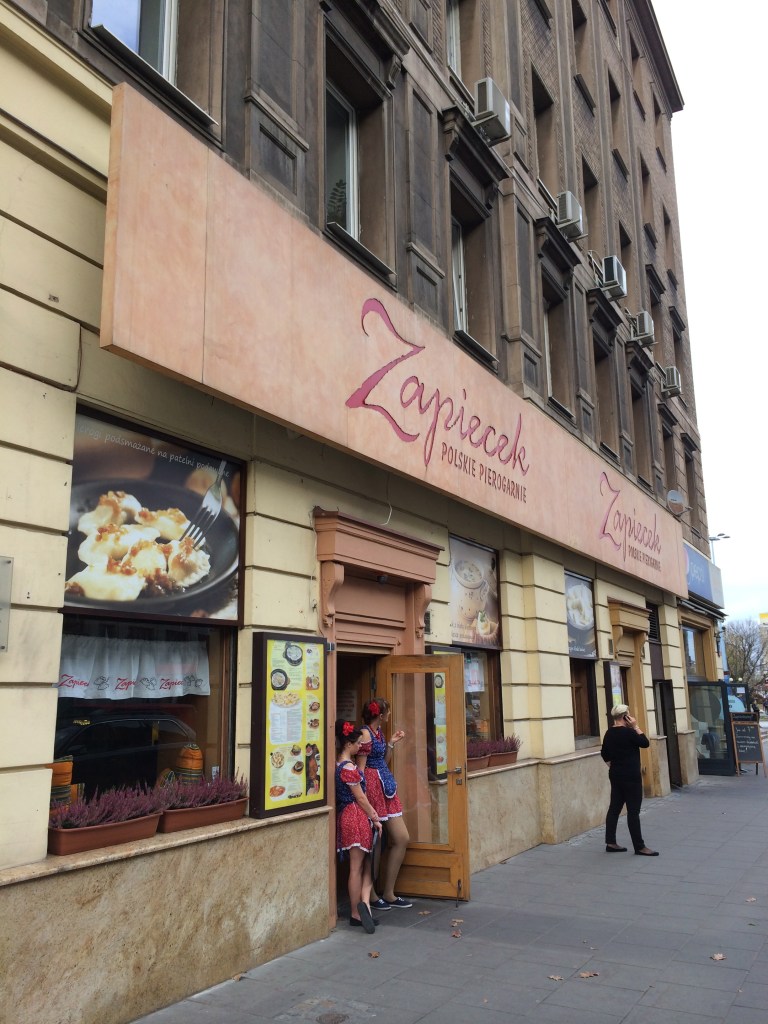
4. Milk bars are another remnant of the communist era. They functioned as subsidized cafeterias catering to the masses. Today, some of them have been restored to provide affordable rustic meals made by adorable grandmas. Bar Bambino is a relatively modernized milk bar but the menu is still old school. Pierogis, cabbage salad, potatoes and coffee for all under $10 USD but most importantly the ladies running the cafe are very hospitable even more so to curious tourists. The Zapiecek chain is also popular for the pierogis but it felt showy and had long lines. In general, food was hearty and nutritious. I didn’t get tired of all the dill seasoning as much as I thought. 

5. Warsaw was home to some major celebrities back in the day. Of which, Chopin is a world renowned and my favorite. He was pianist and composer of the Romantic age. (1800s). He spent his early years in Warsaw before moving to Paris. Fryderyk Chopin Museum captures some of this history and is a must visit for every Chopin fan. Also, the Warsaw international airport is named after him. Nicolaus Copernicus, the famous astronomer who proposed the heliocentric system i.e planets orbited the sun is also memorialized in Warsaw through statues and street names. The science museum in Warsaw is also named after him. 

5 things about Warsaw, Poland