7 things about Munich,Germany

1. Munich or München (home of the monks in German) came into being because of the monks of the Benedictine monastery. In 1157, the Duke of Bavaria gave his permission for the monastery to build a market and this became the foundation for the city. Munich’s coat of arms pays homage to its origins. In modern day, Munich has evolved to be the heart of the Bavarian economy as well as the German economy. It is home to six large companies including BMW, Siemens, Munich Re, Allianz which comprise the elite DAX 30 blue chip stock list of Germany. As a result, it is a prosperous city with a high cost of living. 

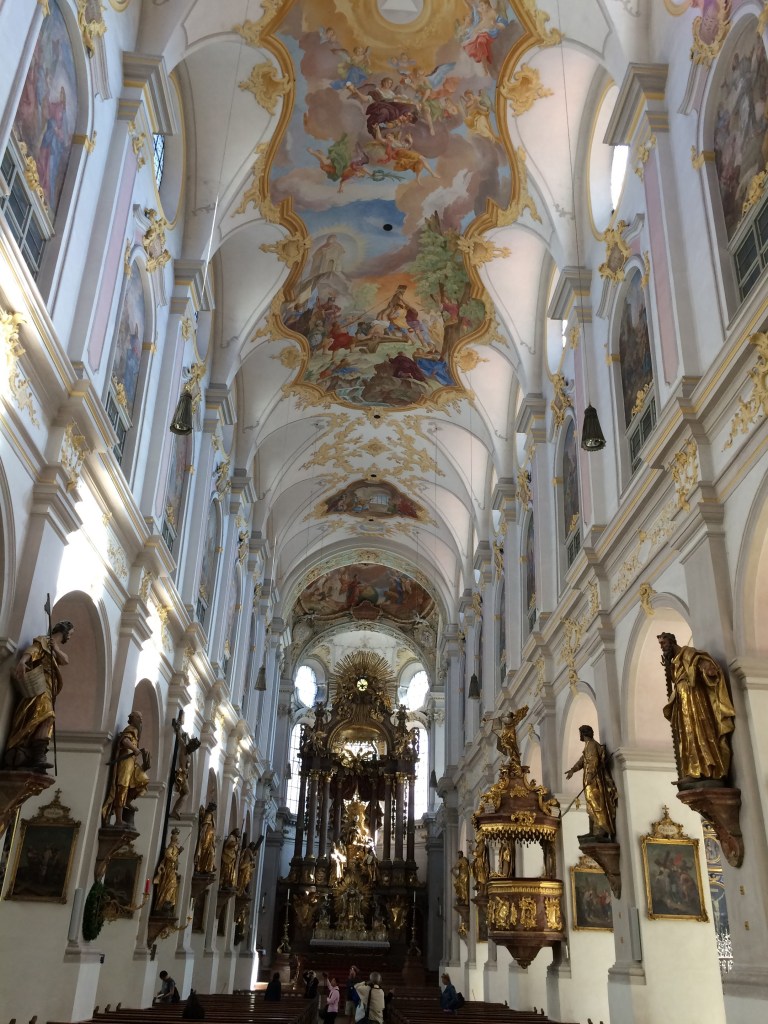
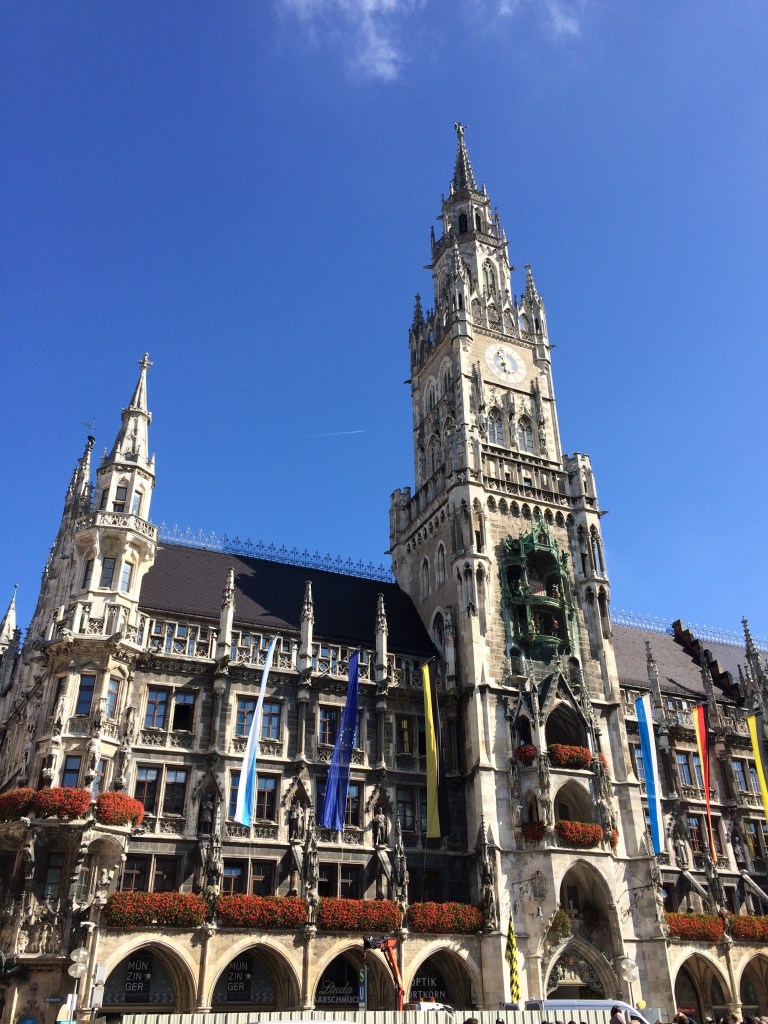
2. Marienplatz is the downtown core of Munich. There is no dearth of biergartens here but  Hofbrauhaus offers a small taste of an Oktoberfest tent throughout the year. Peterskirche (St Peter’s Church) with its whitewashed walls, golden statues and ceiling frescoes is one of the few but worthy religious monuments in the entire city. One can also climb up the church tower for a bird’s eye view of the area. The lavish wedding of Bavarian Duke Wilhelm V is recreated in a mechanical clock on the Marienplatz tower. The act involves 32 life sized figures and 42 bells and lasts about 15 minutes. It is one of those unique fun things in Munich. 
3. The cycling culture could rival that of Denmark’s. There were a good number of recreational cyclists as well as commuters. After receiving a few cold stares from the locals, I learned to avoid straying into the cycles lanes which run parallel to walking lanes on the sidewalk.

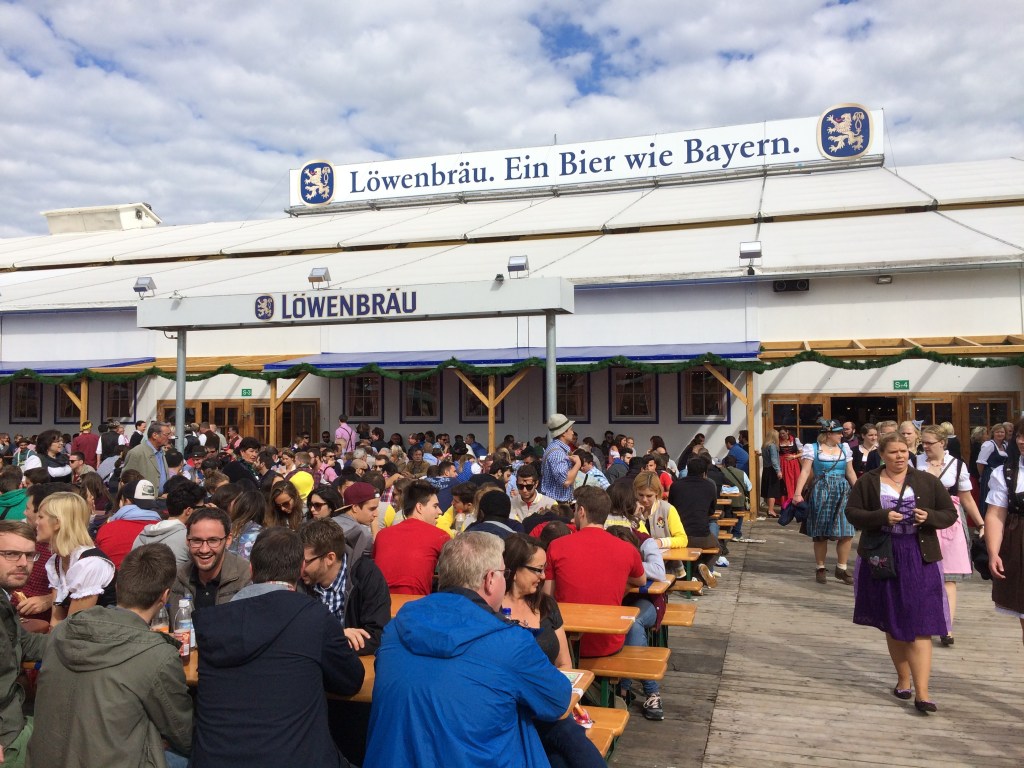
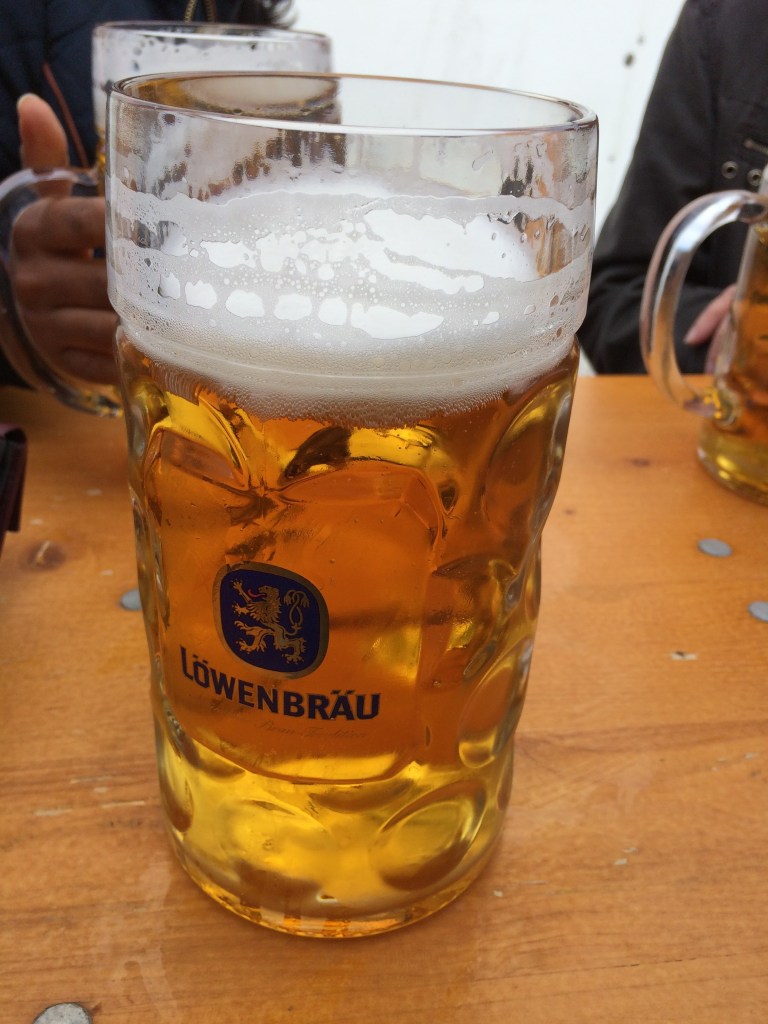
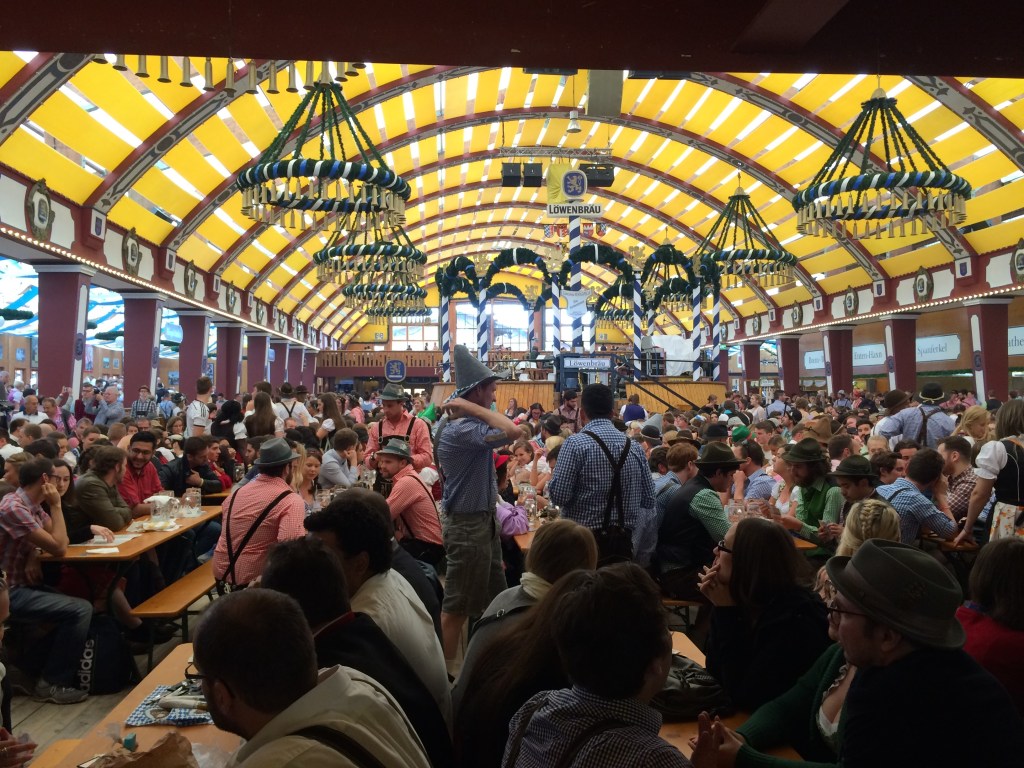
4. Oktoberfest is the mother of all beer festivals. I was pleasantly surprised at the scale of the event. I was lucky enough to be around on the opening day to witness the parade and cask tapping by the Mayor. After having tried my luck at some of the popular tents, I finally found seating at the Lowenbrau tent. With a giant mug of cold beer and a bigger pretzel to boot , I rejoiced in the festive mood with some nice Germans who as I was told would continue to drink for the rest of the day. 
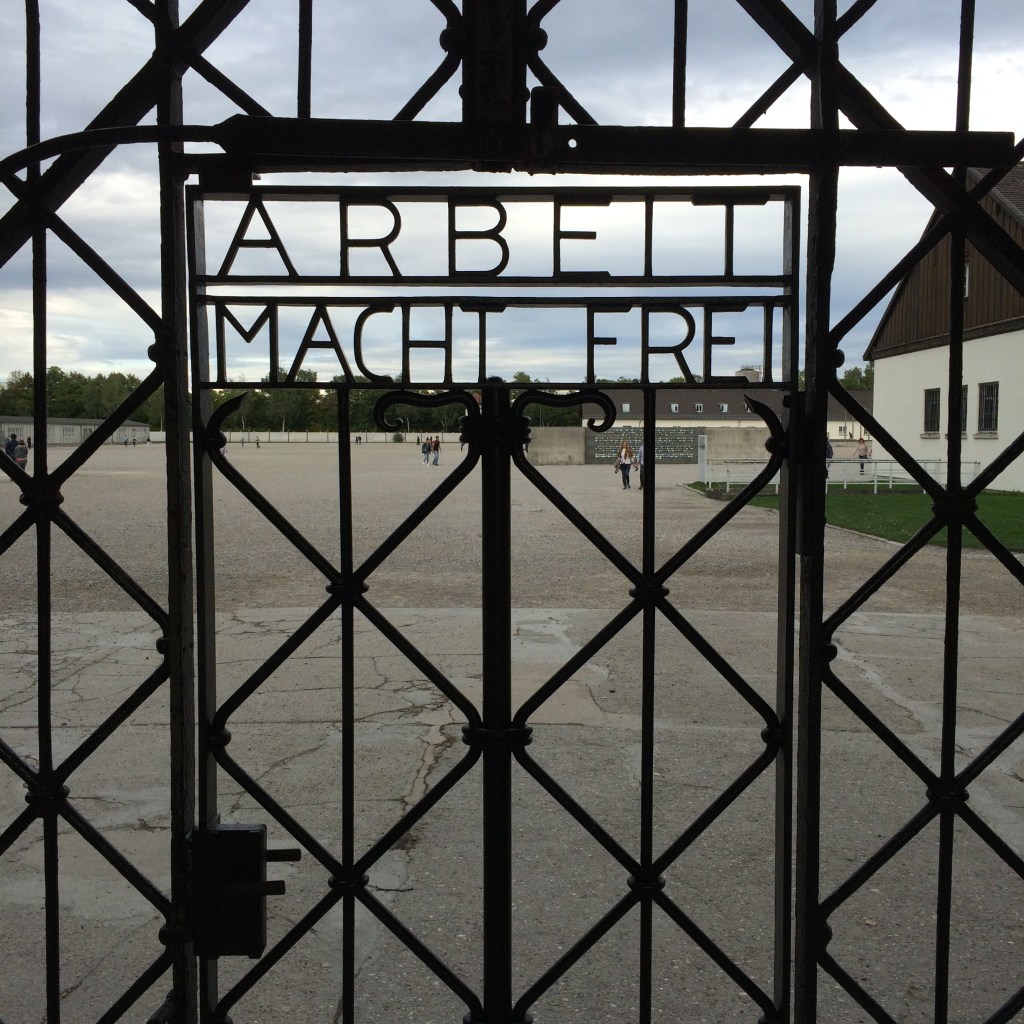
5. The town of Dachau is about 30 minutes from Munich. It was home to one of the longest running concentration camps during Nazi rule. It was commissioned by Heinrich Himmler, the architect of the worker camps and operated from 1933 until 1945 when it was liberated. I wasn’t at all prepared for the grimness of this place. Although the camps no longer exist, the museum built around the ruins is a stark reminder of those dark days in German history. The gas chamber evoked gut wrenching emotion as I could visualize the horrors portrayed in every holocaust movie. The entry gate with the word “Albeit Macht Frei”, German for work sets you free is a symbol of how hatred was deeply embedded in the ideology of the Nazi party. 
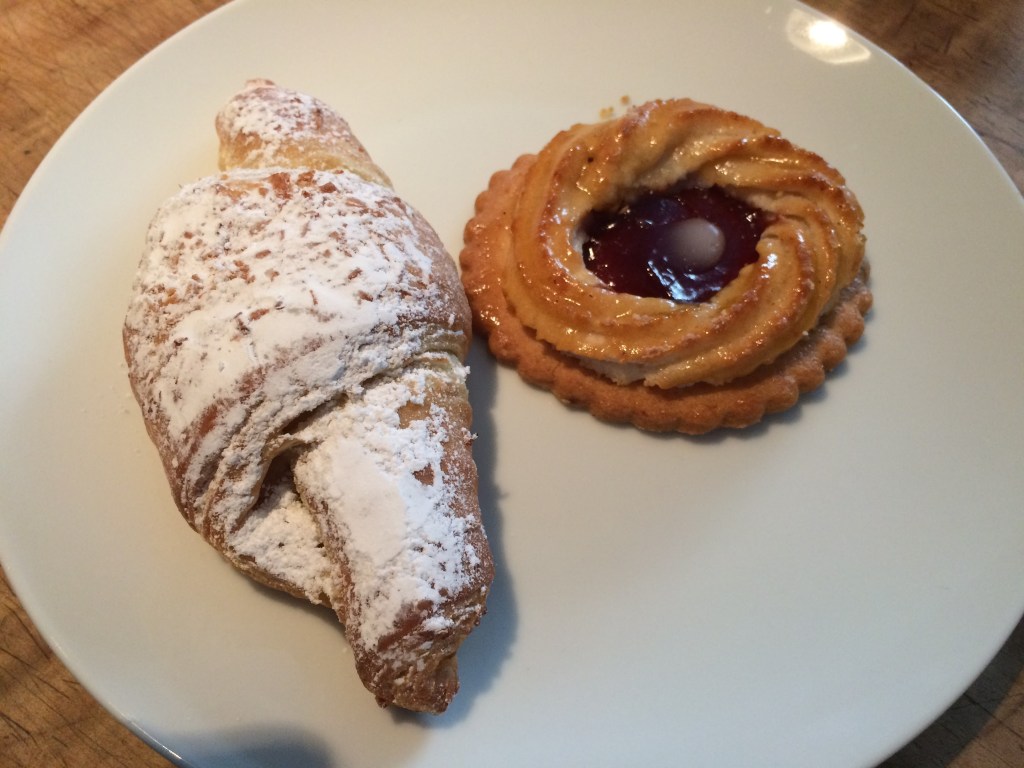
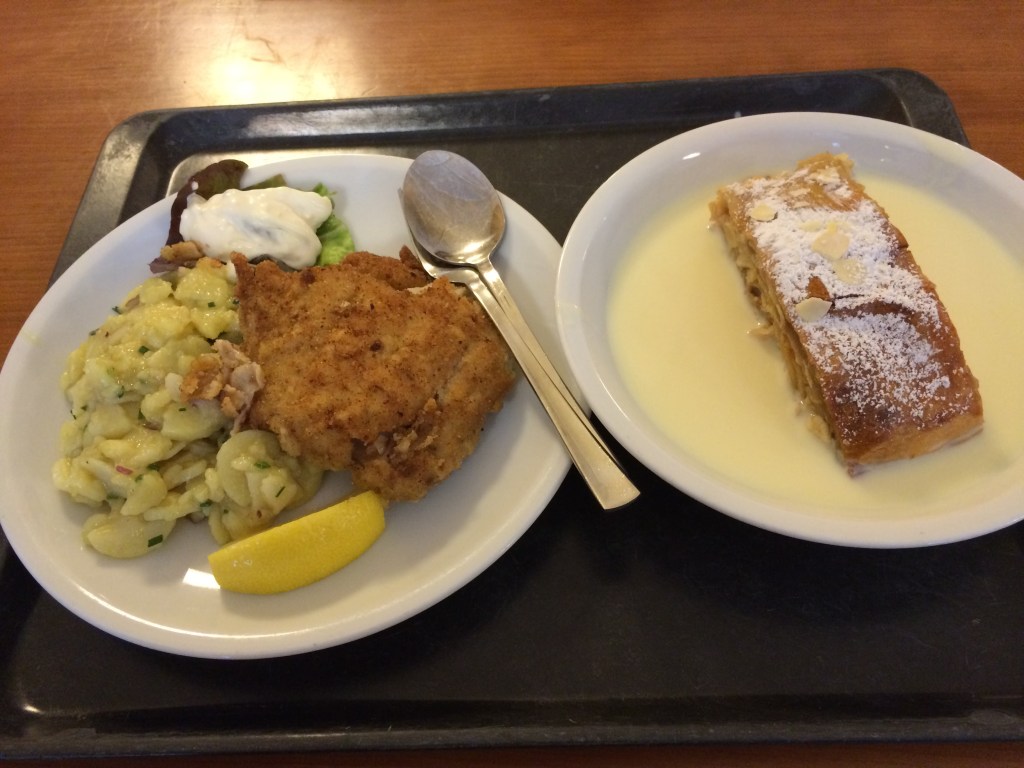
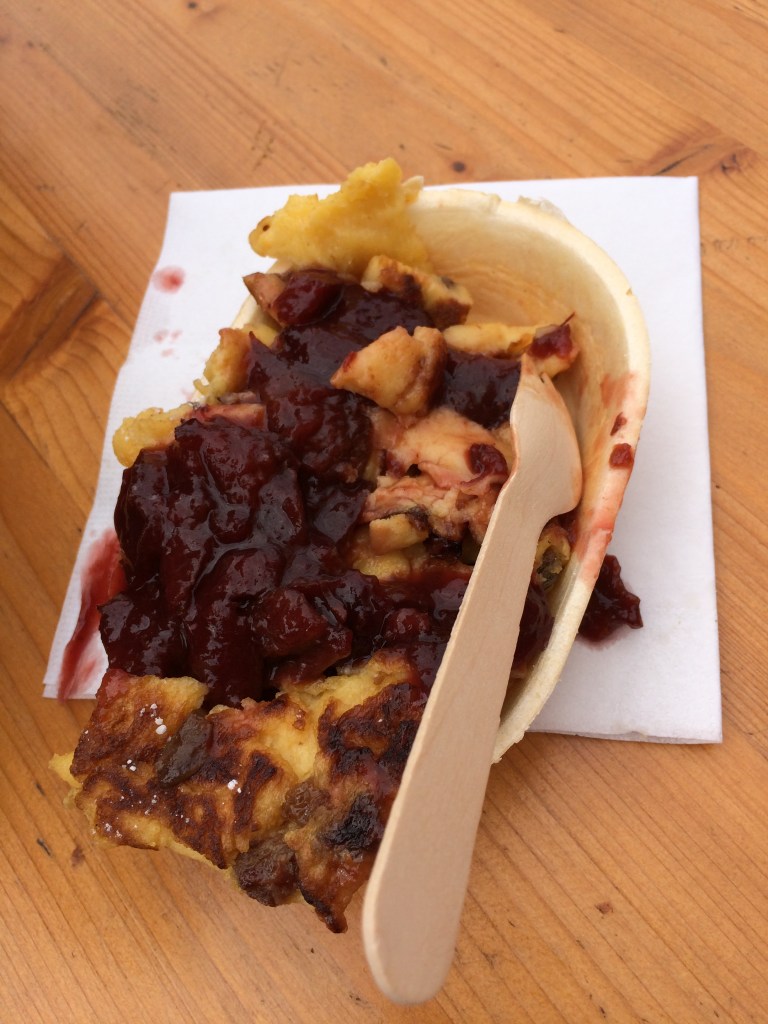
6. German food is utilitarian, hearty and nutritious. We had a couple of meals at the City Hall canteen. It was usually a breaded fried protein, mashed or boiled potatoes and strudel in custard for dessert. The classic apfelstrudel looks deceivingly simple but is scrumptious nonetheless. It can safely say that it is better than all versions of apple pie that I ever had. While I was spoilt for choice in terms of bread but viennoiseries were doughier and less buttery than their French counterparts. I had this eggy shredded pancake called kaiserschmarrn for breakfast at the Oktoberfest complex. For a sweet tooth, it is a German alternative for French toast. Spaezle is a cross between dumpling and egg noodles but I found it to be bland and doughy. It was a good standby though when vegetarian alternatives were hard to come by.
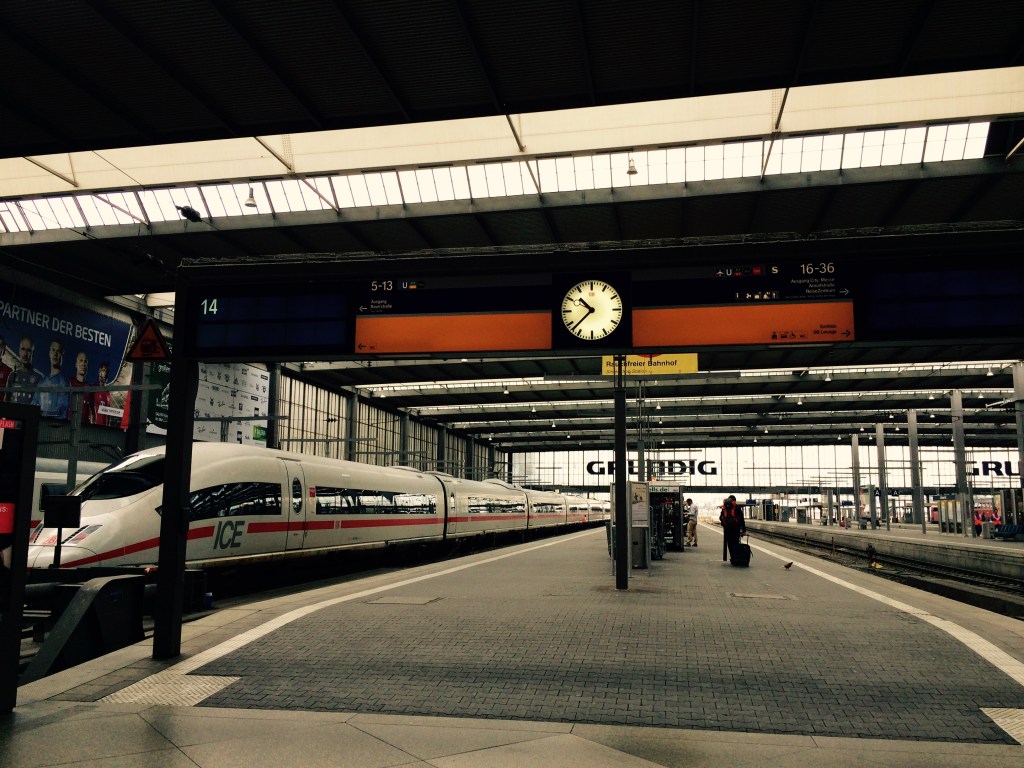
7. Trains in Germany are punctual, clean and efficient. I look forward to every opportunity to ride the Deutsche Bahn. Munich is extremely well connected and centrally located. I took advantage of it for a day trip to Salzburg.I turned out to be far more adventurous that I would have liked. It was the peak of the migrant crisis in EU with borders being sealed at short notice, I felt so fortunate and privileged to be able to cross the border back into Germany. 
7 things about Munich,Germany

5 things about Vancouver, Canada

1. Vancouver was originally called Granville back in the late 1800s. It was formally made a city in 1886 and was renamed to honour the British explorer George Vancouver who was the first to survey the coast in 1792. Prior to that this region was inhabited by the idendigenous people of Pacific Northwest mainly from Squamish, Tsleil-waututh and Xwméthkwyiem tribes. 

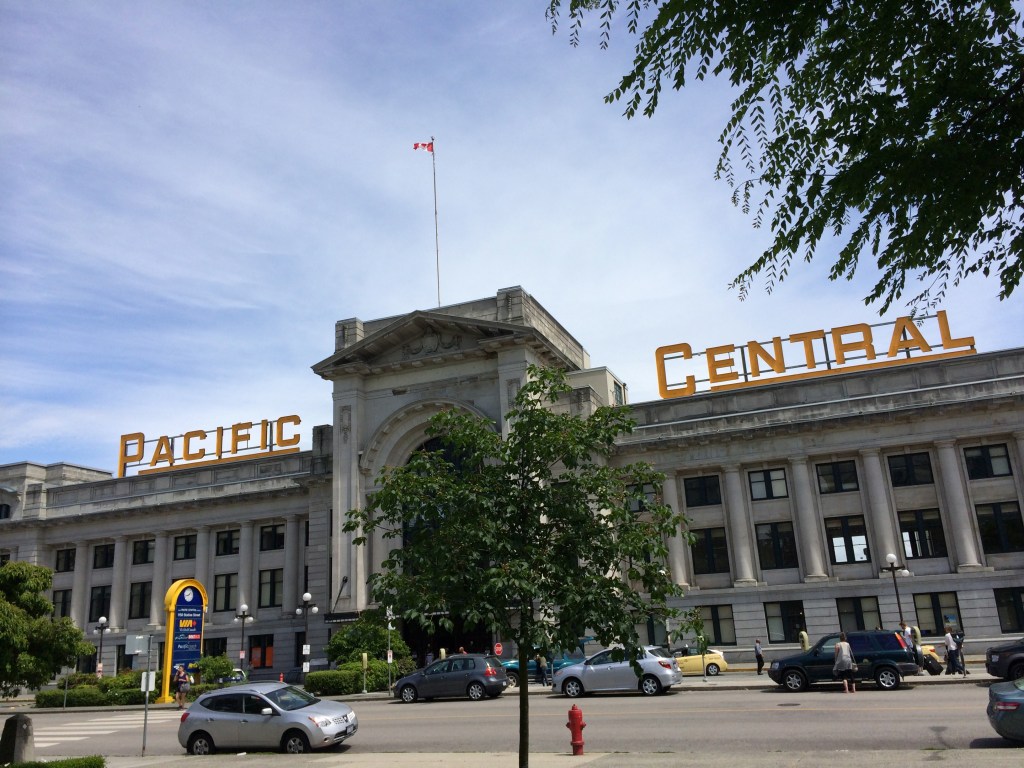
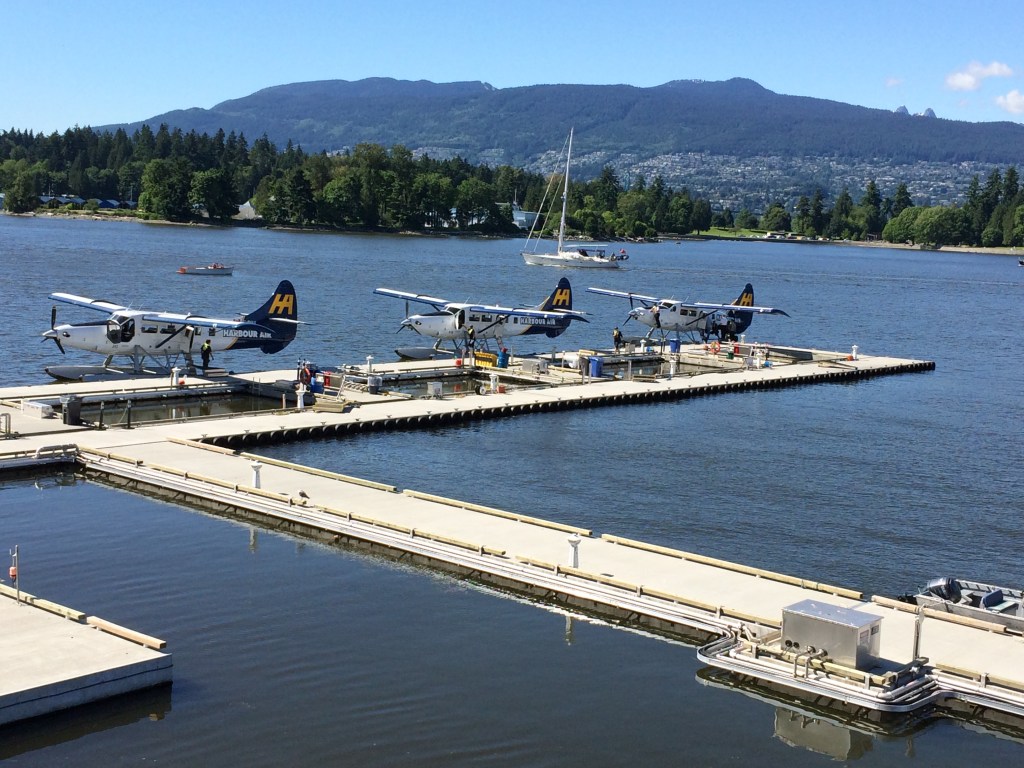
2. Vancouver is a stone’s throw from Seattle. After considering several interesting and potentially scenic modes of transportation like the seaplane, Amtrak train and the speed boat via Victoria, I settled on the more accessible and affordable option – the humble greyhound bus. It was sufficient and dropped at the Pacific Central Station in under 4 hours. The border check was straightforward and probably the first time I crossed a land border checkpoint. 

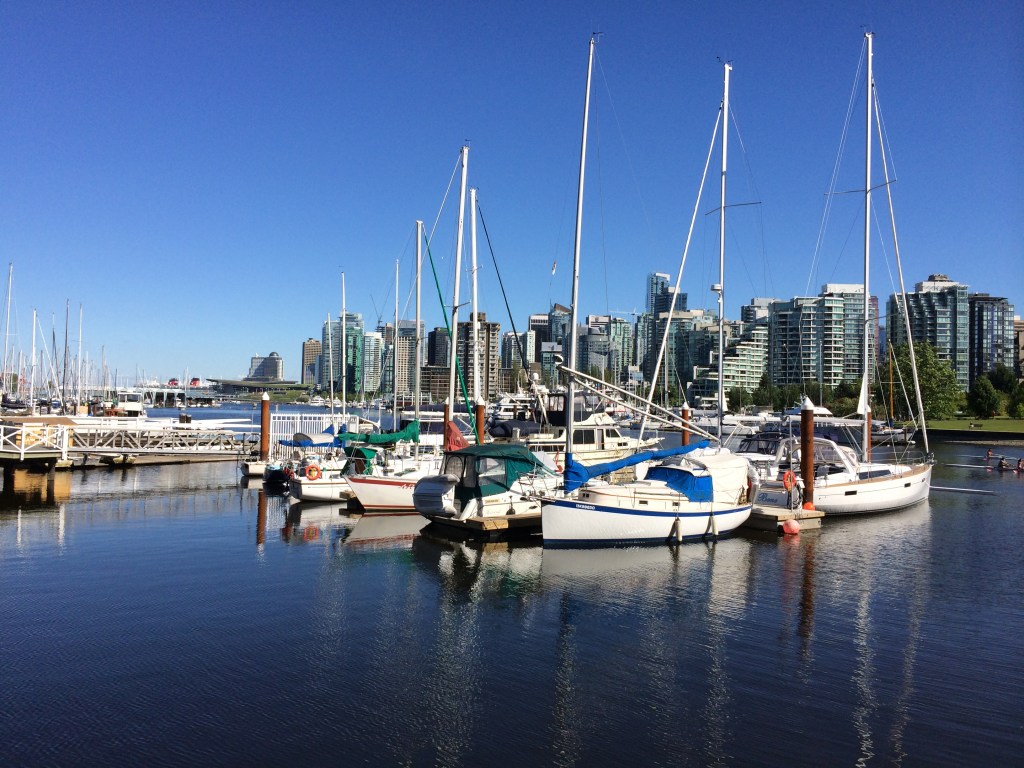
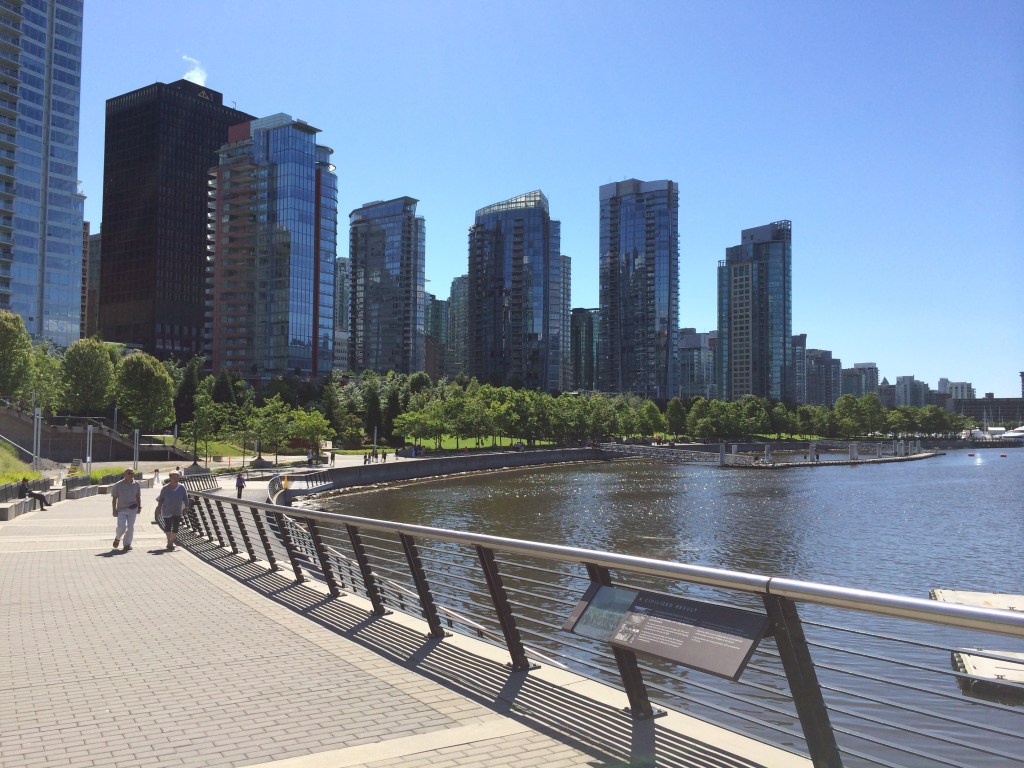
3. My favorite memory of Vancouver was exploring Stanley Park on foot. The scenery is beautiful with a bit more laid back vibe compared to the ones in Seattle. The views of the harbor from seawall on a sunny day is an invitation to picnic and catch up on the book lazing in the grass. 

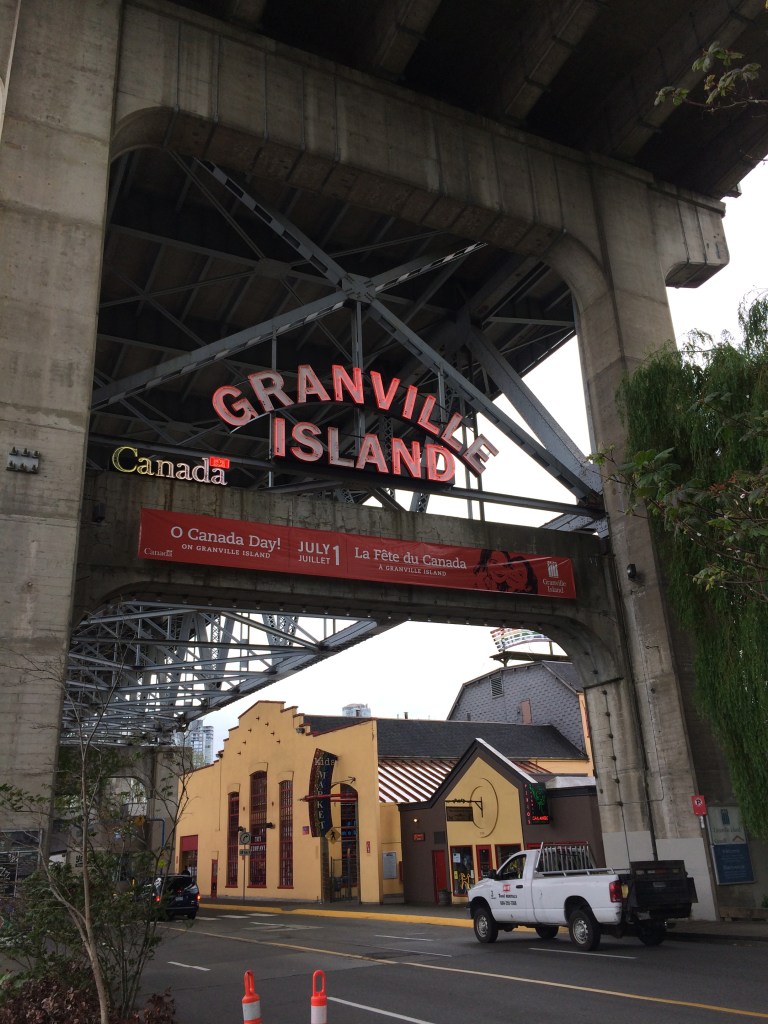
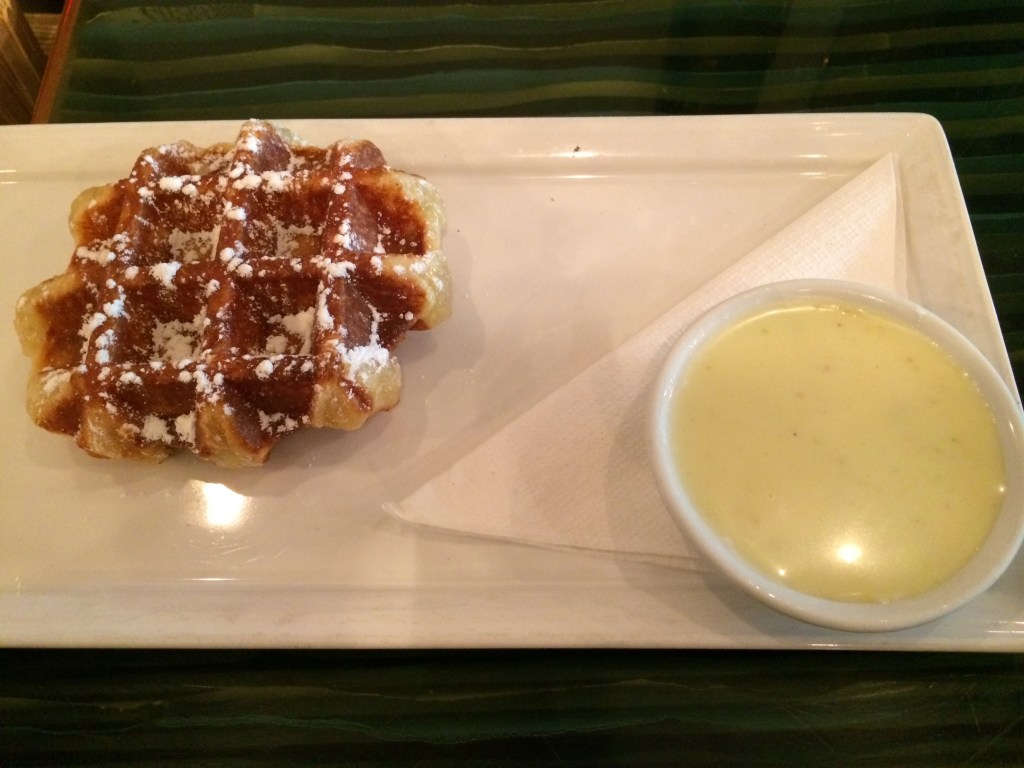
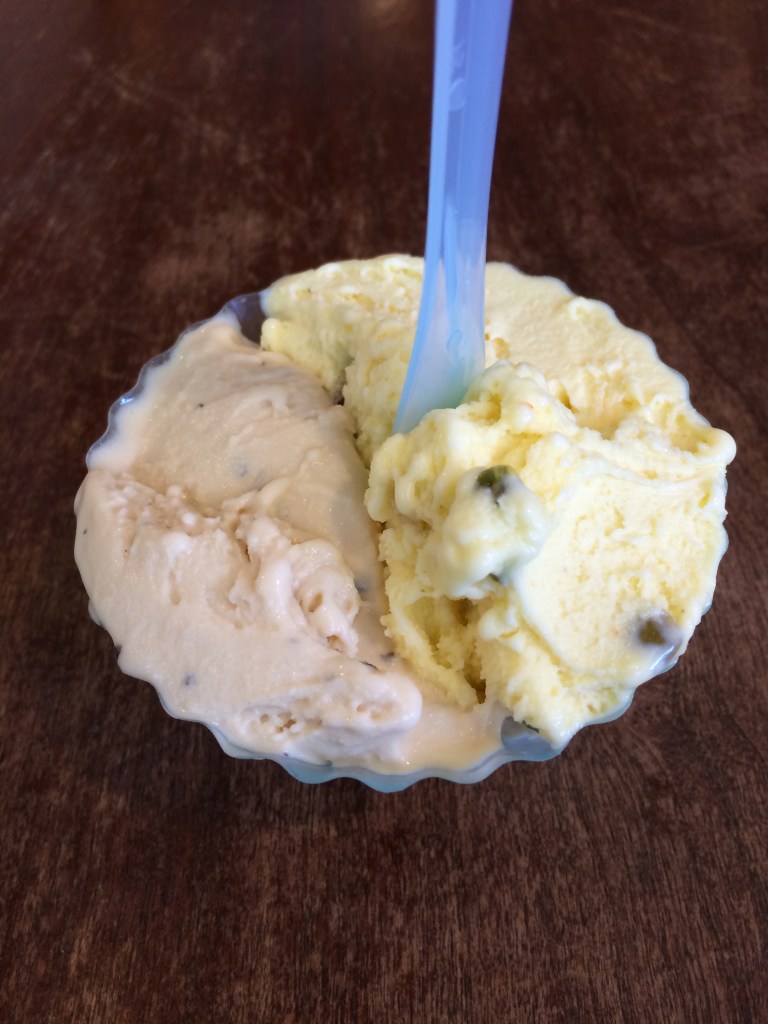
4. I did my obligatory Tim Horton’s pit stop.The coffee and donuts are ok but it is more of a tradition. Vij’s is a Vancouver staple but there are probably better options elsewhere in Canada or south of the border. The waffles with unique sauces at Medina cafe were A+ while Bella Gelateria serves some of the best gelato anywhere. In fact, James Coleridge of Bella won the awards at the Firenze gelato competition. Vancouver’s Chinatown is bustling but the real deal are apparently in the suburb of Richmond. It is known to have some of the best dim sum in North America.  The Granville island public market was charming and the food hall has something for everyone.

5. Vancouver offers easy access to nature including the world class skiing zones at Whistler. I vowed to return back in the Winter but chickened out and settled for the ones closer to home at Mount Baker. Suspension bridges are a thing in Vancouver, while Capilano was built as a tourist attraction, the one at the Lynn Canyon is more charming. The Lynn Canyon park is great for hiking, its tall trees are green and leafy in the summer.

5 things about Vancouver, Canada

10 things about Mexico City, Mexico

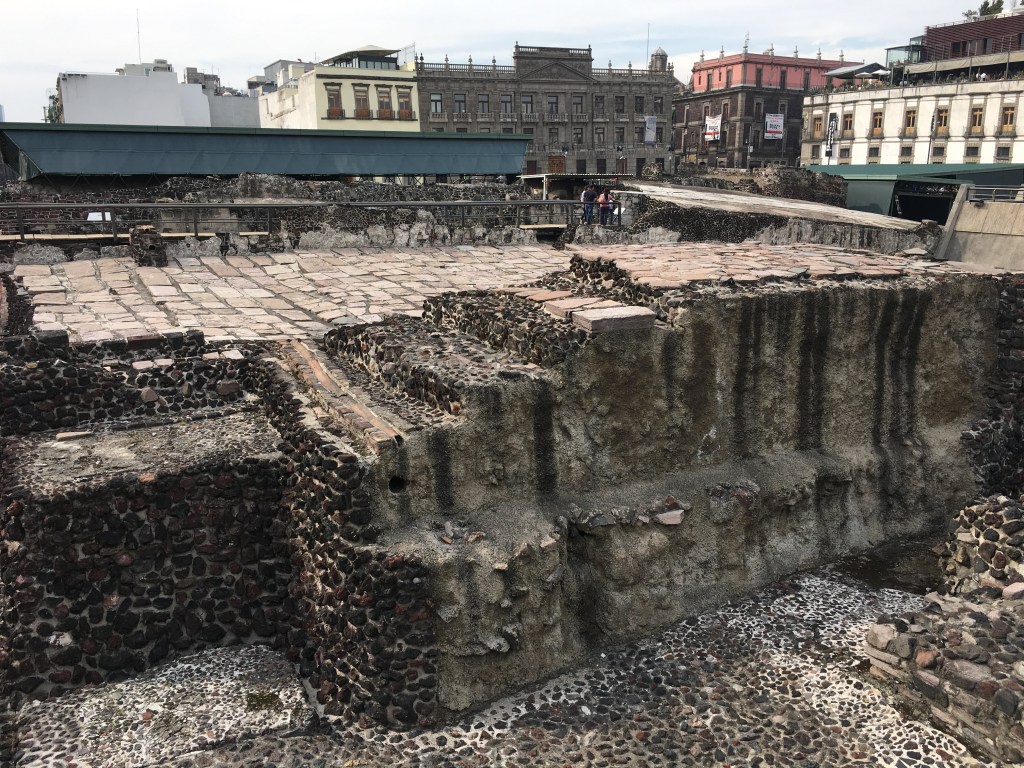
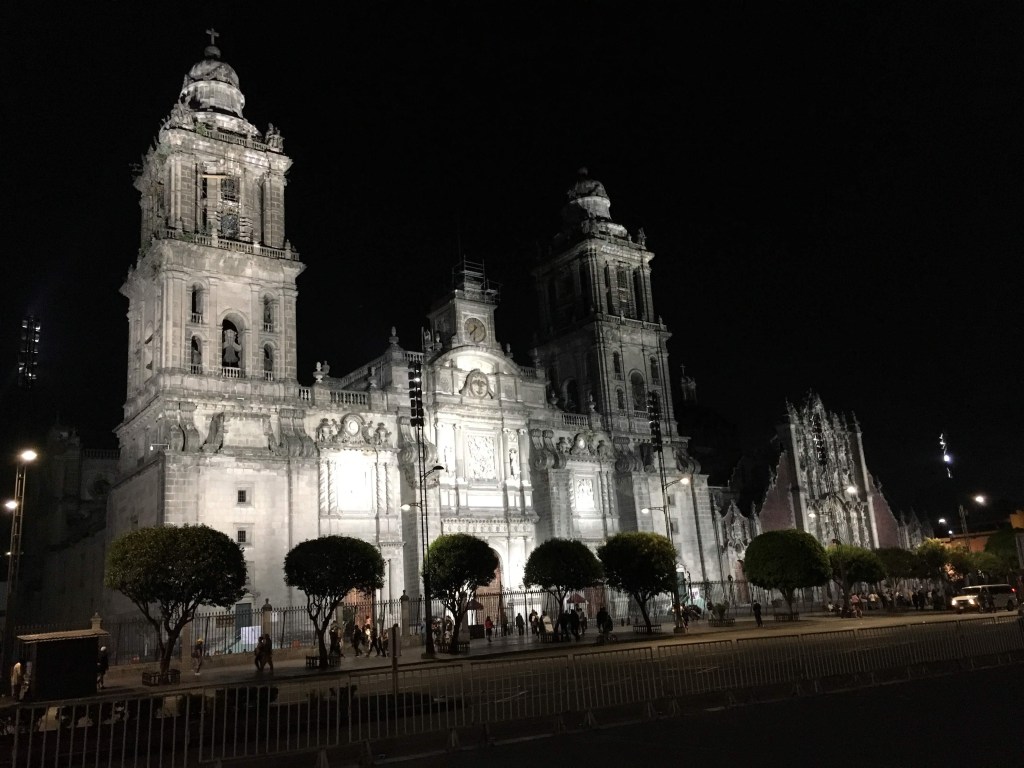
1.Although the area around today’s Mexico City was inhabited by various indigenous tribes as early as 100 AD, it was the Aztecs that laid the foundation of an actual city – Tenochtitlán. It was initially built over a lake, the Lago de Texcoco. Aztecs built an artificial island by dumping soil into the lagoon. Remnants of this ancient city are found at the Templo Mayor museum. When the Spanish came, they demolished most of the Aztec city and built a typical Spanish style city on top of it with its characteristic grand squares, cathedrals and palaces. 

2. City is a sprawling metropolis with a population of about 9 million while the greater Mexico City area is home to about 21 million people.There is the fashionable but leafy neighborhood of Condesa, fancy but uptight Polamco, the bohemian Roma and its gentrifying cousin Juarez or the artsy Coyoacán, Mexico City has something for everyone much like every large city similar to its size. While general caution needs to be exercised in parts of La Merced, Tepito, Doctores and Centro Historic they are not dangerous. Plus, there is a usually a heavy police presence in touristy parts of these “difficult” neighborhoods. I stayed in Centro Historico and it was perfectly safe at all time of the day. 
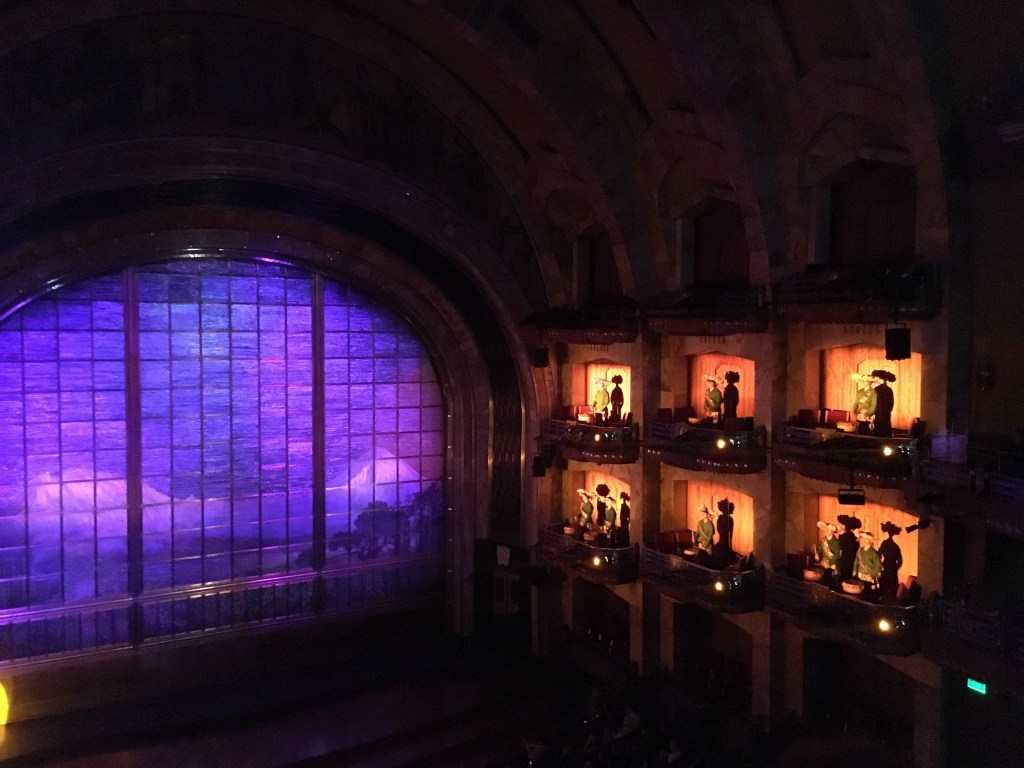
3. Given that Mexico was colonized by Spain for over 300 years, the influence on the Mexican identity is well known. But the founders of Ballet Folklórico de México created a dance ensemble to showcase the culture from the Mesoamerican times.The show is a visual spectacle with a mix of colorful and acrobatic dance performances. It usually runs a few times a week at the Bella Artes Museum. Lucha Libre (wresting show similar to WWE) is the polar opposite of the ballet with its grimy venues, loud audience and affordable options. Arena Mexico and Arena Coliseo are the top choices.The luchador mask defines the identity of the wrestler and also makes a good souvenir. 
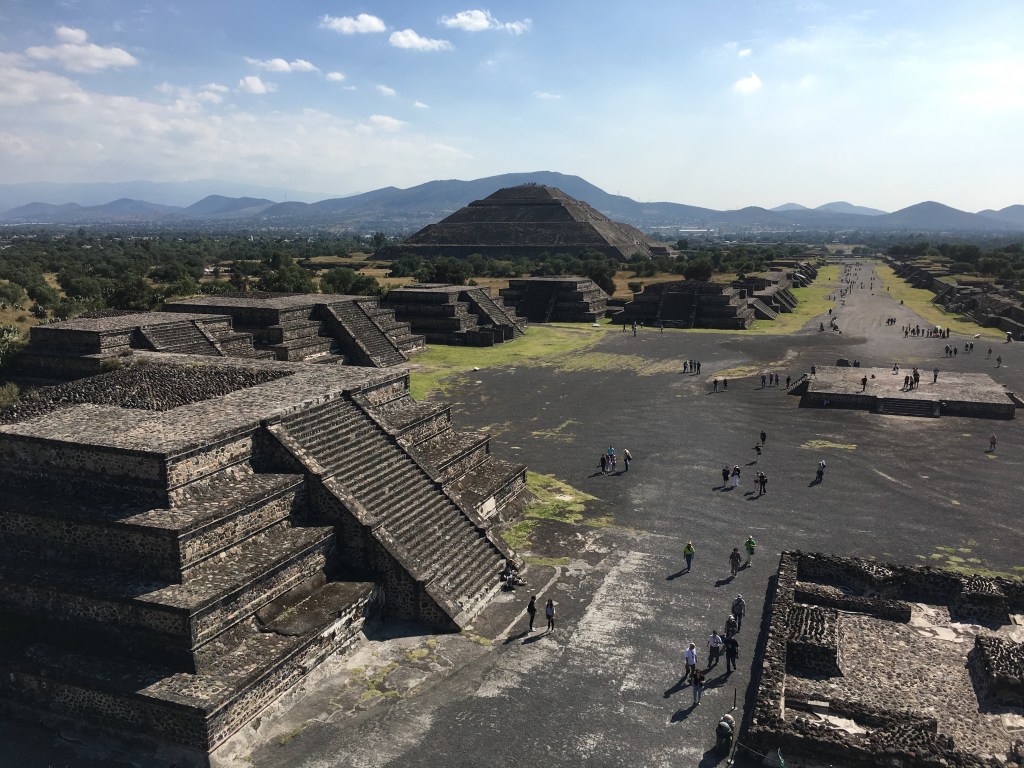
4. Teotihuacan is a mesoamerican city located in the central valley of Mexico about 90 minutes drive from Mexico City. While the original city predates the Aztecs, it was them who named it as Teotihuacan – “a place where gods are created”. In modern day, it is well known for its well preserved pyramids. The Pyramid of the Sun is a massive step pyramid. The best part is that is still open for climbing. Although the steps are a bit too narrow, it is fun to climb all the way to the top and get a bird’s eye view of the ancient city. 

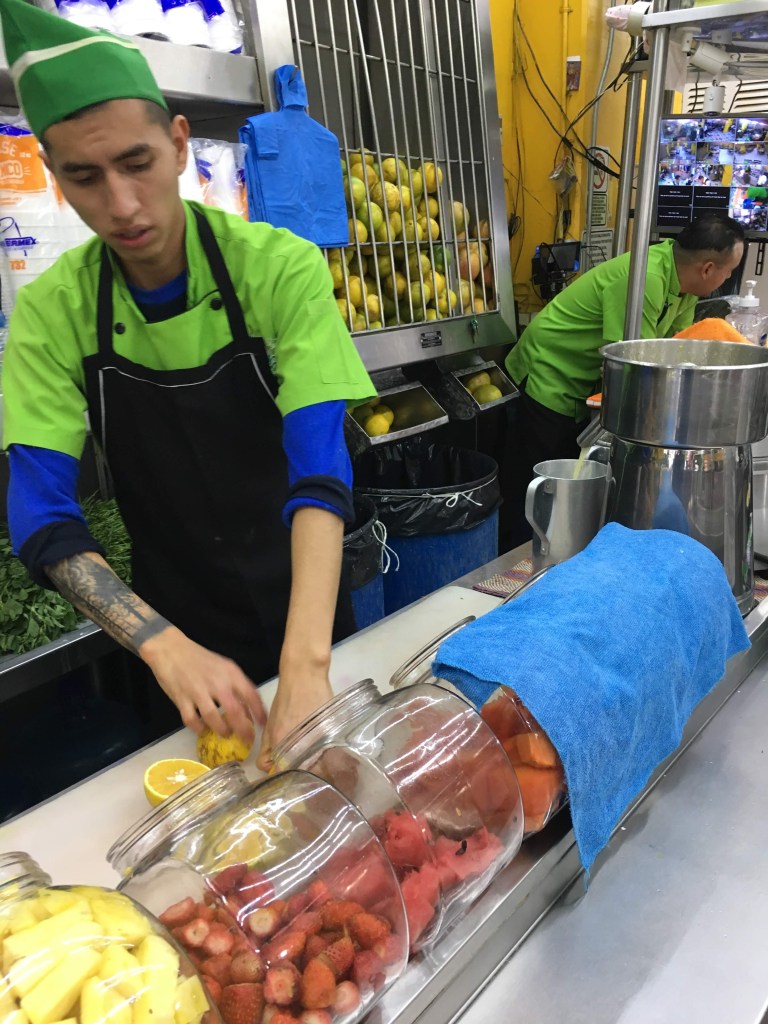
5. Something that struck me about Mexico city were how industrious the people were. For the most part, everybody wanted to do their job well. The guy at the juice shop, the taco masters, cab drivers were very professional. Although this might seem like a random generalization, there was a certain quality to their execution that led to me this conclusion. 

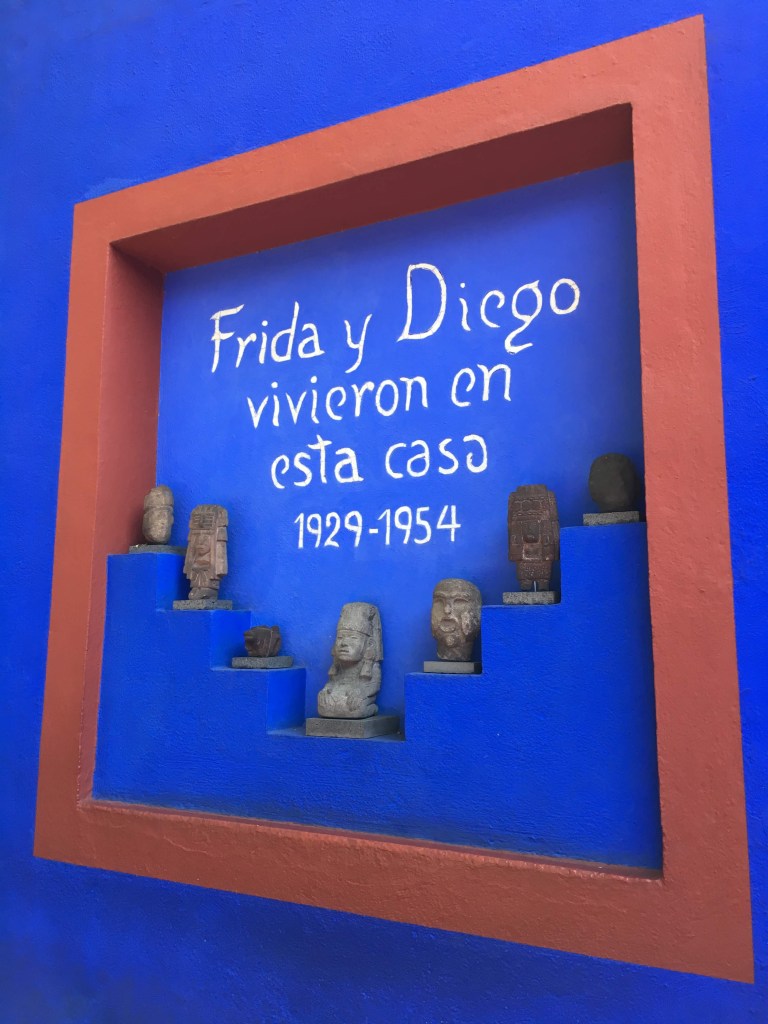
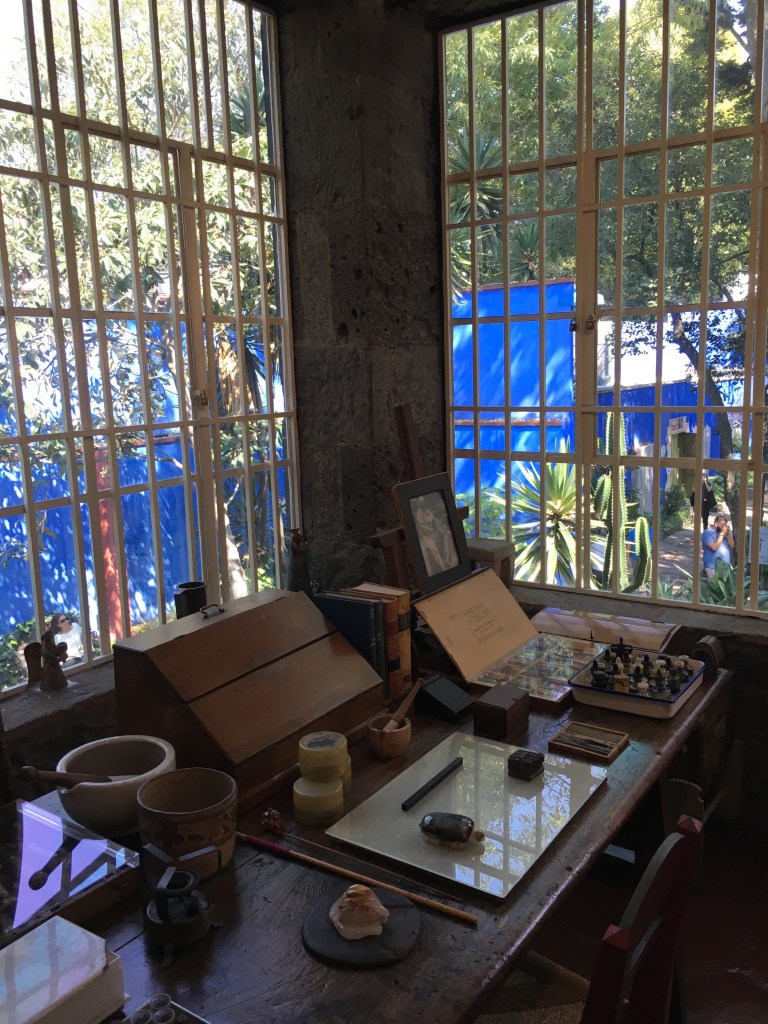
6. Frida Kalho and Diego Riviera are much lauded for their contribution to art in Mexico but they were controversial figures looking back into history. Frida was an accidental artist. Although affected by polio early in the childhood, it was the devastating accident that had her bedridden for months and it is during this time that she took up painting. At 22, she had an affair with her teacher Diego Riviera and eventually married him. Frida and Diego joined the Mexican Communist Party and even petitioned the Mexican government to grant asylum to the soviet leader Leon Trotsky. They even hosted him at their Casa Azul house. Despite their mutual infidelities and the resulting complicated relationship, they were married until Frida’s death. The Casa Azul now a museum is very bohemian and rustic. 

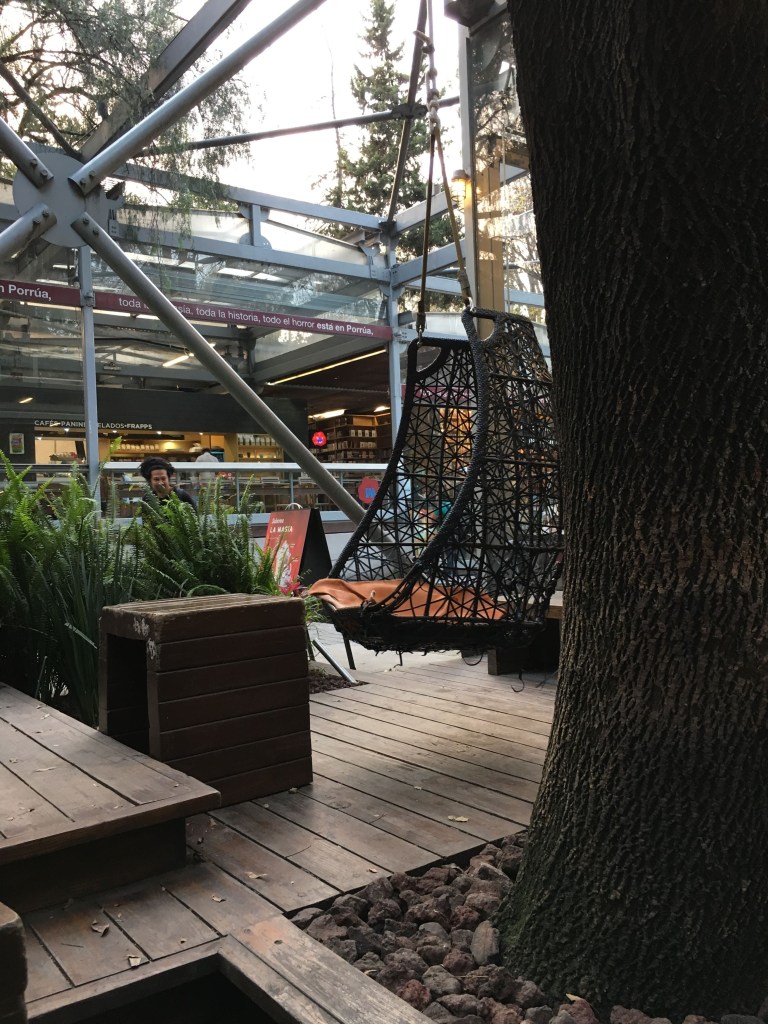
7. The greenery of Chapultepec Park are the lungs of Mexico City. Flanked by Polanco, Condesa and Colonia neighborhoods, it is home to the botanical garden, art and a number of museums and the Chapultepec castle. The Museo Nacional de Antropología is a must visit, it is an expedition into the history of Mexico centered around thoughtfully curated artifacts. I liked relaxing in the park and enjoying drinks at the fancy Starbucks with its bamboo chair swings. 

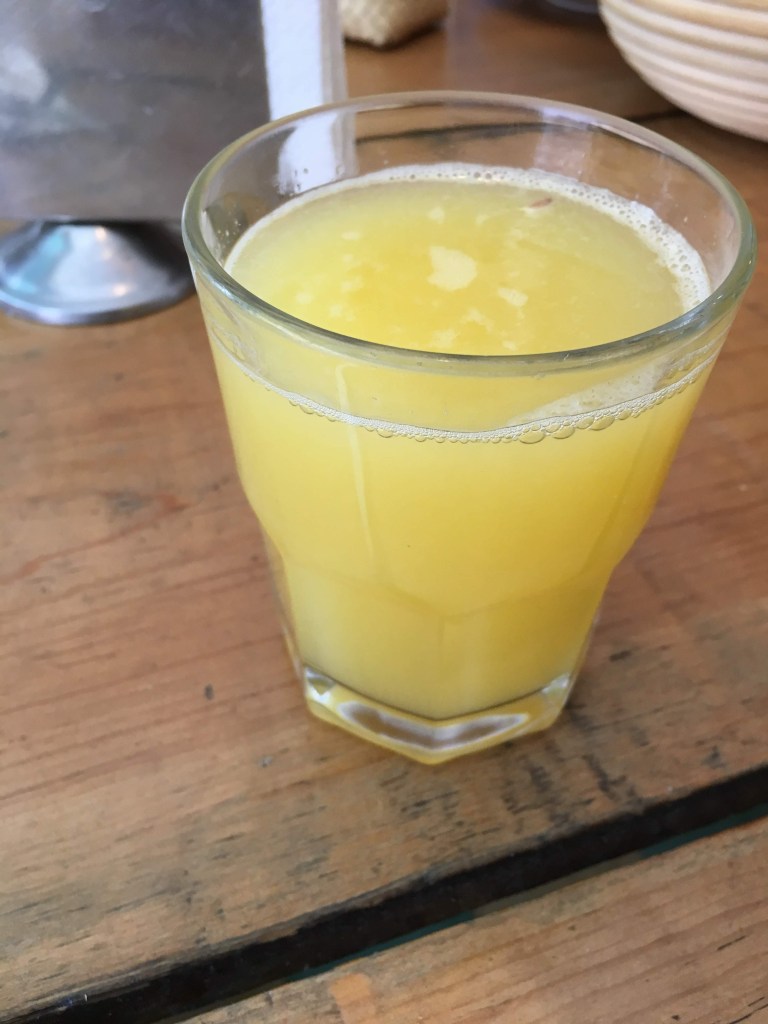
8. Oranges were one of the imports from Spain who themselves were introduced to it during the period of Arab domination.There is almost always freshly squeezed orange juice available at most restaurants and cafes. I got one with my breakfast everyday. It was perfectly orangey and sweet. 

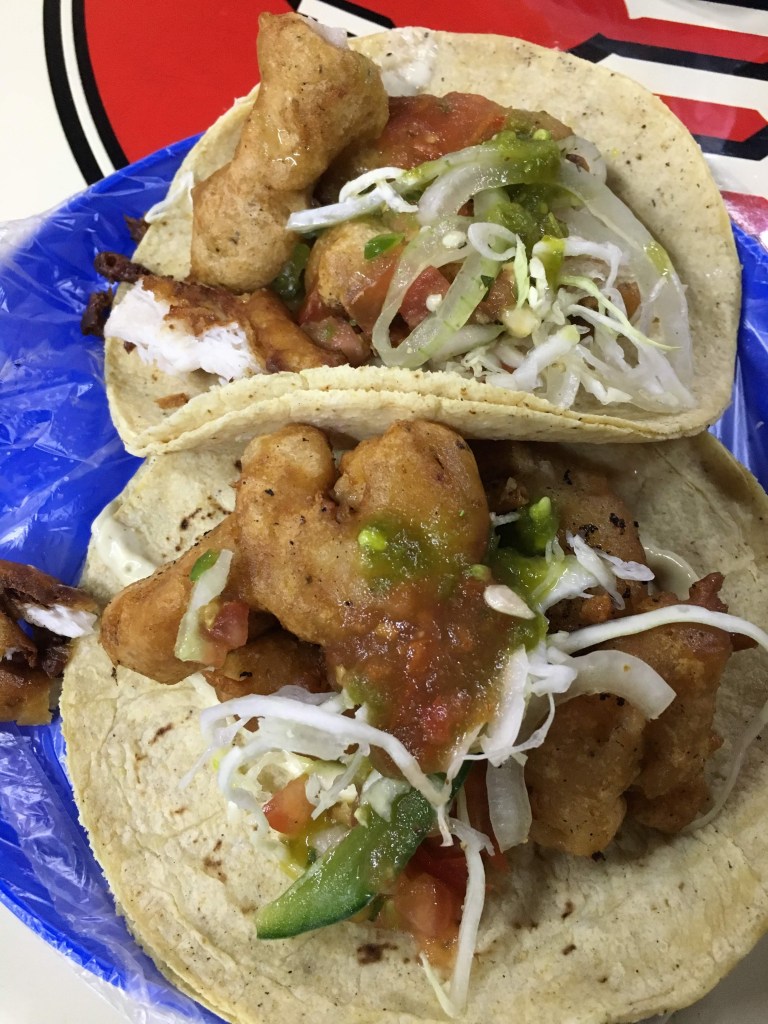
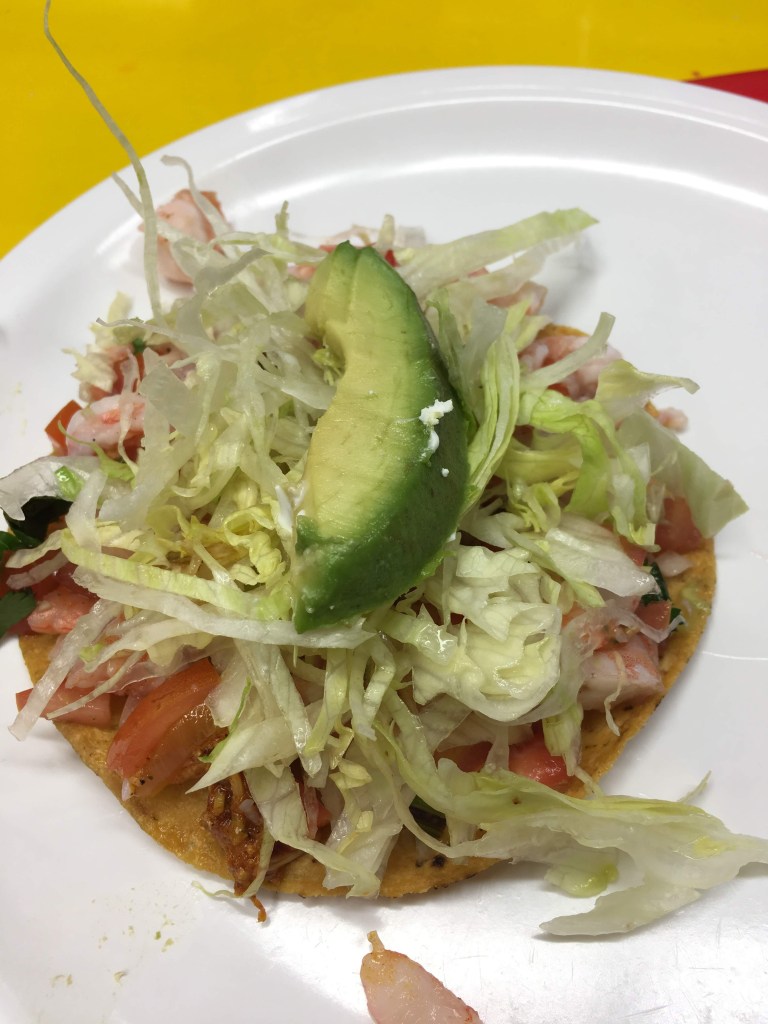
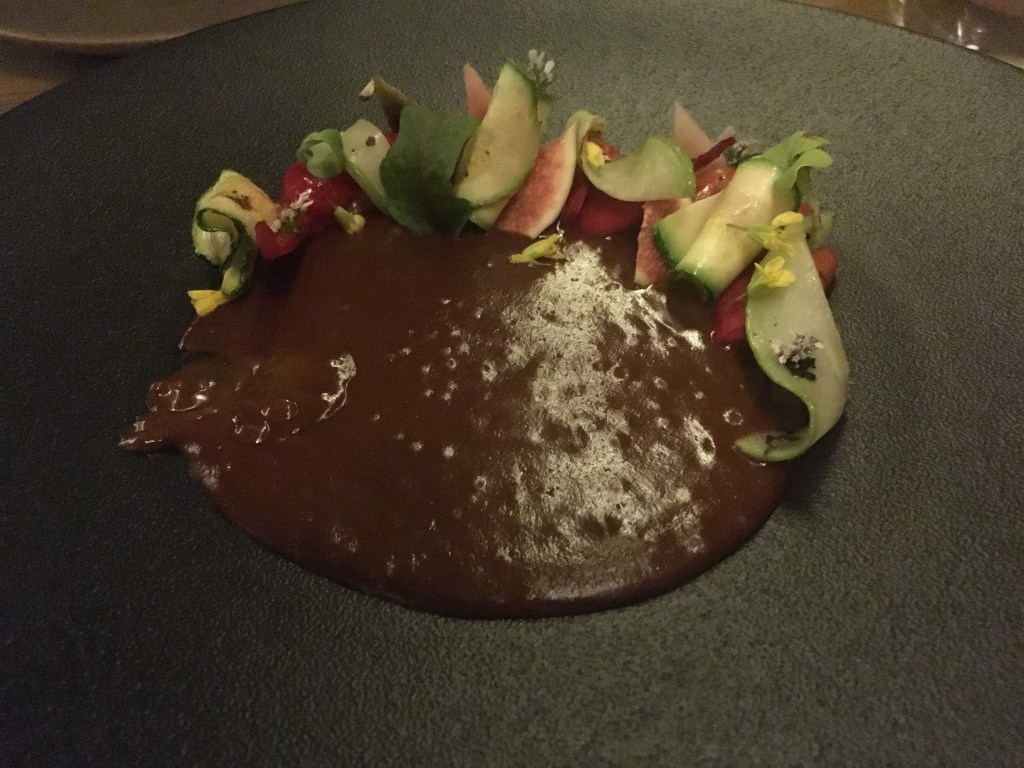
9. The shrimp and fish tacos at El Pescadito set the bar really high for any taco I have in the future. The seafood is fried per order and the salsas are supremely flavorful. It was flavor explosions in my mouth. Another such experience was at the Mercado Coyocan while eating the shrimp tostadas. The salsas were mind-blowing. They are masters at balancing acidity and heat. Mole has complexity of flavor. Although I wasn’t a fan of it at first, I couldn’t resist licking it off my plate at Quintonail. 

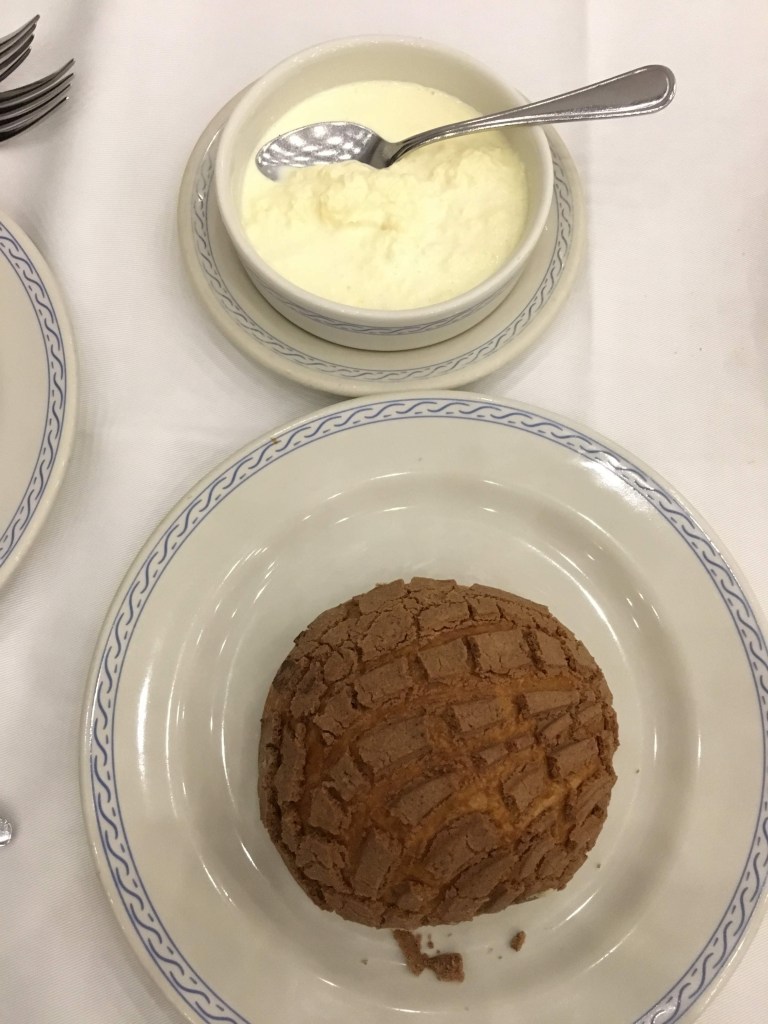
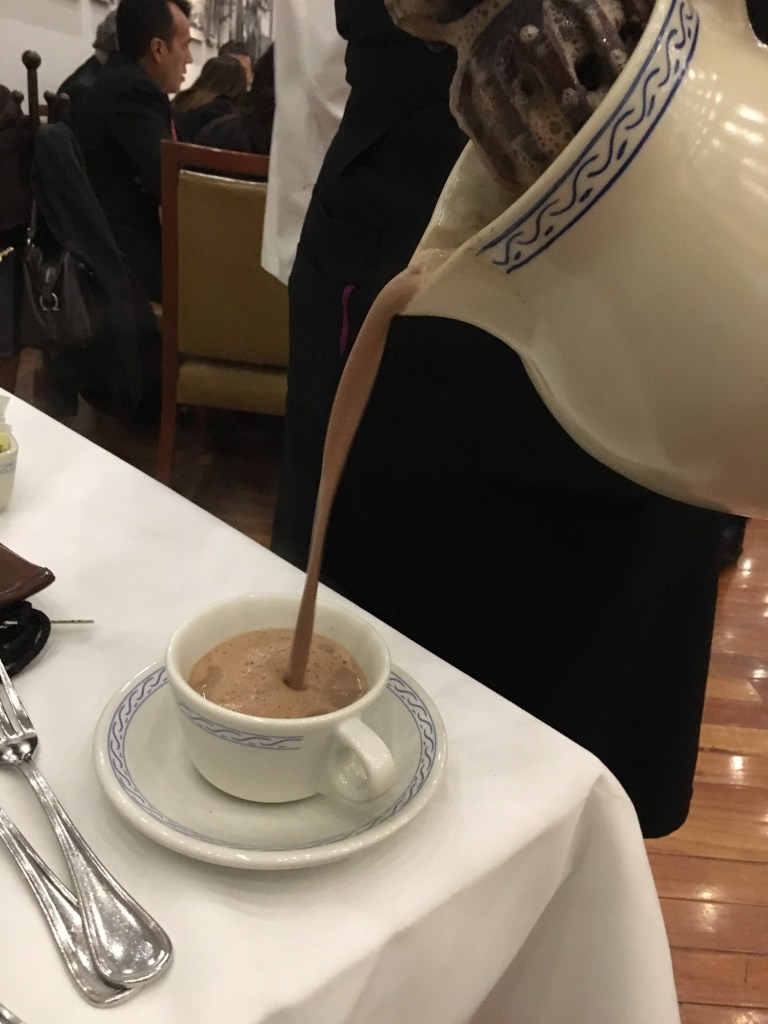
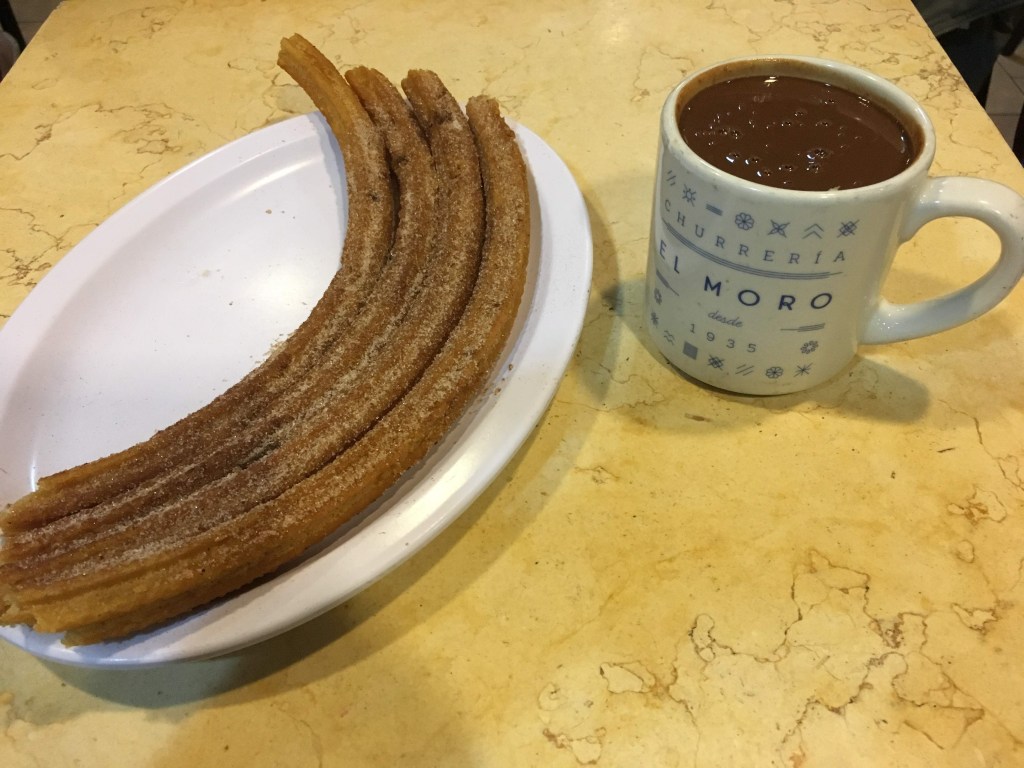
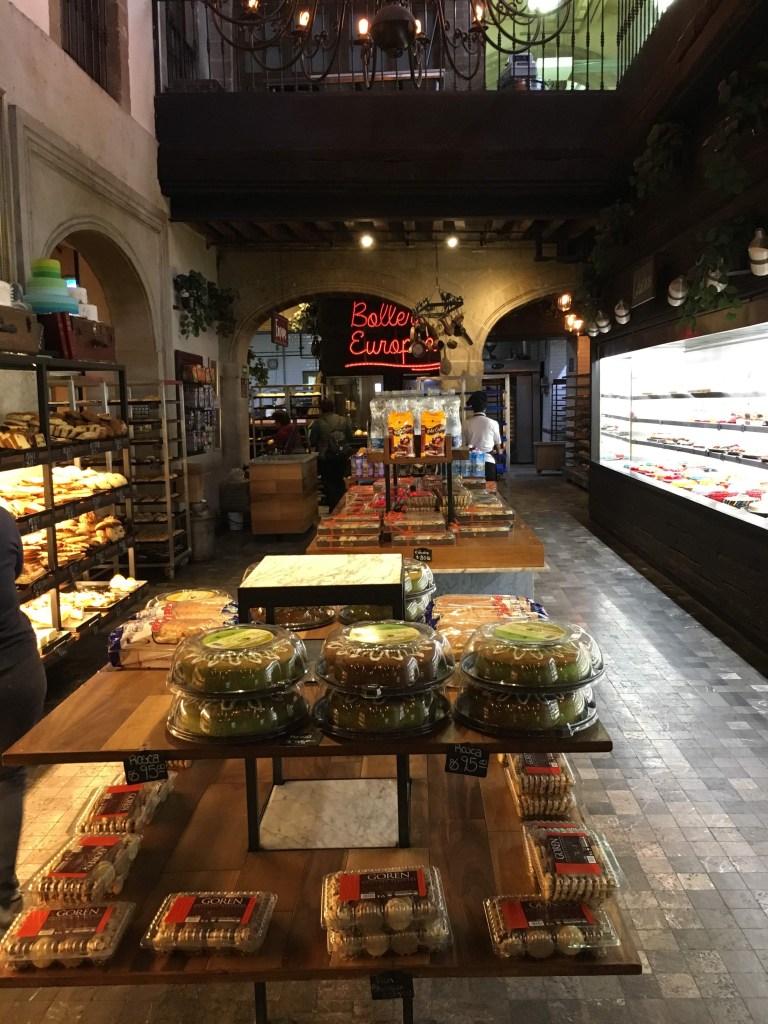
10. Churros, Conchas, Chocolate complete the sweet tooth trifecta in Mexico City. Lining up at El Moro and getting a pack of fresh churros is a memory on its own. Dunk it in house made european style hot chocolate, it becomes addictive. El moro churros are not greasy, they are crunchy on the outside and soft on the inside. It was fried food perfection. While Conchas are what croissants are to the French, the ones at the El Cardenal are pillowy soft. The table side hot chocolate is much more than the show, it is absolutely delicious – intense chocolate with just the right amount of sweetness. La Esperanza bakery chain is a solid option for both Mexican panaderia breads as well as viennoiseries.

10 things about Mexico City, Mexico

10 things about Istanbul,Turkey

1.Istanbul was born as Lygos. It became Byzantium before being colonized by the Greeks led by King Byzas. It was ransacked and rebuilt by Roman emperor Septimius Severus. But it did not embark on its path to greatness until Constantine the Great laid eyes on Byzantium in 324. He emerged victorious in the civil war and established Constantinopolis as the capital city of the Roman empire in 330. After he passed on, his sons split the empire and Constantinople became the capital of the Eastern Roman empire called Byzantine empire. This empire emerged with its distinctive Greek roots and became the center of Greek Orthodox Christianity. Justinian, the famous Byzantine emperor led major conquests and built Hagia Sophia as one of the largest cathedrals of that time. The Byzantine empire waned in power and in 1453 Sultan Mehmed II besieged and took over Constantinople. He rode straight into Hagia Sophia and ordered it be converted into a Mosque. 

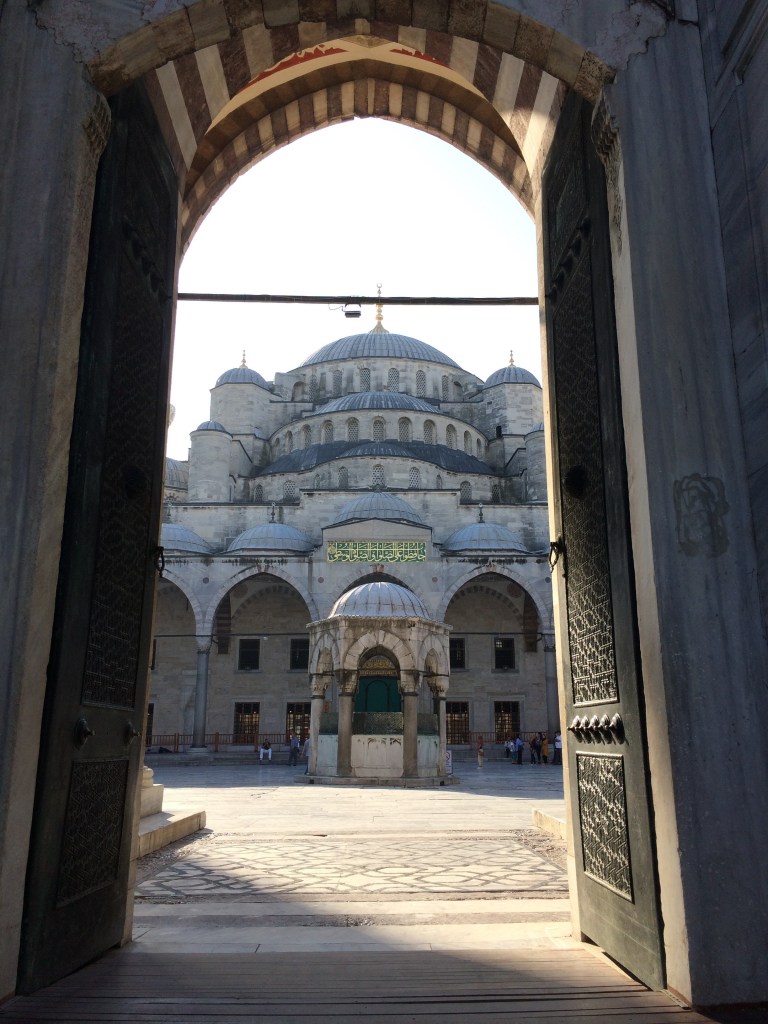
2. Ottoman architecture is reflected in its grand mosques. Their unique style is characterized by large central domes, smaller buildings with small semi-domes and tall minarets. As I entered Sulthanamet for the first time in the dead of the night, it felt like traveling back in time.While Blue Mosque is the most popular and undoubtedly great, it can get very crowded. I found the less popular ones like Fatih, Selim, Suleymaniye, Şehzade to be better for observing the architectural nuances and to be able to generally sit in awe for longer. Each of the domes are magnificent with intricate carvings and color patterns. 

Sultan Ahmed Mosque

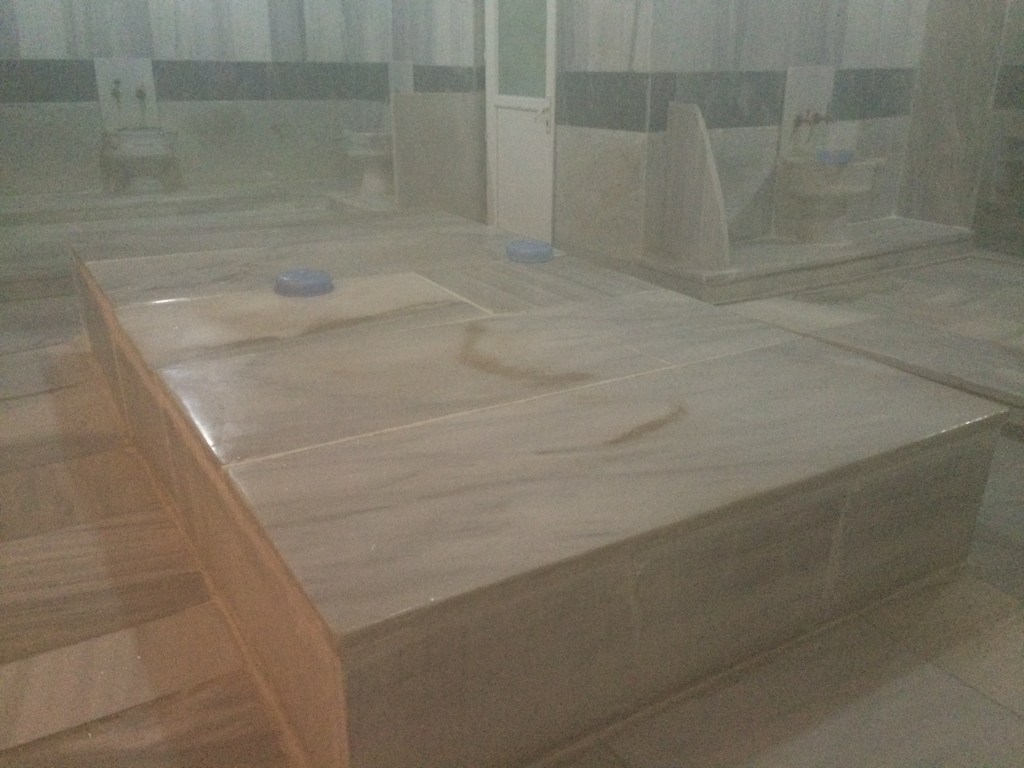
3. Hamman baths were an Ottoman tradition derived from Roman baths but these days it seems to be mostly a tourist thing. My Hamman experience was weird but fun. It started with lying on a hot stone in a steamy room, followed by intense scrubbing and cold water cleansing. There are very few old school hammans still left in Istanbul, Çemberlitaş Hamami is one of them which was designed by Mimar Sinan, the chief Ottoman architect.

4. The Ottoman Empire dominated the region since its inception. The last reigning monarch of the Ottoman empire tried enacting constitutional reforms but reverted to monarchy soon after. The Young Turk movement forced the monarch to enact reforms yet again and eventually forced him out in a coup in 1913. After being defeated as an ally of Germany in the first World War, the British and French forced occupied Anatolia. During this occupation, Muslims in that territory were persecuted by Greek and Armenian rebels. A resistance movement led by Mustafa Kemal Atatürk was born and eventually led to the formation of the Republic of Turkey. It was established as a progressive state with secular civil code and political rights for women. In recent times, Ataturk Secularism has morphed into Islamist resurgence under Erdogan. 

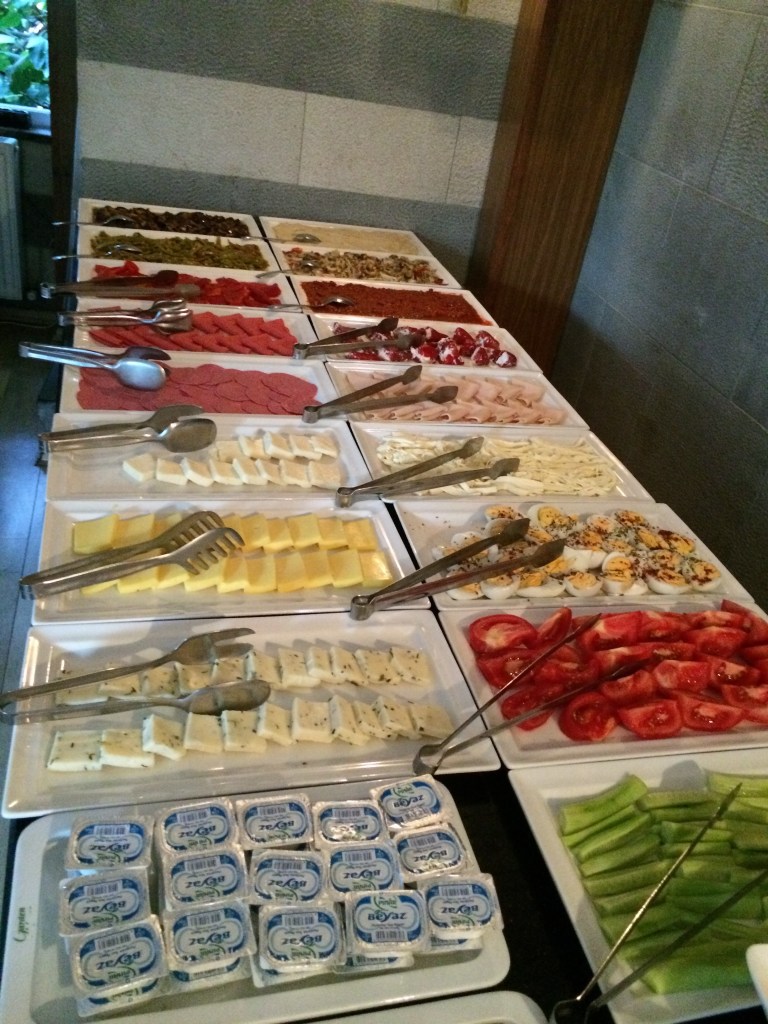
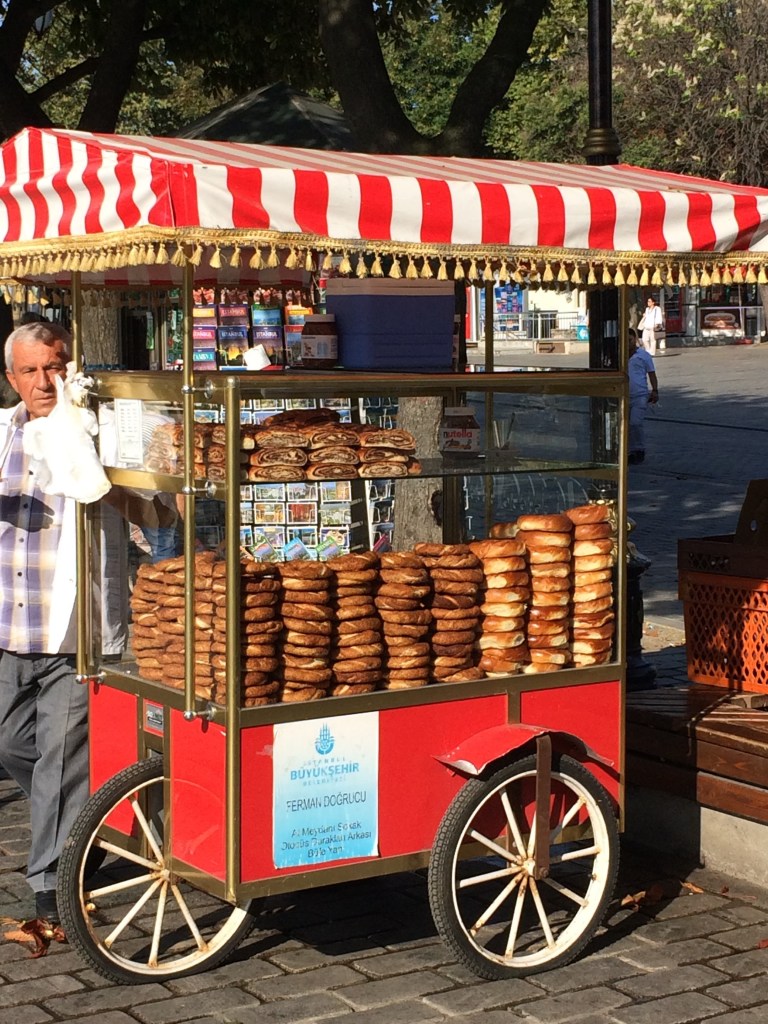
5. At most hotel/hostels, Turkish Breakfast involves a lavish spread consisting of an array of breads,cheese and spreads but is Simit is a popular on the go option. It is Turkey’s version of bagel, eaten with cheese or jam. Menemen is a simple one pan dish with eggs, tomatoes and peppers stewed together to resemble a Shakshouka but is usually topped with sausage(sujuk). 

Turkish Breakfast
Simit

6. Baklava has become a part of Turkish culinary identity despite its Arab origins, in part due to great produce available in Turkey like the pistachios from Gaziantep. The sweetness in the Baklava can be a bit intense. Pair it with tea and it is perfect accompaniment to a good conversation. Karakoy Gullugolu and Hafiz Mustafa are local favorites but they are scores of good places all over the city. Turkish ice cream is more about the entertainment value.The addition of mastic lends a stretchy texture to the ice cream that is used for performing antics. I found the taste rather unpalatable due to its gumminess. However, I liked sahlep – a hot drink made from milk, sahlep powder (made from tubers of orchid) and topped with cinnamon and pistachios. I found it similar in consistency to the Mexican Atole. Ayran is Turkey’s version of buttermilk, Indians tourist would rejoice at its ubiquity. It is the drink of choice after most meals. 

Baklava

7. Turkish Coffee is basically Arabic Coffee. It is brewed in a long narrow brass pots called Cezve. Since it is unfiltered, taste is bold and caffeine hit strong. My favorite moment in Turkey was drinking coffee with a bunch of middle aged locals right off Istikal Avenue. By using a combination of broken Hindi and English, I managed to make conversation and even share a laugh or two. 

8. Sulthanamet is basically the the old town of Istanbul encompassing an area that includes Hagia Sophia, the Sultan Ahmed Mosque, the Hippodrome, Topkapı Palace, and the Basilica Cisterns. Beyoglu is an upscale neighborhood with lots of foreign embassies and lot of history. It was known as Galata in the Byzantine empire. The area became the base of European merchants, particularly from Genoa and Venice, in what was then known as Pera. In fact, the Genoans built the Galata tower. The famous Istikal Caddesi is home to tons of cafes, restaurants, coffee shops and shopping.

9. Istanbul is every modern as any major European city. The business district of Maslask is home to skyscrapers of all sizes. 

10. Istanbul is split into two by the Bosphorous – one part of the European sub-continent and the in the Asian side as well. The more popular monuments are in the European side but there are remnants on the Asian side as well. Ferries help connect the city – most popular route from Eminomu to Kadikoy. The Asian side is much quieter and most parts of its are mostly residential. The Kadikoy food market is popular and Bagdat Caddessi is like the 5th Avenue of Istanbul. 

10 things about Istanbul,Turkey

7 things about Iceland

1. We have Norwegian explorers to thank for discovering and inhabiting this beautiful island called Iceland. By 930 AD they even established some form of government starting with an outdoor assembly at Pingvellir (now part of a national park). This assembly evolved as Althing which claims to be one of the oldest parliaments in the world.

2. Iceland tends to rank highly along with its Nordic counterparts in the World Happiness Report. Nationalized high quality healthcare, state funded education and a strong economy are likely major reasons for it. Most notably, Iceland has consistently ranked first in the gender equality index. It is said to have eliminated gender pay gap completely. But the downside is everything is expensive – gas, groceries, alcohol.

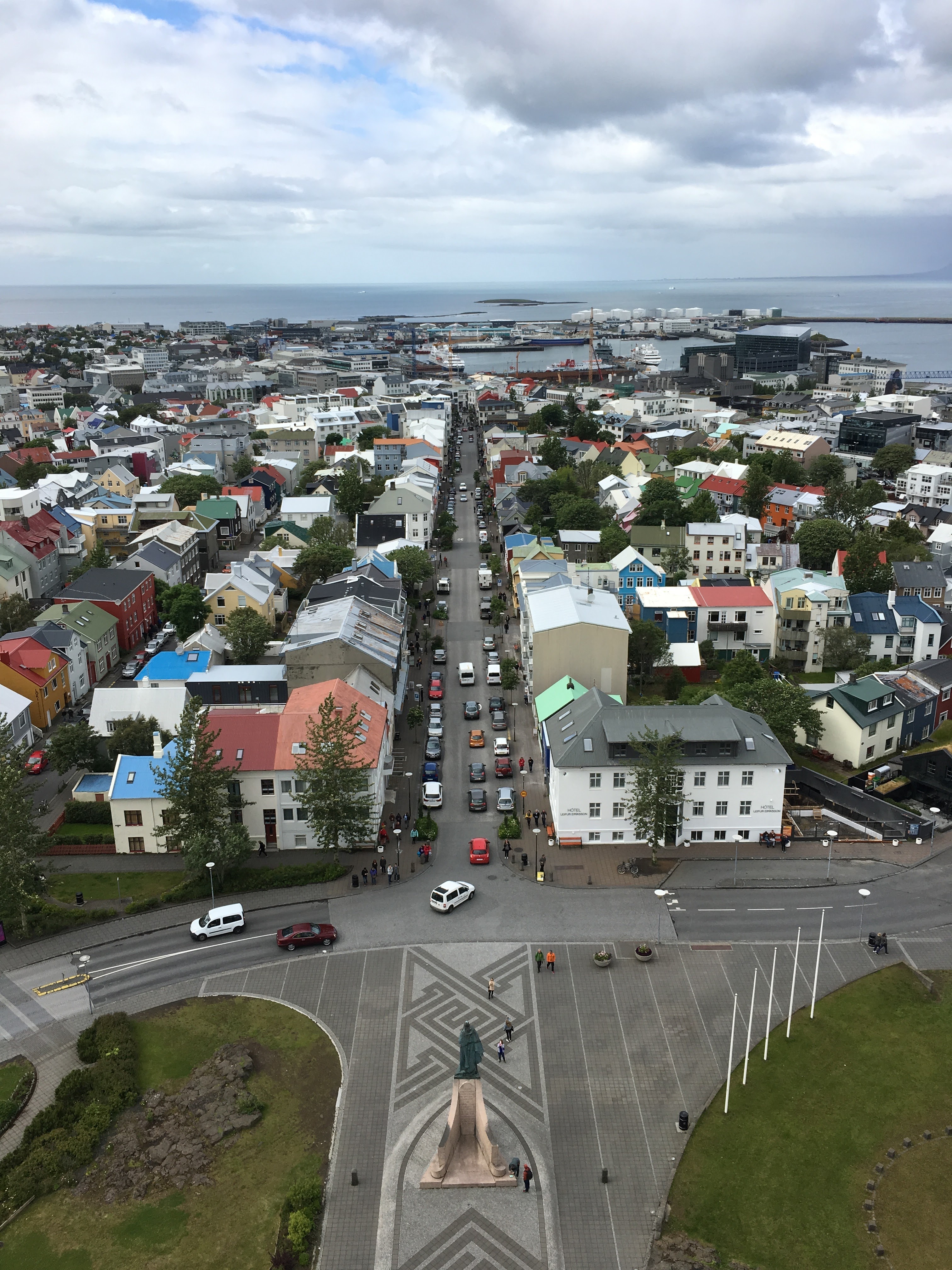
3. Iceland is nature at its best. It is so raw and formidable that humanity and its problems start to feel insignificant. It is best seen by road tripping through the ring road which encircles the island. There is an abundance of awe inspiring things along the route from waterfalls to geysers to glaciers to volcanoes. It is hard to take a bad picture with so much going on. Most folks start or end their journey at the capital, which has a great small town feel to it. The viewpoint from the top of Hallgrímskirkja Church provides panoramic views of the city.

Reykjavik View Iceland.JPG

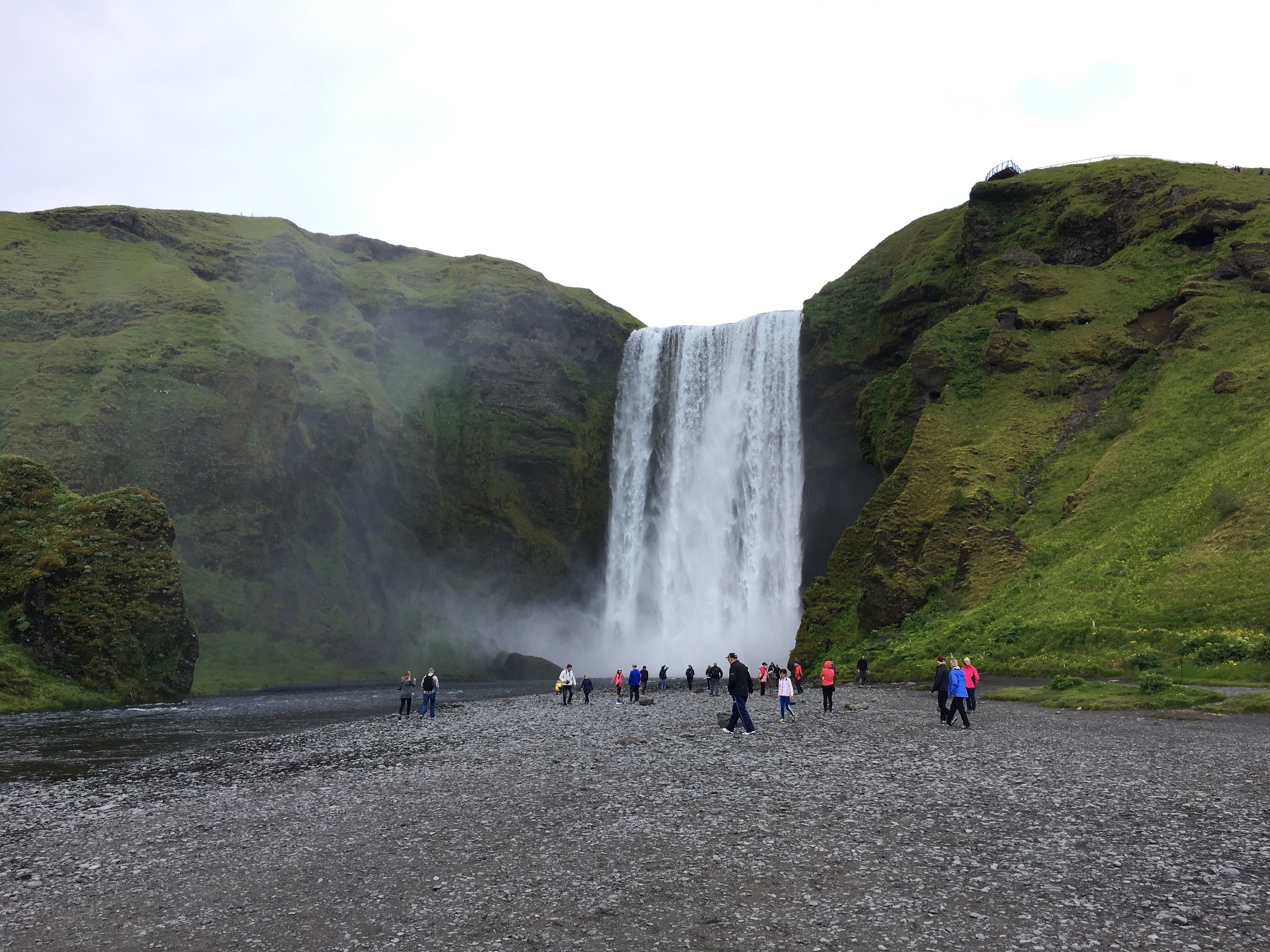
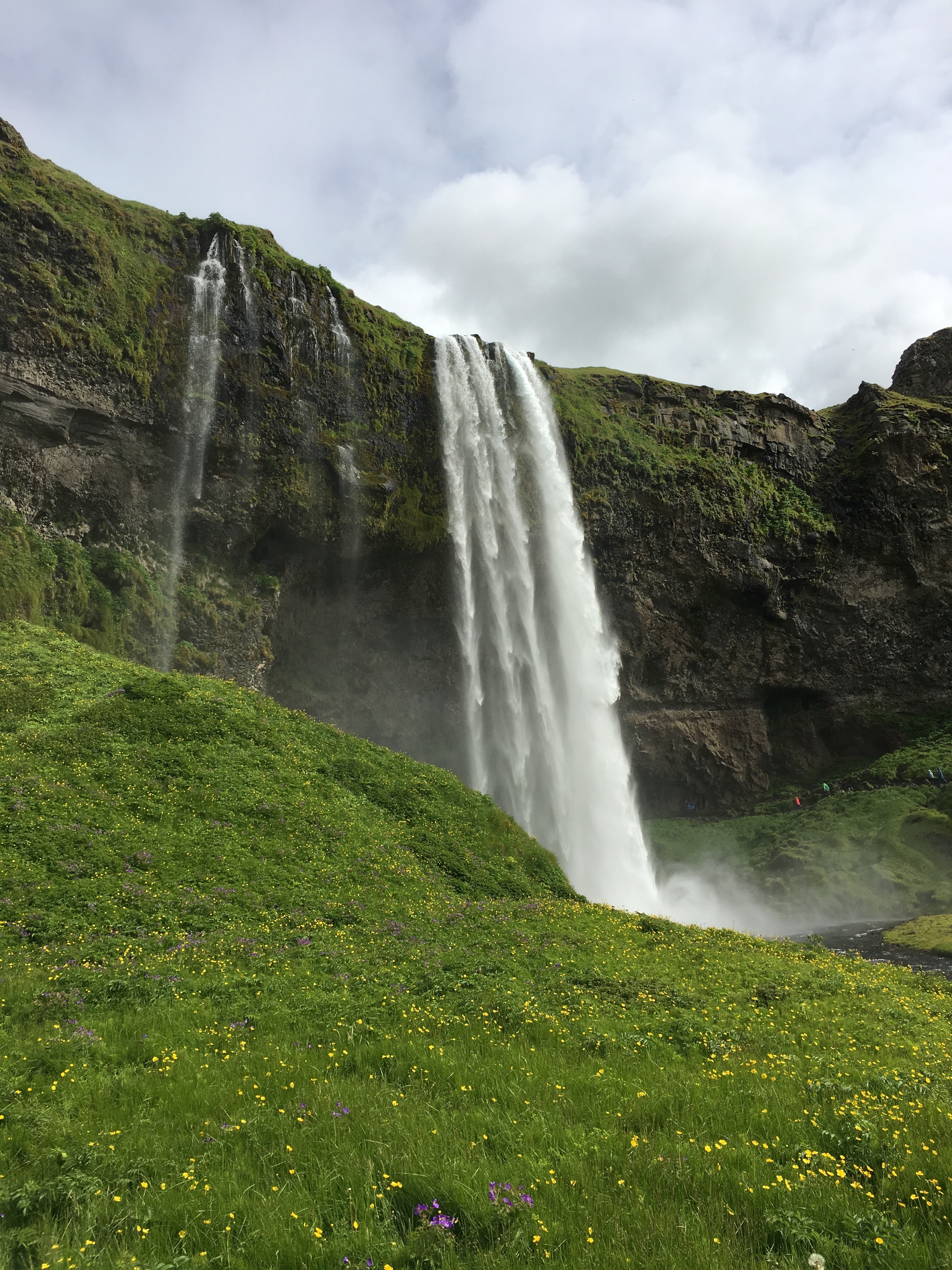
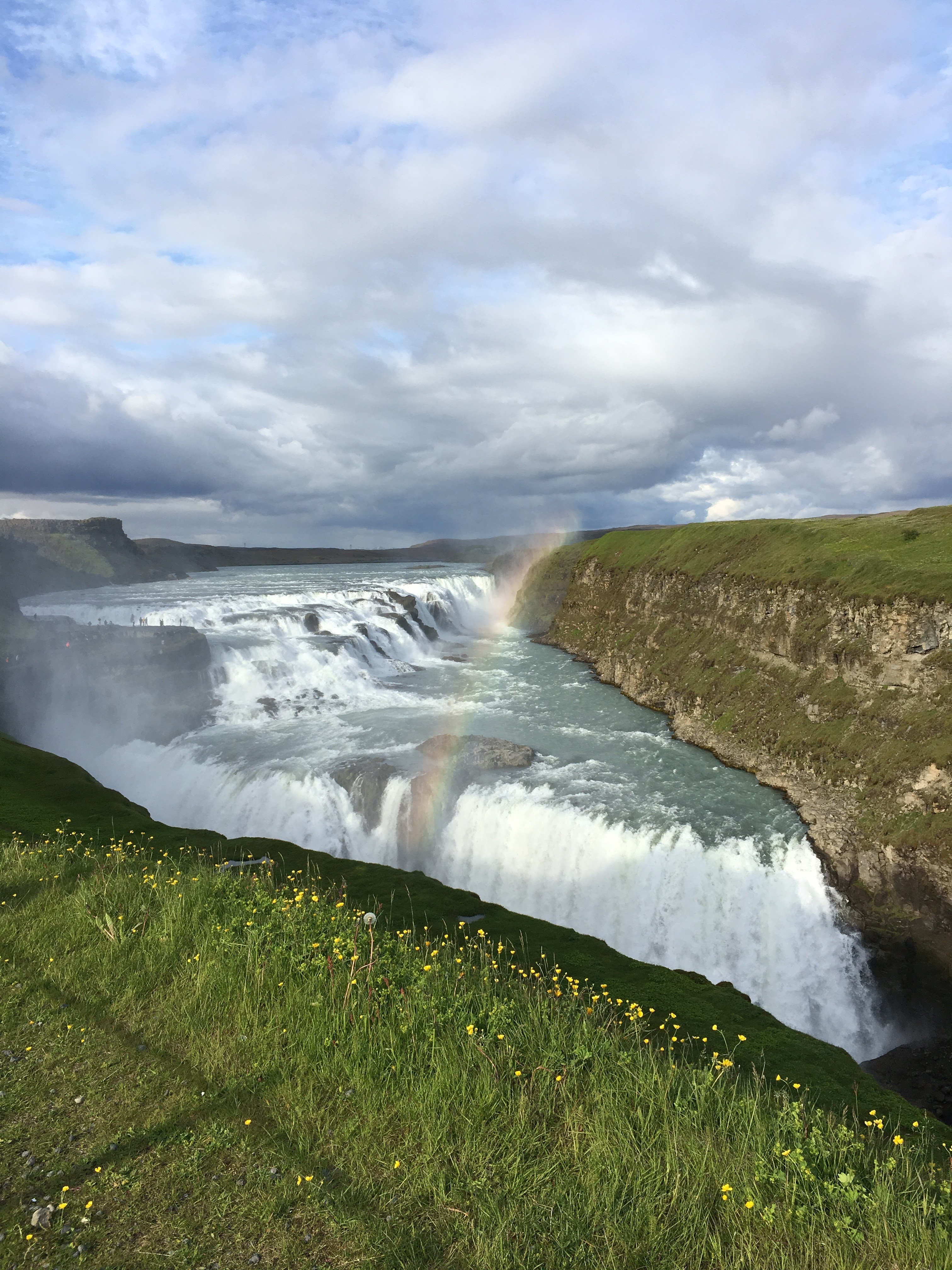
4. The waterfalls in Iceland are otherworldly. In summer amidst the lush green setting, they are breathtaking. Skogasfoss is a dreamy waterfall but no mistake it is powerful, the showers can even be felt at a safe distance. It is also adventurous to walk all the way to the top to get a glimpse of the waterfalls from the back. The Seljalandsfoss is taller but can be seen seen right from the highway. The adjoining trails provide access to other smaller waterfalls. Gullfoss is a massive waterfalls that originates from a glacier and falls into a gorge in two tiers. It is jaw dropping.There are many more falls like Godafoss, Svartifoss that are totally worth exploring.

Skogasfoss Iceland

Seljalandsfoss Iceland.JPG

Gullfoss Iceland

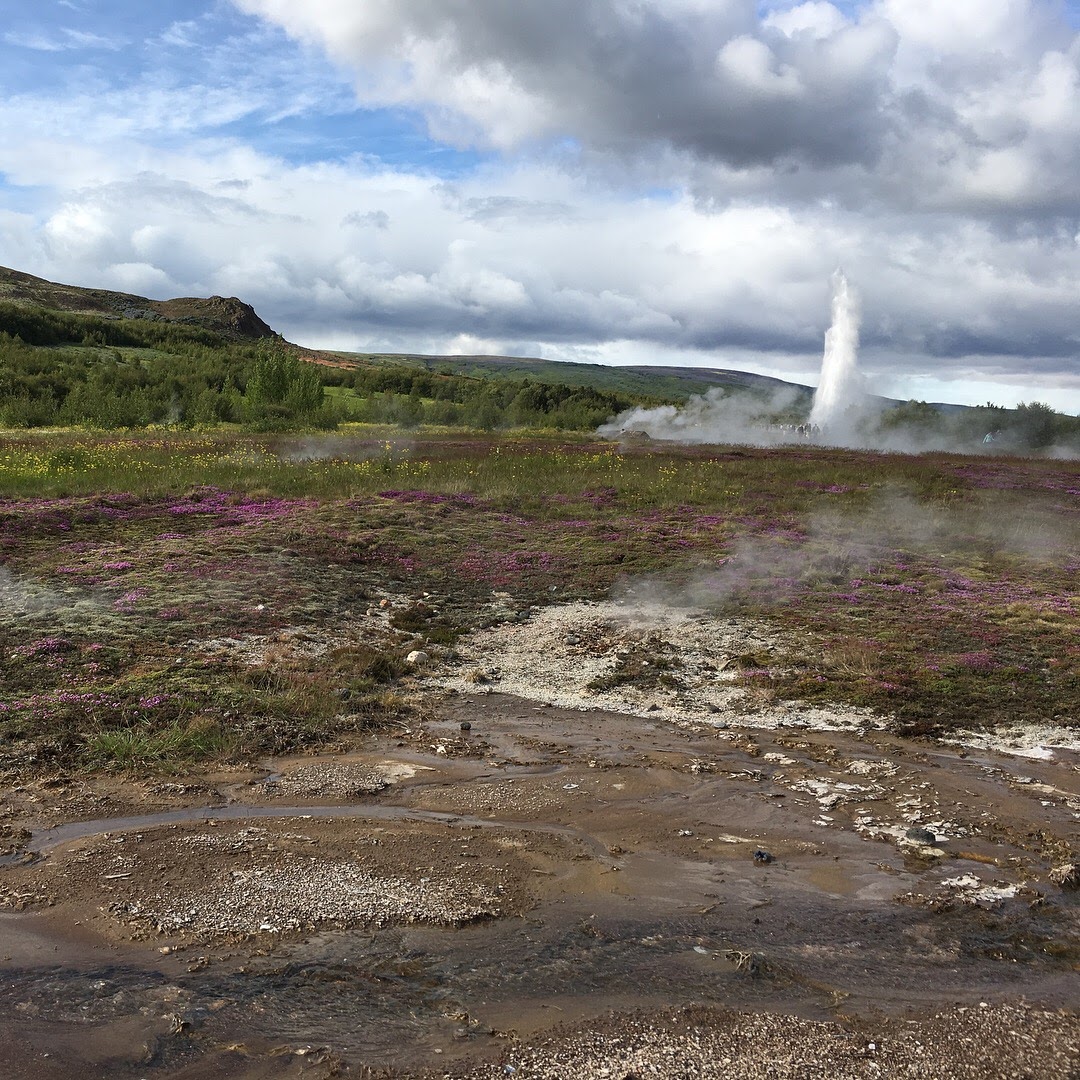
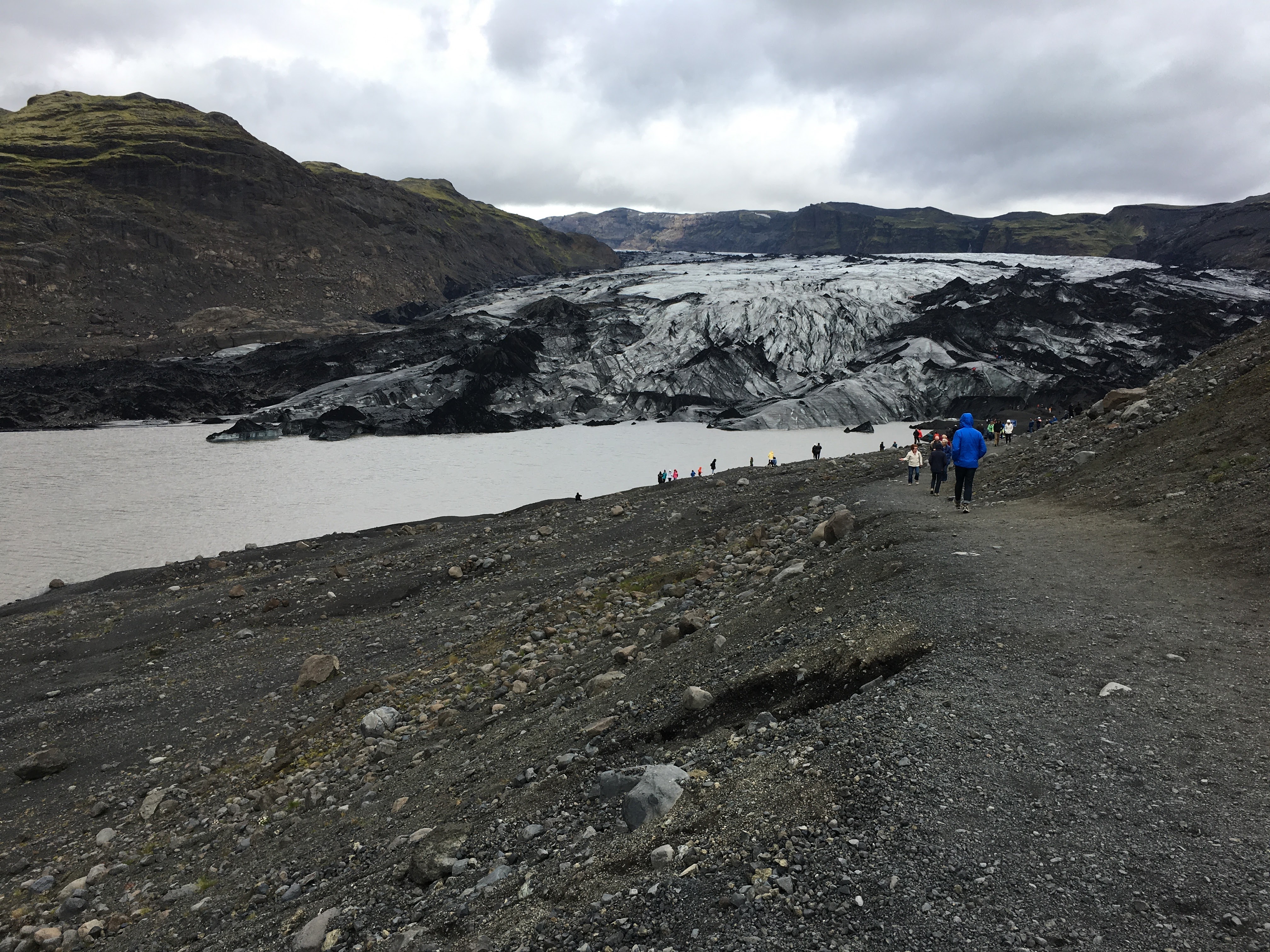
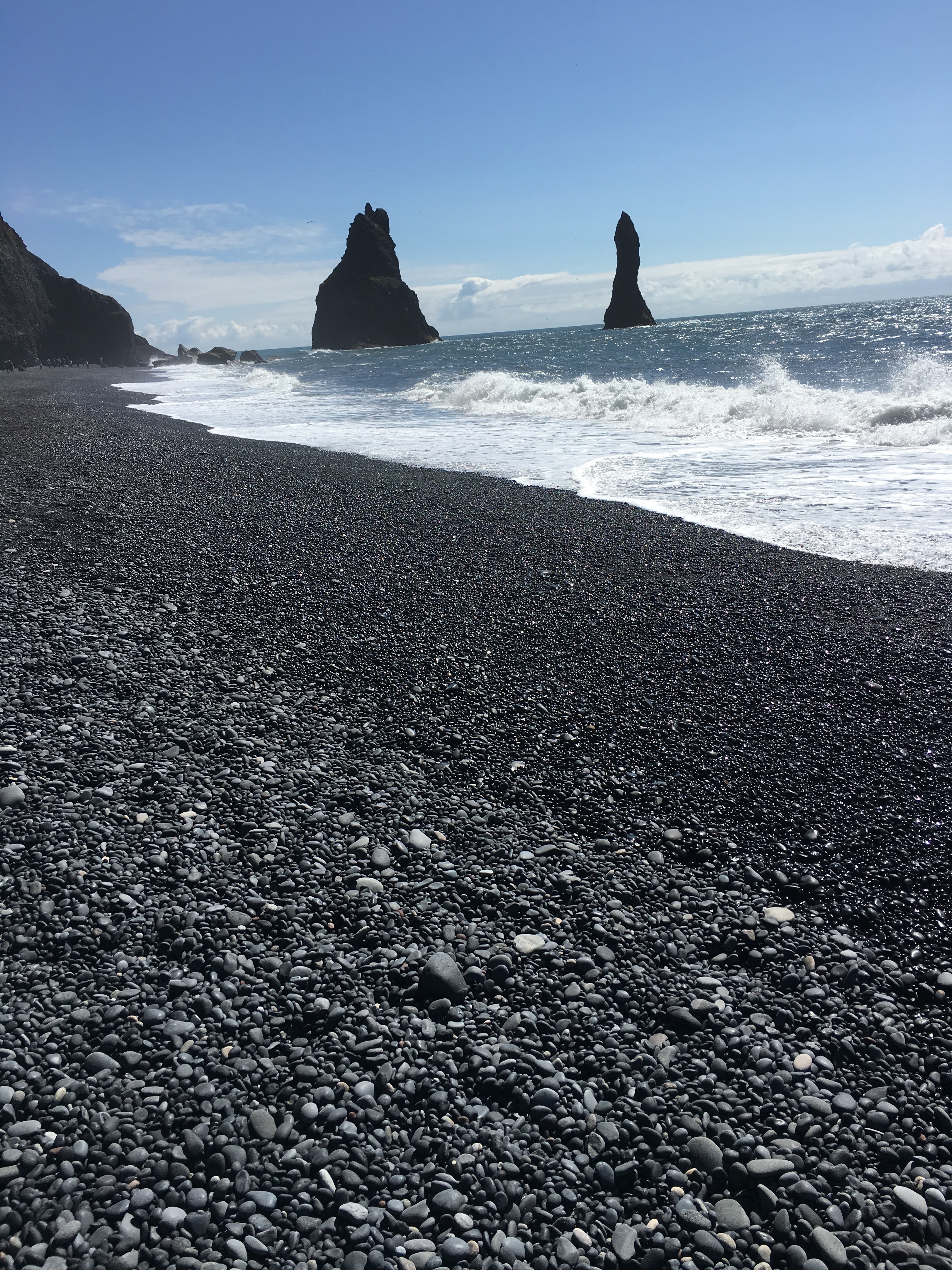
5. The Geysir is easily the funnest natural phenomenon that I have ever seen. You kind of know what to expect but you still cheer every time it blows up. I even did a self guided glacier hike at Solehimajakull since the tours filled up and went to a black sand beach at Reynisfara right after. Such dramatic changes in geography is what makes Iceland truly special. Vik is a great stop to explore Dyrhólaey peninsula and is on way to Jokulsarlon, home to the glacier lagoon.

Geysir Iceland.JPG

Glacier Iceland

Black Sand Beach Iceland.JPG

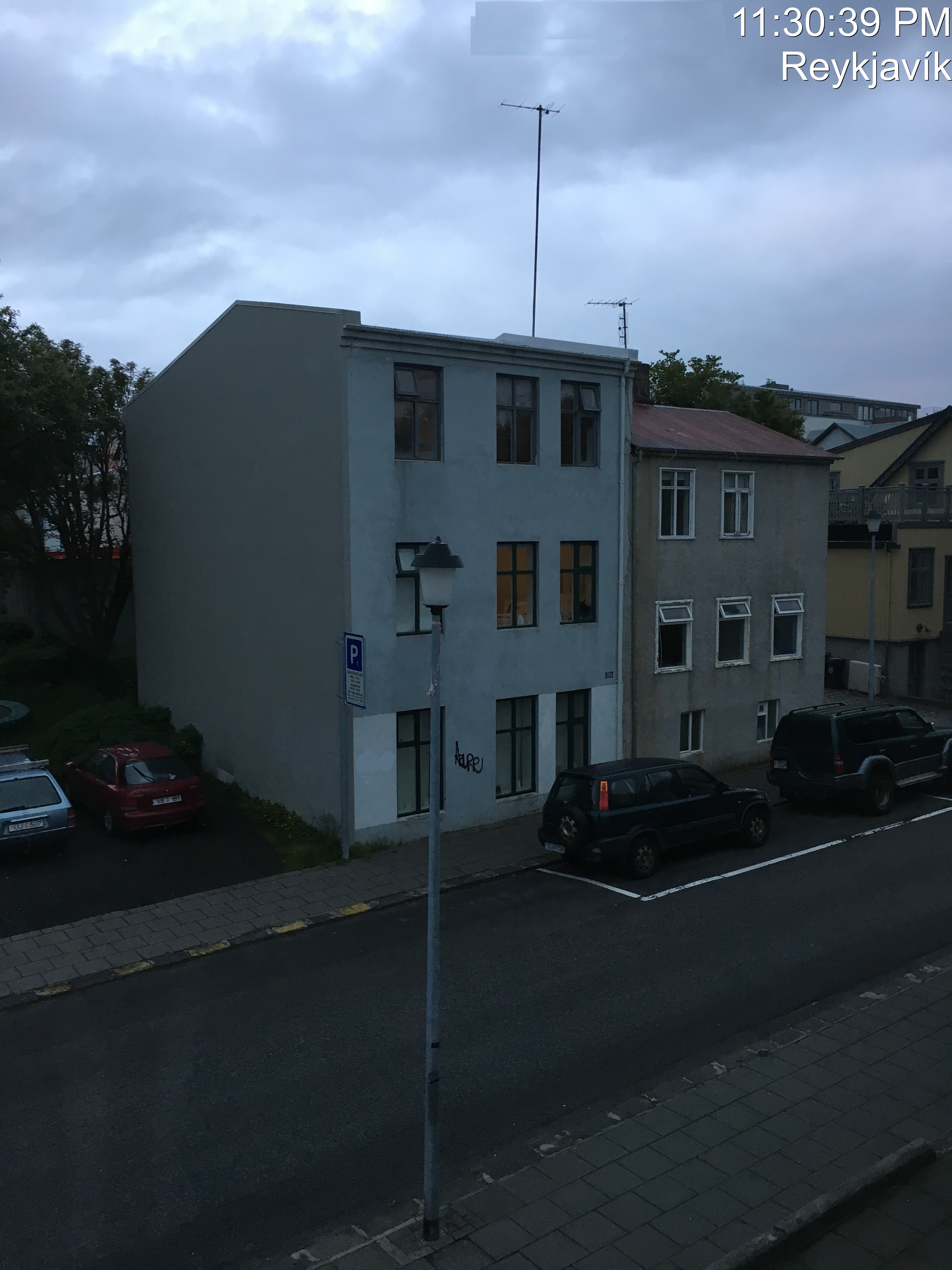
6. I experienced Midnight Sun for the first time ever. It was cool to see daylight barely dim even around midnight. Most homes in Iceland seem to have blackout curtains to help keep their sleep cycles manageable even during summer. In Winter, I guess the curtains never shut.

Midnight Sun Iceland.png

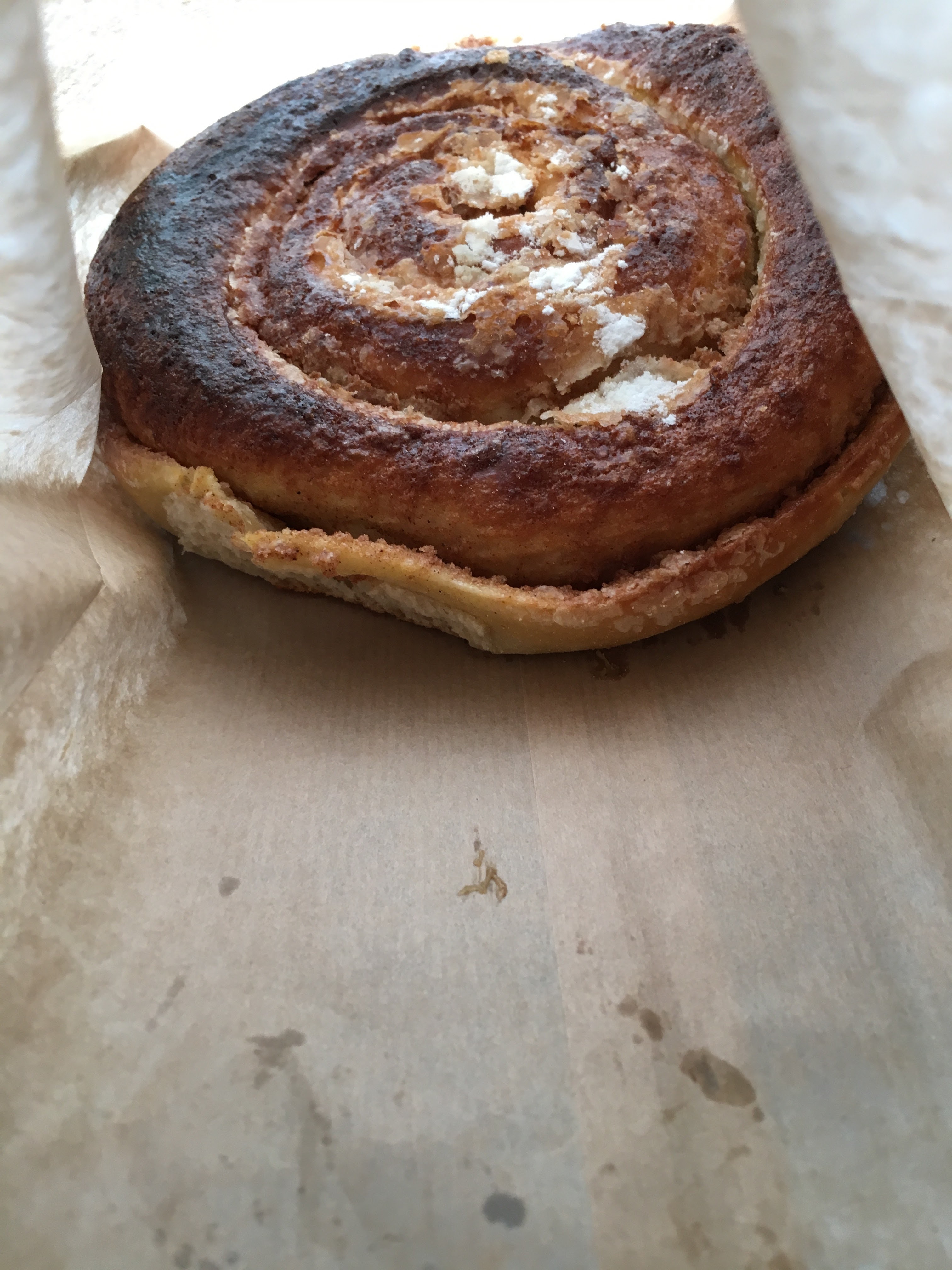
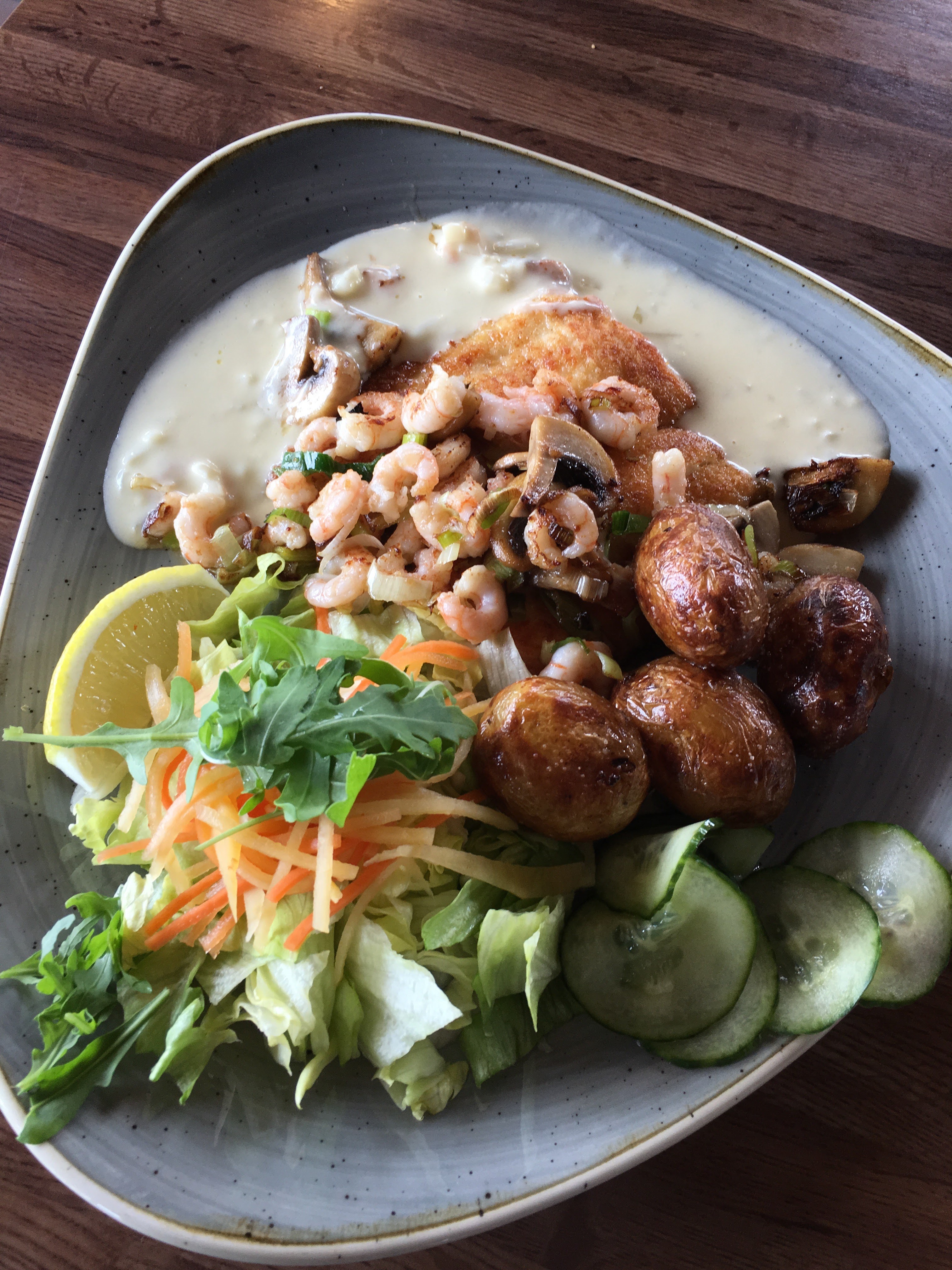
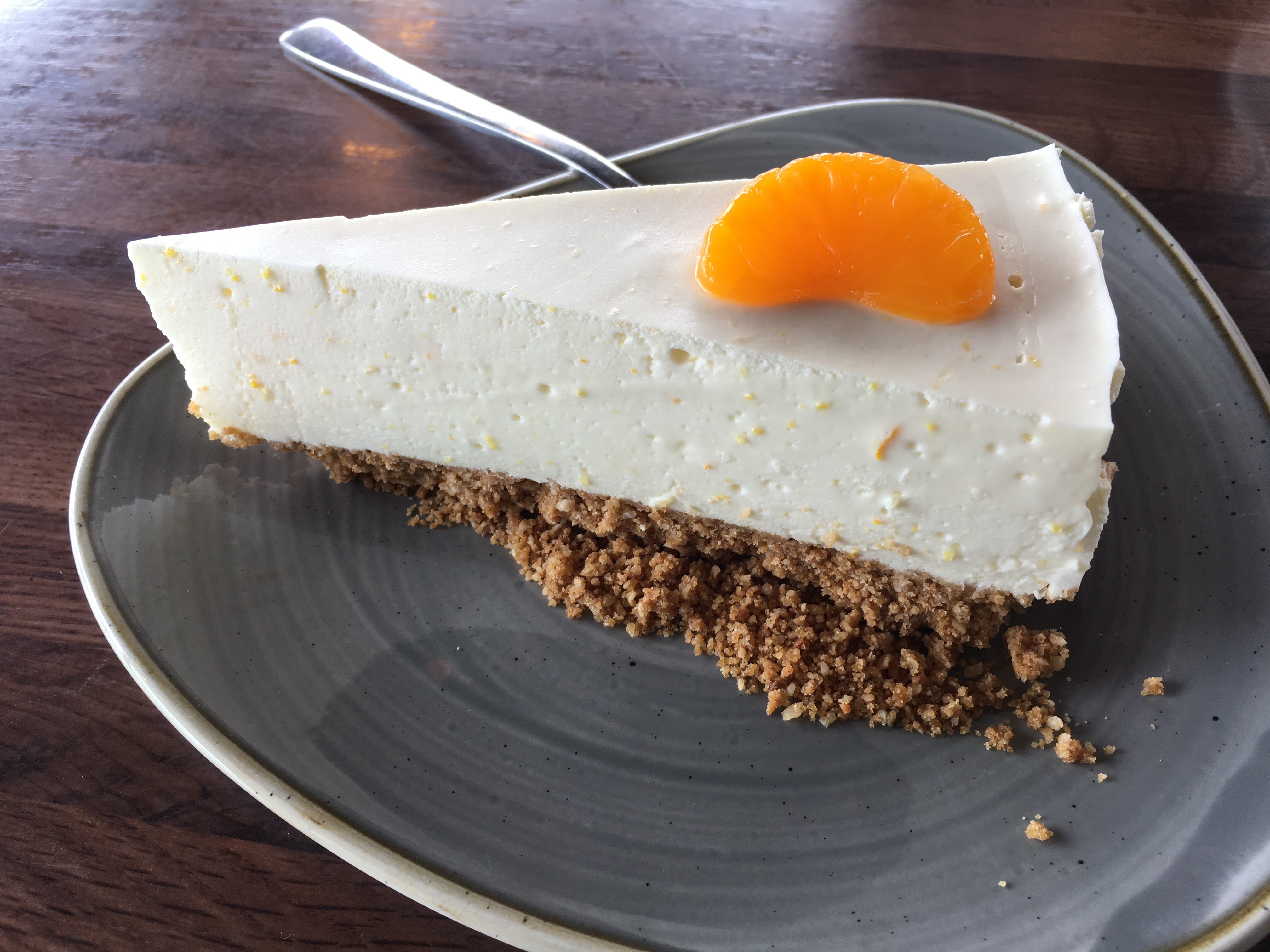
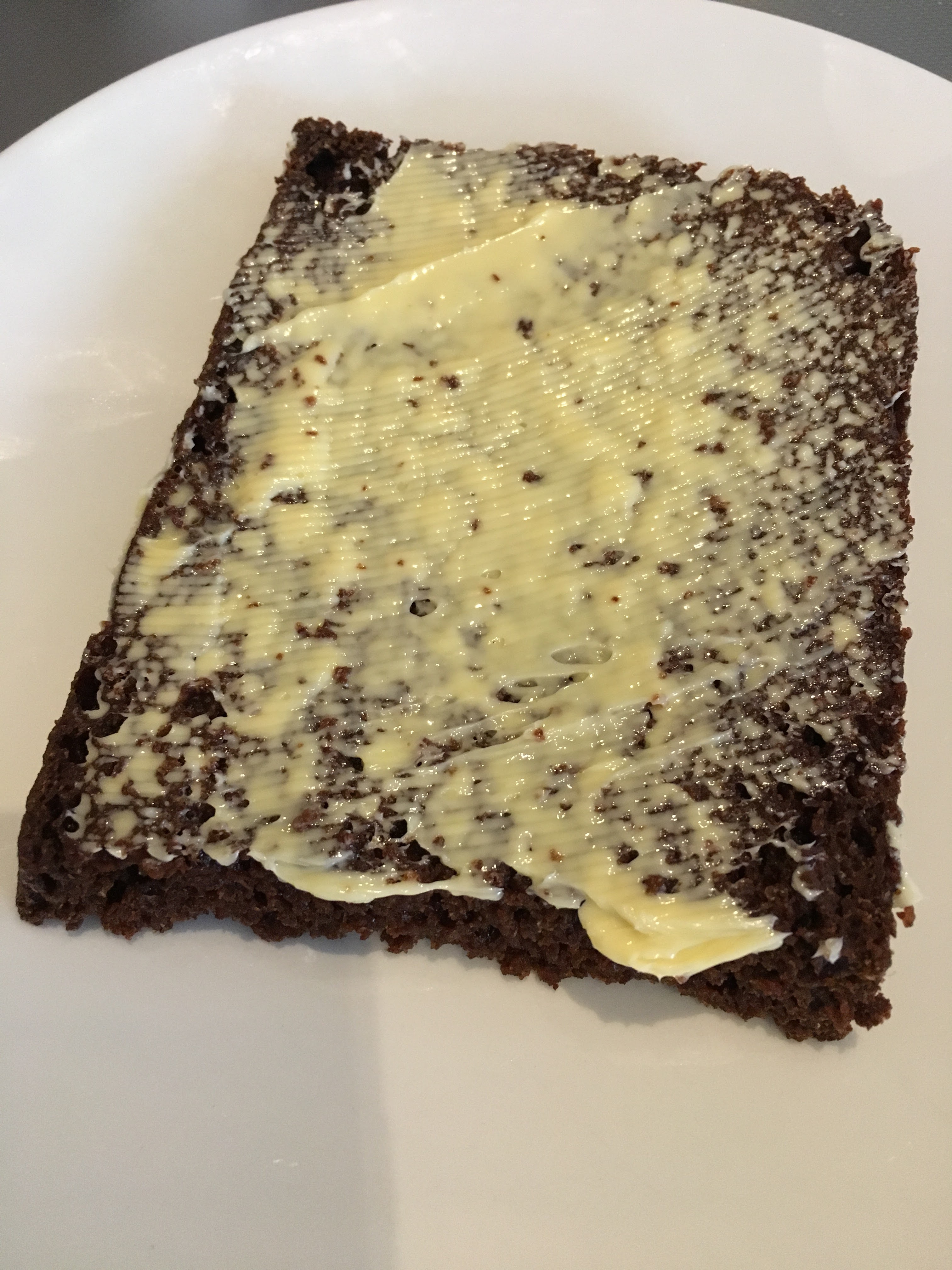
7. Icelandic food is fresh and unfussy but also hearty and flavorful. There are few if any avant-garde restaurants and I was told that most icelanders prefer to cook and eat simple meals at home. Perhaps, why bother when the produce especially the seafood is amazing.Eating out is very expensive too. Icelandic butter Smjor much like the Irish version is yellow in color showing its purity. Skyr is Icelandic strained yogurt, it makes for a nutritious breakfast or a snack. Skyr Cheesecake was drop dead delicious. I fell in love with the cinnamon rolls at Brod in Reykjavik, so much so that we went there every morning. This ain’t close to anything that is available in America and they definitely don’t douse it in sweet icing. While Rye bread is a staple across Scandinavia, At Cafe Loki it is a family recipe where the bread is dense but moist and they even make an ice cream with it.

Cinnamon Roll Brod Iceland.JPG

Icelandic Food Iceland

Skyr Cheesecake Iceland.JPG

Rye Bread Iceland

7 things about Iceland

10 things about London, UK

1. London is as cosmopolitan as it gets. Due to the its colonial past and liberal economic policies, it has attracted people from all over the world in search of a better life. There are large neighborhoods that have evolved to cater to specific communities from certain Commonwealth countries. Southall is home to the largest Sikh community in London, Ealing is the hub of the Polish community, Brixton is the home to the Caribbean community and so on.

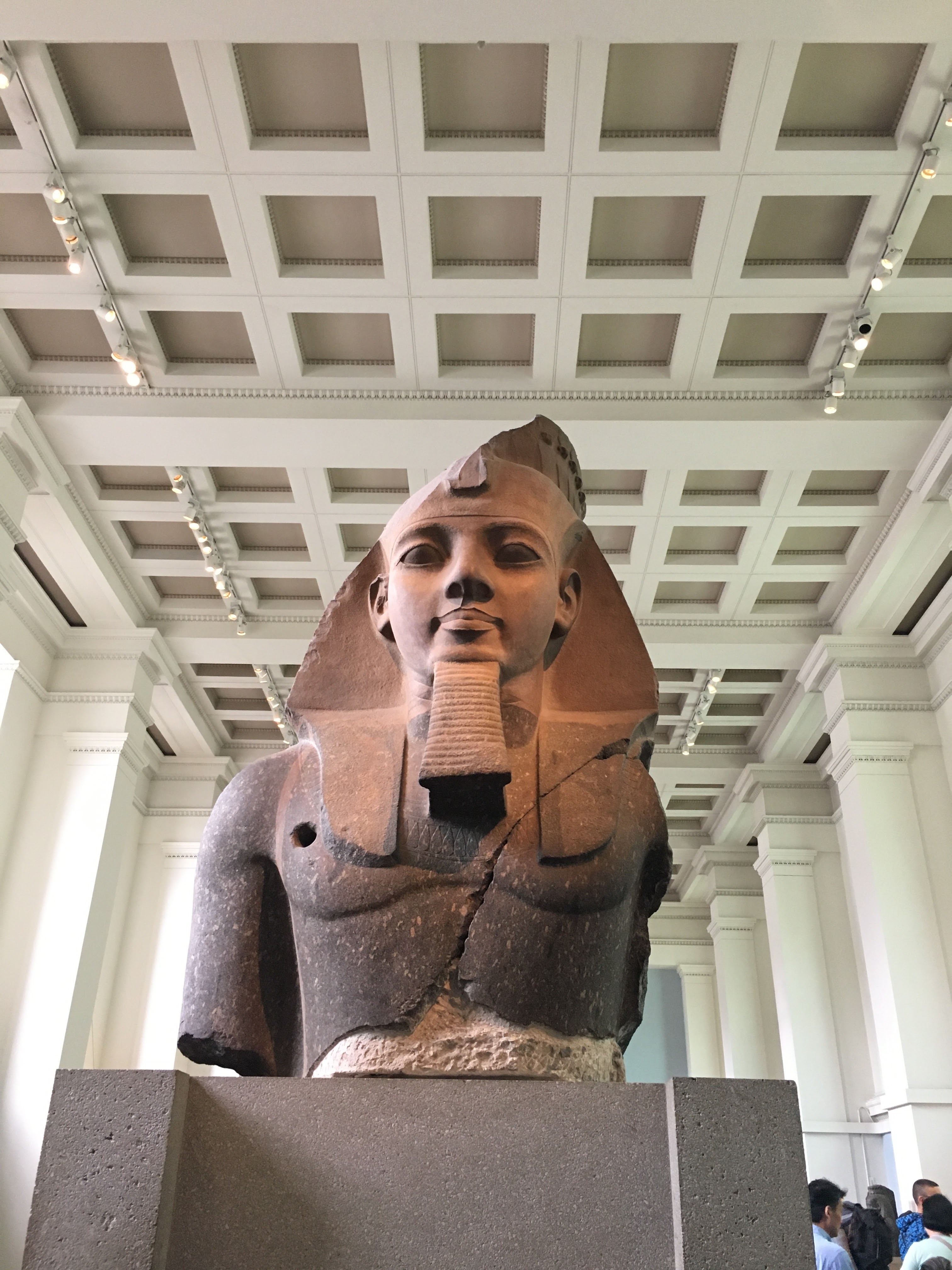
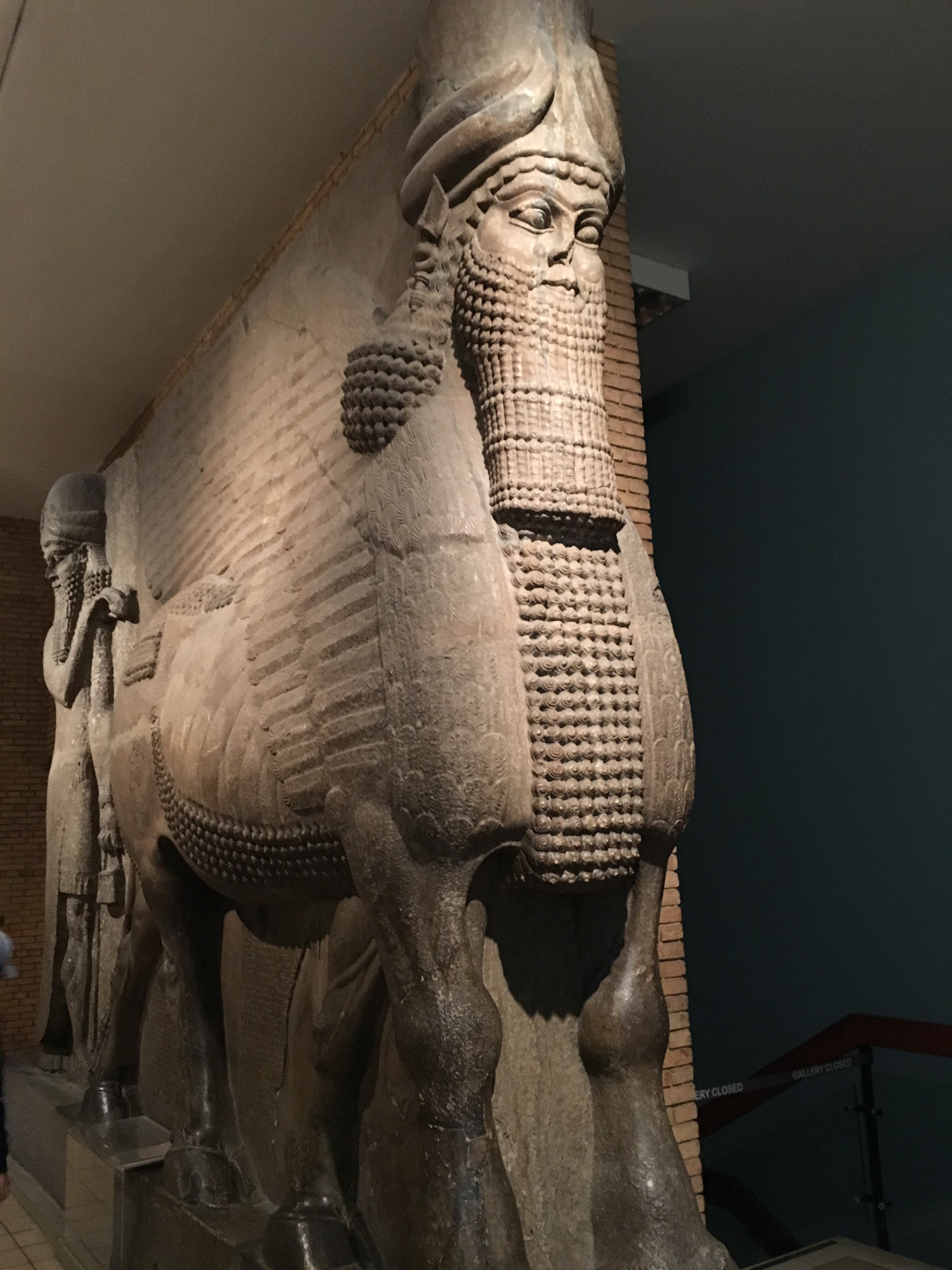
2. There is history around every corner. I stumbled upon a quaint church – All Hallows by the Tower near the financial district and found that it had a connection to John QuincyAdams, one of founders of United States of America. Then they are the museums. British Museum is an incredible repository of world history. I could easily spend days unpacking each exhibition although I couldn’t shake off the feeling that a majority of exhibits were misappropriated from their homeland. The National Gallery is another gem. Victoria and Albert Museum’s Asian artifact and ceramic collection is among the best. Even the Museum of London was very educational. I learned that the Romans established Londonium as a port town on River Thames. It is hardly surprising since they were everywhere. Ruins of that city’s original defense walls are found near the Tower Hill station.

British Mueseum London.JPG

British Mueseum2 London.JPG

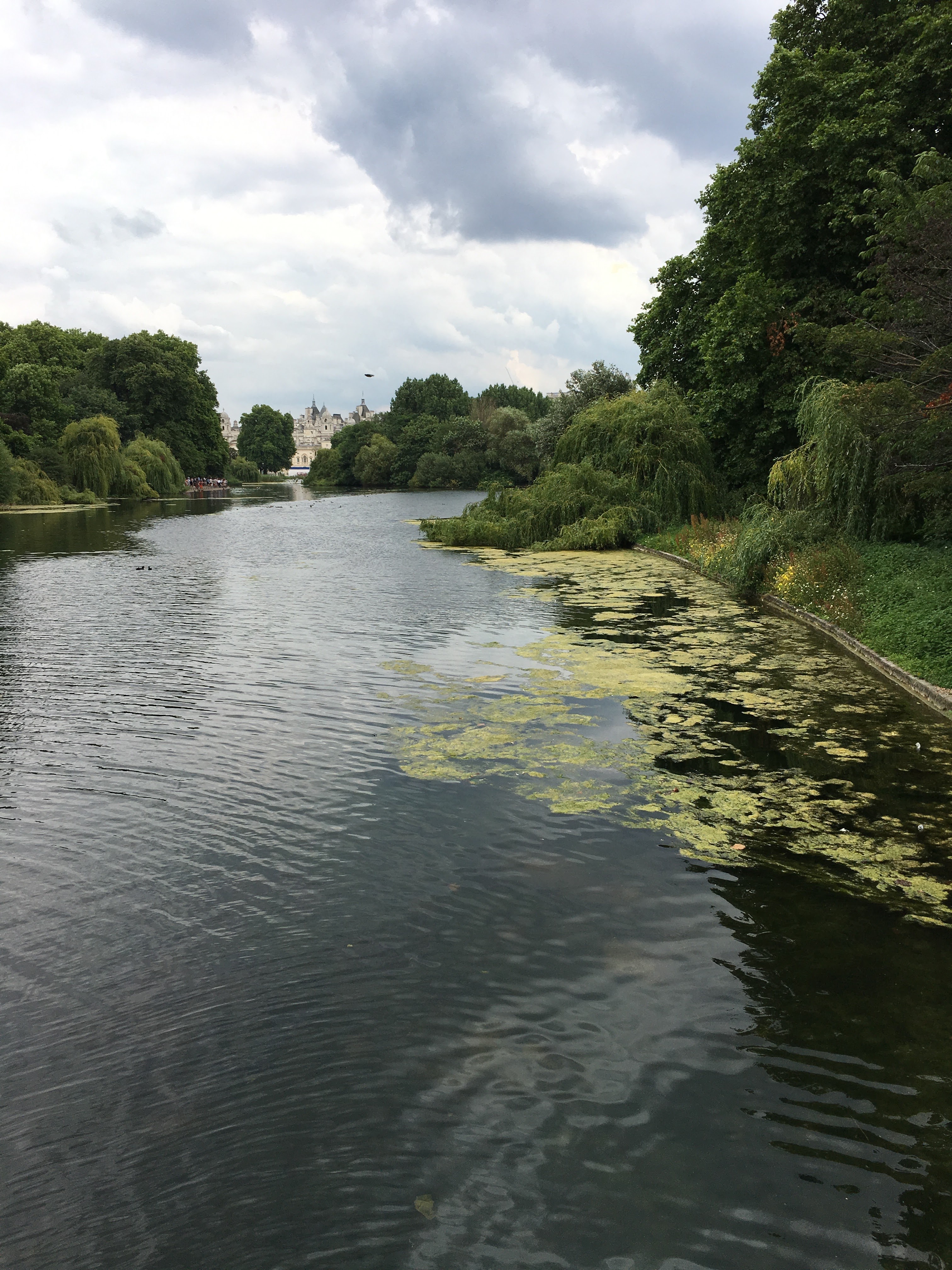
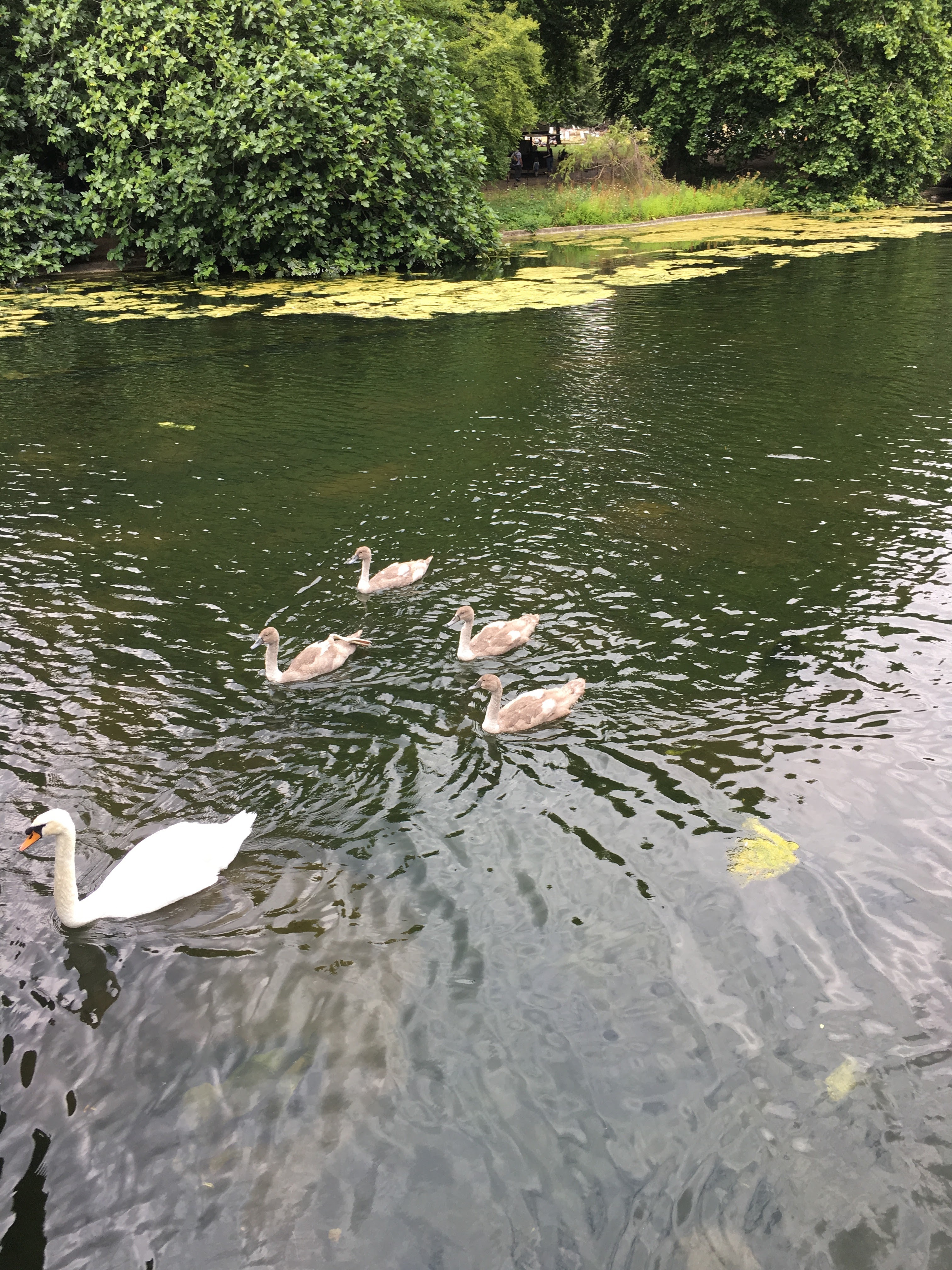
3. The greenery is unparalleled for any big city. Hampstead Heath, Primrose Hill, Hyde Park, St James Park, Greenwich Park, Kensington Gardens, Kew Gardens are all amazing and accessible. The drizzly weather probably makes it slightly easier to maintain the lushness of the gardens but the attention to detail to its upkeep is very admirable.

St James Park London

Greenery London

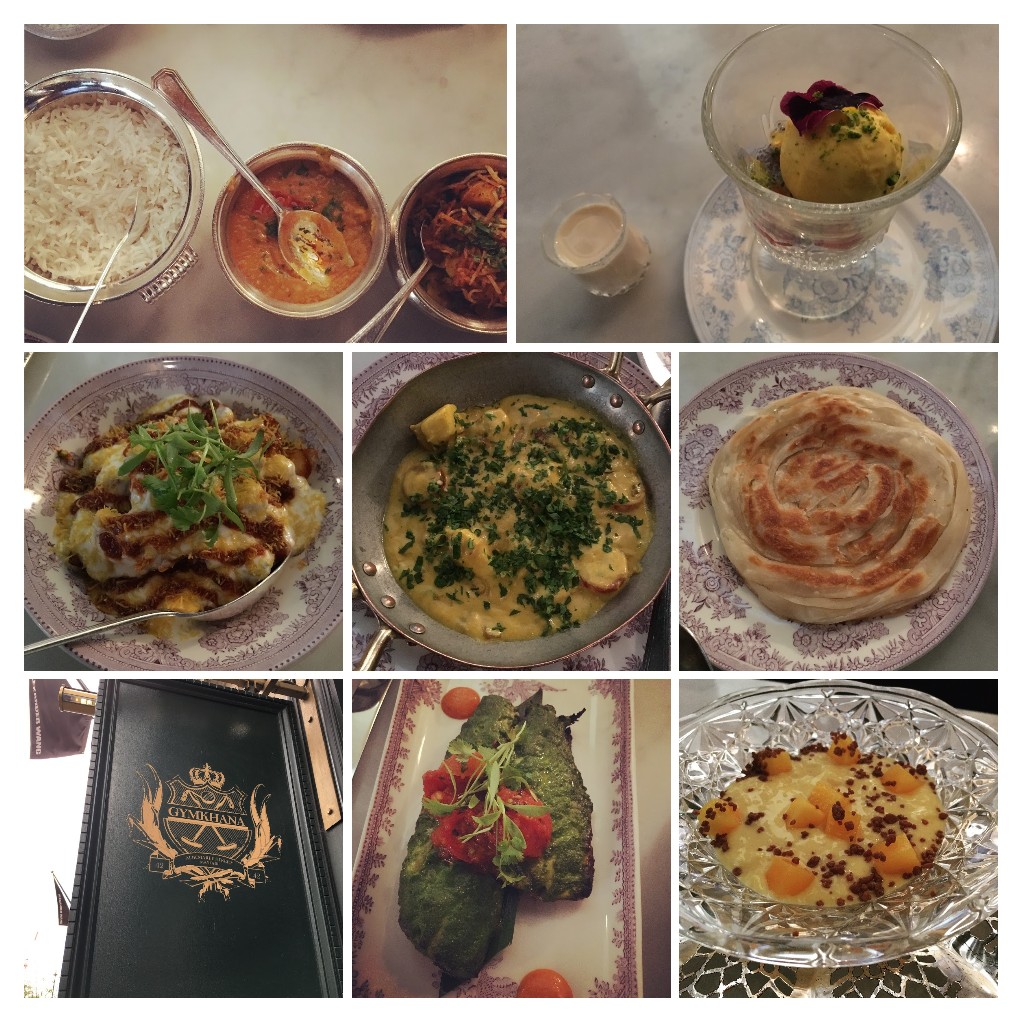
4. There is simply no other place outside India where Indian food is considered a staple. But I was pleasantly surprised by the elevated Indian food scene – Dishoom, Gymkhana, Trishna, Quilon, Veerasamy, Gunpowder, Benares, Zaika and the list goes on. While Dishoom pays homage to Irani cafes in Mumbai, Gymkhana was about showcasing hits from various cuisines of India.Gymkhana London.jpg

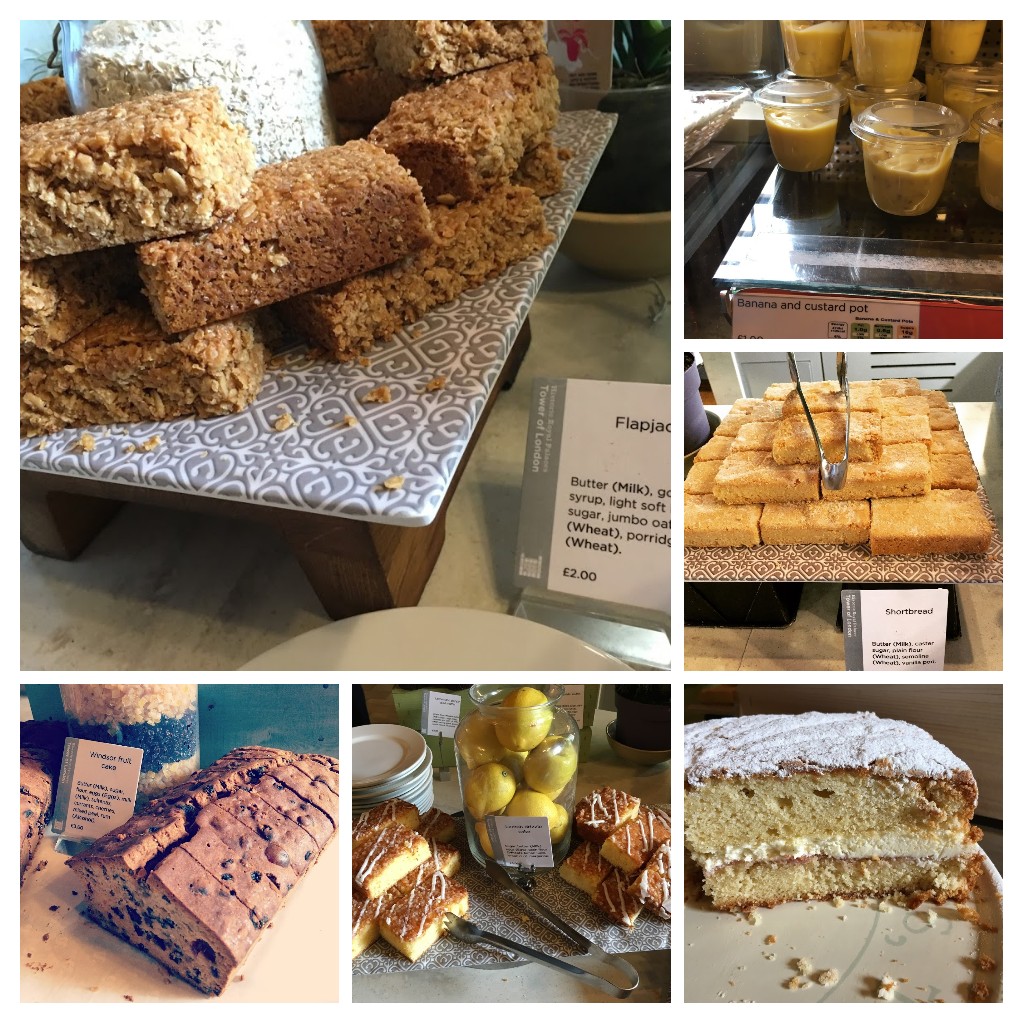
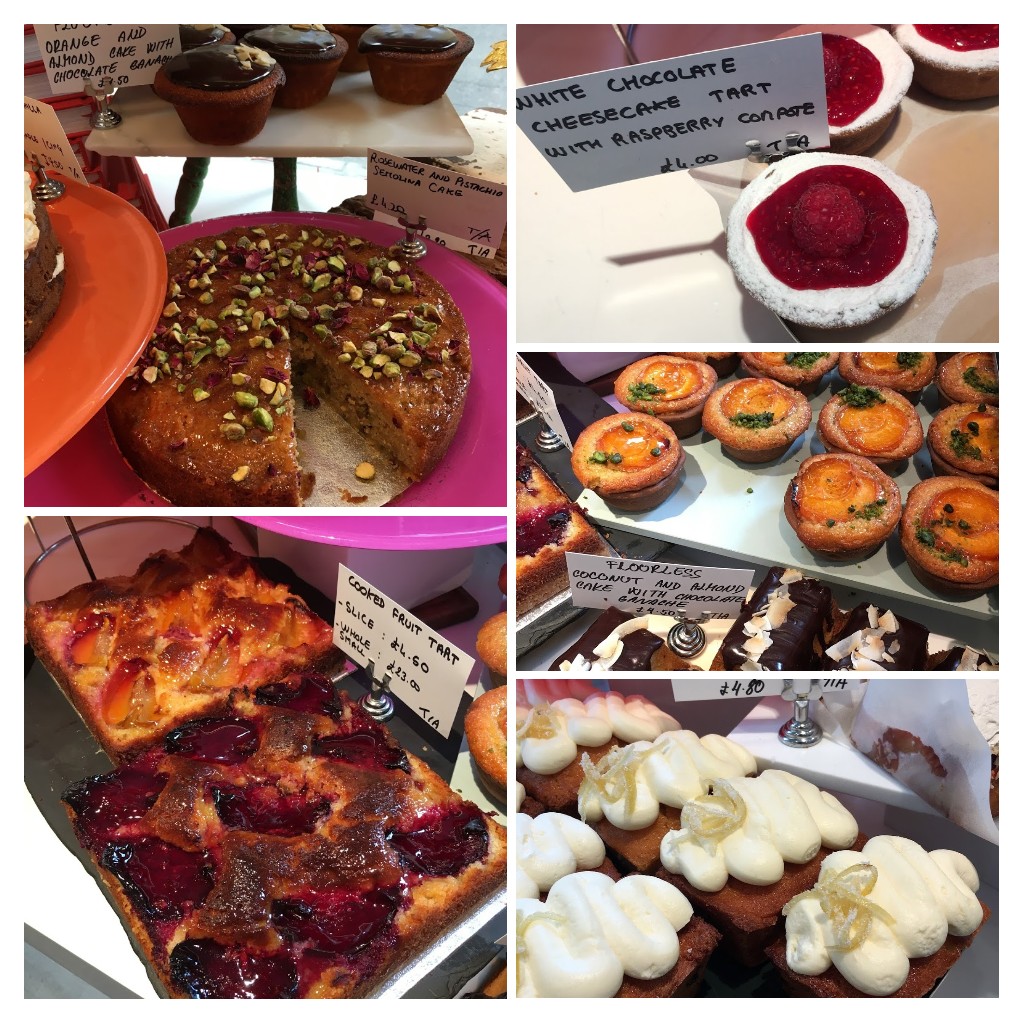
5. British food never had this reputation of being sophisticated or diverse although I think they deserve more credit. However, the sheer variety and quality of baked goods blew my mind. Be it the simple custard, the rich treacle tart or the imported Friand, they were all scrumptious.

Pastries1 London.jpg

Pastries2 London

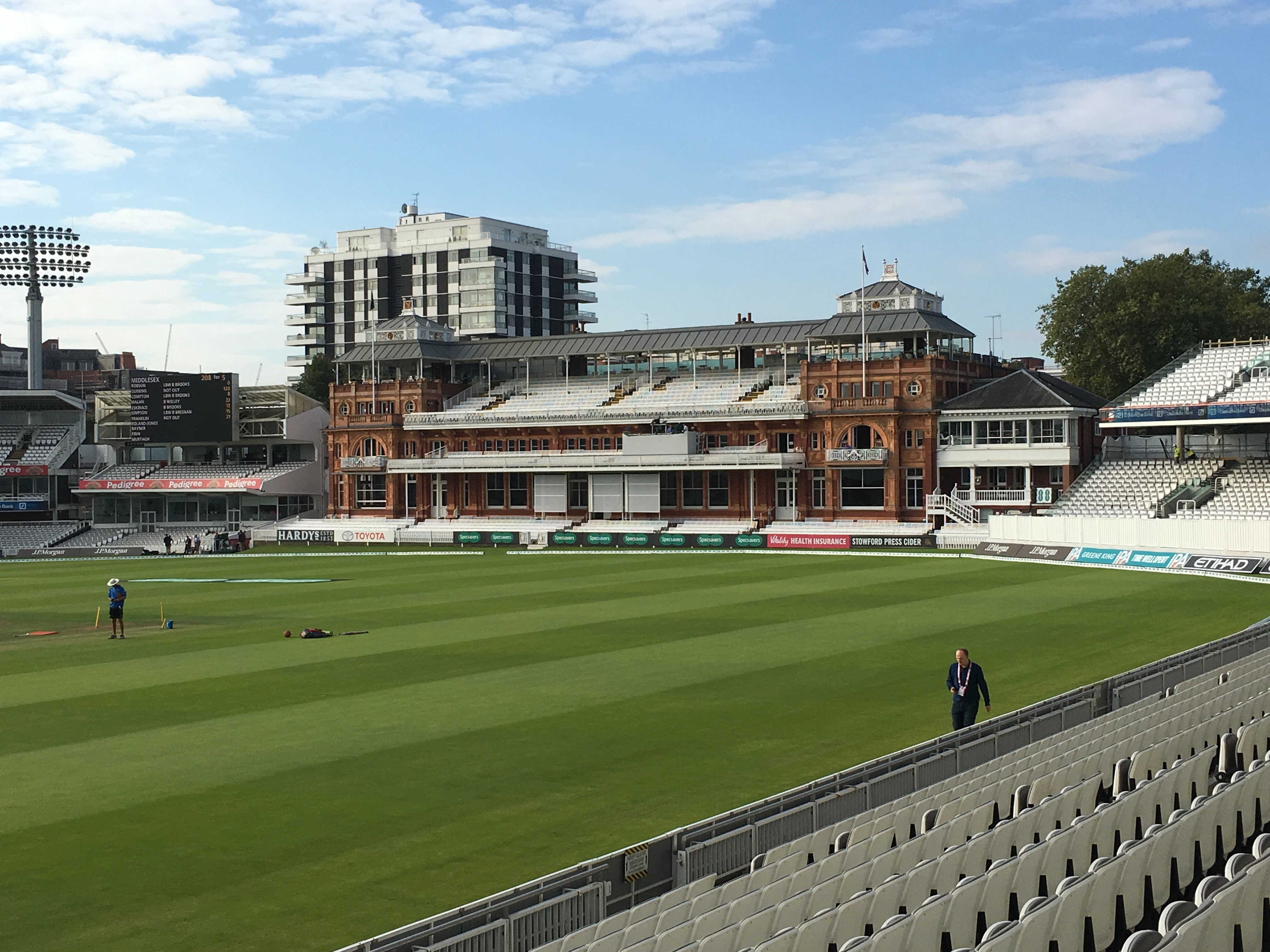
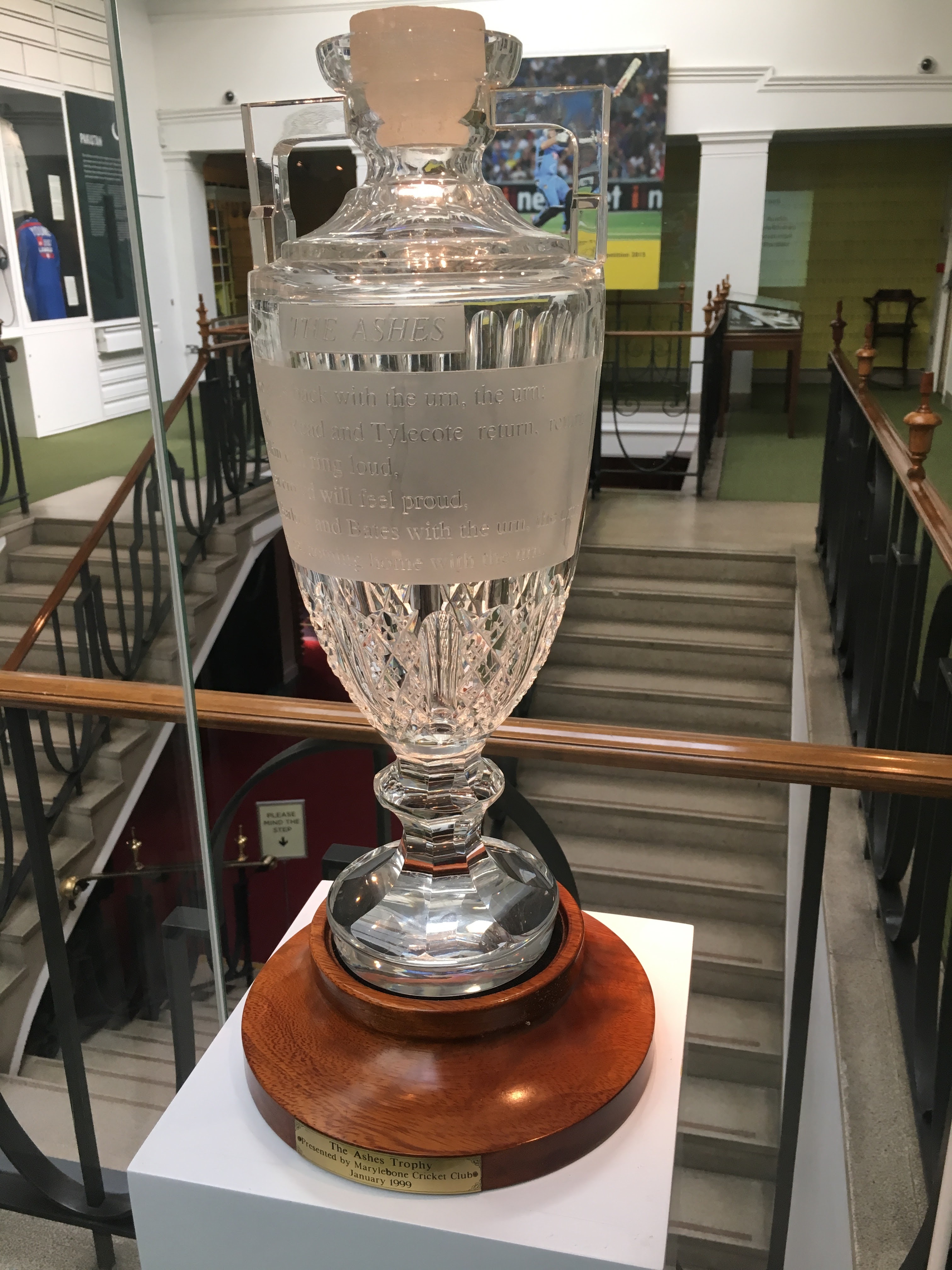
6. Cricket is very much part of the popular culture in Britain. Walking into the stadium at Lords was a special experience for an ardent cricket fan like me. Even more so was walking down the hallowed long room which has witnessed some of the key moments in the history of cricket.

Lords Stadium London.JPG

Ashes Lords London

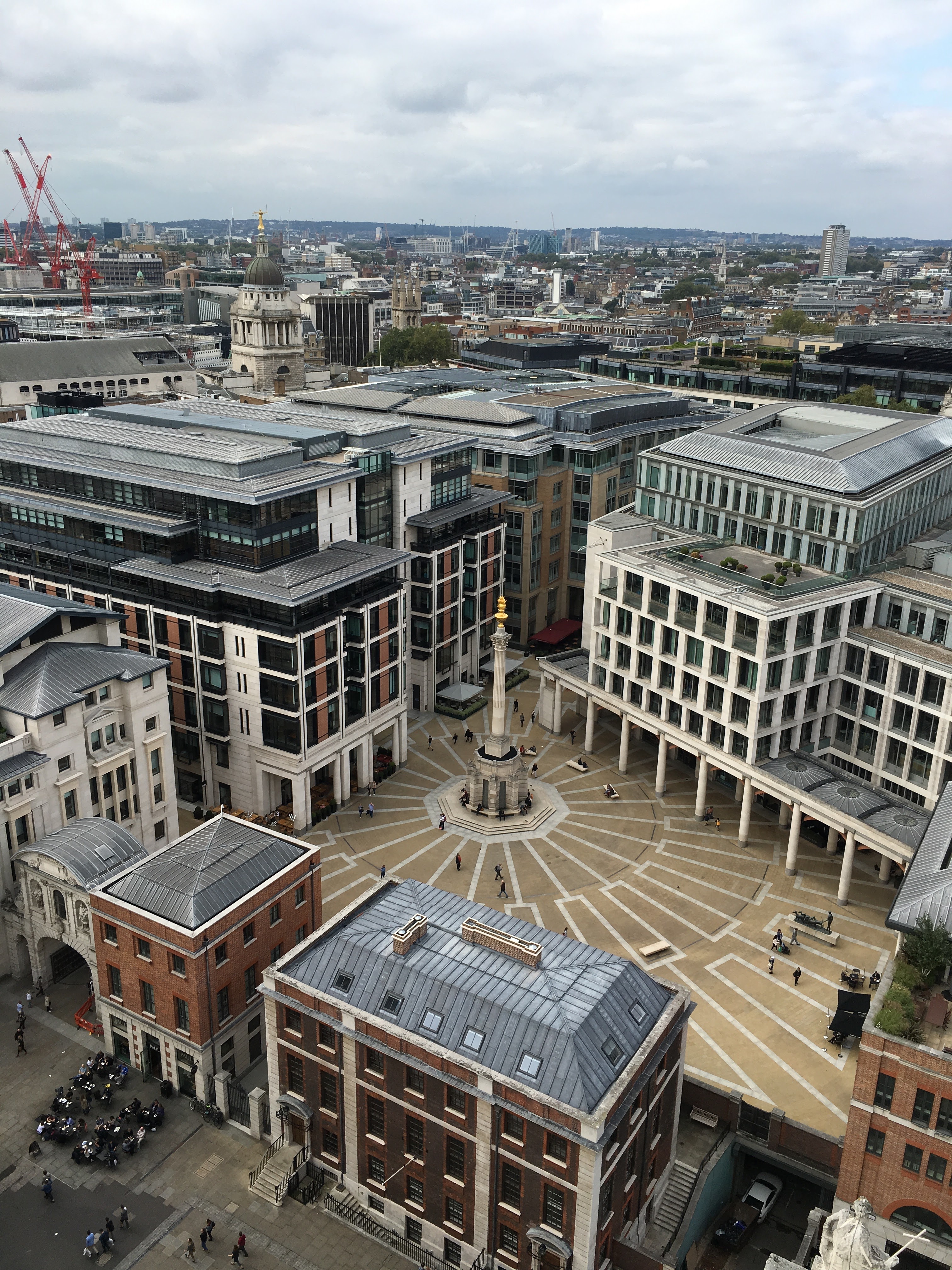
7. One of the unique characteristics of London is the co-existence of the old and new – buildings/monuments that are centuries old along with ones that were built in 2000s. There is no “old town” like most cities in Europe.

Old and new London.JPG

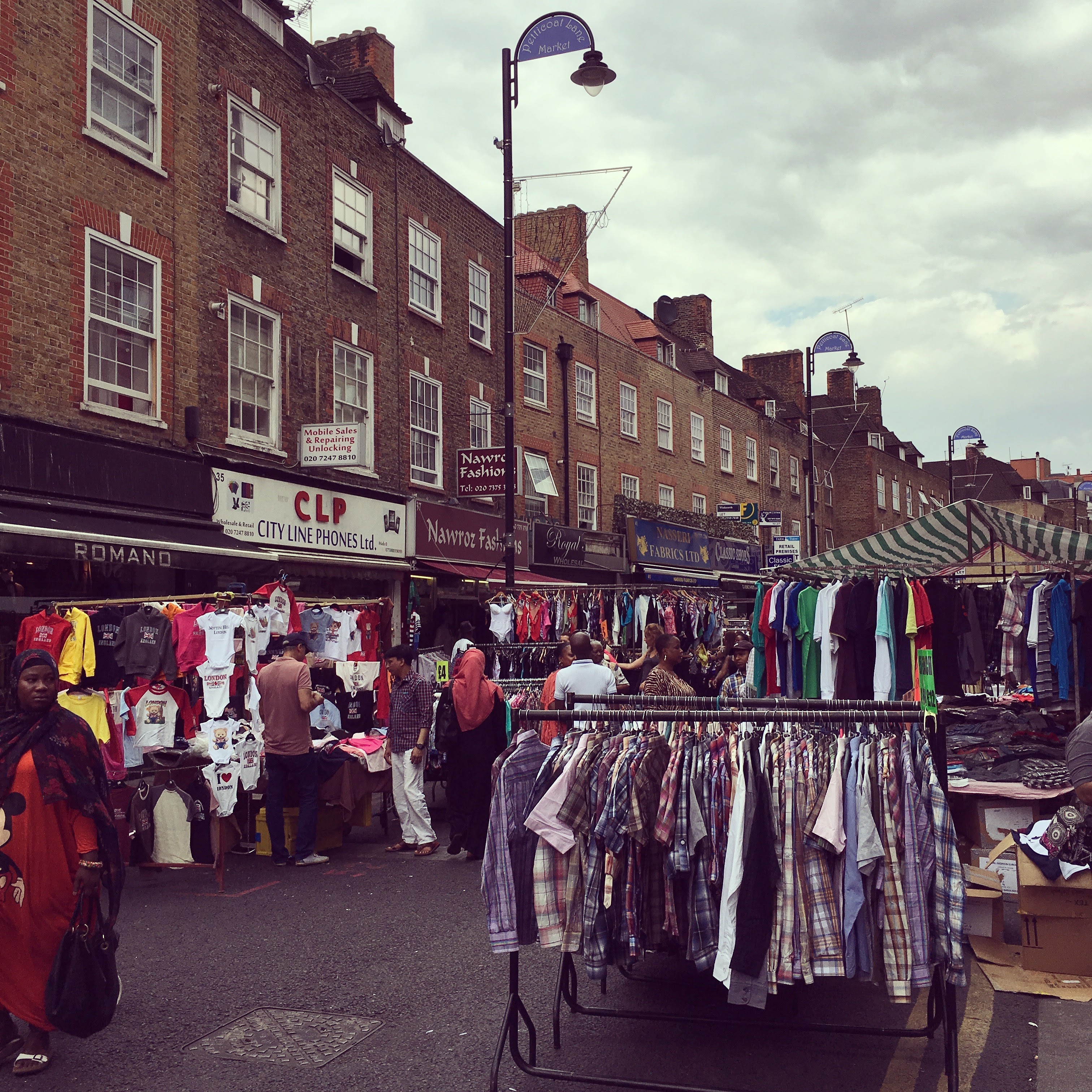
8. While every major city in the world now has food halls and indoor markets, the outdoor markets in London are rather popular. Unlike the farmer’s markets in America, the ones in London are more than just food and groceries. I saw books, vintage clothes, artisanal products literally anything that be sold. The Old Spitafields Market seemed to be popular with the African Diaspora with its fashionable ethnic wear – dashikis, kitenge and boubou’s.

Spitafields Market London.JPG

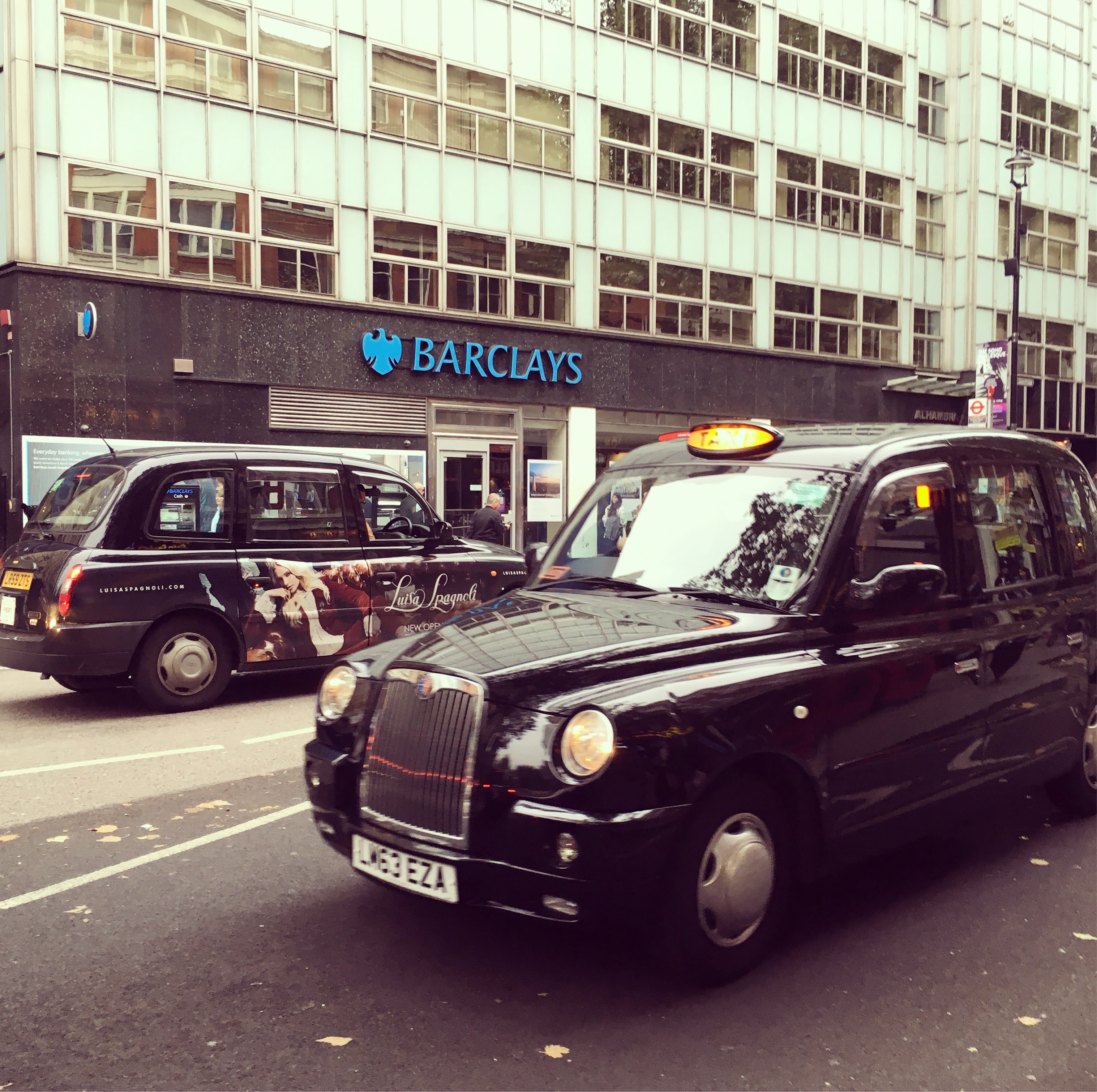
9. The London Black Cab is charming. The process of becoming a cabbie is notorious for its rigorousness. In the age of Uber, it is one of those anachronisms that I hope would not disappear. Also, I had one of most intellectual conversations about US foreign policy towards EU with a cabbie. So, I might be biased.

Black Cab London

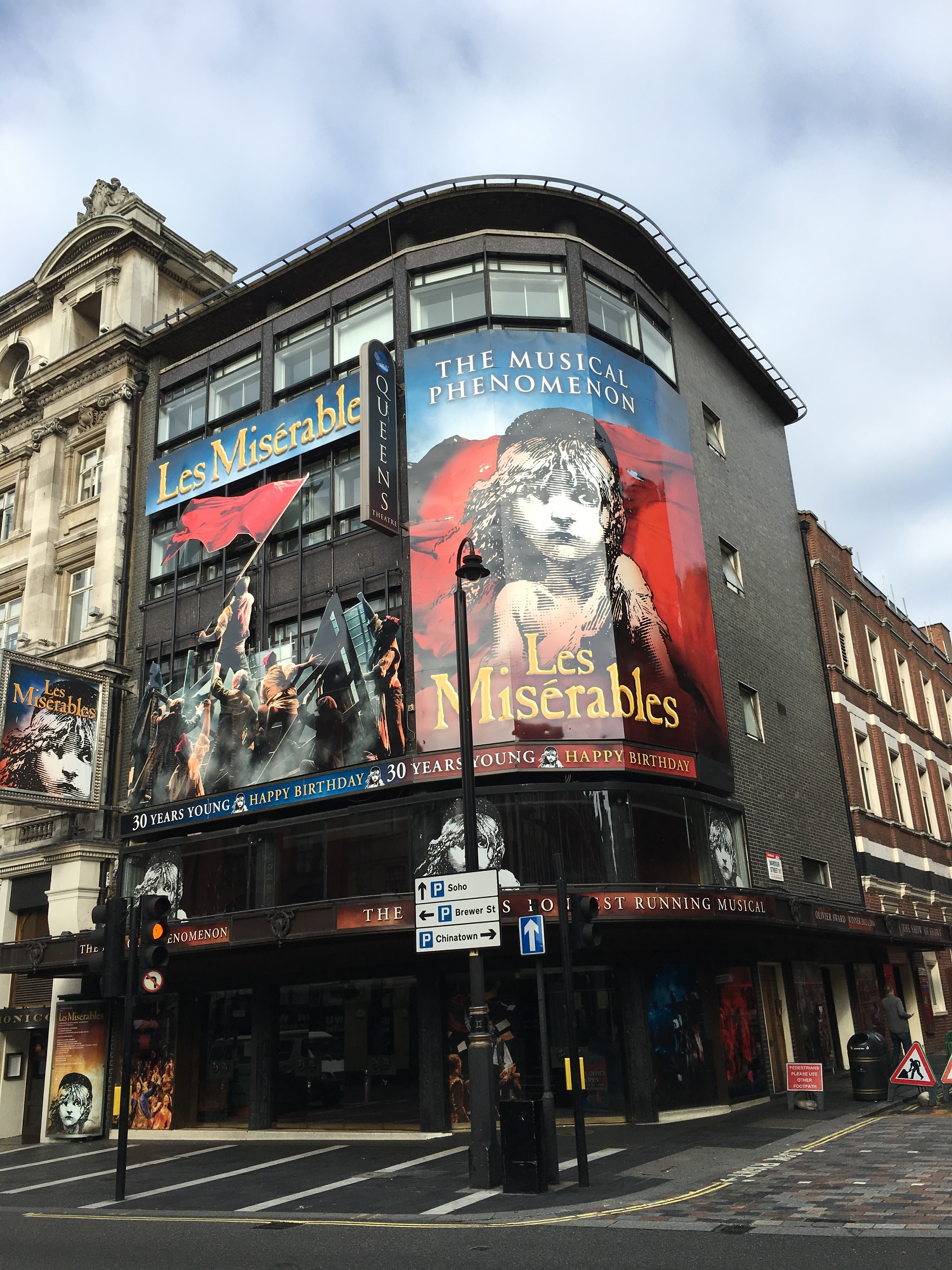
10. London’s theatre scene is huge probably only rivaled by NYC’s Broadway. The area surrounding Leicester Square has all the popular shows at various venues.The Shakespeare’s Globe is both native and unique to London. The theatre itself is a reconstruction of an Elizabethan era playhouse for which Shakespeare wrote his plays. Although I couldn’t make it to a play, I thought that the rustic set up was very charming. The interiors of the Royal Opera House are breathtaking. The architecture tour is another way to access the Opera House without spending $$$.

Theatre London.JPG

10 things about London, UK

5 things about Jordan

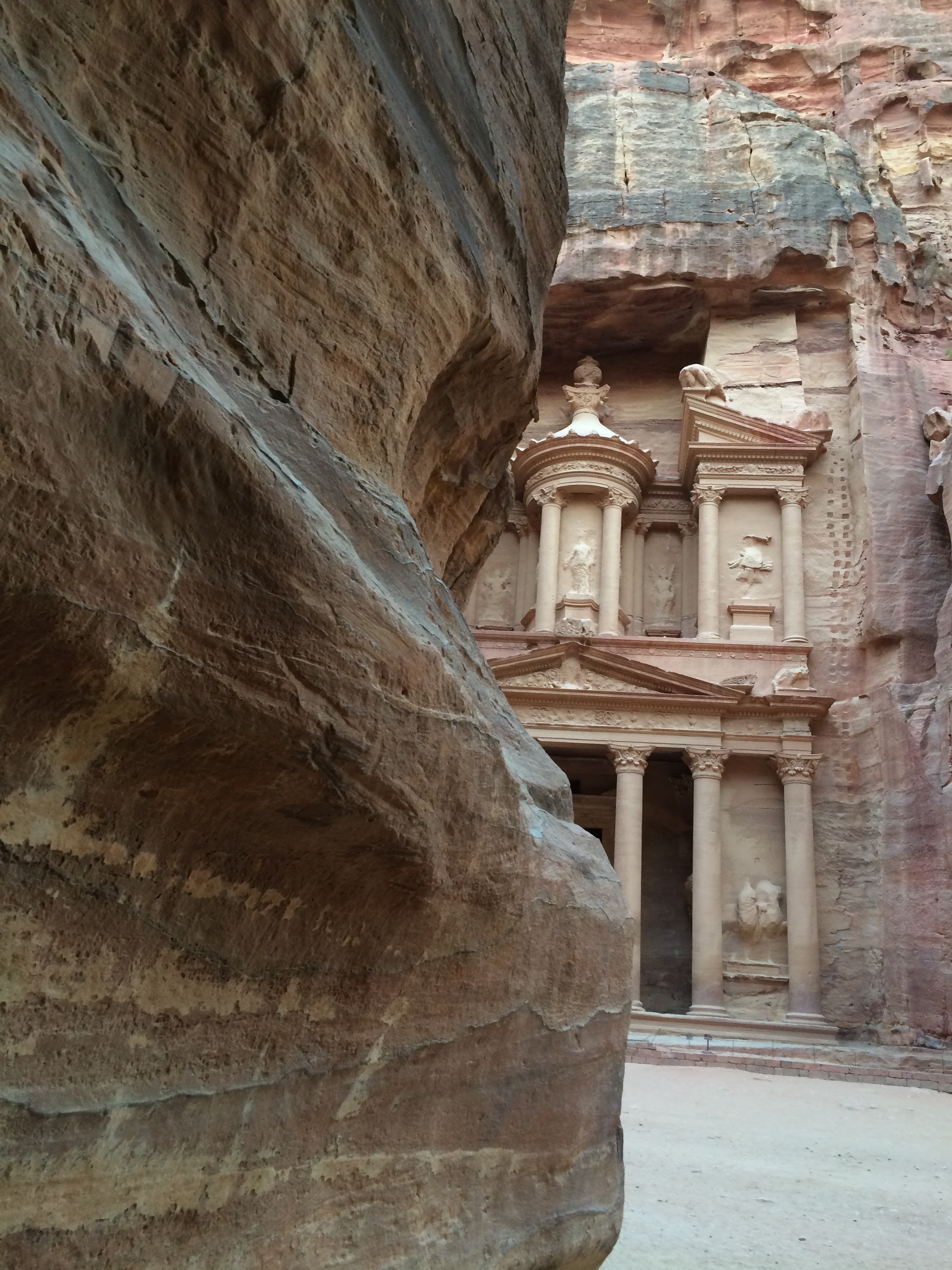
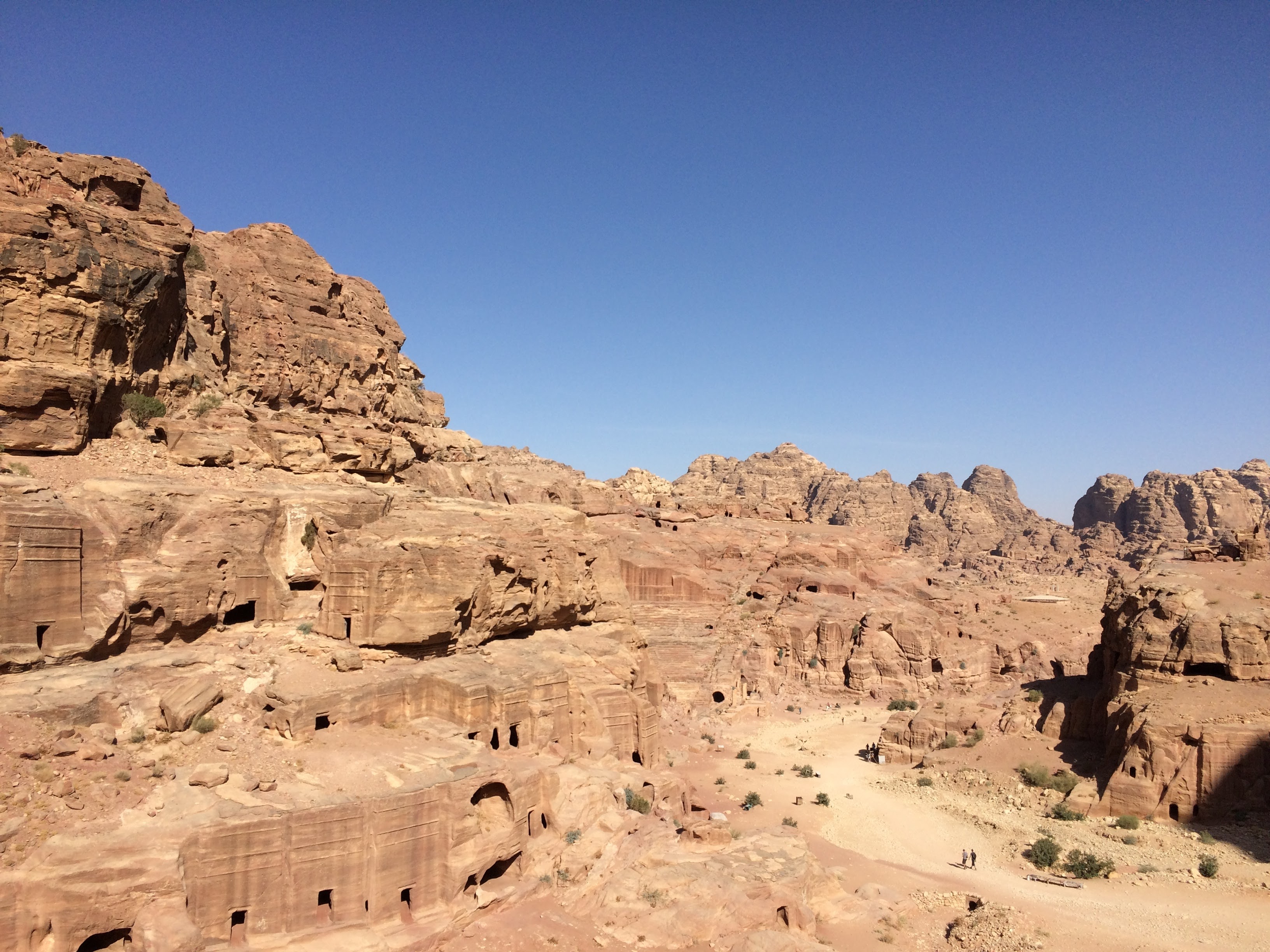
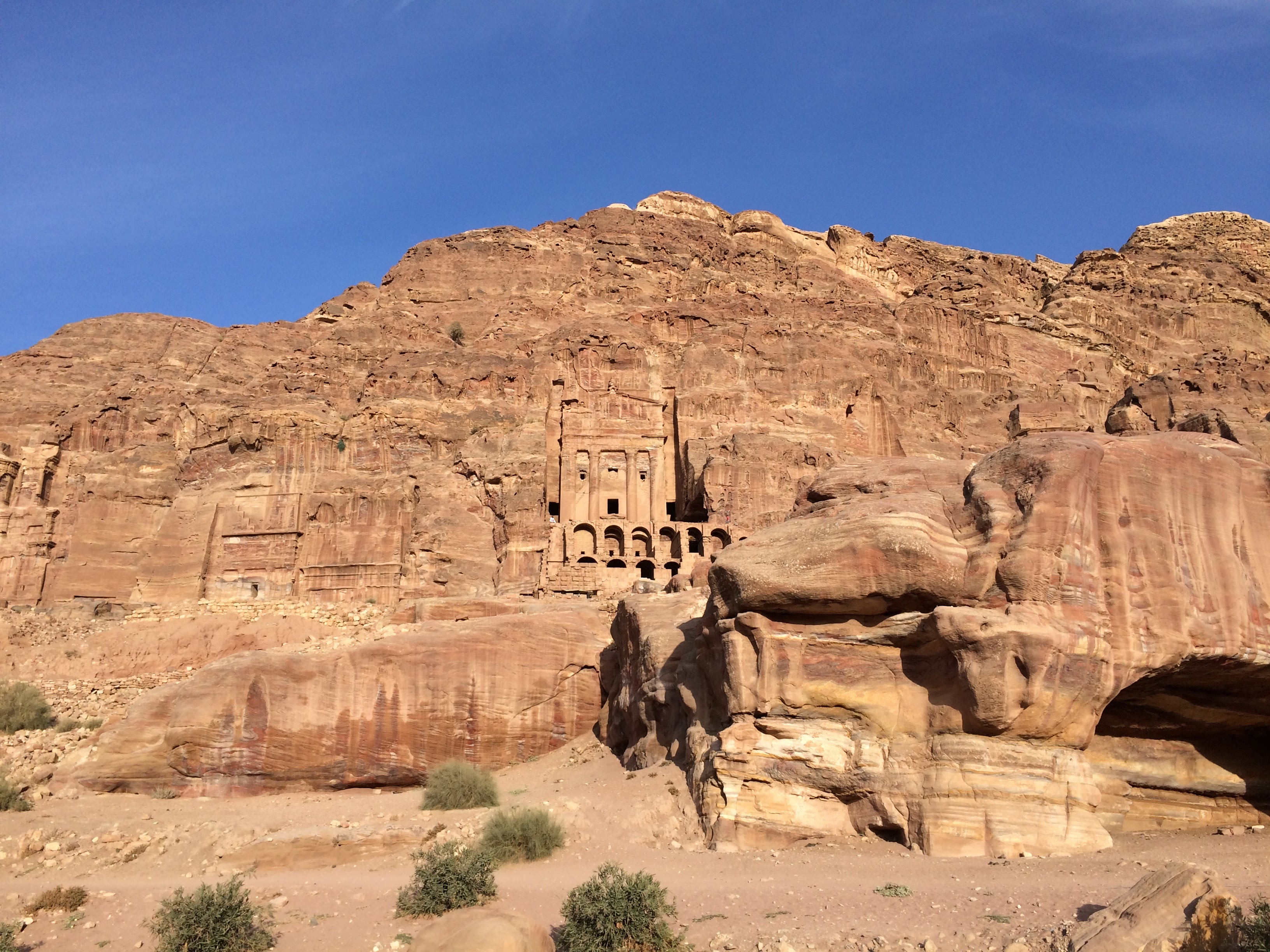
1.Petra is actually the Greek name for Raqmu, home of Nabateans. The Nabateans were one of the few nomadic Bedouin tribes who prospered with trade and even established their own kingdom between 2nd and 4th century BC. They co-operated with the Romans and grew their kingdom, roman theatre and all impressive facades are estimated to have been built during that period.The treasury facade is carved on the pink sandstone rocks and is a sight to behold. Hundreds, if not thousands of tombs are also carved into the rocky cliffs. Like most civilizations, they just seem to have vanished but left us with these beautiful monuments to wonder at.

Petra Treasury Jordan.JPG

Petra 2 Jordan

Petra 3 Jordan.JPG

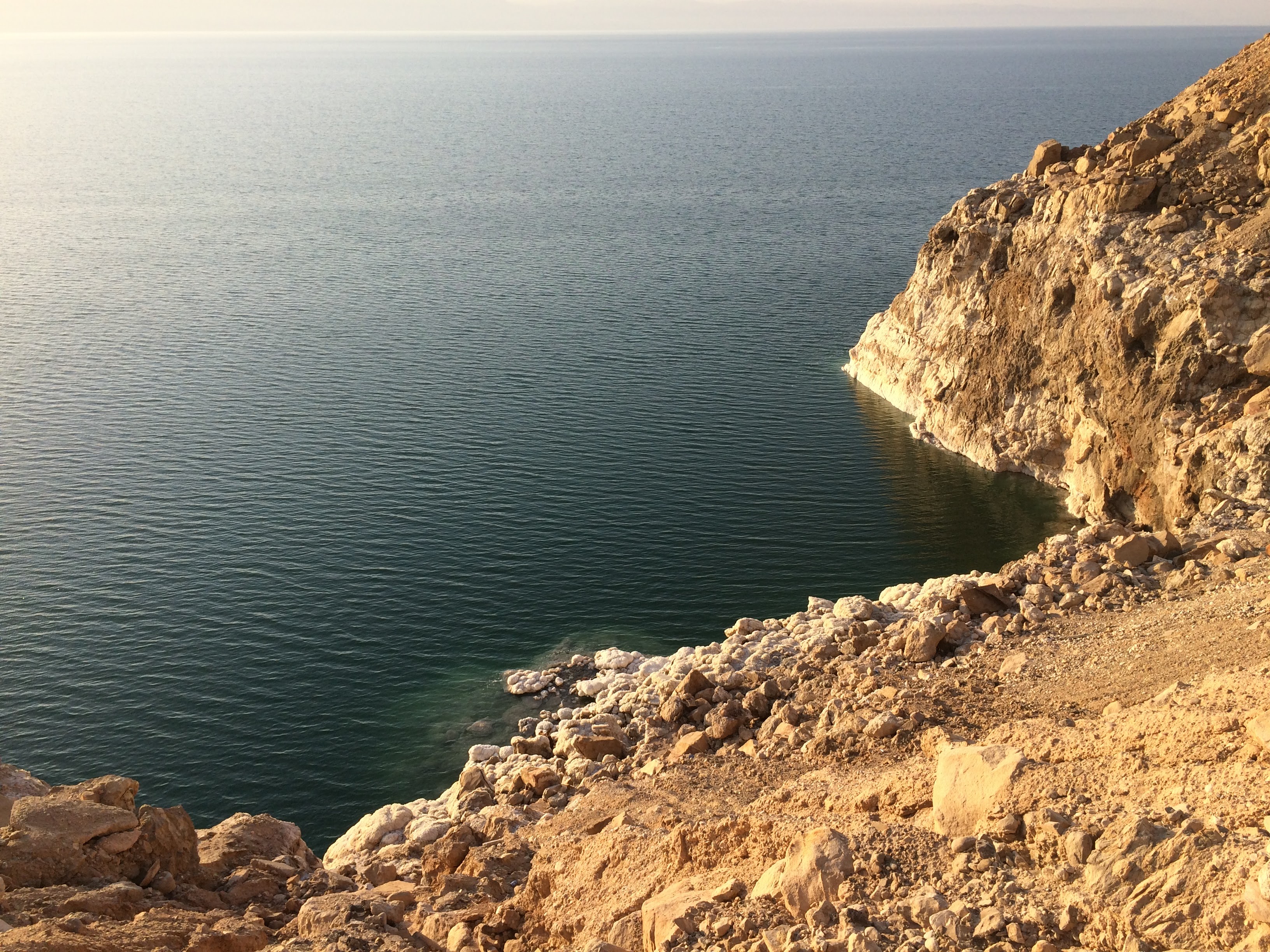
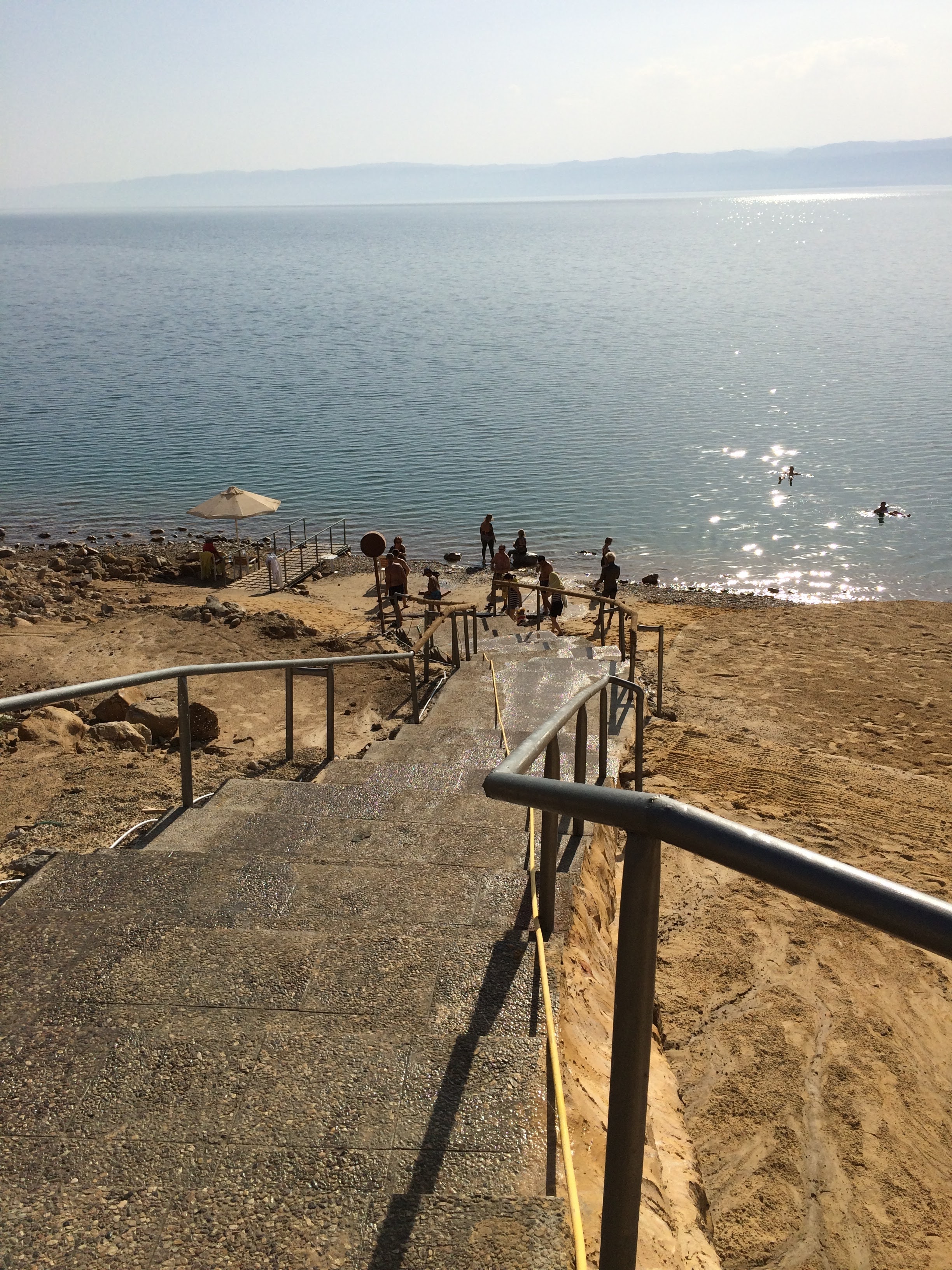
2. Dead Sea was surreal. I simply couldn’t imagine floating in water although science explains how. But to experience it was another thing. It is one of the most memorable experiences of my life. I simply couldn’t get enough of it.I was able to access both at a private property and public beach. The dead sea mud rub is part of the experience and is known to have skin healing properties. Almost all resorts or tour packages offer this complimentary .The public beach was equally fun but then again be open to large crowds and fewer facilities. It is a sad that the dead sea is drying up due to local and macro factors like global warning.

Dead Sea Jordan

Dead Sea2 Jordan.JPG

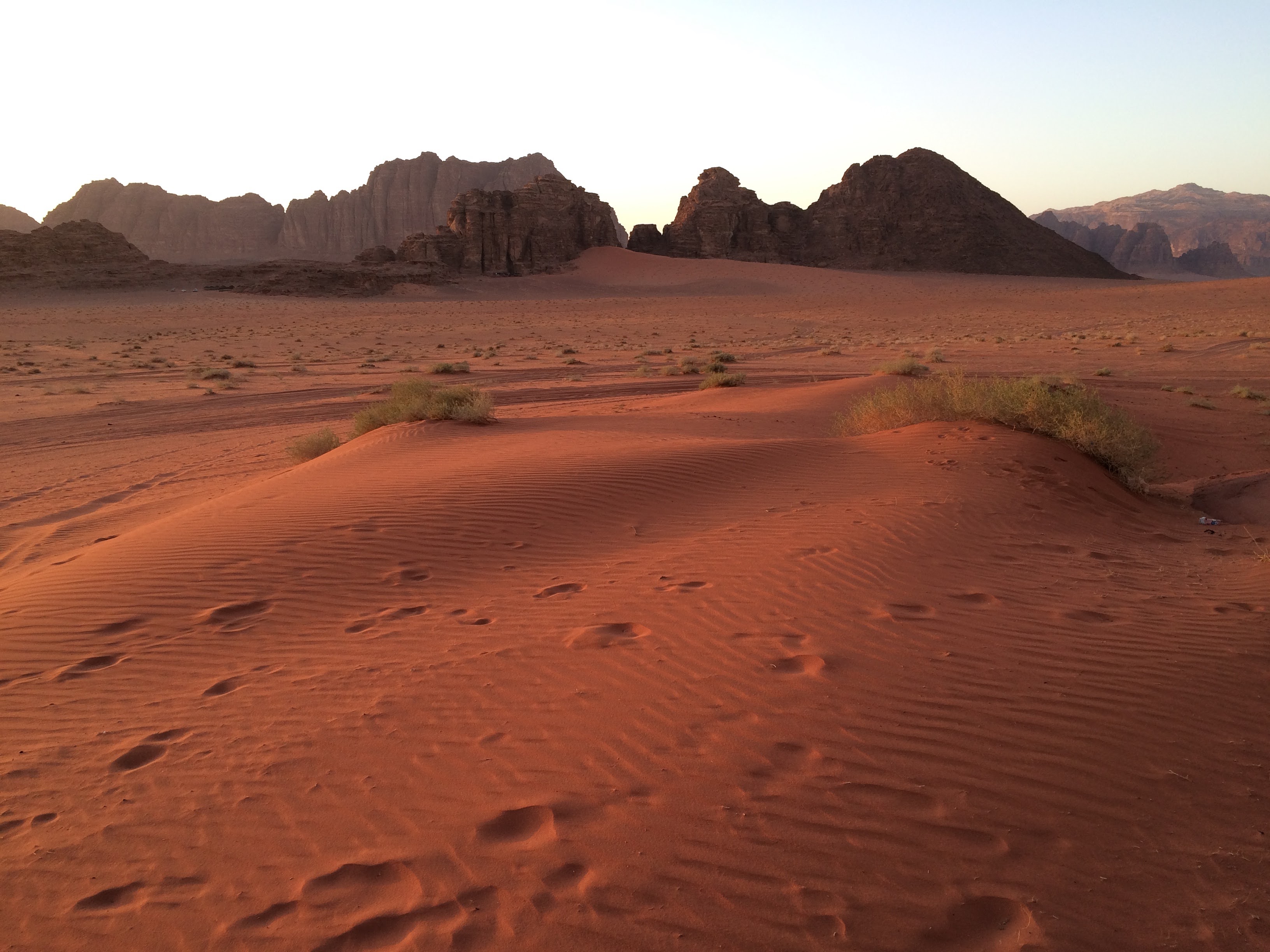
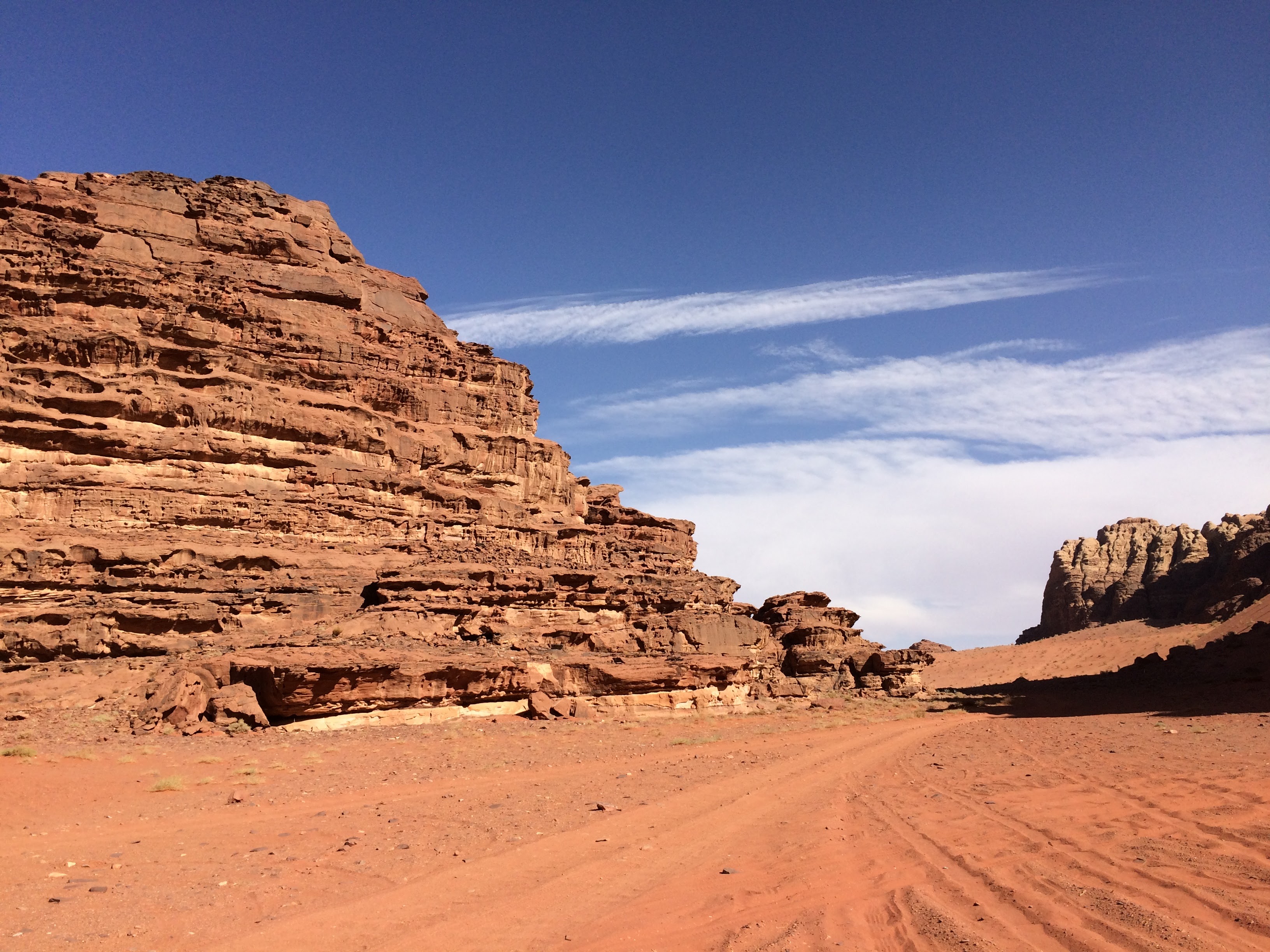
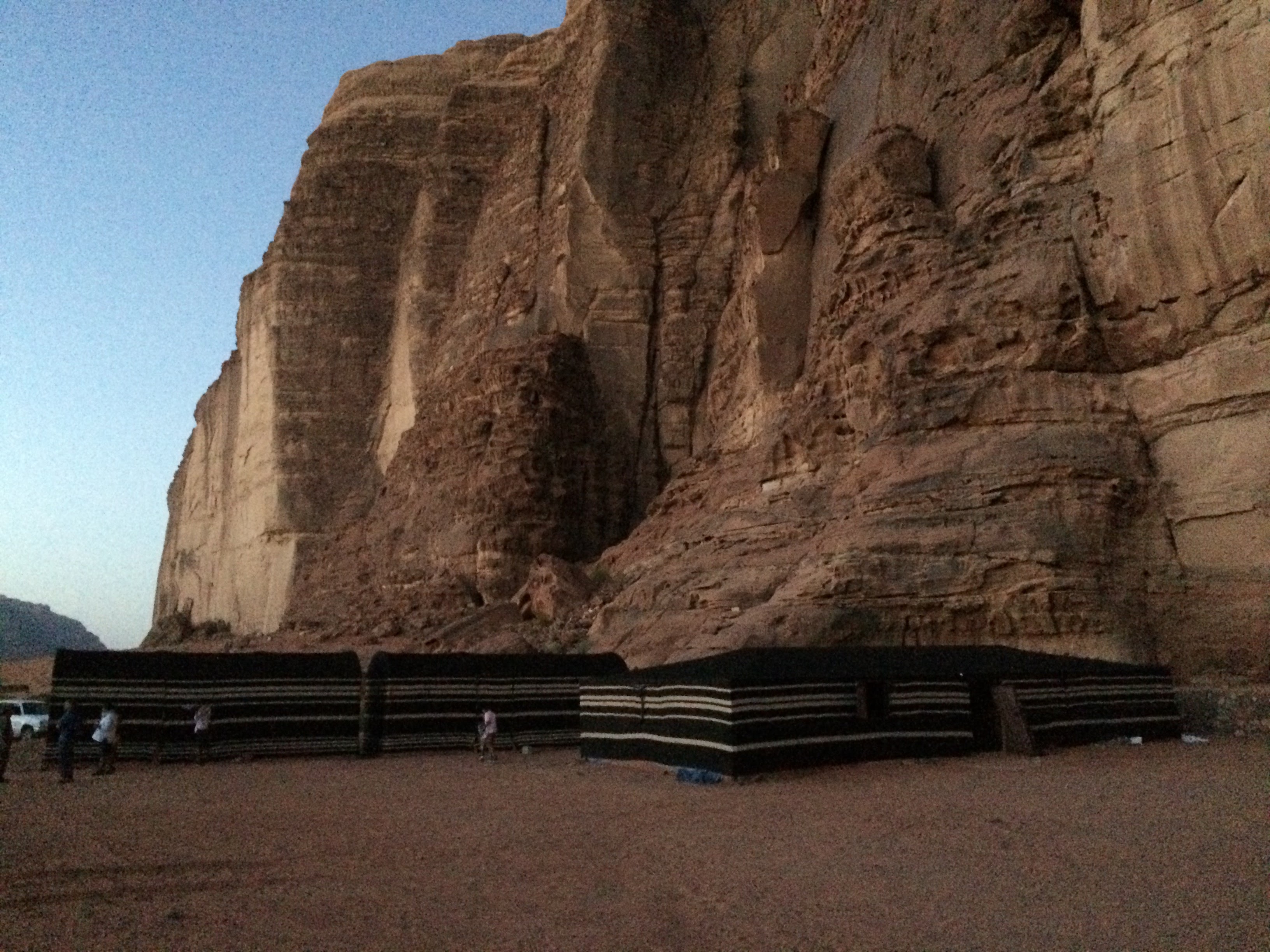
3. Wadi Rum is Martian looking. In fact, it was used to film parts of many space movies like The Martian, The Last Day on Mars and Red Planet. The desert has a magical silence to it that we don’t experience in our daily lives anymore. Also, sleeping under the stars never loses its charm. There are tons of tours that offer overnight tent stays including cultural experience like presentations from local musicians and bedouin food. Bedouins own access to the Wadi just like Native Americans manage access to canyons on their reservations.

Wadi Rum1 Jordan

Wadi Rum2 Jordan.JPG

Wadi Rum 3 Jordan

4. Amman was my first city experience in the Arab World. It has interesting geographical texture – hills and winding streets. The Roman Amphitheater still stands and is testament to the might and reach of the Roman empire. It was no less impressive than other similar monuments in Italy. I kept wishing for more time in Amman. Jerash is another popular day trip option from Amman known for its Roman ruins.

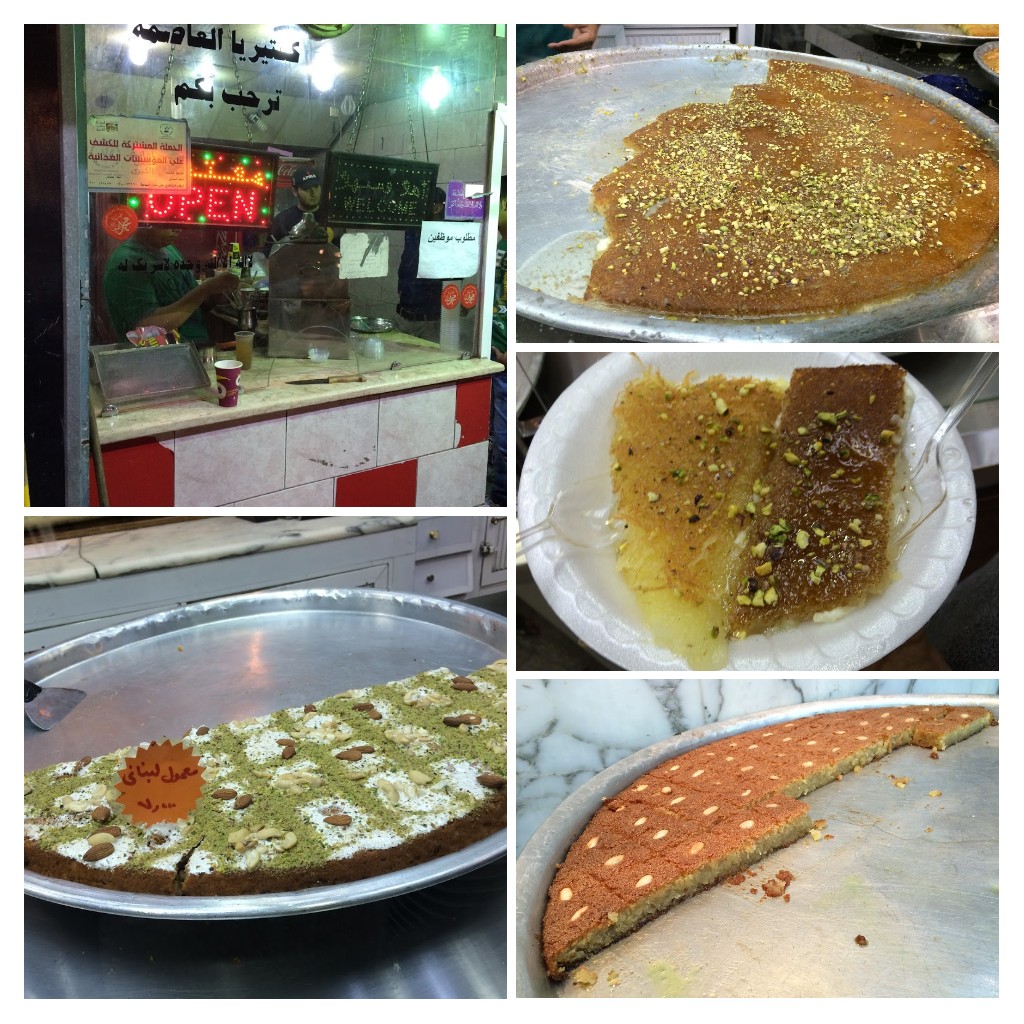
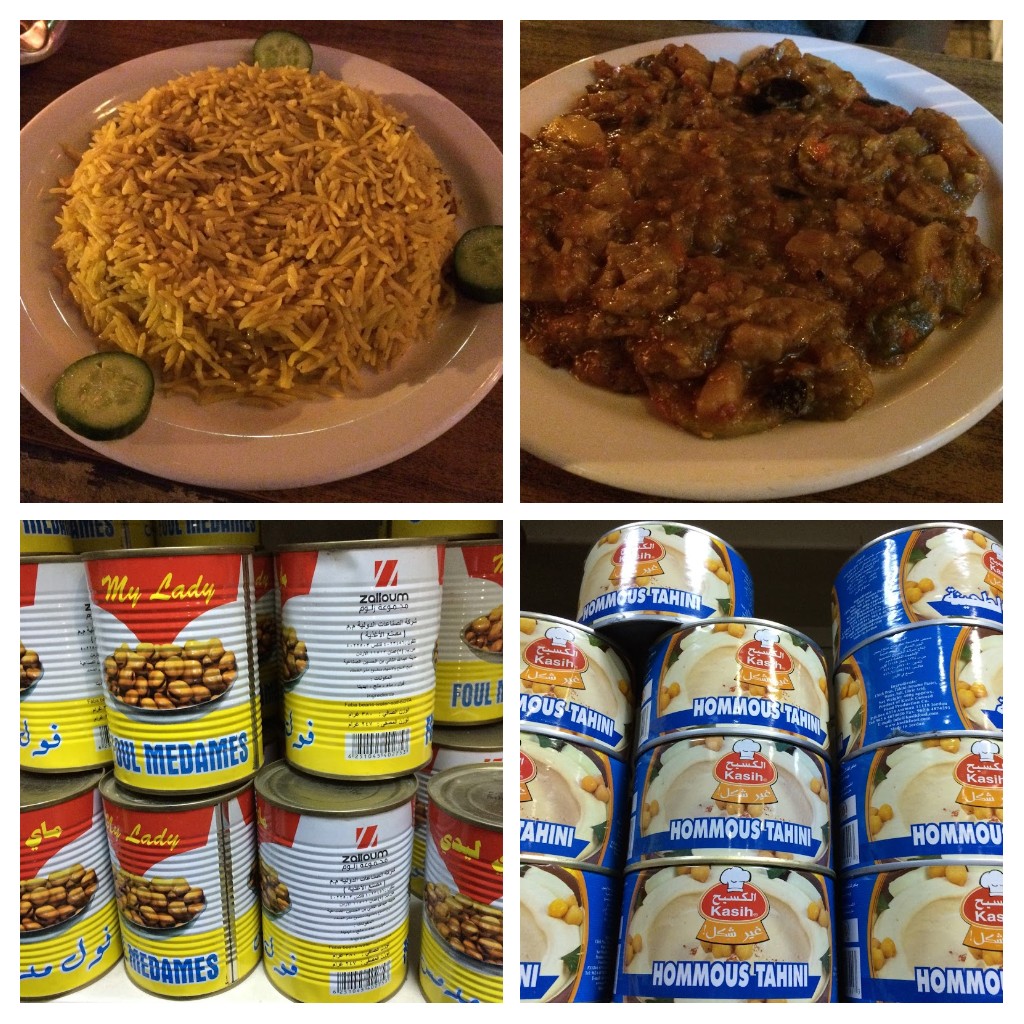
5. I had the best Kunefe ever in Amman – there is absolutely nothing to complain about hot gooey cheese drizzled with sugar syrup. It was soul warming. The store like a melting pot where class barriers didn’t seem to matter. This was followed by Arabic cardamon coffee, the aroma of which still lingers in my memory. Maklouba (meaning upside down in Arabic) is an one pot dish native to the region. Meat, rice, vegetable and spices are cooked in shallow pot and flipped on to a serving plate to form a rice tower.  Although the vegetarian friendly version was tasty enough, it was akin to a meatless biriyani. The maghmour also referred to as Moussakal is a dish wherein eggplant, tomatoes, spice are cooked to a creamy consistency. It makes for a great dip for the pita alongside the ubiquitous hummus and ful.

Amman Kunefe Jordan.jpg

Food Jordan

5 things about Jordan

5 things about Dublin,Ireland

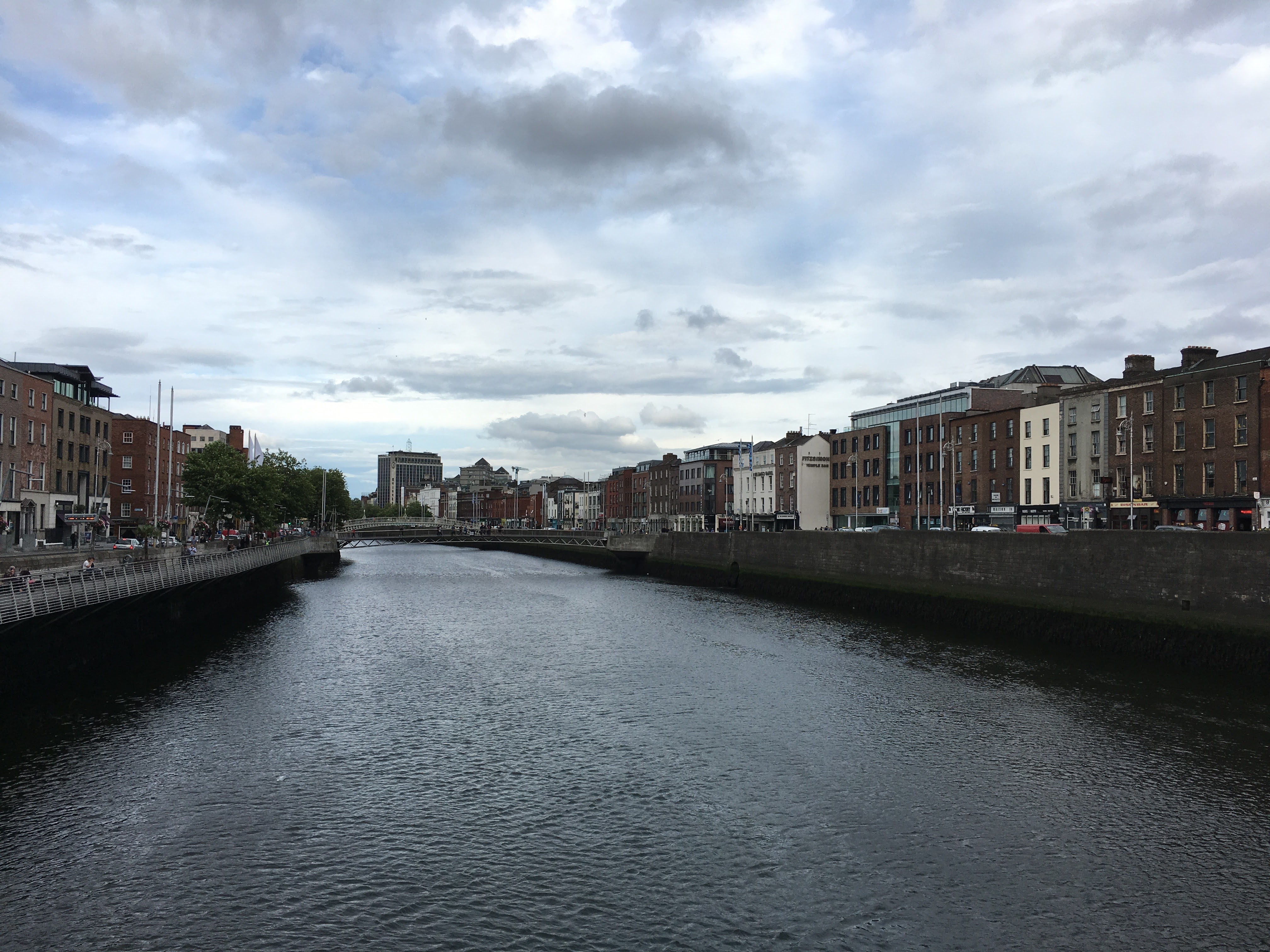
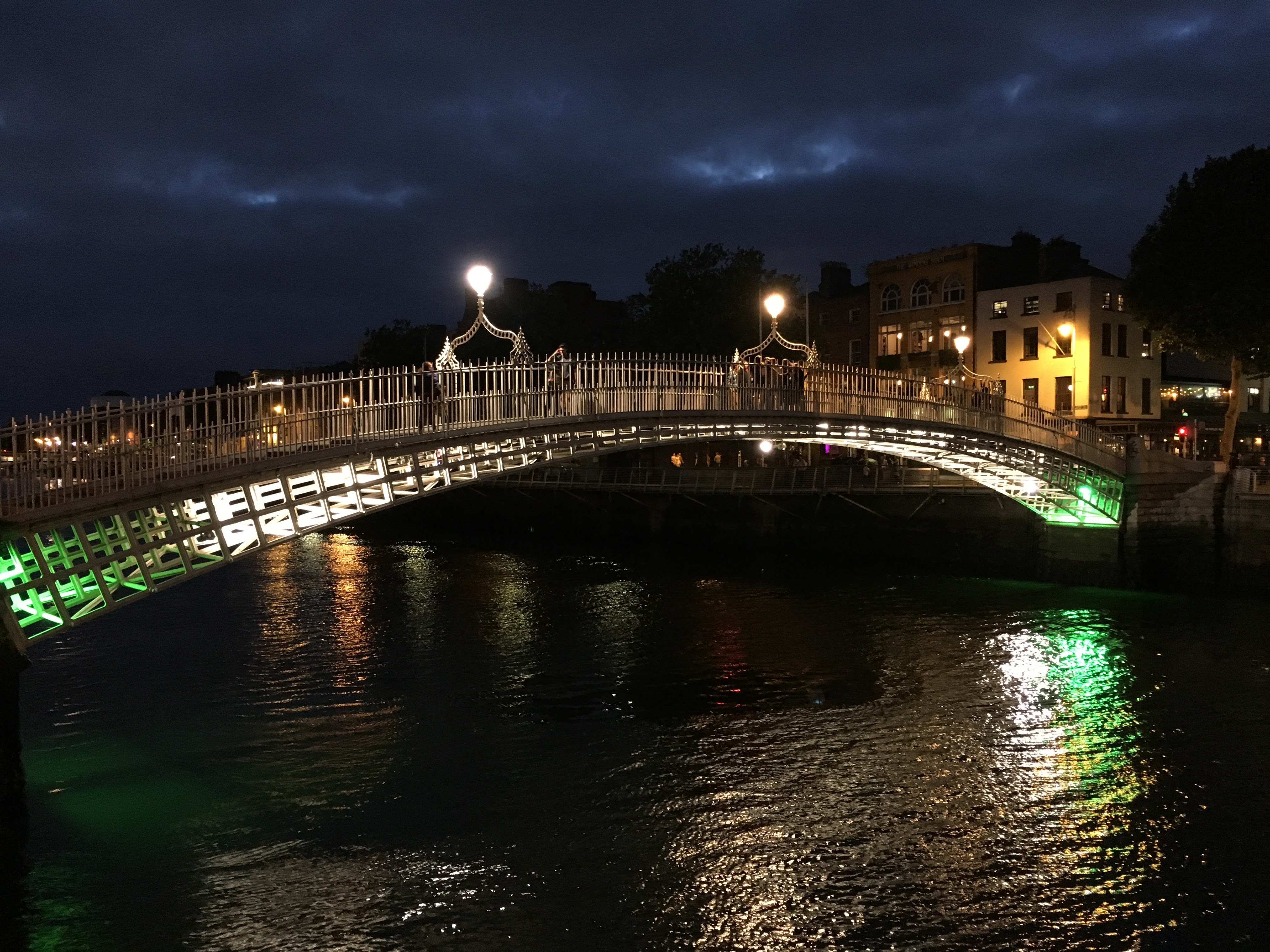
1.The city of Dublin is divided into two by the Liffey river – Northside and Southside. Hence, there are a series of small bridges across the river.The most famous of them, Ha’Penny bridge has an interesting history. It was commissioned as a compromise to replace the ferries that were used by Dubliners to cross the Liffey river. The ferry owner chose to build a toll bridge instead of replacing his aging ferry fleet. At one point, the toll fee was penny-ha’penny (11/2 pence)and that became the identity of the bridge itself.

Liffey river Dublin.JPG

Ha Penny Bridge Dublin

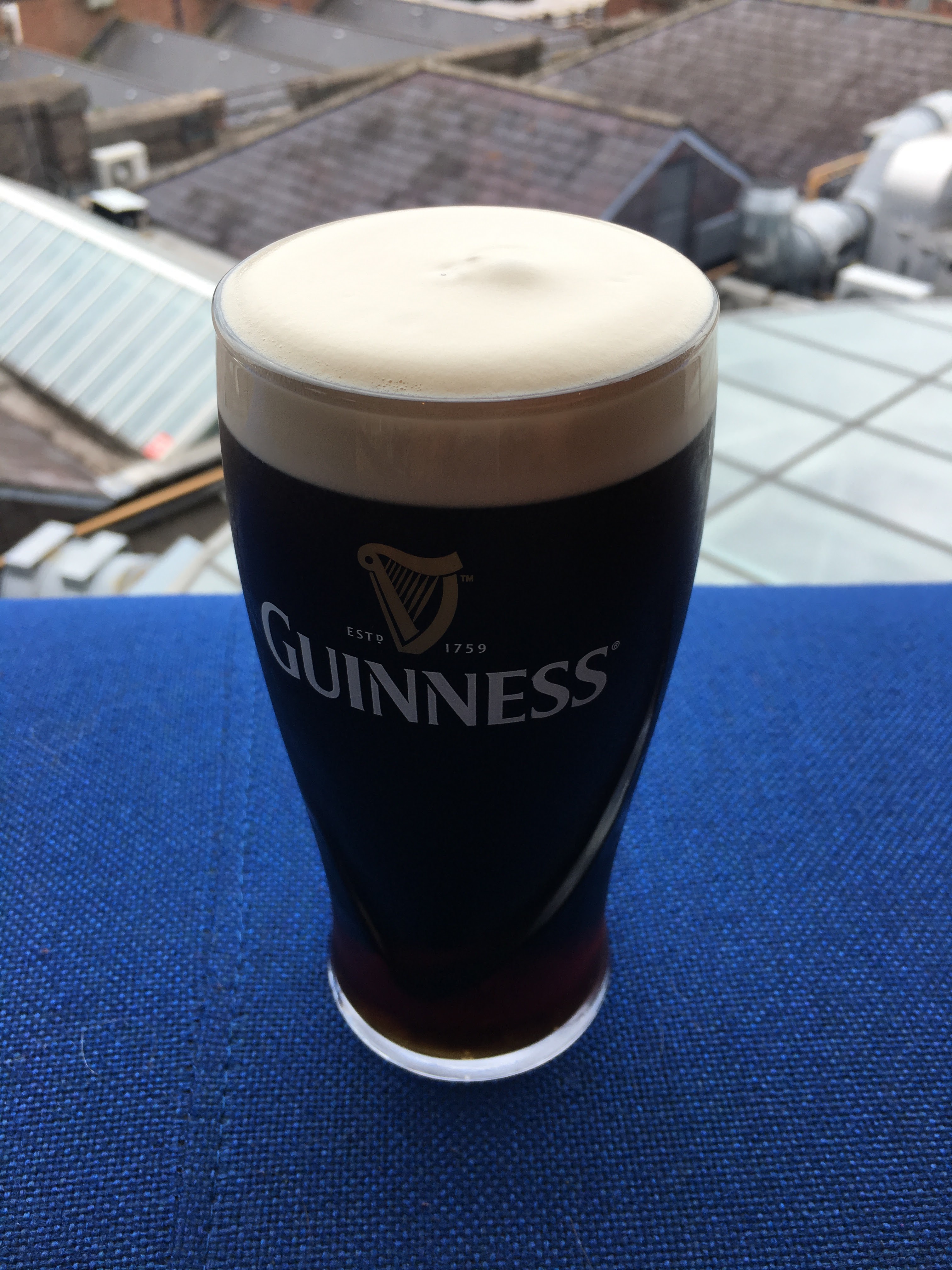
2. I was never much of a beer person but I absolutely fell in love with Guinness upon  sampling it at the Guinness Storehouse. The entrance is pricey and the museum itself can feel like an informercial but they have made a genuine effort to present the science behind beer making in an engaging way. The original Guinness brewery at James Gate was established by Arthur Guiness in 1759 and apparently was chosen due to its excellent water supply.During its first 18 years, the brewery didn’t even sell porter but has only brewed porter beer since 1797.

Guiness Storehouse Dublin.JPG

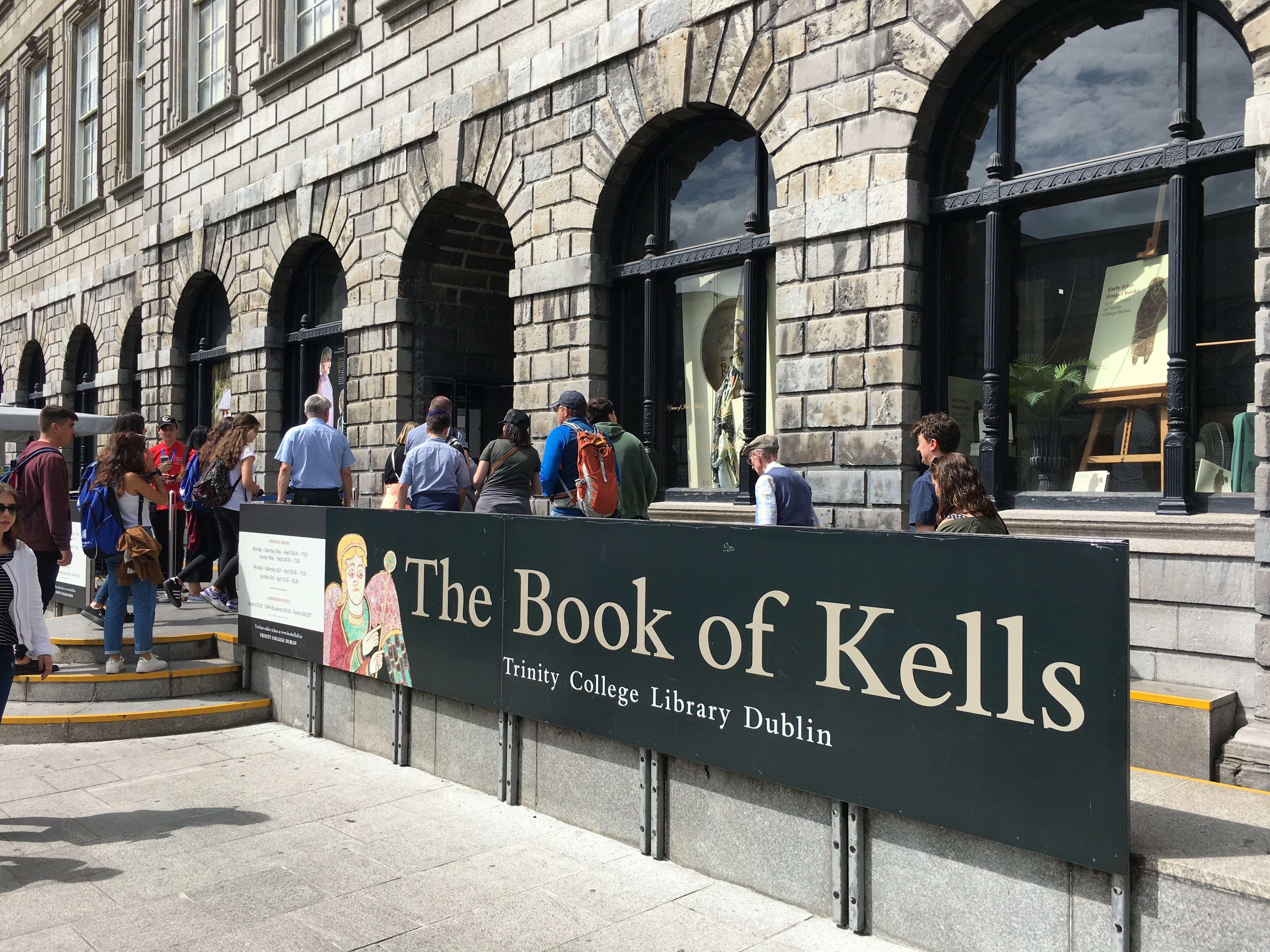
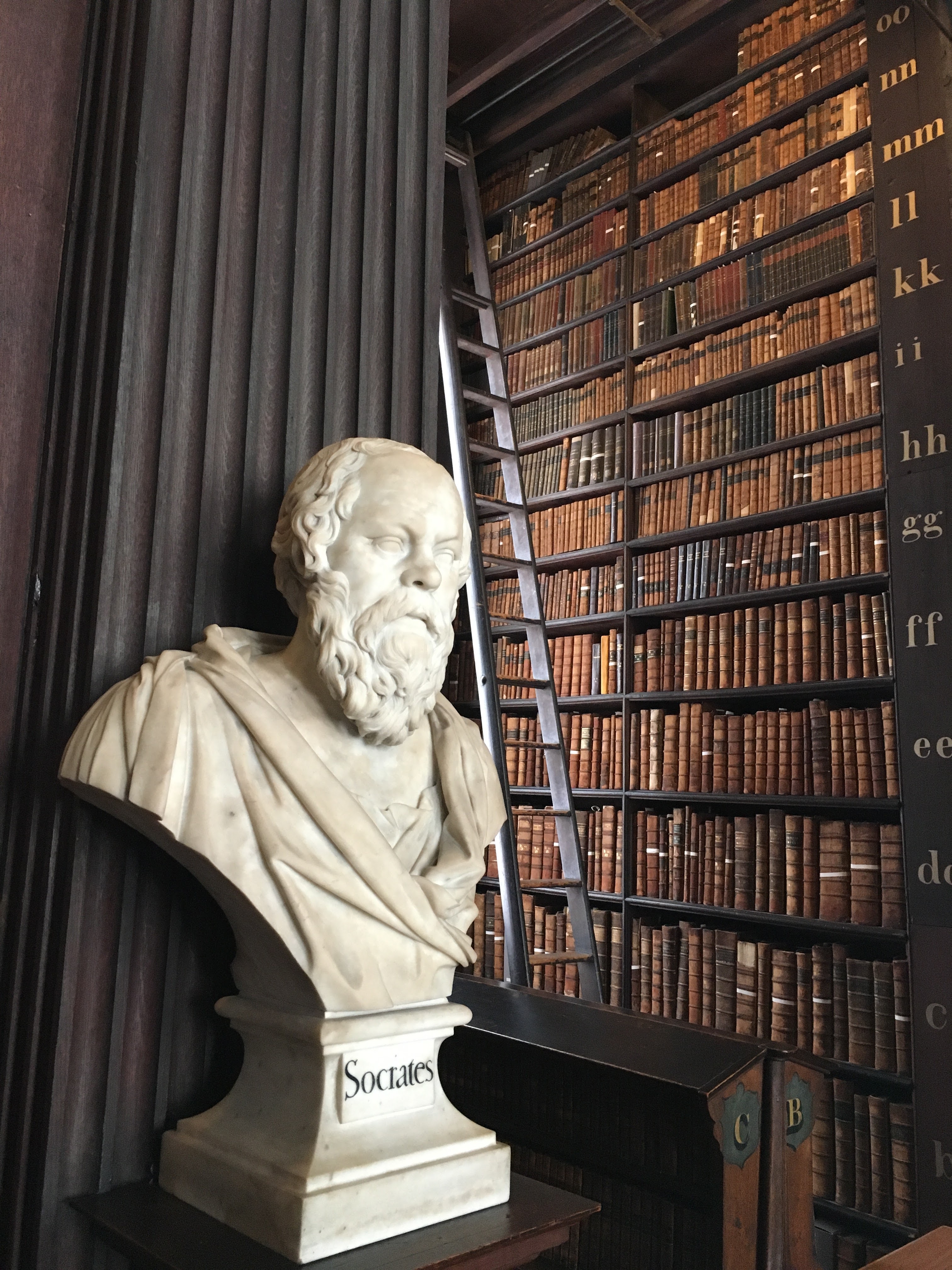
3. Trinity college was found as the College of the Holy and Undivided Trinity of Queen Elizabeth by Queen Elizabeth I to be in the same league as colleges in Oxford and Cambridge but it never grew beyond that one college. Today, it is now the most prestigious educational institution in Ireland with an illustrious alumni list and known to tourists as the home of book of Kells.The book of Kells is very significant in Christian history as it contains the four gospels in Latin and has survived since 348AD. I was awestruck by the long room despite the crowds. It was like stepping back in time. About 2,00,000 of the Library’s oldest books displayed with busts of famous philosophers laid out along the edges of the room with antique wooden panels, I was ready to make it my future workplace.

Book of Kells Dublin

Long Room Trinity College Dublin.JPG

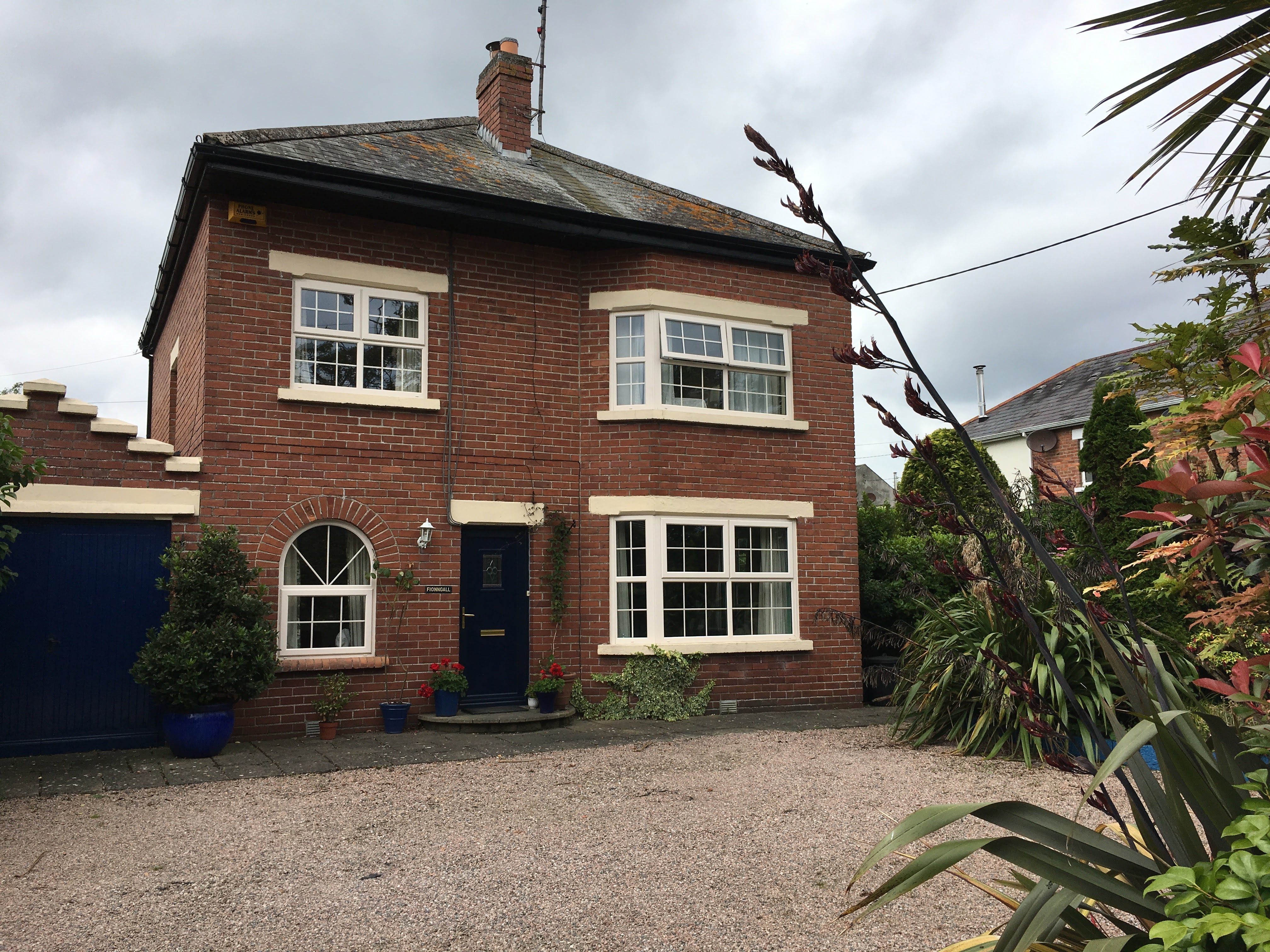
4. Ireland seemed unusually green to my eyes. For a leisure day, Phoenix park is a great bet. It is Dublin’s answer to big city parks like Central Park, Golden Gate Park, Hyde Park. As we hopped on the bus to Irish countryside, the quaint manor houses always caught the eye.

Quaint house Countryside Dublin

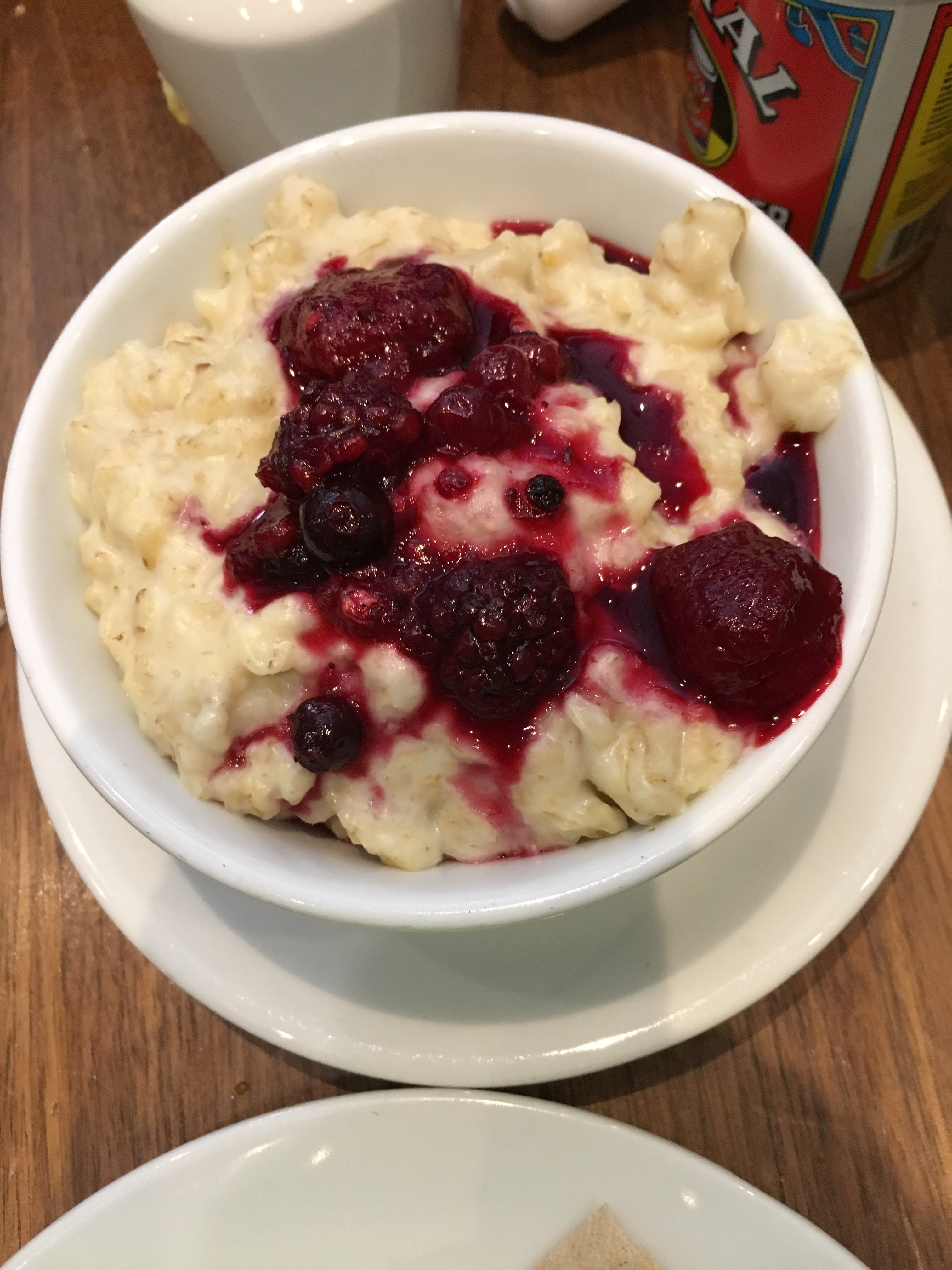
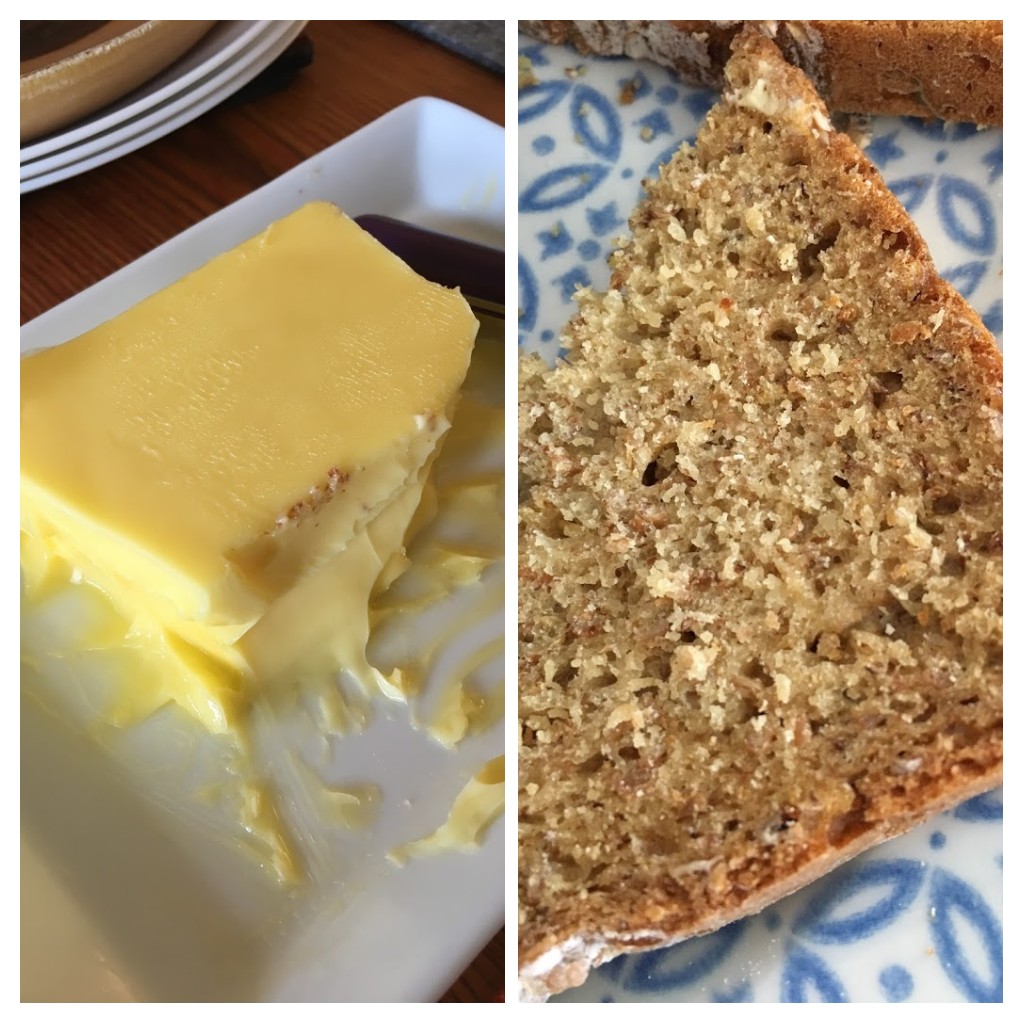
5. Irish cuisine is known to be hearty but they certainly have elevated the humble porridge.  Brother Hubbard’s version was outstanding, one of the best porridges that I had ever had. Porridge is an Irish staple along with soda bread. Soda bread uses baking soda as a leavening agent instead of yeast. The low gluten “soft wheat” that grows in Ireland is typically used to make this bread. I thought it had a bit of funny after taste but with a dollop of bright yellow Irish butter it didn’t seem to matter as much. The yellow color is an indication of the quality of Irish butter. Thanks to the abundance of green grass and consequently happy cows.

Porridge Dublin

Irish Bread and Butter Dublin.jpg

5 things about Dublin,Ireland

7 things about Stockholm, Sweden

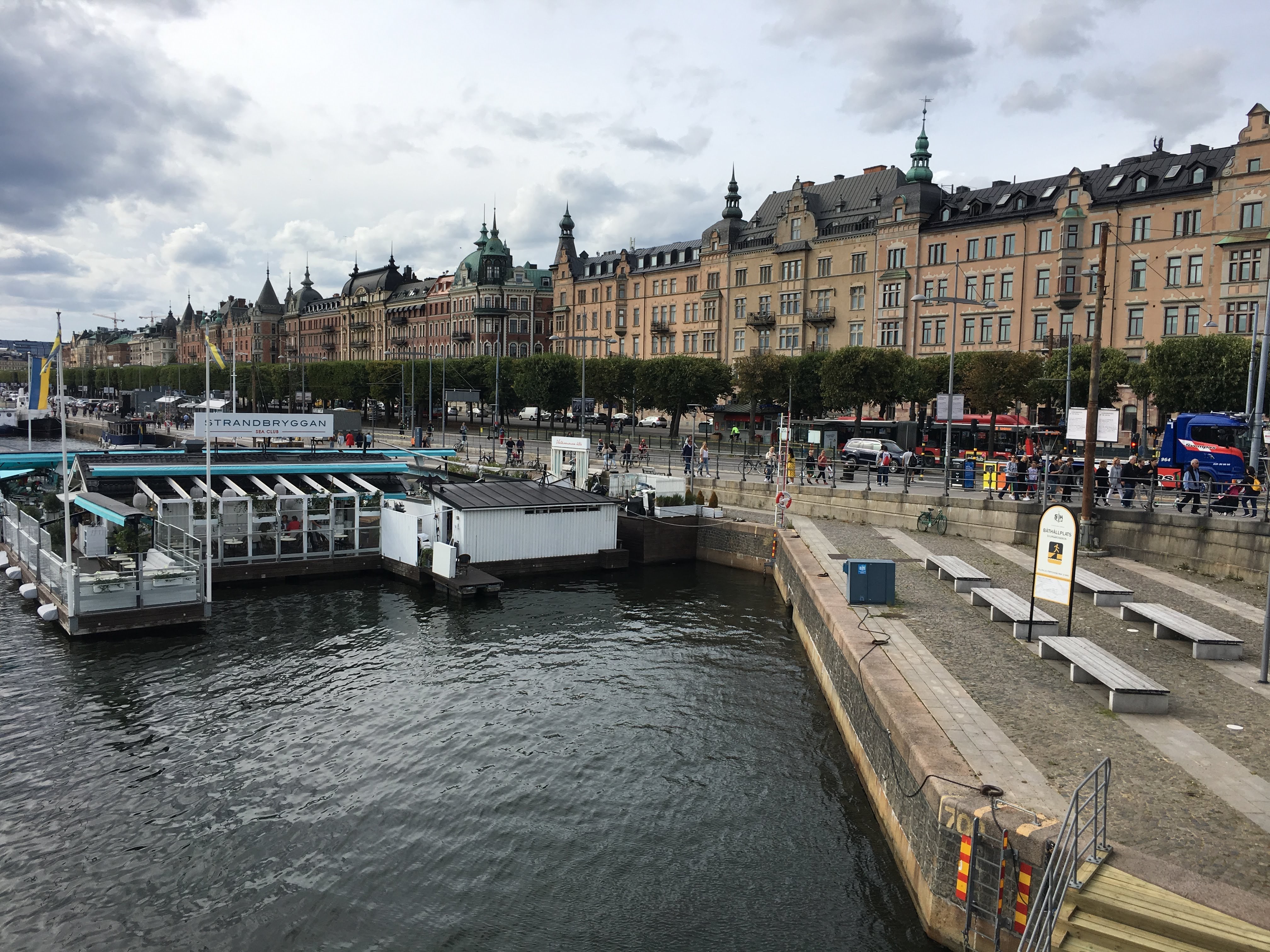
1. The city itself is beautiful and is actually composed of 14 islands. Söderströmriver flows through central Stockholm connecting Lake Mälaren with the Baltic Sea. I loved walking along the river banks from Normalm(commercial centre) to Gamla Stan(Old Town) and Djurgården (Museum Island).

city-of-stockholm

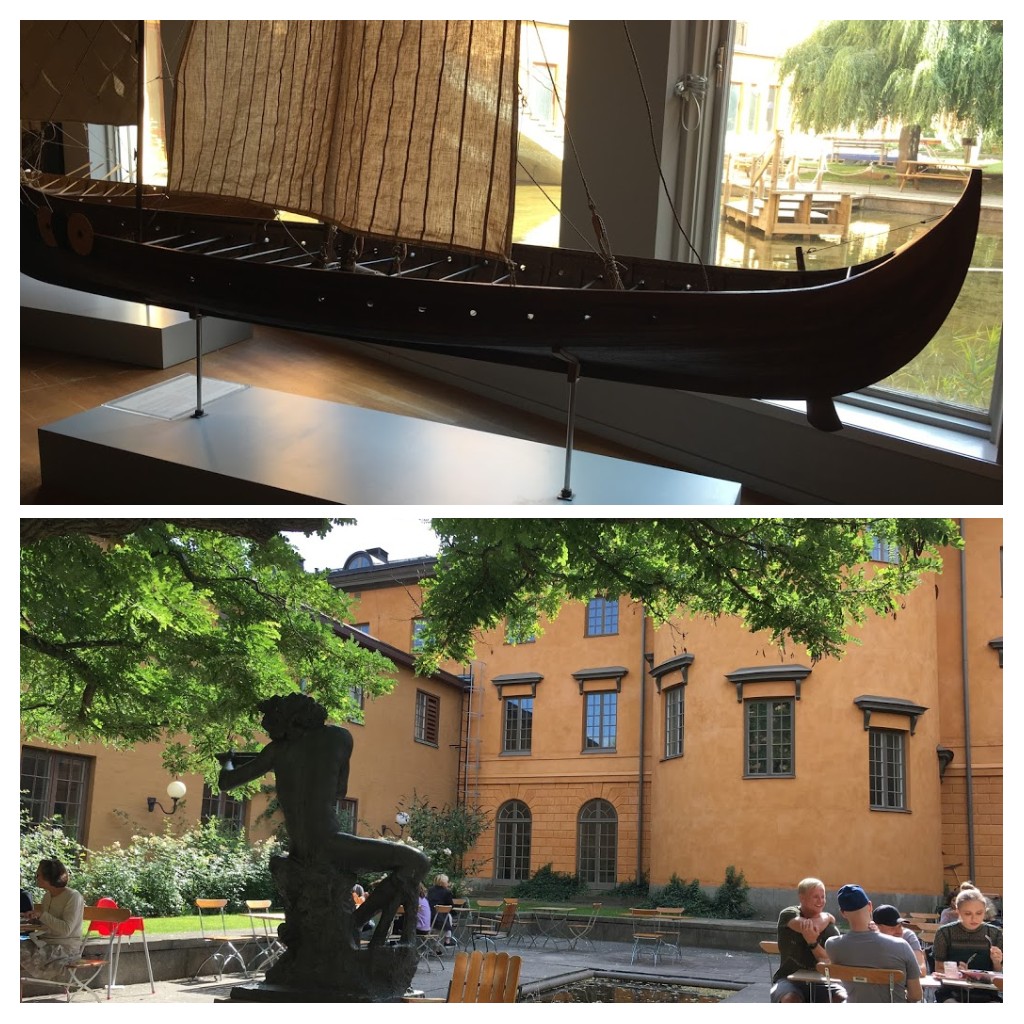
2.The Vikings were first and foremost raiders. They pretty stole anything they could. This was all possible because of their superior long ships. Light and fast, they were equally at home both in open sea and on rivers inland. The Kings of medieval France and England paid off Vikings and even ceded territory at times to avoid constant pillaging. The Swedish History Museum has a separate section on the Vikings. 

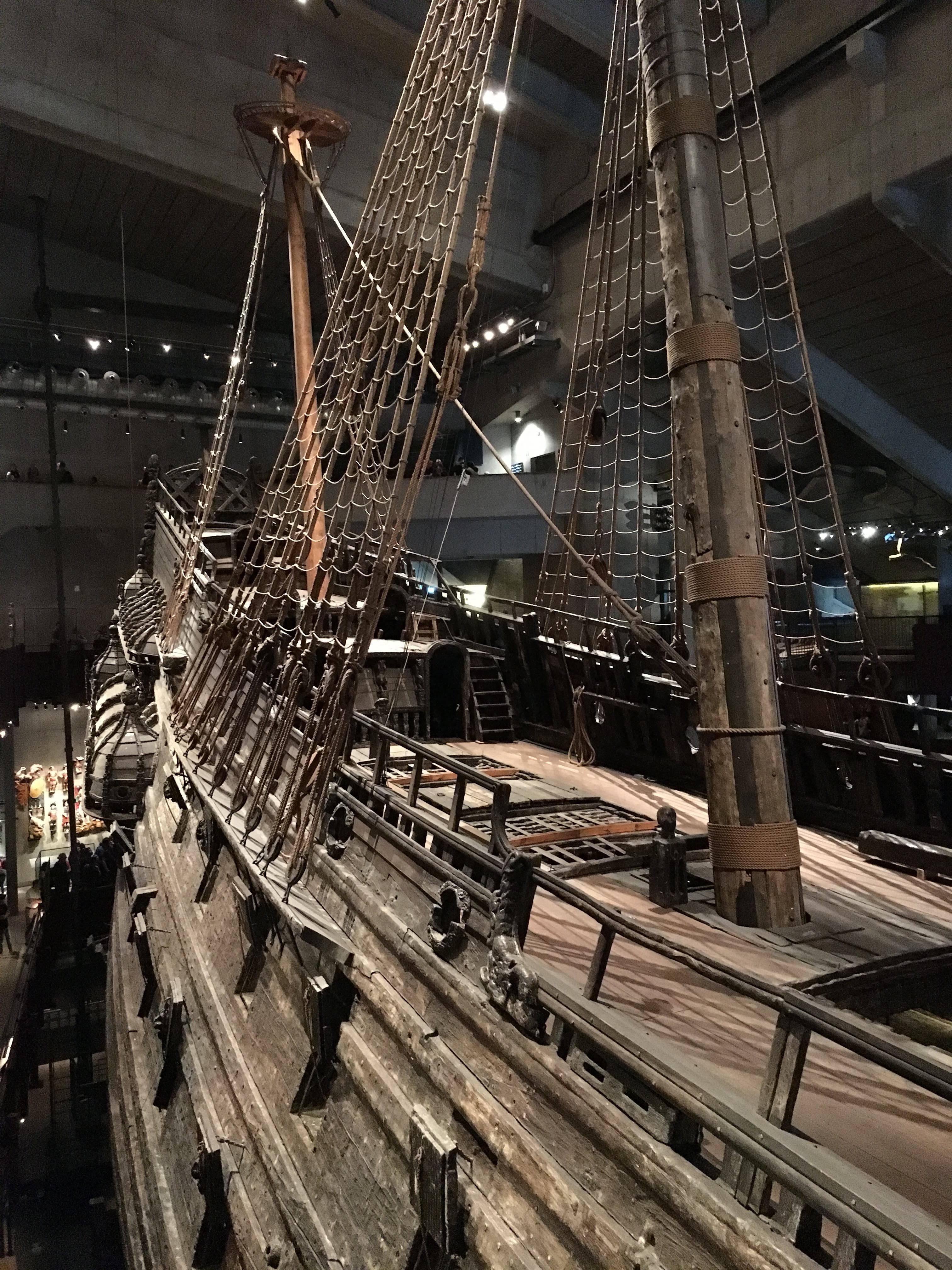
viking-mueseum-stockholm3. The Vasa museum is built around a ship that wasn’t even sea worthy but they have done a amazing job of preserving and maintaining the ship for centuries now. Try the tour and learn more the rich naval history of the Nordics and the hidden details about what ultimately led the Vasa to be chained to the harbor.
vasa-stockholm

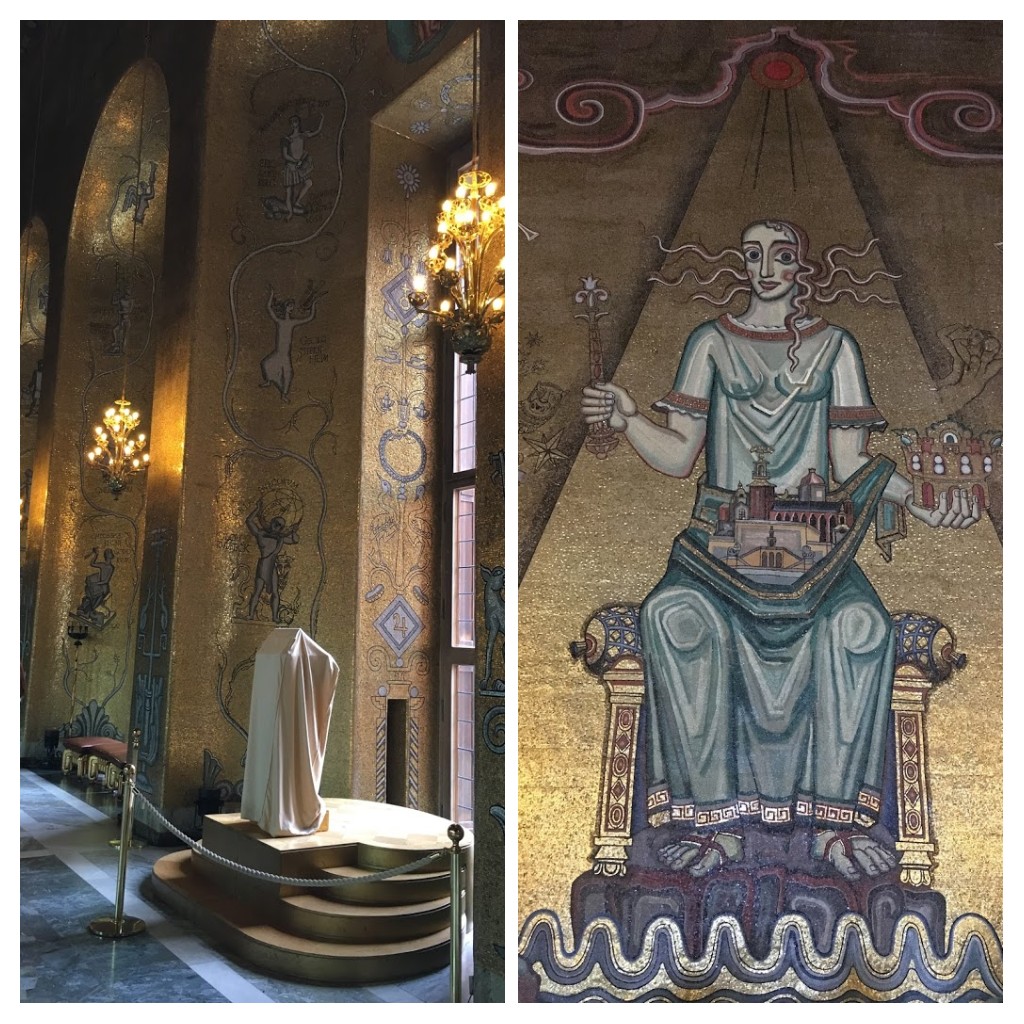
4. The Stockholm City Hall is worth a visit just for the Golden Room. It is Swedish opulence at its finest. Also, the Nobel Prize dinners are hosted here. So, you can claim to have walked the same corridors some of the brightest minds in the world have passed through.

city-hall-stockholm

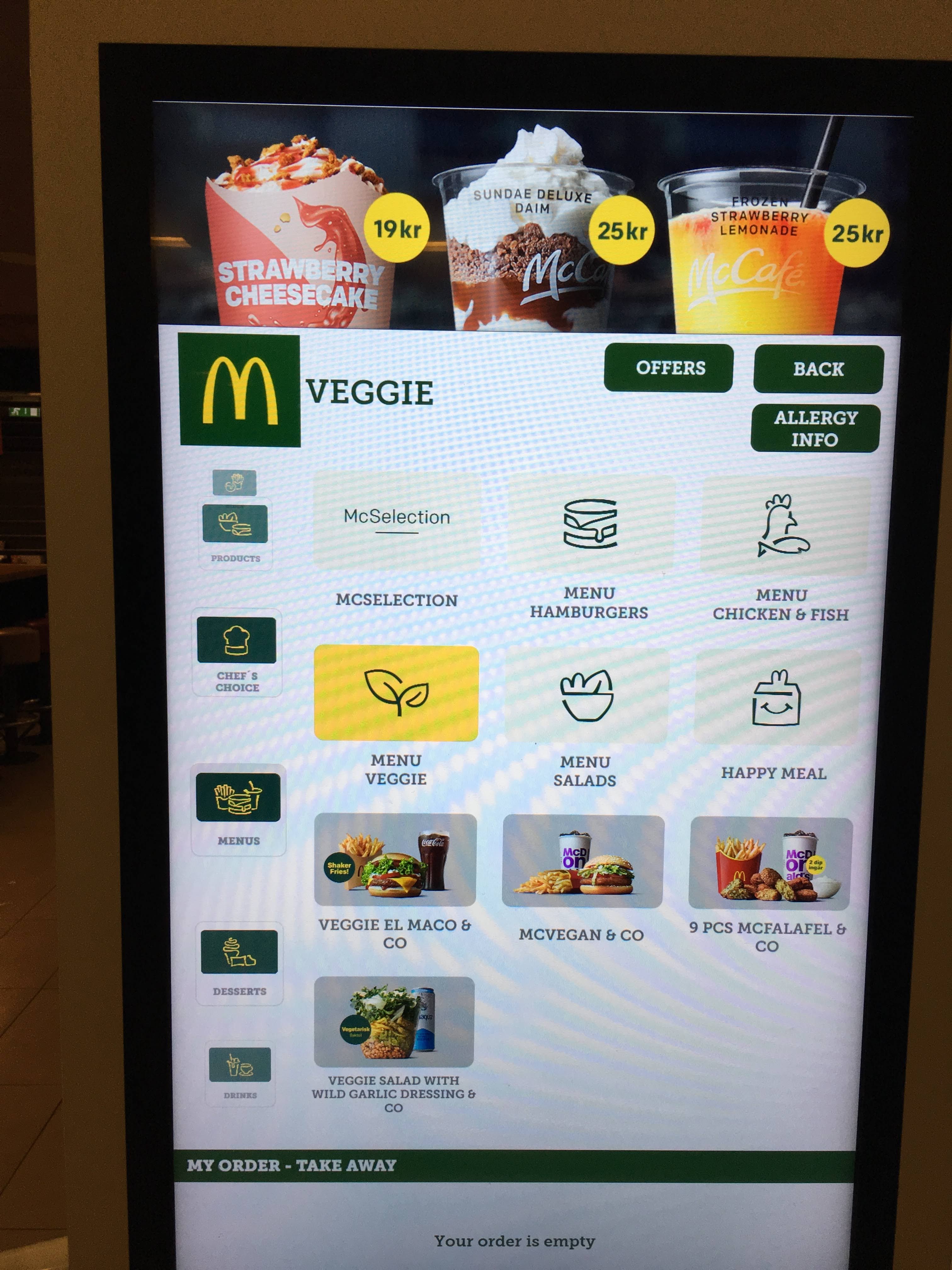
5. Stockholm was surprisingly vegetarian friendly among all the countries in Scandinavia. Even McDonalds had not one but three solid veggie options – Veggie burger, Vegan burger and Falafel nuggets. There are a tons of falafel and Shawarma shops all over Stockholm thanks to recent to the middle eastern diaspora. Maxos Falafel was my favorite. Helmed by Nidal Kersch, it aims to showcase his Arabic heritage to the Swedes  by bringing food from Jerusalem.

mcd-stockholm

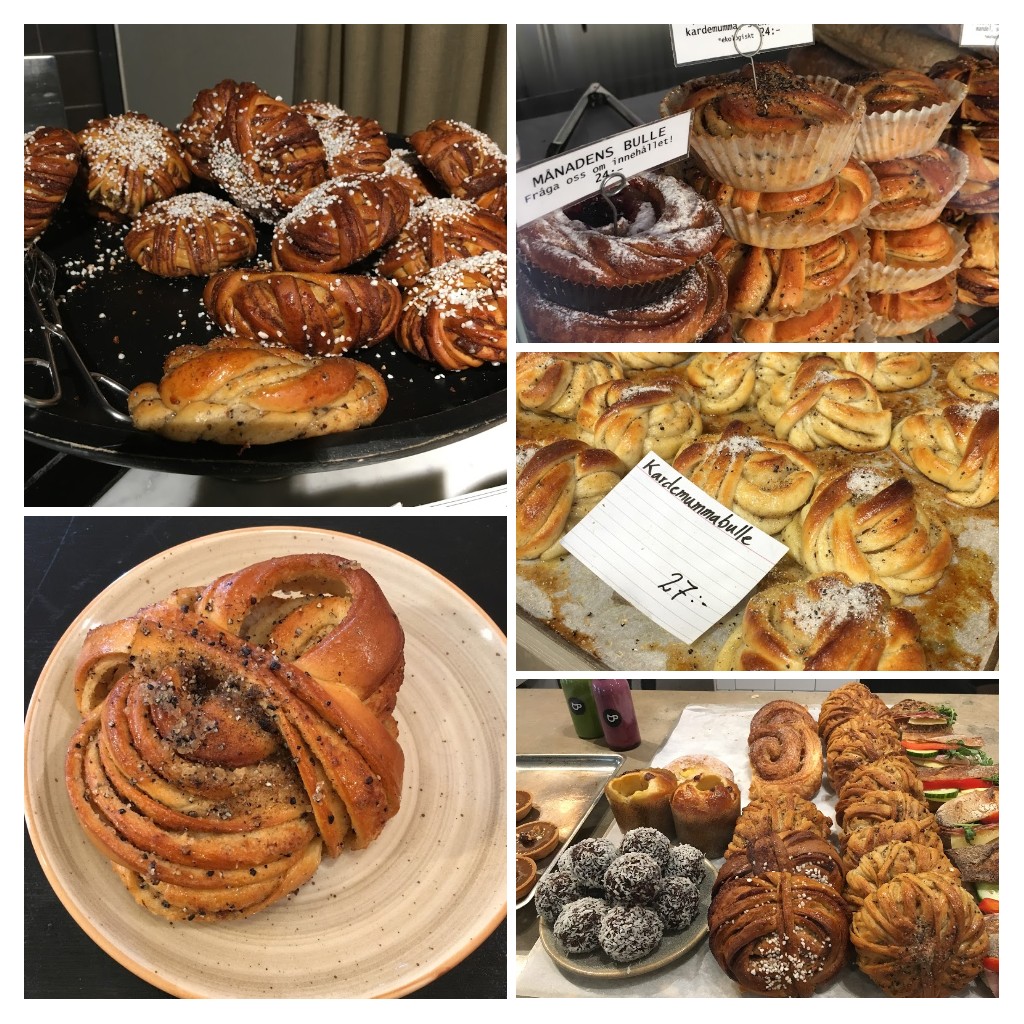
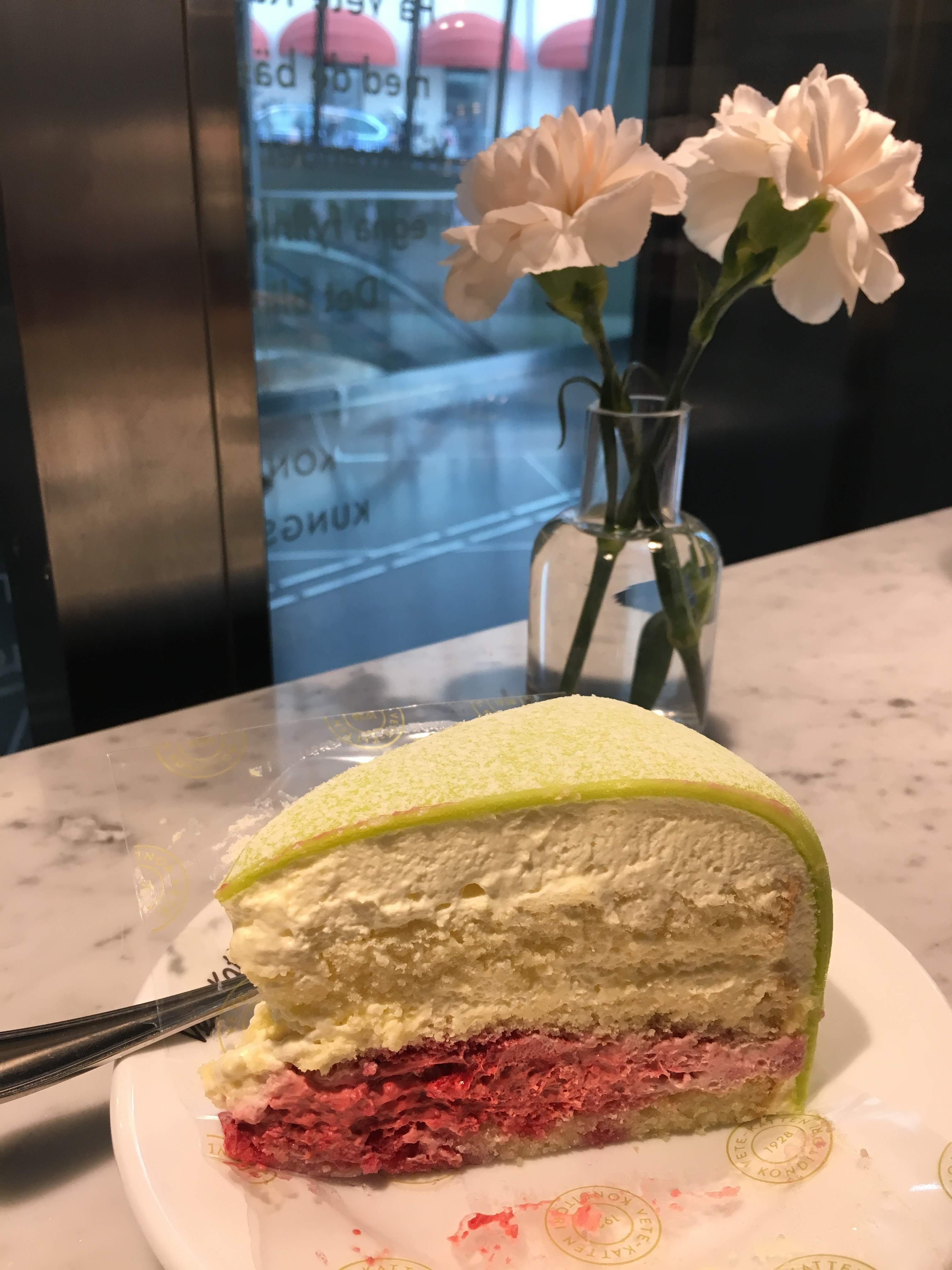
6. The viennoiseries and cakes in Sweden are second to none. It seems under rated compared to French or even Italian recipes. We remained steadfast to the Fika tradition every single day of our stay alternating between buns and princess cakes. I absolutely loved the Cardamon buns and pretty much anything from Vete-Ketten.

cardamom-bun-stockholm

princess-cake-stockholm

7. Stockholm seems to be most cosmopolitan of all the Scandinavian capitals I have visited. It helps that Stockholm is the tech hub of Scandinavia thanks to massive recent successes of Spotify and Klarna. Sweden it also home to Ericsson, Assa Abloy, Electrolux, Volvo, Skanska and IKEA.  


7 things about Stockholm, Sweden

5 things about Copenhagen, Denmark

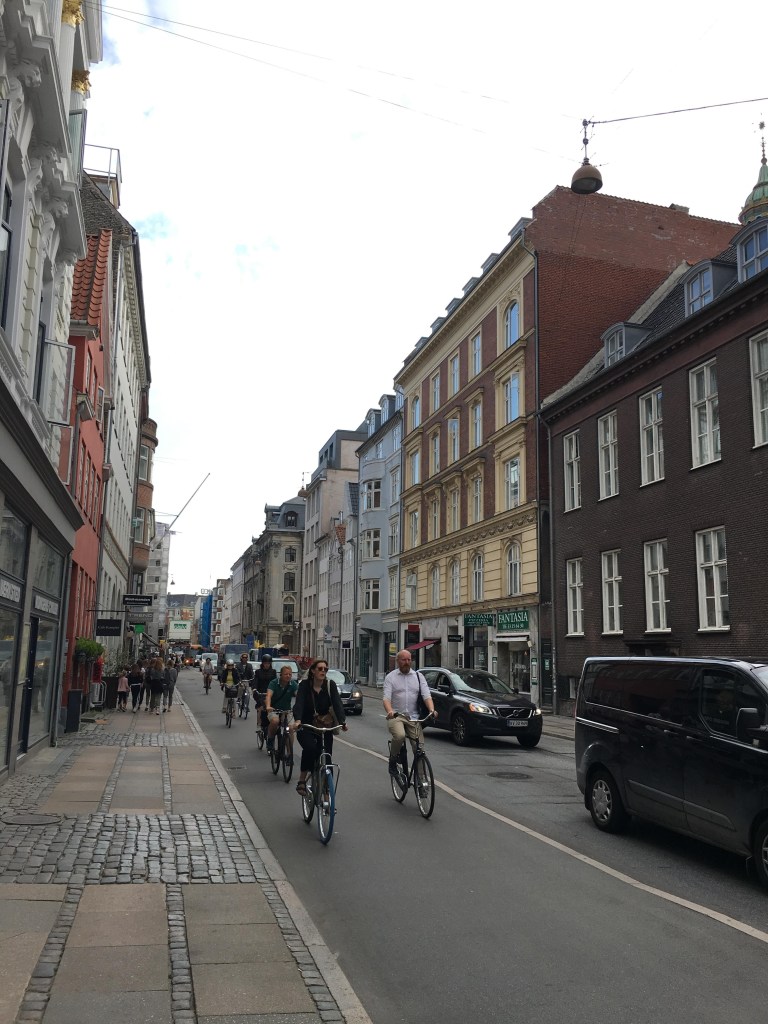
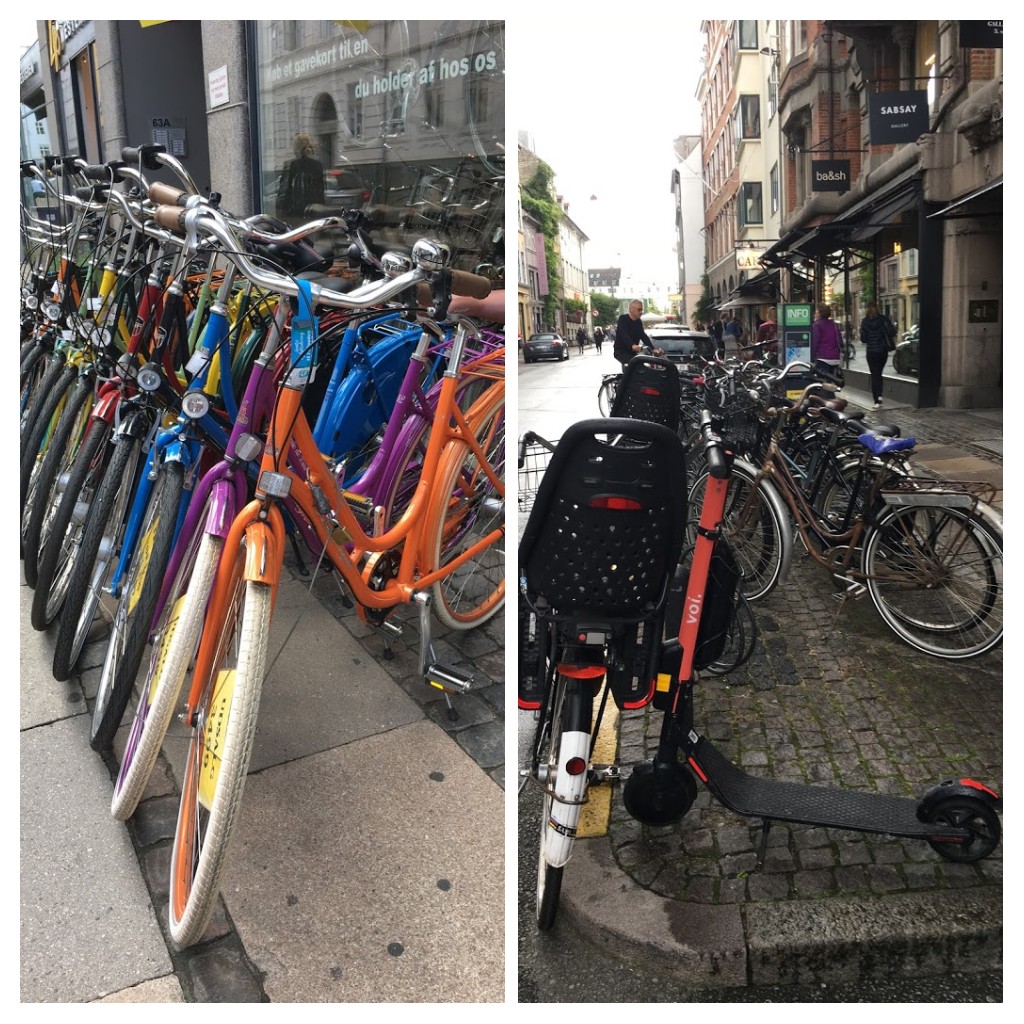
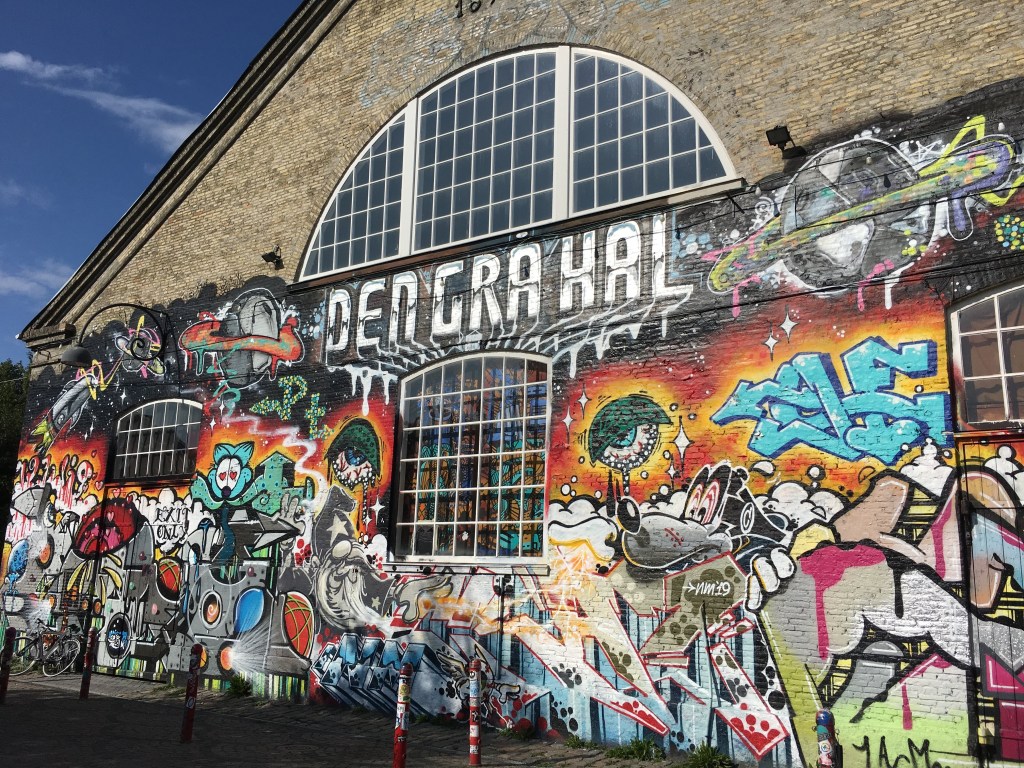
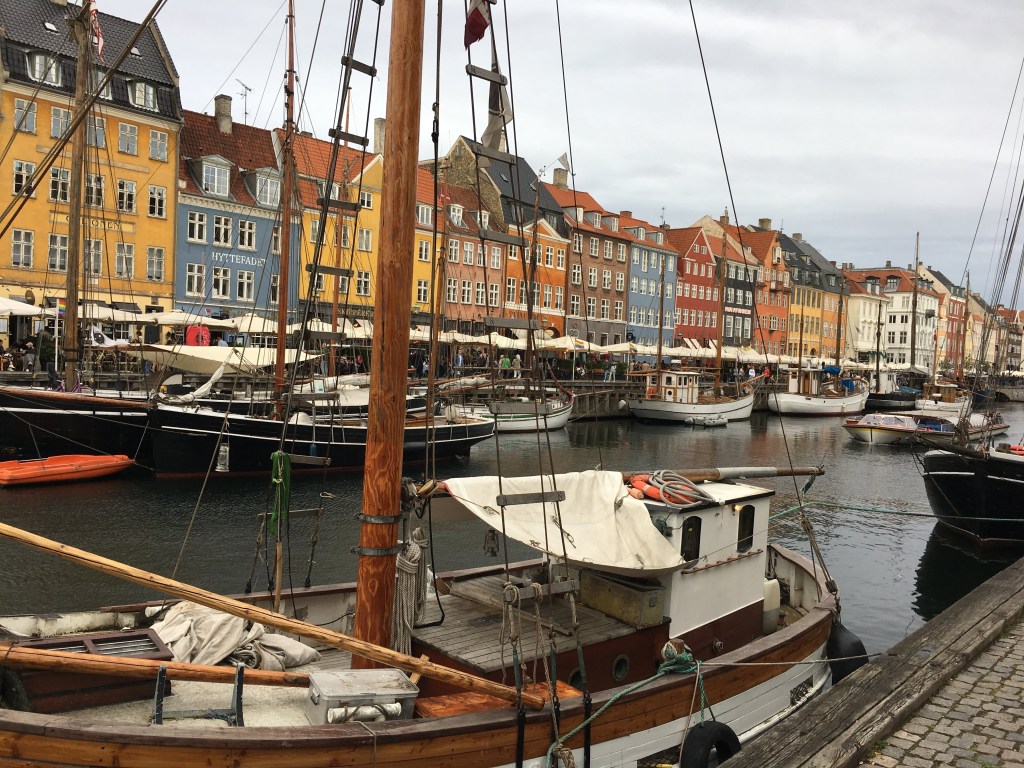
1. Danes obsession with bicycles is well known but it was not until I saw the rush hour traffic in Copenhagen that I understood the relevance of it. The cycling lane was packed, much more than car lanes in certain place. The true reason for the adoption is that cycling lane is actually functional and thoughtfully designed to maximize safe usage. It also helps that Copenhagen is flat and compact. I really enjoyed biking across various neighborhoods, my favorite was biking from Nyhavn to Freetown Christinia. 

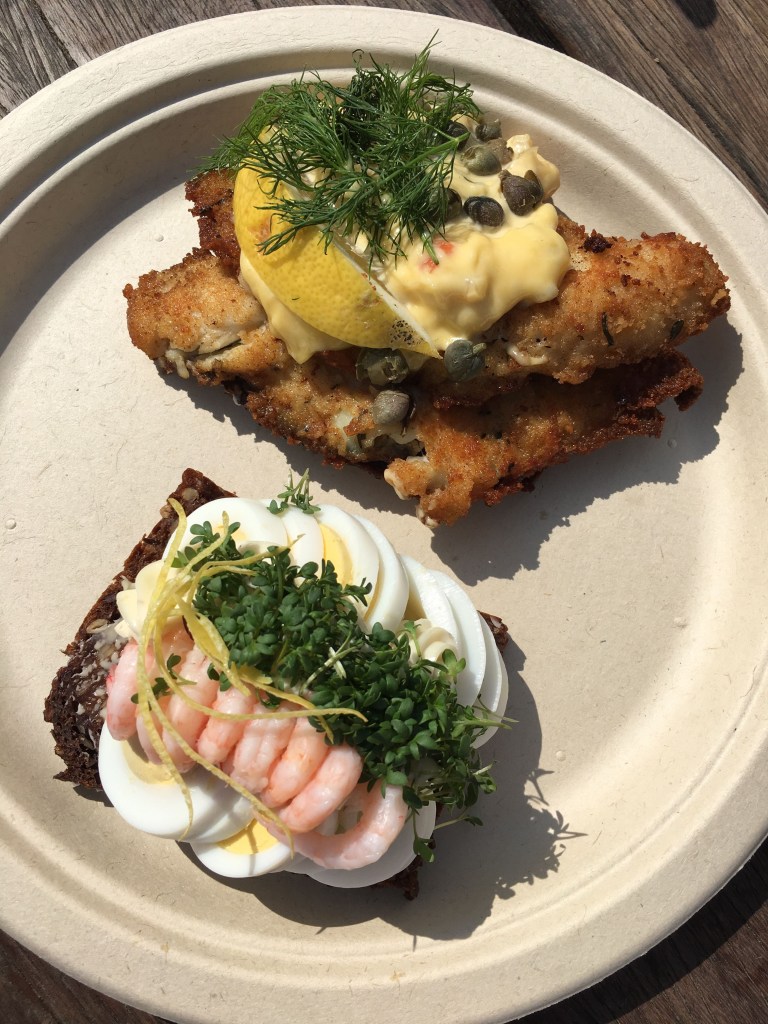
2. Smörrebröd is a Danish staple and it is versatile enough that it can eaten for breakfast, lunch and dinner. We tried at the trendy Hallernes Smorrebrod. Although the portions look small, it was very filling and rich thanks to the generous use of butter and mayo. Danish Rye bread with Lurpak® butter can be a nutritious and tasty meal on its own. I also picked up some unconspicous ice cream from the super market and it turned out the creamiest ice cream ever. I didn’t dare to read the nutrition facts. 

3. Carlsberg beer was founded and is still headquartered in Copenhagen. The founder of Carlsberg, Jacobsen even set up a lab dedicated to science of brewing. In fact, this lab helped identified the year species that is used to make pale lager. A century and a half later, hobby brewers Bjergsø and Keller founded the Mikkeller brewing company to produce craft brews that are now sold across the globe. Mikkeler bars in Cophengen are super laid back and the beer is unique.

4. Denmark is usually rated as one of the happiest countries in the world. Like most western European countries, Denmark is welfare state, high taxes are put to good use in terms of universal free healthcare and education. The term Hygge is part of Danish culture, it refers to feelings of cosiness, comfort and contentment. It is also used as verb – hyggelig to describe things that create hygge. Candles, Fireplace, Blankets, Comfort food are on top of the list. I experienced my share of Hygge by cosying up in cafes to escape some unwelcome summer downpours.

5. Danish design aesthetic is well respected. I knew about Bang and Olufsen but it was interesting gazing at the boutique stores downtown specially the ones selling furniture. The designs felt timeless but hefty prices though. 

5 things about Copenhagen, Denmark